Introduction
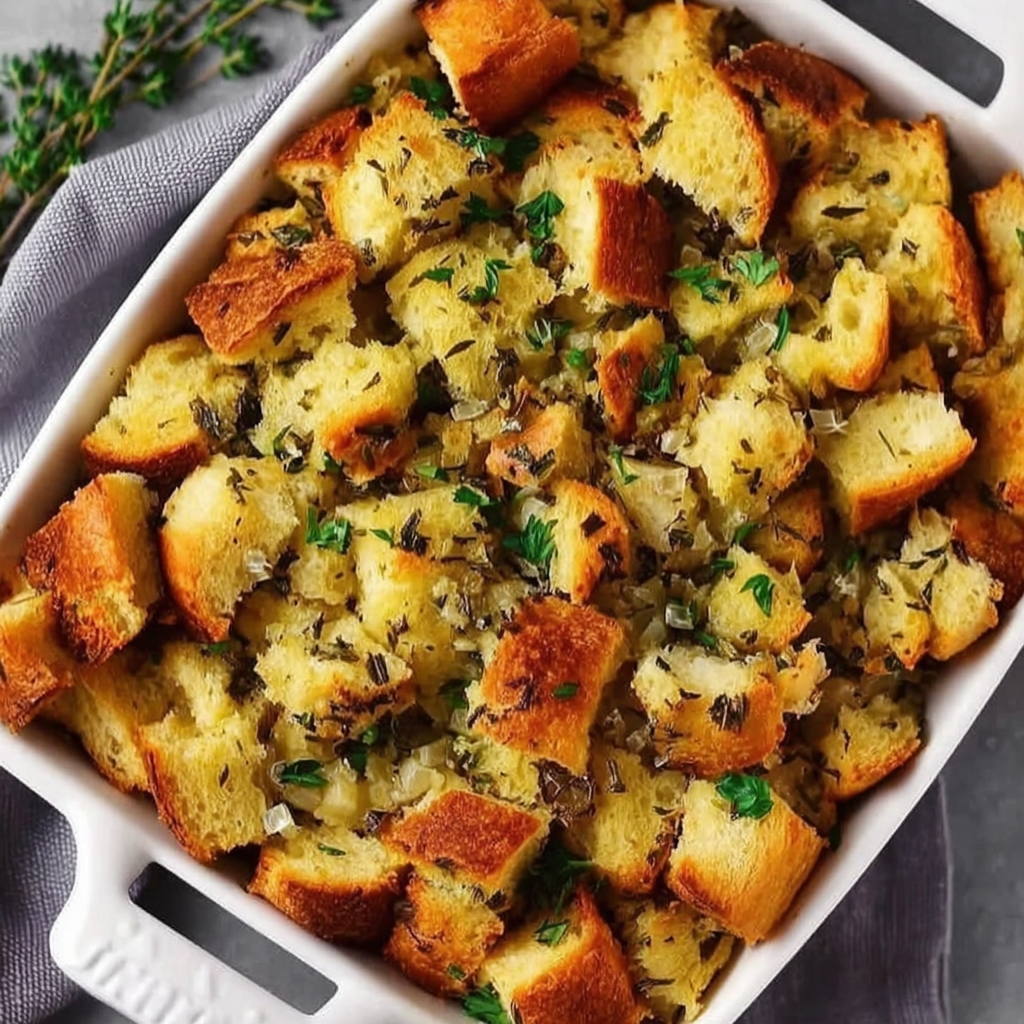
As the aromas of Thanksgiving fill the air, few dishes evoke as much nostalgia as a warm bowl of buttery herb stuffing. A blend of fresh ingredients and comforting spices creates a harmonious side dish that complements holiday meals beautifully.
Stuffing isn’t just for Thanksgiving. Its rich flavors and incredible texture can elevate any dinner gathering. In this recipe, we celebrate simple yet vibrant ingredients that shine as the star of the plate, transforming into a family favorite during every seasonal feast.
Ingredients

- 1 loaf of French bread, cubed (about 10 cups)
Stale or day-old French bread is ideal as it holds up during cooking and absorbs the aromatic broth and butter, ensuring every bite is flavorful. Its crusty exterior and soft interior create the perfect texture. - 1 cup unsalted butter
Butter adds a rich, creamy flavor that makes every bite indulgent. In addition to flavor, it helps in toasting the bread cubes to a perfect golden hue, contributing to a delightful crispiness. - 1 large onion, diced
Onions provide a foundational sweetness and depth of flavor. Cooking them until golden enhances their natural sugars, adding a savory element that contrasts beautifully with the herbs. - 2 cups celery, diced
Celery introduces crunch and a fresh, green flavor that balances the richness of the butter. It’s an essential ingredient that complements the other savory elements while adding texture. - 4 cloves garlic, minced
Garlic infuses the stuffing with a warm, aromatic quality. When sautéed, it softens in flavor and pairs wonderfully with the herbs, creating an enticing aroma in the kitchen. - 1 tablespoon fresh sage, chopped
Sage’s earthy flavor is classic in stuffing recipes, bringing an element of warmth and complexity. Fresh sage is preferred for its vibrant taste, elevating the overall dish. - 1 tablespoon fresh thyme, chopped
Thyme adds a light, herbal brightness that complements the rich elements in the stuffing. It delivers a slightly woody flavor that rounds out the savory notes beautifully. - 1 tablespoon fresh parsley, chopped
Parsley brings a freshness and a hint of bitterness that lightens up the dish. Its vibrant green color also enhances the visual appeal of the stuffing. - 2 to 3 cups low-sodium chicken broth
Broth is crucial for hydrating the bread and melding the flavors together. Using low-sodium broth allows you to control the saltiness while ensuring a rich, savory depth in the stuffing. - 1 teaspoon salt
Salt enhances the overall flavors of all the ingredients, making each component stand out. It’s vital for balancing sweetness, especially from the onions and the broth. - 1/2 teaspoon black pepper
Black pepper adds a subtle heat that elevates the stuffing’s flavor. It’s a simple seasoning that contributes to the dish’s overall savory profile. - 1/2 cup dried cranberries or raisins (optional)
These dried fruits introduce a burst of sweetness that contrasts beautifully with the savory elements. They can be an optional inclusion for a pleasant surprise in each bite, appealing to those who enjoy a sweet-savory balance.
Directions & Preparation
Step 1: Preheat your oven to 350°F (175°C).
Setting the oven to the right temperature is a vital first step, as it ensures that your stuffing bakes evenly. Preheating also allows the butter and broth to effectively meld with the bread, creating a homogenous mix that enhances the final dish. Don’t skip this step, as a properly heated oven is key to achieving a delightful golden crust.
Step 2: Toast the bread cubes on a baking sheet.
Toasting the bread first helps it retain its texture when mixed with wet ingredients later. Spread the cubed bread in an even layer and toast until golden brown, about 10-15 minutes. This process not only brings out the bread’s flavor but also creates a firmer structure that prevents the stuffing from becoming mushy.
Step 3: In a large skillet, melt the butter over medium heat.
Melting the butter allows it to evenly coat the vegetables you’ll add next. Butter acts as a flavor carrier, enriching the onions and celery while providing a delicious base for the other ingredients. This step sets the foundation for a rich and fragrant stuffing.
Step 4: Add the diced onions and celery to the skillet.
Sautéing the onions and celery until they are tender and slightly golden is essential for developing a depth of flavor. The natural sweetness from the onions will caramelize, complementing the richness of the butter, while the celery adds a refreshing crunch that balances the dish.
Step 5: Stir in the minced garlic and chopped herbs.
This step is key for infusing the stuffing with aromatic flavors. Garlic should be added last in this mixture to prevent burning, which can lead to bitterness. Ensuring that the garlic is fragrant without browning maximizes its flavor profile alongside the herbs.
Step 6: Combine the bread cubes with the vegetable mixture in a large bowl.
Transferring the mixture to a bowl and adding the toasted bread allows for gentle mixing without crushing the cubes. This is where the textural magic happens. The bread will soak up the buttery, savory juices while maintaining individual identity, ensuring you have both crunch and softness in every bite.
Step 7: Pour in the chicken broth and mix well.
Adding the chicken broth is crucial for hydration. Start with two cups and gradually add more if needed, ensuring the bread cubes are moistened but not overly soggy. Proper hydration promotes cohesive flavor throughout the stuffing while allowing it to bake to a perfect texture.
Step 8: Season with salt and pepper before transferring to a baking dish.
Even seasoning is important for the final dish, as it enhances the components without overpowering them. Taste the mixture before baking, adjusting salt and pepper to your preference. This is the final opportunity to harmonize the flavors fully before they transform in the oven.
Step 9: Cover the baking dish with foil and bake for 25 minutes.
Covering with foil helps retain moisture during the initial stage of baking, preventing the stuffing from drying out. The steam will ensure the stuffing heats through while allowing for even cooking. Keep an eye on it during this time, as every oven varies slightly.
Step 10: Remove the foil and bake for an additional 15 minutes.
Exposing the stuffing to direct heat allows it to develop a golden-brown crust. This final stage is essential as it creates texture, combining the crispy bits of bread with the moist, flavorful interior. Achieving that perfect contrast is what makes stuffing truly irresistible.
Step 11: Let the stuffing rest before serving.
Allowing the stuffing to rest for about 10 minutes helps the flavors settle and makes serving easier. The resting time allows the ingredients to firm up slightly, making it easier to scoop out perfect portions without it falling apart.
Embracing Fresh Herbs
Incorporating fresh herbs into your stuffing not only elevates the flavor profile but also adds visual appeal with vibrant sprigs of green. Sage, thyme, and parsley create a fragrant mix that effortlessly pairs with the buttery undertones. The choice of herbs can be easily adapted based on your personal preference or the season, allowing you to customize the stuffing to match various occasions.
The Toasting Technique
Understanding the importance of toasting your bread before adding it to the stuffing is key for achieving the right texture. Toasting creates a firmer structure that holds up amidst the moist ingredients, preventing an overly soggy stuffing. This step not only enhances the flavor through caramelization, but it ensures every bite is a delightful balance of crispy and soft.
A Sweet Twist with Dried Fruits
For those looking to try a new twist, integrating dried cranberries or raisins into your stuffing offers a delightful contrast. These fruits add a touch of sweetness that complements the savory elements beautifully, resulting in a more complex flavor experience. This combination of sweet and savory is especially popular during holiday gatherings and can be a conversation starter at your dinner table.
FAQs
What can I do if my stuffing turns out too dry?
If your stuffing is too dry, adding a bit more broth gradually can help restore moisture. Mix it in gently until desired consistency is achieved.
Is there a way to make this stuffing spicier?
To add heat, consider incorporating diced jalapeños or a sprinkle of red pepper flakes into the vegetable mixture. Adjust to your spice level preference for a flavorful twist.
Can I add sausage to this stuffing recipe?
Yes, adding cooked sausage can introduce a delicious savory depth. Cook and crumble the sausage before mixing it into the stuffing to integrate those robust flavors.
What if I forget to toast the bread?
If you skip toasting, don’t worry too much! You can still bake it longer, adding moisture gradually to avoid dryness. Just be mindful as it may not achieve the same textural contrast.
How can I customize the herbs in this recipe?
Feel free to switch out herbs like using rosemary or oregano for a different flavor profile. Fresh herbs make a significant impact in this recipe, enhancing its individuality.
What if I don’t have chicken broth?
If chicken broth is unavailable, vegetable broth or even water can be used as substitutes. Just keep in mind that the flavor may vary slightly, so consider boosting seasonings or adding bouillon.
Conclusion
Crafting the perfect buttery herb stuffing is a delightful journey into home cooking that promises warmth and flavor at the dinner table. With fresh ingredients and careful techniques, you can create a side dish that complements any meal beautifully.
As you embrace the rich flavors of this cherished recipe, remember that each Thanksgiving or family gathering is an opportunity to add your personal touch. Let this stuffing be the centerpiece that invites conversations and brings everyone together around the table.
Recipe Card
Deliciously Herby and Buttery Stuffing Recipe
Ingredients
- 1 loaf of French bread cubed (about 10 cups)
- 1 cup unsalted butter
- 1 large onion diced
- 2 cups celery diced
- 4 cloves garlic minced
- 1 tablespoon fresh sage chopped
- 1 tablespoon fresh thyme chopped
- 1 tablespoon fresh parsley chopped
- 2 to 3 cups low-sodium chicken broth
- 1 teaspoon salt
- 1/2 teaspoon black pepper
- 1/2 cup dried cranberries or raisins optional
Instructions
- Preheat your oven to 350°F (175°C).
- Toast the bread cubes on a baking sheet.
- In a large skillet, melt the butter over medium heat.
- Add the diced onions and celery to the skillet.
- Stir in the minced garlic and chopped herbs.
- Combine the bread cubes with the vegetable mixture in a large bowl.
- Pour in the chicken broth and mix well.
- Season with salt and pepper before transferring to a baking dish.
- Cover the baking dish with foil and bake for 25 minutes.
- Remove the foil and bake for an additional 15 minutes.
- Let the stuffing rest before serving.
Notes
Additional serving suggestions: pair with a crisp salad, garlic bread, or roasted seasonal vegetables for balance.
For make-ahead, prep components separately and assemble just before heating to preserve texture.
Taste and adjust with acid (lemon/vinegar) and salt right at the end to wake up flavors.