Introduction
There's a certain charm that comes with a classic pineapple upside down cake. This vintage dessert takes you back to family gatherings and festive celebrations, where the sweet, caramelized fruit contrasts beautifully with the moist, buttery cake. It’s a delightful treat that's visually stunning and incredibly flavorful.
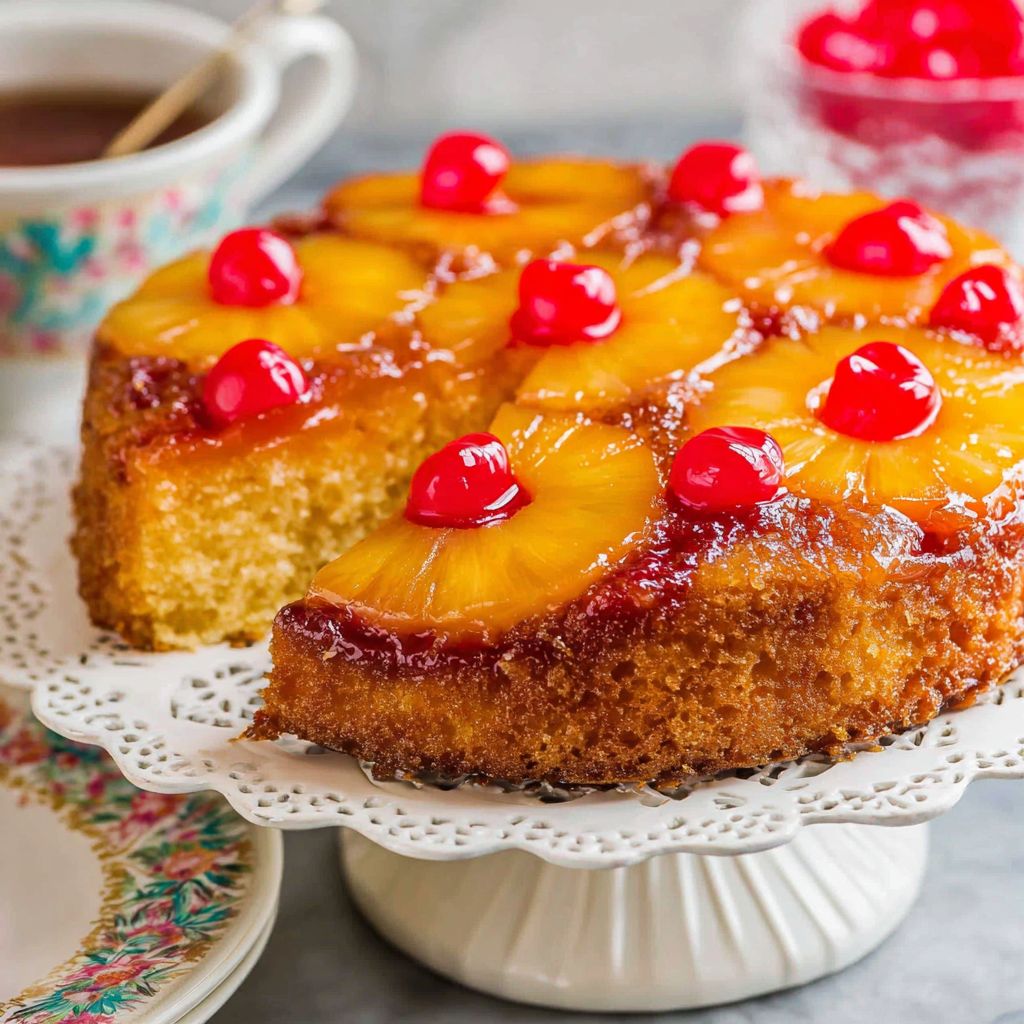
Baking this cake is not just about the final product; it's about bonding over mixing ingredients and watching the magic happen in the oven. Each slice reveals the vibrant pineapple rings and maraschino cherries, making it a feast for the eyes as much as the palate. Let's explore how to create this nostalgic wonder in your own kitchen.
Ingredients
- 1 cup unsalted butter, softened
Butter is crucial for creating a tender crumb in the cake. It helps in adding richness and flavor, while also aiding in the incorporation of air during the mixing process, which gives the cake its light and fluffy texture. - 1 cup brown sugar
Brown sugar provides a deeper, more complex sweetness than white sugar and helps create that signature caramelization at the bottom of the pan when combined with butter and pineapple. - 1 can (20 oz) pineapple slices, drained
The pineapple slices serve as both a base and topping, imparting moisture and sweetness to the cake. Their juices infuse into the batter, enhancing the overall flavor. - Maraschino cherries (optional)
Cherries add a pop of color and a burst of sweetness, contrasting nicely with the tangy pineapple. They are optional but elevate the cake's presentation. - 1 ½ cups all-purpose flour
Flour gives structure to the cake. The gluten formed when flour is mixed helps the cake rise and hold its shape, balancing the moistness from the pineapple. - 1 tsp baking powder
Baking powder acts as a leavening agent, creating the necessary lift in the cake. It helps achieve that light, airy texture, making each bite delightful. - ½ tsp salt
Salt enhances the flavors of all ingredients, balancing the sweetness and heightening the overall taste of the cake. - 2 large eggs
Eggs add moisture and richness, as well as help bind the ingredients together. They also improve the structure of the cake, allowing it to rise properly. - 1 tsp vanilla extract
Vanilla extract contributes warm, aromatic notes that enhance the overall flavor profile. It acts as a flavor enhancer, rounding out the cake's sweetness.
Directions & Preparation
Step 1: Preheat your oven to 350°F (175°C).
Preheating the oven is a critical step in baking, ensuring that your cake starts cooking at the right temperature. This helps activate the leavening agents and ensures an even rise and consistent texture throughout.
Step 2: Prepare the cake pan by greasing it and lining the bottom with parchment paper.
Greasing the pan and adding parchment paper prevents the cake from sticking, allowing for easy removal once it's baked. It’s an essential step for maintaining the integrity of the cake during serving.
Step 3: In a small saucepan, melt the butter and brown sugar together over low heat until combined and slightly caramelized.
This mixture creates the glaze for the pineapple and cherry topping. Heating it ensures that the sugar dissolves smoothly and melds with the butter, forming a luscious caramel that will coat the fruit beautifully.
Step 4: Pour the butter-sugar mixture into the prepared cake pan, spreading it evenly.
Pouring this mixture into the pan creates a caramel base that the pineapple and cherries will sit on. It’s important to spread it evenly to ensure uniform caramelization and coating when the cake is inverted.
Step 5: Arrange pineapple slices, and cherries if using, over the caramel mixture in the pan.
This step not only shapes the visual appeal of the cake but also allows the pineapple to soak up the caramel flavor during baking. It ensures that each slice is stunningly presented once the cake is flipped.
Step 6: In a mixing bowl, whisk together flour, baking powder, and salt.
Whisking the dry ingredients together ensures that the baking powder and salt are evenly distributed throughout the flour. This is vital for achieving a uniform rise and texture in your cake.
Step 7: In another bowl, cream the softened butter and sugar until light and fluffy.
Creaming butter and sugar together incorporates air into the mixture, which is key for achieving a light texture in the cake. This process also contributes to the overall flavor and richness by blending the ingredients well.
Step 8: Add the eggs, one at a time, mixing well after each addition, along with the vanilla extract.
Adding eggs gradually allows for better emulsification, resulting in a smoother batter. The added vanilla complements the sweetness and enhances the cake’s flavor profile.
Step 9: Gradually incorporate the dry ingredients into the wet mixture, alternating with the pineapple juice until combined.
Alternating between dry and wet ingredients prevents the batter from becoming overly tough by avoiding too much gluten development. This technique also helps maintain a moist texture and adds more pineapple flavor.
Step 10: Pour the batter over the arranged pineapple and cherries in the pan.
Pouring the batter evenly ensures that it covers the fruit entirely, which is essential for even cooking and for capturing all the delicious flavors while baking.
Step 11: Bake for 40-45 minutes or until a toothpick inserted into the center comes out clean.
Baking the cake at the right temperature and time is crucial for achieving the desired texture. Keeping an eye on it in the latter stages ensures it doesn’t overbake, which can dry out the cake.
Step 12: Let the cake cool in the pan for about 10 minutes before flipping it onto a serving plate.
Cooling slightly in the pan allows the caramel to set a bit, making it less likely to drip when you flip it. This also enables the cake to loosen from the sides for a cleaner release.
Step 13: Serve warm or at room temperature, optionally with whipped cream.
Serving the cake warm enhances its flavors and texture, while the optional whipped cream adds a luxurious, creamy element that balances the cake's sweetness. This final touch elevates this classic dessert to another level.

The Importance of Fresh Ingredients
Using fresh, high-quality ingredients significantly impacts the flavor of your pineapple upside down cake. Fresh pineapples, if opted for over canned, offer a vibrant acidity that balances sweetness beautifully. High-quality butter makes for a richer flavor, while fresh eggs contribute to a better texture. Paying attention to sourcing quality components can elevate this classic dessert from ordinary to extraordinary.
Elevating the Flavor Profile
While the classic version of pineapple upside-down cake is delicious, there are subtle tweaks you can make for a unique twist. Consider adding spices like cinnamon or nutmeg to the batter to enhance the flavor complexity. Incorporating coconut flakes or a splash of rum can also transport you to tropical locales and make your cake stand out at gatherings. A touch of creativity can transform this traditional dessert into a showcase for your personal style.
Serving Suggestions for the Perfect Finale
Serving your pineapple upside down cake offers a chance to impress. Pair it with a scoop of vanilla ice cream or a dollop of freshly whipped cream to balance the cake's sweetness and add creaminess to each bite. Garnishing with toasted coconut or a sprig of mint can elevates the presentation while adding flavor. These small touches make an inviting dessert that’s perfect for any occasion.
FAQs
Why did my cake stick to the pan?
If your cake sticks, it may be due to inadequate greasing or not using parchment paper. Next time, ensure thorough greasing, especially in the corners, and lining the pan will provide extra protection.
What can I do if the cake is too dense?
If your cake is too dense, it may be due to overmixing or using too much flour. Be sure to measure flour correctly and mix just until combined to maintain that airy texture.
Can I use fresh pineapple instead of canned?
Absolutely! Fresh pineapple can add a delightful texture and flavor to the cake. Just slice it evenly and make sure to cook it slightly to release some juice before arranging it in the pan.
How can I tell when the cake is done?
The cake is done when a toothpick inserted in the center comes out clean or with a few moist crumbs. The edges should pull away from the sides of the pan, and the top should be lightly golden.
Why is my caramel too runny?
If your caramel is too runny, it may not have cooked long enough to thicken. Cooking it a bit longer will help it set properly when baked.
What if my cake doesn't rise?
If your cake doesn’t rise, double-check the freshness of your baking powder. Expired leavening agents can hinder the cake's ability to rise properly.
Conclusion
Baking a classic pineapple upside-down cake is a delightful journey into nostalgia, combining simple ingredients to create something truly special. Its unique upside-down presentation and tropical flavors make it a memorable centerpiece for any gathering.
Whether you're making it for a birthday party, a special dinner, or simply to treat yourself, this cake is sure to impress. So gather your ingredients, embrace the baking process, and enjoy every slice of this timeless dessert.
Recipe Card

Delightful Classic Pineapple Upside Down Cake Recipe
Ingredients
- 1 cup unsalted butter softened
- 1 cup brown sugar
- 1 can 20 oz pineapple slices, drained
- Maraschino cherries optional
- 1 ½ cups all-purpose flour
- 1 tsp baking powder
- ½ tsp salt
- 2 large eggs
- 1 tsp vanilla extract
Instructions
- Preheat your oven to 350°F (175°C).
- Prepare the cake pan by greasing it and lining the bottom with parchment paper.
- In a small saucepan, melt the butter and brown sugar together over low heat until combined and slightly caramelized.
- Pour the butter-sugar mixture into the prepared cake pan, spreading it evenly.
- Arrange pineapple slices, and cherries if using, over the caramel mixture in the pan.
- In a mixing bowl, whisk together flour, baking powder, and salt.
- In another bowl, cream the softened butter and sugar until light and fluffy.
- Add the eggs, one at a time, mixing well after each addition, along with the vanilla extract.
- Gradually incorporate the dry ingredients into the wet mixture, alternating with the pineapple juice until combined.
- Pour the batter over the arranged pineapple and cherries in the pan.
- Bake for 40-45 minutes or until a toothpick inserted into the center comes out clean.
- Let the cake cool in the pan for about 10 minutes before flipping it onto a serving plate.
- Serve warm or at room temperature, optionally with whipped cream.
Notes
Additional serving suggestions: pair with a crisp salad, garlic bread, or roasted seasonal vegetables for balance.
For make-ahead, prep components separately and assemble just before heating to preserve texture.
Taste and adjust with acid (lemon/vinegar) and salt right at the end to wake up flavors.