Introduction
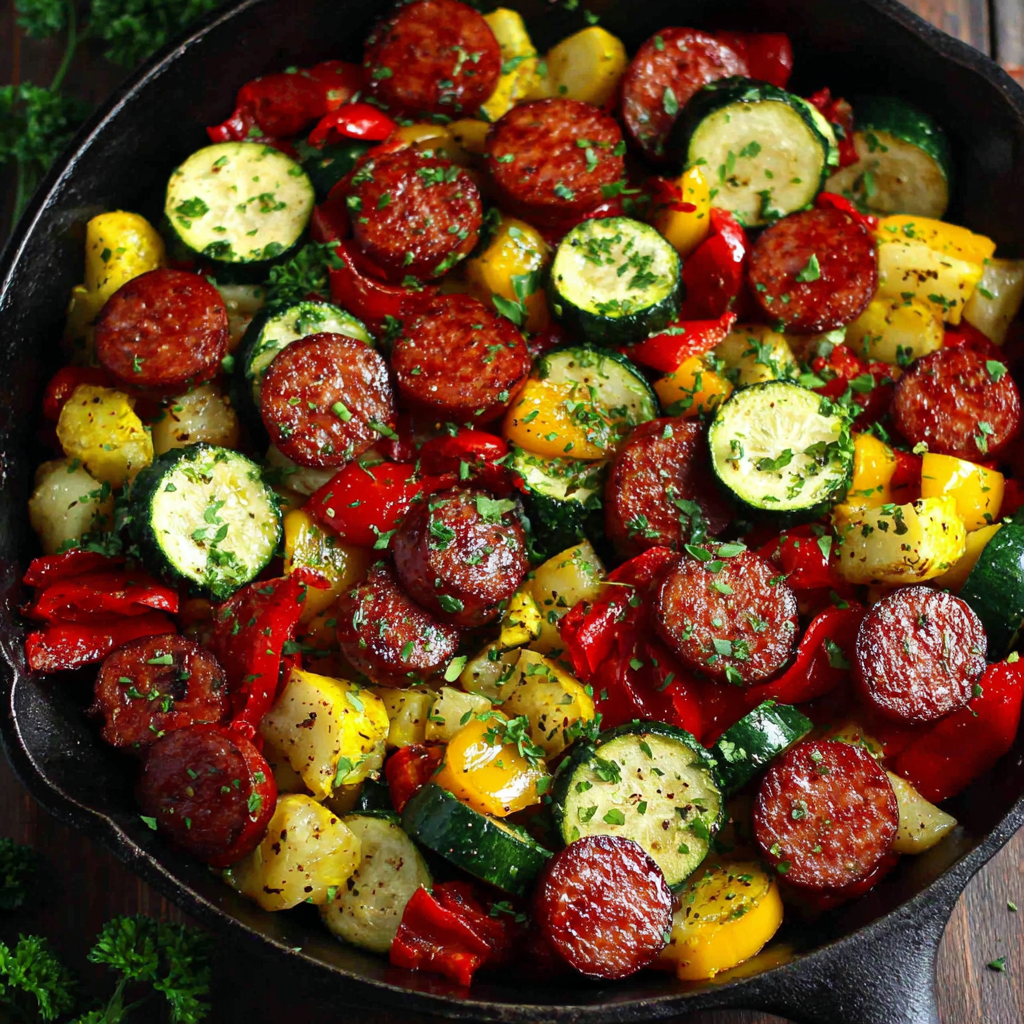
A sausage and veggie skillet is one of those comforting dishes that brings together hearty flavors and vibrant colors in one pan. Perfect for busy weeknights or leisurely weekend brunches, it’s an excellent choice for any meal. The beauty of this dish lies in its versatility; you can mix and match your favorite vegetables and types of sausage to create a satisfying meal.
This skillet is not just easy to prepare, but it also allows you to take advantage of seasonal produce. Whether you have leftover vegetables in the fridge or want to showcase fresh seasonal delights, this recipe encourages creativity in the kitchen. So let’s dive into creating this delicious medley of flavors.
Ingredients
- 1 lb Italian sausage
Italian sausage is the star of the skillet, adding rich, savory flavors with a hint of spice. Its fat content helps carry the seasonings throughout the dish, providing a hearty base. - 1 bell pepper, chopped
Bell peppers add a sweetness and crunch that balances the richness of the sausage. They also offer a pop of color, making the dish visually appealing. - 1 medium zucchini, sliced
Zucchini provides a tender texture and absorbs the delicious flavors of the skillet. This vegetable is light and helps to create a well-rounded dish. - 1 medium onion, diced
Onions add depth and a subtle sweetness when caramelized. They serve as an aromatic base that enhances the overall flavor profile of the dish. - 2 cloves garlic, minced
Garlic not only imparts a robust flavor but also complements the sausage and vegetables fabulously. Its aroma fills the kitchen, enticing everyone to gather around the table. - 1 cup cherry tomatoes, halved
Cherry tomatoes add acidity and juiciness, brightening the flavors of the skillet. They burst with flavor, making each bite a delight. - 1 teaspoon smoked paprika
Smoked paprika brings a warm, smoky flavor that enhances the overall depth of the dish. It’s a subtle touch that takes the dish from good to unforgettable. - Salt and pepper to taste
Salt and pepper are essential for seasoning the dish, helping to amplify the natural flavors of the ingredients. Adjusting them to your preference makes the dish truly yours. - 2 tablespoons olive oil
Olive oil is used for sautéing the ingredients, allowing them to cook evenly while contributing a rich flavor. It also contains healthy fats that aid in nutrient absorption.
Directions & Preparation
Step 1: Start by heating olive oil in a large skillet over medium heat.
Heating the olive oil properly is essential as it creates a non-stick surface for the ingredients. Medium heat allows the oil to warm up without smoking, ensuring even cooking for the sausage and vegetables.
Step 2: Add the Italian sausage to the skillet, breaking it apart with a wooden spoon.
Cooking the sausage first provides a flavorful base while allowing the fat to render out. Breaking it apart ensures it cooks evenly and helps develop a nice caramelization, adding depth to the dish.
Step 3: Once the sausage is browned, add the diced onions and minced garlic.
Onions and garlic should be added once the sausage develops a brown crust. This step builds layers of flavor, as the onions will soften and sweeten while the garlic infuses its aromatic essence into the dish.
Step 4: Stir in the chopped bell pepper, zucchini, and halved cherry tomatoes.
Incorporating these vegetables allows them to cook slightly, releasing their juices and melding their flavors with the sausage. The combination of colors and textures makes the dish appealing and satisfying.
Step 5: Sprinkle in the smoked paprika, salt, and pepper, stirring to combine.
Seasoning the dish enhances overall flavors, and smoked paprika adds a subtle smokiness that enhances the sausage's richness. Tasting at this point allows you to adjust the seasoning to your liking.
Step 6: Cook for an additional 5-7 minutes until the vegetables are tender.
This step is crucial for achieving the right texture; the vegetables should be tender yet retain some bite. Stir occasionally to ensure even cooking and to prevent anything from sticking to the pan.
Step 7: Remove from heat and serve immediately.
Serving the skillet fresh off the heat ensures that the ingredients maintain their texture and vibrant color. It also means everyone can enjoy a warm meal right away, which enhances the overall dining experience.

Endless Vegetable Variations
One of the best aspects of the sausage and veggie skillet is its adaptability. Feel free to swap in seasonal vegetables like asparagus, mushrooms, or spinach based on what you have on hand. Each addition will provide its unique flavor and texture, making every skillet a new adventure.
Choosing Your Sausage Wisely
Selecting the right sausage can dramatically alter the final taste of your dish. Whether you prefer spicy chorizo, classic Italian, or even chicken sausage, each type comes with distinct flavor notes. Taste-testing the sausage beforehand can help decide what will work best for your skillet.
Perfect Pairings with Sides
This sausage and veggie skillet can stand alone, but a few sides elevate the meal. Consider serving it with a crusty piece of bread to soak up the juices, a light salad for freshness, or some rice to add heartiness. Each choice complements the skillet’s flavors beautifully.
FAQs
What can I do if my skillet seems too greasy?
If your skillet appears overly greasy, consider draining some of the rendered fat from the sausage after cooking it. This will help balance the flavors without losing the delicious essence that the sausage provides.
Can I make this recipe spicy?
Absolutely! To add spice, opt for spicy Italian sausage or sprinkle some red pepper flakes into the skillet during cooking. This will give each bite a delightful heat that pairs well with the vegetables.
How can I stretch this recipe to feed more people?
To serve more people, simply increase the quantity of vegetables while keeping the same amount of sausage. This will yield a larger volume without overwhelming the dish's flavors and maintains a balanced ratio.
What should I do if my vegetables are overcooked?
If your vegetables end up overcooked, there’s no need to panic. You can try adding fresh, raw veggies at the end for a little crunch and freshness. This will create a nice contrast to the cooked ingredients.
Is there a way to enhance the flavor while keeping it simple?
Absolutely! You can add a splash of balsamic vinegar or a hint of lemon juice right before serving. These additions brighten the flavors and provide a lovely acidity that balances the richness of the sausage.
What if I want to add some grains to the skillet?
Incorporating grains like quinoa or rice is straightforward. Just cook them separately and mix them in during the last couple of minutes of cooking. This will help them absorb the dish's flavors while providing extra texture.
Conclusion
The sausage and veggie skillet is a perfect example of how simple ingredients can come together to create something extraordinary. The combination of flavors offers satisfaction in every bite, making it a go-to option for any meal.
Embrace the flexibility of this recipe by experimenting with different ingredients and spices. With each variation, you'll build your culinary confidence and perhaps discover a new favorite dish.
Recipe Card

Flavor-Packed Sausage and Veggie Skillet Recipe
Ingredients
- 1 lb Italian sausage
- 1 bell pepper chopped
- 1 medium zucchini sliced
- 1 medium onion diced
- 2 cloves garlic minced
- 1 cup cherry tomatoes halved
- 1 teaspoon smoked paprika
- Salt and pepper to taste
- 2 tablespoons olive oil
Instructions
- Start by heating olive oil in a large skillet over medium heat.
- Add the Italian sausage to the skillet, breaking it apart with a wooden spoon.
- Once the sausage is browned, add the diced onions and minced garlic.
- Stir in the chopped bell pepper, zucchini, and halved cherry tomatoes.
- Sprinkle in the smoked paprika, salt, and pepper, stirring to combine.
- Cook for an additional 5-7 minutes until the vegetables are tender.
- Remove from heat and serve immediately.
Notes
Additional serving suggestions: pair with a crisp salad, garlic bread, or roasted seasonal vegetables for balance.
For make-ahead, prep components separately and assemble just before heating to preserve texture.
Taste and adjust with acid (lemon/vinegar) and salt right at the end to wake up flavors.