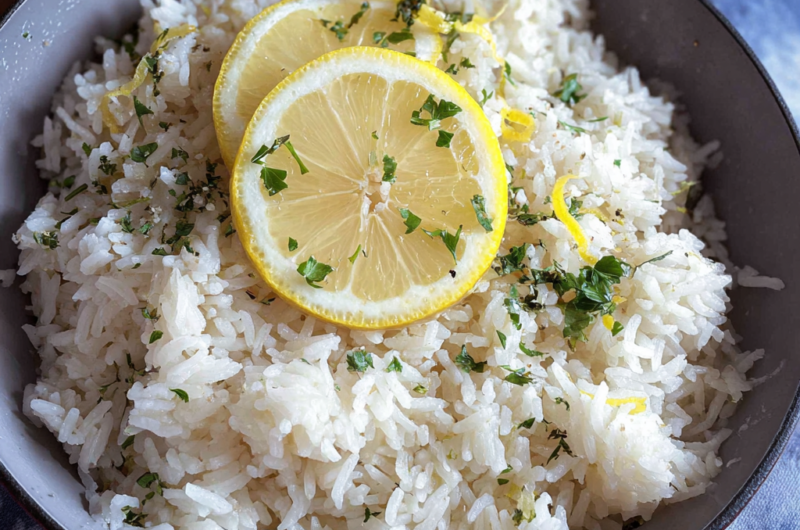
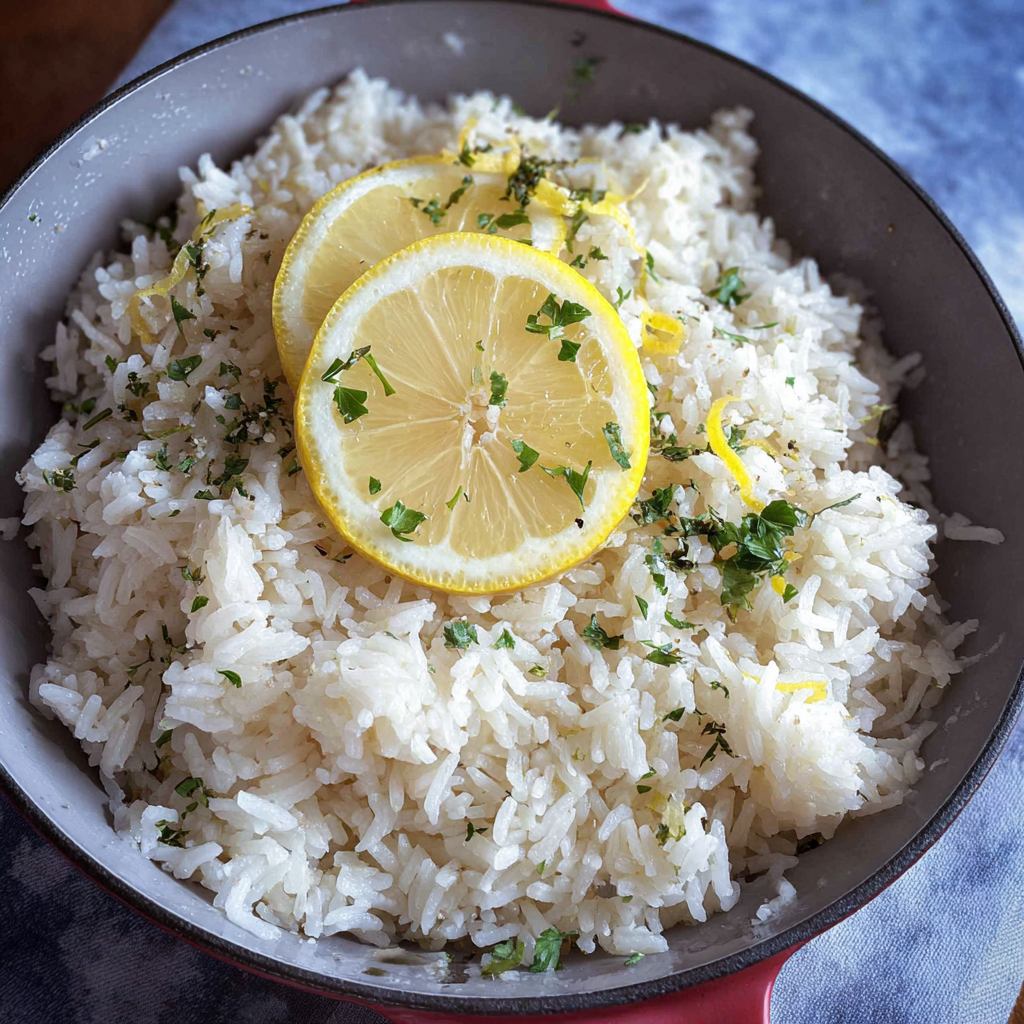
Greek Lemon Rice Pilaf
Ingredients
Method
- Heat oil over medium heat in large saucepan or small pot.
- Add garlic and onion. Cook for 5 minutes or until translucent and sweet.
- Add rice and stir until rice turns mostly translucent.
- Add broth and water. Place lid on, bring to simmer then turn heat down to low.
- Cook for 12 minutes or until water is evaporated.
- Remove from from stove and rest for 10 minutes (keep the lid on).
- Remove lid. stir through lemon zest, lemon juice, herbs and salt and pepper to taste.
- Lovey served warm or at room temperature.
Notes
- For the best flavor, make sure to sauté the garlic and onion until they are just translucent; this enhances their sweetness without burning them.
- To prevent your rice from becoming mushy, avoid lifting the lid while it cooks, as this releases steam essential for the cooking process.
- If you don't have fresh dill, feel free to substitute with equal amounts of fresh parsley, or try a mix of oregano and basil for a different flavor profile.
- This Greek Lemon Rice Pilaf can be stored in the fridge for up to 5 days; reheat gently in the microwave with a splash of water to restore moisture.
- Add a pinch of lemon zest to the cooking liquid for an extra pop of citrus flavor throughout the rice.
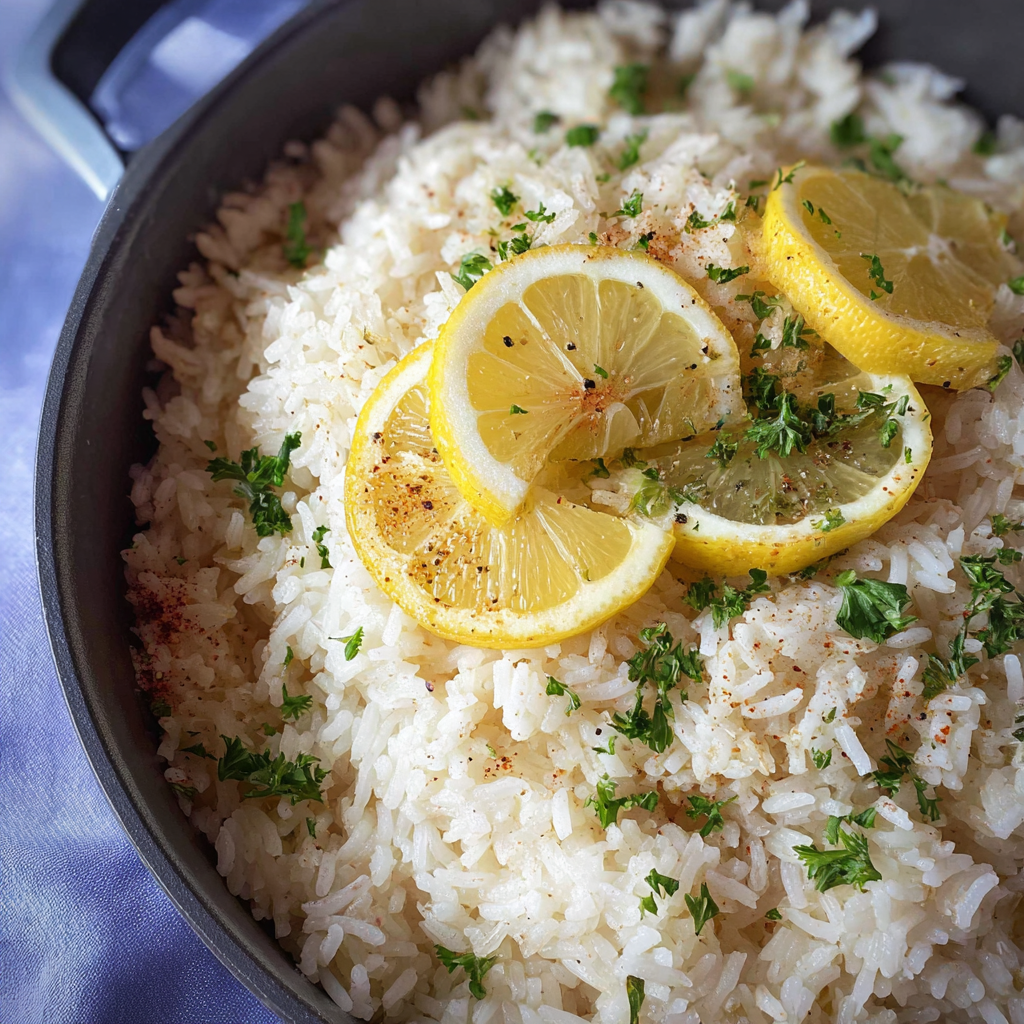
Bright, fluffy, and infused with the holy trinity of Greek flavors—lemon, olive oil, and fresh herbs—this pilaf is the only side dish you need for your next Mediterranean feast.
📋 In This Article
- Introduction
- Why This Recipe Works (The Science Behind the Flavor)
- Essential Ingredients for Authentic Greek Lemon Rice
- Step-by-Step Instructions for Perfect Greek Lemon Rice
- Common Mistakes to Avoid for the Best Greek Lemon Rice
- Delicious Variations & Serving Suggestions
- Storage & Reheating Tips
- Pro Tips for the Ultimate Greek Lemon Rice
- Frequently Asked Questions About Greek Lemon Rice
Introduction
There is a specific kind of magic that happens in a Greek taverna kitchen. It smells like oregano, grilled meat, and something distinctively savory and bright. That last scent? It’s usually a pot of Greek Lemon Rice.
Most people treat rice as an afterthought, a bland filler to soak up sauce. But in Greek cuisine, rice is treated with respect. This isn’t just “rice with lemon juice stirred in.” It’s a proper pilaf. We’re talking about distinct, separate grains that are tender, not mushy, saturated with the flavor of good chicken broth and finished with a hit of fresh citrus. Bright and Flavorful Greek Pasta Salad Recipe.
I’ve spent years testing rice-to-liquid ratios, and I can tell you that getting that restaurant-style fluffiness isn’t about luck. It’s about a few specific chemical reactions—namely, how fat coats starch and how acid affects gelatinization. This recipe captures the authentic heart of the dish without requiring a plane ticket.
Why This Recipe Works (The Science Behind the Flavor)
The difference between a sticky mess and a fluffy pilaf comes down to science. This recipe utilizes the Pilaf Method, and here is why it works:
- Fat Coating the Starch: We sauté the rice in extra virgin olive oil before adding liquid. This does two things. First, it initiates the Maillard reaction on the rice grains, adding a subtle nutty complexity you don’t get from boiling rice in water. Second, and more importantly, the oil coats the exterior of the starch granules. This coating acts as a barrier, preventing the grains from swelling to the point of rupture. Less rupture means less starch leakage, which means no clumps.
- The Acid Timing: This is the most common mistake home cooks make. Lemon juice contains acid, and acid inhibits the gelatinization of starch. If you add lemon juice during the simmer, the rice will stay hard and crunchy no matter how long you cook it. By adding the juice after the rice is tender, you get the bright, fresh lemon flavor without messing up the texture.
- The Resting Period: We let the rice rest, covered, for 10 minutes after turning off the heat. During cooking, the moisture on the outer layers of the grain is higher than the center. Resting allows for moisture equilibration, ensuring the texture is uniform from the surface to the core.
Essential Ingredients for Authentic Greek Lemon Rice
You don’t need a long shopping list, but the quality of each item matters here.
- Long-Grain Rice: I prefer Basmati or Jasmine rice. These varieties are high in amylose, a type of starch that stays firm and separate when cooked. Do not use short-grain rice (like Arborio); it has too much amylopectin, which creates a creamy, sticky texture better suited for risotto than pilaf.
- Chicken Broth: Use a high-quality low-sodium chicken broth. Since we reduce the liquid, the salt concentration increases. If you use full-sodium broth, you risk an inedibly salty dish. Homemade is gold standard, but a good boxed brand works fine.
- Fresh Lemon Juice: Bottled juice tastes metallic and “cooked.” You need fresh lemons for this. We use both the juice and the zest—the zest contains the essential oils where the floral aromas live, without the harsh acidity.
- Fresh Herbs: Dried dill has its place, but this isn’t it. You need fresh dill and flat-leaf parsley added right at the end. Their volatile oils are heat-sensitive; if you cook them, the flavor fades.
Step-by-Step Instructions for Perfect Greek Lemon Rice
Follow these steps precisely. Rice is unforgiving, but once you master the technique, it becomes second nature.
Step 1: Rinse the Rice
Place 1.5 cups of long-grain rice in a fine-mesh strainer. Rinse it under cold running water until the water runs clear. This usually takes about 30 to 45 seconds. Rinsing removes the loose surface starch that turns the cooking water into glue. Drain the rice well.
Step 2: Sauté the Aromatics
In a medium saucepan (one with a tight-fitting lid), heat 1.5 tablespoons of extra virgin olive oil over medium heat. Add 1/2 cup finely chopped onion and cook for about 3 minutes until translucent. Add 1 minced garlic clove and cook for another 30 seconds until fragrant. You want to sweat the onions, not brown them—we want sweetness, not bitterness.
Step 3: Toast the Rice
Add the drained rice to the pot. Stir constantly for about 2 minutes. You want the rice to smell nutty and for the grains to turn opaque with slightly translucent edges. This toasting step is non-negotiable for authentic flavor.
Step 4: Simmer
Pour in 1.25 cups of chicken broth and 1 cup of water. Add 1 teaspoon of salt. Stir once to separate the grains, then bring the liquid to a boil. Once boiling, reduce the heat to the lowest setting (simmer) and cover tightly with the lid.
Step 5: Cook and Rest
Simmer gently for 12 to 15 minutes. Do not lift the lid. Trust the process. When the timer goes off, remove the pot from the heat. Keep the lid on. Let it rest for 10 minutes. This is the hardest part—waiting—but it’s crucial for fluffy results.
Step 6: Fluff and Finish
Remove the lid. Fluff the rice gently with a fork. Stir in the zest of 1 large lemon, 3 to 4 tablespoons of fresh lemon juice, 3 tablespoons chopped parsley, and 3 tablespoons chopped dill. Taste and season with salt and pepper. Flavorful Greek Chicken Bowls for Home Cooks.

⚠️ Common Mistakes to Avoid for the Best Greek Lemon Rice
Even experienced cooks botch rice. Here is what usually goes wrong:
- Mushy Rice: This is almost always a liquid ratio issue. If you add too much liquid, the grains burst. Stick to the 1:1.5 ratio (rice to liquid) for standard long-grain rice.
- Crunchy Rice: If you added the lemon juice too early, the acid prevented the starch from hydrating. Alternatively, your lid might not be sealing properly, allowing steam to escape.
- Bland Rice: If it tastes flat, you likely didn’t salt the cooking liquid enough. Rice needs salt while it cooks to absorb flavor, not just a sprinkle on top at the end.
- The “Peek”: Lifting the lid releases steam and drops the temperature. Every peek adds about 3 minutes to your cooking time and risks uneven texture. Keep it sealed.
Delicious Variations & Serving Suggestions
This recipe is a canvas. Once you master the technique, try these variations:
- Spanakorizo (Spinach Rice): Stir in 2 cups of chopped fresh spinach during the last 2 minutes of cooking. The residual heat will wilt it perfectly without making it watery.
- Tomato Lemon Rice: Replace 1/2 cup of the broth with crushed tomatoes or passata. This adds a beautiful red hue and a savory sweetness.
- Nutty Pilaf: Toast 1/4 cup of pine nuts or slivered almonds in the pan before adding the oil and onions. The nuts add a necessary crunch that contrasts with the soft grains.
Serve this alongside grilled lamb chops, roast chicken, or a simple slab of grilled salmon. The acidity cuts through the richness of fatty meats beautifully.
Storage & Reheating Tips
Rice can be dangerous if left at room temperature due to Bacillus cereus spores. Cool your leftovers quickly—within one hour—and store them in an airtight container in the fridge for up to 4 days.
To reheat, don’t just nuke it dry. Sprinkle a teaspoon of water over the rice and cover with a damp paper towel. Microwave on medium power in 30-second intervals. The steam rehydrates the grains, bringing them back to their original fluffy texture. Delicious Air Fryer Honey Garlic Chicken Recipe.
💡 Pro Tips for the Ultimate Greek Lemon Rice
- Butter is Your Friend: For a richer, more decadent dish, stir in 1 tablespoon of cold butter along with the lemon juice at the end. The fat emulsifies into the sauce, giving the rice a velvety sheen.
- Don’t Skip the Zest: The juice provides the sour acid, but the zest provides the floral “lemon” aroma. You need both for a full spectrum of flavor.
- The Towel Trick: If your pot lid doesn’t fit tightly, place a clean kitchen towel over the pot before putting the lid on. The towel absorbs excess condensation, preventing it from dripping back onto the rice and making it soggy.
Frequently Asked Questions About Greek Lemon Rice
+Why is my rice still crunchy after the cooking time?
If you didn’t add lemon juice too early, the issue is likely heat. If the heat was too high, the liquid evaporated before the rice hydrated. If the heat was too low, the rice wasn’t simmering. Ensure you have a true low simmer.
+Can I use brown rice for this recipe?
You can, but brown rice requires more liquid (about 2.25 cups liquid to 1 cup rice) and a longer cooking time (about 40-45 minutes). The texture will be chewier and nuttier.
+Can I make Greek Lemon Rice vegan?
Absolutely. Simply swap the chicken broth for a robust vegetable broth. The flavor will be lighter, so you may want to add a pinch of nutritional yeast or a bouillon paste to boost the savory umami notes.
+How do I know when the rice is done?
Taste a grain. It should be tender with no hard spot in the center. If it’s still crunchy but the liquid is gone, add 2 tablespoons of water, cover, and cook for another 2 minutes.
+Can I freeze this rice?
Yes. Freeze in airtight bags for up to 2 months. Thaw in the fridge overnight. Reheating with a splash of water restores the texture remarkably well.
+What is the difference between pilaf and steamed rice?
Steamed rice is cooked in water with minimal intervention. Pilaf involves sautéing aromatics and toasting the rice in fat before adding liquid, creating a more complex flavor profile and distinct grain separation.
+Why add lemon juice at the end?
Acid interferes with starch gelatinization. If you add lemon juice while cooking, the rice will remain hard and undercooked. Adding it at the end ensures the rice is fluffy and the lemon flavor is bright and fresh.
Greek Lemon Rice Pilaf
Ingredients
Method
- Heat oil over medium heat in large saucepan or small pot.
- Add garlic and onion. Cook for 5 minutes or until translucent and sweet.
- Add rice and stir until rice turns mostly translucent.
- Add broth and water. Place lid on, bring to simmer then turn heat down to low.
- Cook for 12 minutes or until water is evaporated.
- Remove from from stove and rest for 10 minutes (keep the lid on).
- Remove lid. stir through lemon zest, lemon juice, herbs and salt and pepper to taste.
- Lovey served warm or at room temperature.
Notes
- For the best flavor, make sure to sauté the garlic and onion until they are just translucent; this enhances their sweetness without burning them.
- To prevent your rice from becoming mushy, avoid lifting the lid while it cooks, as this releases steam essential for the cooking process.
- If you don't have fresh dill, feel free to substitute with equal amounts of fresh parsley, or try a mix of oregano and basil for a different flavor profile.
- This Greek Lemon Rice Pilaf can be stored in the fridge for up to 5 days; reheat gently in the microwave with a splash of water to restore moisture.
- Add a pinch of lemon zest to the cooking liquid for an extra pop of citrus flavor throughout the rice.