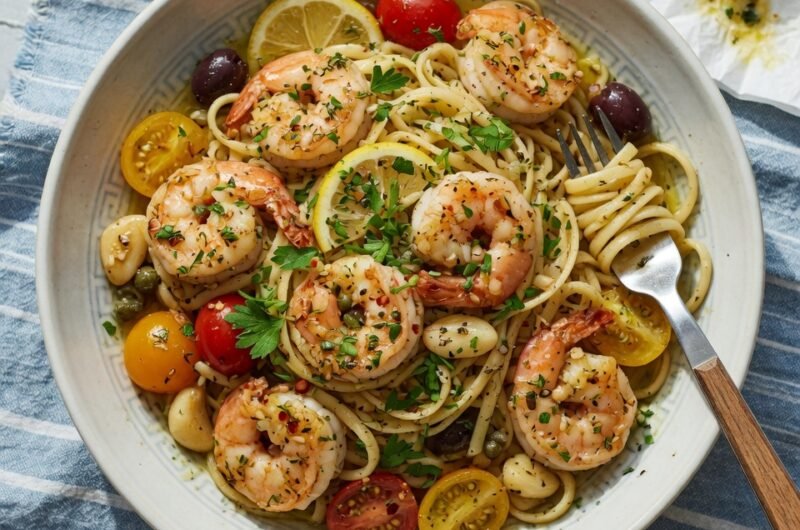
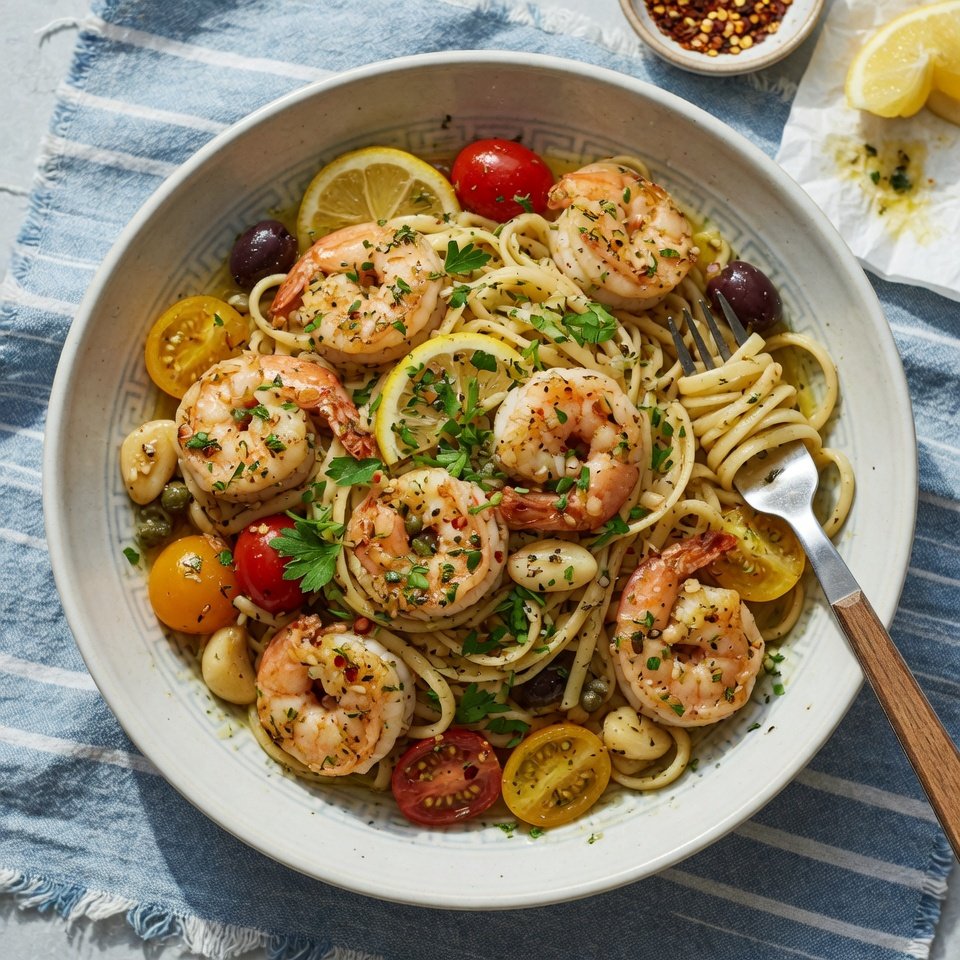
Shrimp Pasta
Ingredients
Method
- Cook the pasta. Bring a large pot of water to a boil. Once boiling, salt generously and add the spaghetti. Cook according to package to al dente (about 9 minutes). Reserve a half cup of the starchy pasta cooking water before draining.
- Meanwhile, cook the shrimp. In a large pan, heat 1 tablespoon olive oil over medium-high heat. When the oil shimmers, add the shrimp. Cook until pink on both sides, 2-3 minutes per side. Transfer the shrimp to a side plate for now.
- Saute the aromatics. Add little more olive oil to the pan, if needed. Reduce the heat to medium-low. Add the onion, garlic, oregano and red pepper flakes (I used Aleppo-style pepper). Cook for 2 minutes, stirring constantly. Add the wine and scrape up any pieces of garlic and onions. Cook the wine for 1 minute to reduce, then add the lemon zest and juice.
- Combine. Add the chopped parsley, tomatoes, and a pinch of salt and pepper. Toss about for about 30 to 40 seconds, then add the cooked pasta to the pan. Toss to coat, adding a splash of the reserved pasta water if needed to make a glossy sauce.
- Finish and serve. Toss in the cooked shrimp and allow to warm through briefly, about 30 seconds. Remove the pasta from heat. Sprinkle with grated parmesan cheese and more red pepper flakes or Aleppo pepper. Serve immediately!
Notes
- For perfectly cooked shrimp, look for them to turn a bright pink color and curl slightly; they should not be rubbery, which indicates overcooking.
- To prevent your sauce from breaking, make sure to add the reserved pasta water gradually; this helps to emulsify the sauce and keeps it silky.
- If you don’t have spaghetti, any long pasta like linguine or fettuccine works well, but avoid using short pasta shapes, as they won’t hold the sauce as effectively.
- For a quick flavor boost, consider adding a splash of lemon juice or a sprinkle of fresh herbs right before serving to brighten the dish.
- This dish can be stored in the fridge for up to three days; reheat gently on the stovetop with a splash of olive oil or broth to prevent drying out.
Garlic-slicked shrimp, briny tomatoes, and a splash of white wine come together in a pan sauce that clings to every noodle—dinner is served in under 30 minutes.
📋 In This Article
- Introduction
- Why This Mediterranean Garlic Shrimp Pasta Recipe Works
- Ingredients for the Perfect Mediterranean Garlic Shrimp Pasta
- Step-by-Step Instructions: How to Make Mediterranean Garlic Shrimp Pasta
- Common Mistakes to Avoid
- Variations & Substitutions
- Storage & Reheating Tips
- Pro Tips for Next-Level Mediterranean Garlic Shrimp Pasta
- Frequently Asked Questions (FAQ)
- Serving Suggestions
- Conclusion
Introduction
There is a specific kind of magic that happens when garlic hits hot olive oil. It’s the foundation of so much great cooking, but nowhere is it more celebrated than in this Mediterranean Garlic Shrimp Pasta. This isn’t just a weeknight throw-together; it is a study in the power of high-heat searing and emulsification. You get succulent shrimp, a hit of acid from lemon, and the deep savory notes of fond left behind in the pan.
I’ve spent years testing pasta recipes, and the failure point is almost always the sauce. Or rather, the lack of one. Too often, shrimp pasta turns into a dry bowl of noodles with seafood on top. Here, we use the starchy pasta water and the rendered oils from the shrimp to create a glossy, velvety coating that binds the garlic, white wine, and tomatoes together. It’s fast, yes, but the technique is solid. Greek Orzo Pasta Salad with Feta & Olives: Fresh, Bright, & Easy.
Why This Mediterranean Garlic Shrimp Pasta Recipe Works
Speed is the obvious selling point, but the real victory here is texture. We treat the shrimp and the pasta as two separate entities that meet at the very end. This prevents the shrimp from overcooking in the boiling water or steaming to a gray, rubbery mess while the pasta finishes.
By searing the shrimp first and removing them, we build a base of flavor—specifically the fond (those browned bits stuck to the pan) that packs an umami punch. Deglazing with white wine lifts that flavor right back into the sauce. Finally, using the reserved pasta water is the trick that turns oil and liquid into a cohesive, restaurant-quality sauce. The starch in the water acts as an emulsifier, forcing the oil and cooking liquid to hold hands rather than separate.
Ingredients for the Perfect Mediterranean Garlic Shrimp Pasta
Pasta & Protein
- Pasta: 3/4 pound of spaghetti or linguine. Look for bronze-die cut pasta if possible; the rougher surface texture grabs onto the sauce better.
- Shrimp: 1 pound of large shrimp, peeled and deveined. Thaw them completely if frozen, and for the love of flavor, pat them very dry.
Aromatics & Produce
- Garlic: 5 cloves, finely minced. Don’t use a garlic press here; you want distinct pieces that can toast in the oil.
- Red Onion: 1/2 onion, chopped. It offers a sweetness that balances the briny shrimp.
- Lemon: Zest and juice of 1 lemon. The zest contains the essential oils, while the juice adds the necessary acid.
- Tomatoes: 2-3 vine-ripe tomatoes, diced. They break down slightly to create little pockets of sweetness.
- Parsley: 1 cup of fresh parsley, chopped. It’s not just garnish; it adds a fresh, herbal bite that cuts through the oil.
Pantry Staples
- White Wine: 1 cup of dry white wine (like Pinot Grigio). If you won’t drink it, don’t cook with it.
- Oregano: 1 teaspoon of dried oregano. It stands up to the heat better than fresh herbs at this stage.
- Red Pepper Flakes: 1/2 teaspoon of red pepper flakes (or Aleppo pepper for a fruitier, less aggressive heat).
- Olive Oil: High-quality extra virgin.
- Kosher Salt and freshly cracked black pepper.
Optional Additions
- Feta Cheese: 1/2 cup crumbled, for a salty finish.
- Pine Nuts: 1/4 cup toasted, for a crunchy texture contrast.
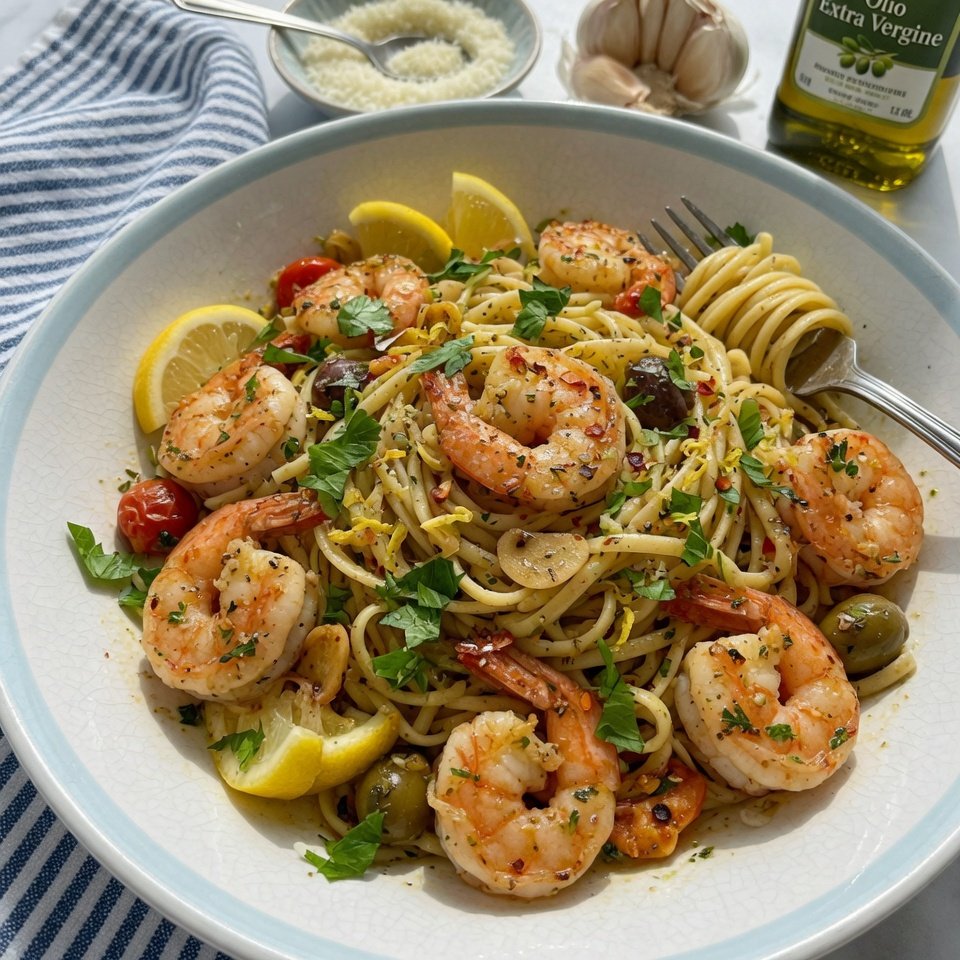
Step-by-Step Instructions: How to Make Mediterranean Garlic Shrimp Pasta
Step 1: The Mise en Place
This recipe moves fast, so prep everything before you turn on the stove. Peel and devein the shrimp, ensuring they are thoroughly dried with paper towels—moisture is the enemy of a good sear. Mince the garlic, chop the red onion, zest and juice the lemon, and dice the tomatoes. Have your parsley chopped and your wine measured.
Step 2: Boil the Pasta
In a large pot, bring heavily salted water to a boil. It should taste like a seasoned soup. Add the spaghetti and cook until al dente, usually 1-2 minutes less than the package instructions. Before draining, reserve a full 1/2 cup of the starchy pasta water. This liquid gold is essential for the sauce. Drain the pasta and set aside.
Step 3: Sear the Shrimp
Heat 1 tablespoon of olive oil in a large skillet over medium-high heat until it shimmers. Add the shrimp in a single layer. Do not crowd the pan; if they are touching, they will steam rather than sear. Cook until pink and opaque, about 2-3 minutes per side. We are looking for a golden-brown crust here. Remove the shrimp from the skillet and set aside.
Step 4: Build the Aromatic Base
Reduce the heat to medium-low. Add a touch more olive oil if the pan looks dry. Add the red onion, minced garlic, dried oregano, and red pepper flakes. Sauté for about 2 minutes. Watch the garlic closely—it should be fragrant and pale gold, not brown or black. Burnt garlic is irreversibly bitter.
Step 5: Deglaze and Reduce
Pour in the cup of dry white wine. Use a wooden spoon to scrape up the browned bits from the bottom of the pan. This is deglazing, and it dissolves the fond into the sauce. Let the wine reduce for about 1 minute to cook off the harsh alcohol, then stir in the lemon zest and lemon juice.
Step 6: Emulsify the Sauce
Add the diced tomatoes and a pinch of salt. Toss in the drained pasta. Now, add a splash of the reserved pasta water. Toss vigorously with tongs. The agitation helps the starch in the water mix with the oil to create a creamy, emulsified sauce that clings to the noodles. Add more pasta water if it looks dry.
Step 7: Finish and Serve
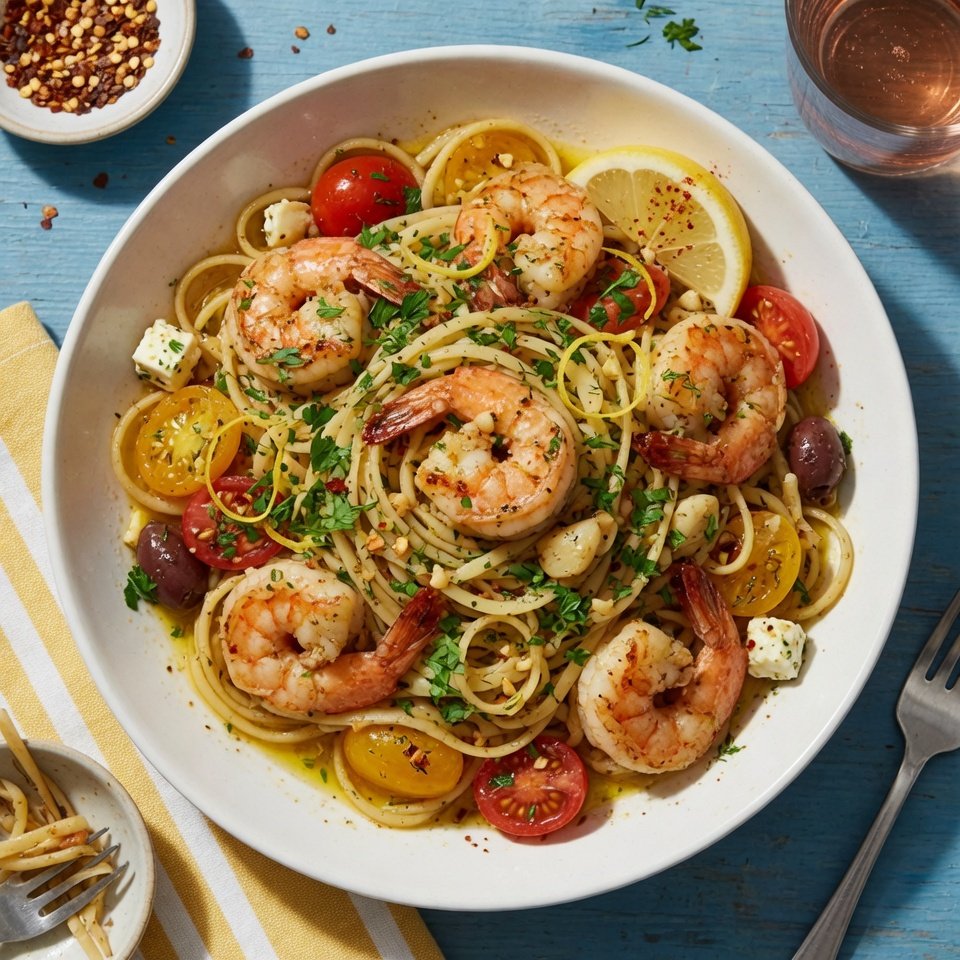
Gently fold the seared shrimp back into the pasta just to warm them through—about 30 seconds. Remove from heat immediately. Sprinkle with the fresh parsley and optional feta cheese. Serve straight from the skillet. Bright and Flavorful Lemon Garlic Shrimp Orzo.
⚠️ Common Mistakes to Avoid
Even simple recipes have pitfalls. The most common error in Mediterranean Garlic Shrimp Pasta is overcooking the protein. Shrimp go from succulent to rubbery in seconds. Because they continue cooking via carryover heat, remove them from the pan while they are just done.
Another mistake is under-salting the pasta water. This is your only chance to season the actual structure of the pasta. If the water isn’t salty, the dish will taste flat no matter how much sauce you add. Finally, never drain the pasta without saving the water. Without that starch, your sauce will slide off the noodles and pool at the bottom of the bowl.
Variations & Substitutions
Customize Your Mediterranean Shrimp Pasta
This recipe is a template, not a law.
- Pasta Types: Whole wheat linguine adds a nutty, earthy flavor, while gluten-free pasta works well if you monitor the cooking time closely. For a lighter dish, zucchini noodles can be tossed in at the very end just to warm through.
- Protein Swaps: Scallops are a luxurious substitute, but they need a hard sear. Chicken works too, but requires a longer cook time—cut it into bite-sized pieces to ensure it cooks through quickly.
- Vegetable Add-ins: Wilted spinach or ribbons of zucchini can be added with the tomatoes for extra greens.
- Spicy Kick: Double the red pepper flakes or add a dash of cayenne pepper if you like heat.
- Vegetarian Adaptation: Swap the shrimp for canned chickpeas or hearty mushrooms like cremini, which offer a similar umami depth.
Storage & Reheating Tips
Leftovers can be tricky with seafood pasta. Store the dish in an airtight container in the refrigerator for up to 3 days. However, know that the shrimp will firm up further in the cold.
When reheating, avoid the microwave if possible. It blasts the shrimp with uneven heat, turning them rubbery. Instead, place the pasta in a skillet over medium-low heat. Add a splash of water or olive oil to loosen the sauce, and toss gently until just warmed through. Gentle heat is the key to preserving the texture.
💡 Pro Tips for Next-Level Mediterranean Garlic Shrimp Pasta
To take this from good to great, dry your shrimp aggressively. I lay them out on paper towels and press another layer on top. Water on the surface of the shrimp turns to steam, killing your chance of a good sear.
Also, think about your pan choice. A stainless steel or cast iron skillet is better than non-stick here. You want the shrimp to stick slightly—that “sticking” is the fond forming, which is pure flavor. A non-stick pan makes it harder to develop that browned base for the sauce. And finally, use a microplane for the lemon zest. You want fine, airy shreds that melt into the sauce, not chunky strips that get stuck in your teeth. Indulge in Creamy Tuscan Chicken Pasta Tonight.
Frequently Asked Questions (FAQ)
+Why is my shrimp rubbery?
Rubbery shrimp is almost always the result of overcooking. Shrimp cook very quickly—usually 2-3 minutes per side is plenty. They are done the moment they turn opaque and form a “C” shape. If they curl into a tight “O”, they are overcooked.
+Can I use frozen shrimp?
Yes, frozen shrimp are often fresher than “fresh” shrimp at the counter because they are frozen immediately on the boat. Just thaw them completely before cooking. I usually put the sealed bag in a bowl of cold water for 20 minutes to speed this up.
+What can I use instead of white wine?
If you prefer not to cook with wine, vegetable broth is the best substitute. To mimic the acidity of the wine, add an extra squeeze of lemon juice or a splash of white wine vinegar.
+How do I know when the pasta is al dente?
The best way is to taste it. Al dente means “to the tooth”—the pasta should be tender but still offer a slight resistance in the center. It shouldn’t be crunchy or hard, but it shouldn’t be mushy either.
+Can I make this dish spicy?
Absolutely. Increase the red pepper flakes to 1 teaspoon, or add a diced serrano pepper along with the garlic for a fresh, sharp heat.
+Is this recipe healthy?
This dish is rich in lean protein from the shrimp and healthy fats from the olive oil. To lower the carbohydrate count, you can use zucchini noodles or a legume-based pasta.
Serving Suggestions
This pasta stands well on its own, but a few sides can round out the meal. A simple green salad with a sharp vinaigrette cuts through the richness of the olive oil. Crusty bread is non-negotiable for mopping up the extra sauce. If you are entertaining, start with a mezze platter of olives and hummus to set the Mediterranean tone.
Conclusion
This Mediterranean Garlic Shrimp Pasta proves that you don’t need a pantry full of ingredients or hours of free time to create a meal that feels special. It relies on high-heat technique and quality ingredients to do the heavy lifting. The result is a dish that is bright, savory, and deeply satisfying. Whether it’s a Tuesday night rush or a casual dinner with friends, this recipe delivers exactly what you need: big flavor with minimal fuss.
Shrimp Pasta
Ingredients
Method
- Cook the pasta. Bring a large pot of water to a boil. Once boiling, salt generously and add the spaghetti. Cook according to package to al dente (about 9 minutes). Reserve a half cup of the starchy pasta cooking water before draining.
- Meanwhile, cook the shrimp. In a large pan, heat 1 tablespoon olive oil over medium-high heat. When the oil shimmers, add the shrimp. Cook until pink on both sides, 2-3 minutes per side. Transfer the shrimp to a side plate for now.
- Saute the aromatics. Add little more olive oil to the pan, if needed. Reduce the heat to medium-low. Add the onion, garlic, oregano and red pepper flakes (I used Aleppo-style pepper). Cook for 2 minutes, stirring constantly. Add the wine and scrape up any pieces of garlic and onions. Cook the wine for 1 minute to reduce, then add the lemon zest and juice.
- Combine. Add the chopped parsley, tomatoes, and a pinch of salt and pepper. Toss about for about 30 to 40 seconds, then add the cooked pasta to the pan. Toss to coat, adding a splash of the reserved pasta water if needed to make a glossy sauce.
- Finish and serve. Toss in the cooked shrimp and allow to warm through briefly, about 30 seconds. Remove the pasta from heat. Sprinkle with grated parmesan cheese and more red pepper flakes or Aleppo pepper. Serve immediately!
Notes
- For perfectly cooked shrimp, look for them to turn a bright pink color and curl slightly; they should not be rubbery, which indicates overcooking.
- To prevent your sauce from breaking, make sure to add the reserved pasta water gradually; this helps to emulsify the sauce and keeps it silky.
- If you don’t have spaghetti, any long pasta like linguine or fettuccine works well, but avoid using short pasta shapes, as they won’t hold the sauce as effectively.
- For a quick flavor boost, consider adding a splash of lemon juice or a sprinkle of fresh herbs right before serving to brighten the dish.
- This dish can be stored in the fridge for up to three days; reheat gently on the stovetop with a splash of olive oil or broth to prevent drying out.