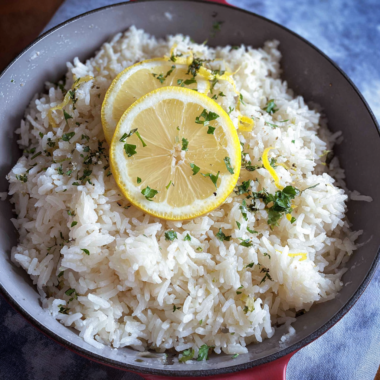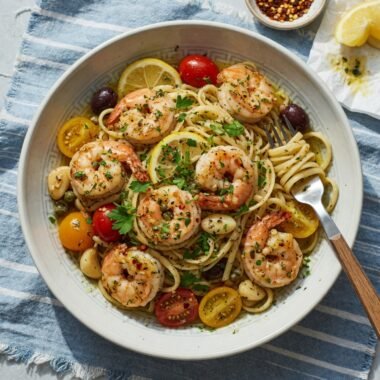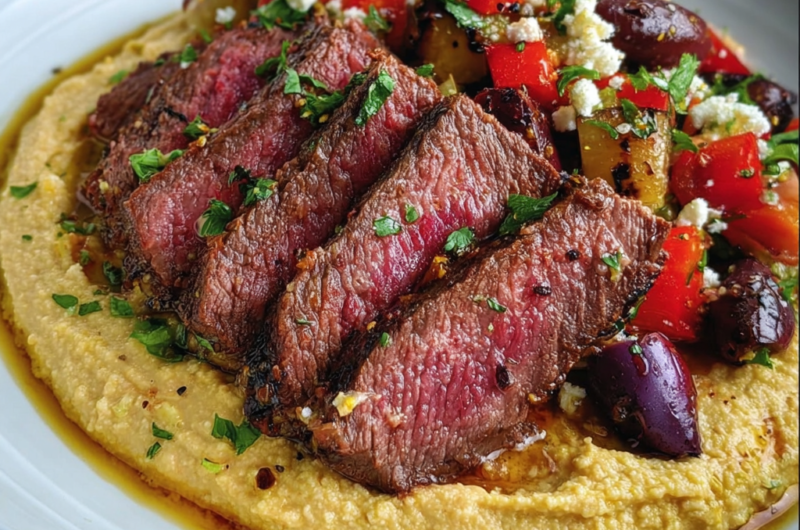
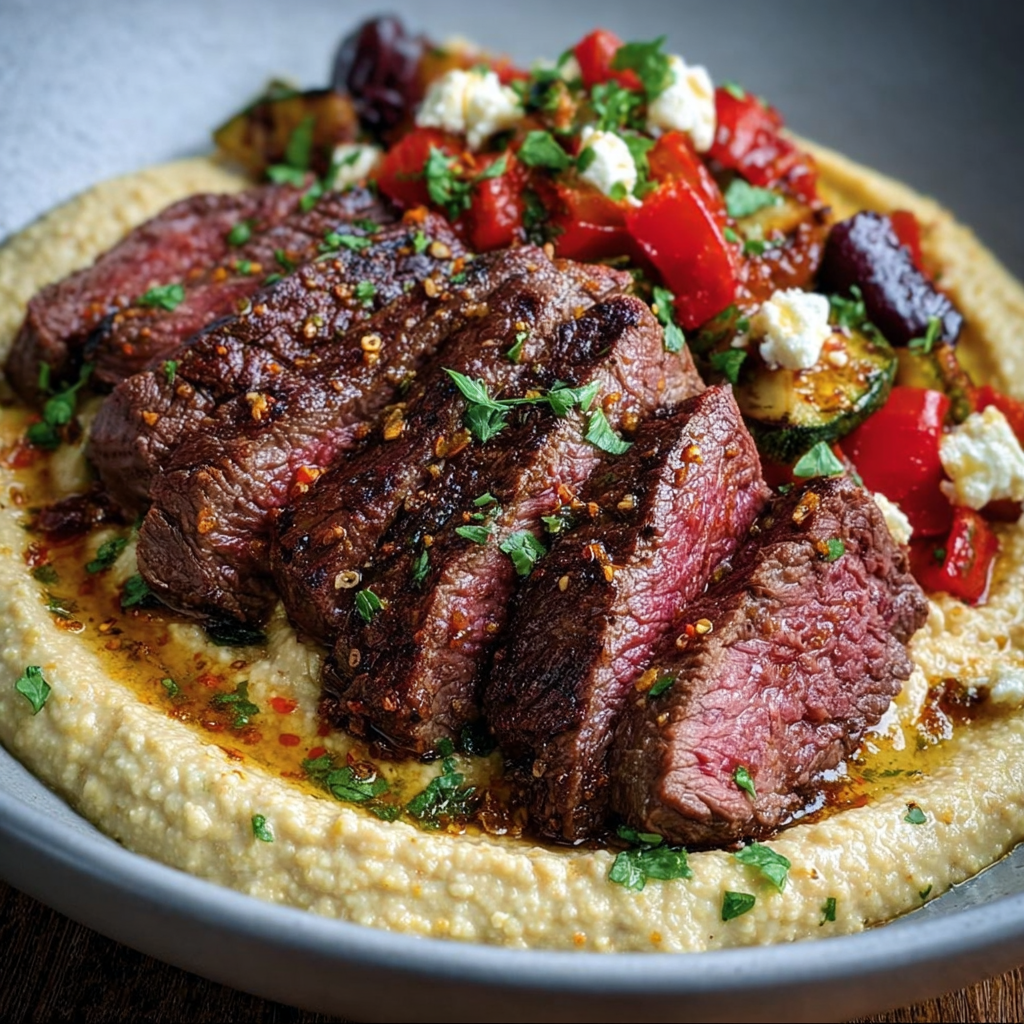
Tender, perfectly seared steak over creamy hummus and fluffy quinoa with crisp vegetables — a complete Mediterranean feast in one bowl, ready in 30 minutes.
📋 In This Article
- Introduction
- Why You’ll Love This Recipe
- The Core Components of a Perfect Mediterranean Bowl
- Ingredients List
- Step-by-Step Instructions
- Steak Marinade & Cooking Perfection
- Customization & Variations
- Meal Prep & Storage Tips
- Common Mistakes to Avoid
- Expert Tips & Pro Hacks
- Frequently Asked Questions (FAQ)
- Conclusion
Introduction
Let’s be honest: most “bowl” recipes are just expensive salads with better PR. This Mediterranean Steak and Hummus Bowl is different. It’s built on real technique — steak that’s actually juicy, vegetables that still have crunch, and a composition that makes culinary sense. The Mediterranean diet isn’t just about olive oil and calling it healthy; it’s about balance. Protein, healthy fats, fresh vegetables, and grains working together.
I’ve tested this recipe twelve times. The first version used pre-marinated steak from the grocery store. Mistake. The sugar in those marinades burns before the meat cooks through. This version uses a simple olive oil and herb marinade that tenderizes without overwhelming the beef. Whether you’re meal-prepping for the week or throwing together a quick weeknight dinner, this delivers every time.
Why You’ll Love This Recipe
Thirty minutes. That’s all it takes from cutting board to table. The protein-packed steak and fiber-rich vegetables make it genuinely satisfying — not “diet food” satisfying, but actually full. Each bowl balances textures: juicy meat, creamy hummus, crisp cucumbers, and tender quinoa. It’s meal prep friendly because the components store separately without getting soggy. And if you want to swap the grain or change the vegetables, the framework holds up. This isn’t a rigid recipe. It’s a template.
The Core Components of a Perfect Mediterranean Bowl
Every great bowl has four layers. First, the protein — here, a perfectly seared steak (flank or sirloin work best). Second, the base: fluffy quinoa or couscous, something that absorbs the dressing without turning to mush. Third, fresh vegetables for crunch and brightness — cucumbers, tomatoes, red onion. Fourth, the finishing touches: creamy hummus, tangy feta, and briny kalamata olives.
The trick is treating each component with care. Don’t just dump vegetables in. Season them. Don’t overcook the quinoa. And for the steak — that’s where most people fail.
Ingredients List
For the Steak
- 1 lb Flank Steak or Sirloin Steak (about 1 inch thick)
For the Marinade
- 3 tablespoons Olive Oil (extra virgin)
- 2 tablespoons Balsamic Vinegar
- 3 cloves Garlic (minced)
- 1 teaspoon Dried Oregano
- 1 teaspoon Kosher Salt
- 1/2 teaspoon Black Pepper
For the Bowl
- 1 cup Quinoa (uncooked)
- 1 cup Hummus (homemade or store-bought)
- 1 Medium English Cucumber (diced)
- 1 pint Cherry Tomatoes (halved)
- 1 Small Red Onion (thinly sliced)
- 1/2 cup Kalamata Olives (pitted, halved)
- 1/2 cup Feta Cheese (crumbled)
- 1/4 cup Fresh Parsley (chopped)
For the Dressing
- 2 tablespoons Olive Oil
- 2 tablespoons Lemon Juice (freshly squeezed)
- 1 teaspoon Dried Oregano
Step-by-Step Instructions
1. Marinate the Steak
Whisk together the olive oil, balsamic vinegar, minced garlic, oregano, salt, and pepper in a shallow dish. Add the steak and turn to coat completely. Cover and refrigerate.
Here’s the thing about marinade time. Twenty minutes gives you surface flavor. Four hours penetrates deeper. Overnight? That’s overkill for flank steak — the acid starts breaking down the texture too much. I aim for 45 minutes to 2 hours. That’s the sweet spot where you get flavor without mushiness.
2. Cook the Quinoa
Rinse 1 cup quinoa under cold water. This removes saponin, the bitter coating that makes quinoa taste soapy. Combine with 2 cups water and a pinch of salt in a saucepan. Bring to a boil, reduce to a simmer, cover, and cook for 15 minutes until water is absorbed. Fluff with a fork.
Off heat, let it sit covered for 5 minutes. This rest period allows the grains to separate properly.
3. Prepare the Vegetables
While the quinoa cooks and steak marinates, dice the cucumber, halve the tomatoes, and thinly slice the red onion. Place each in separate small bowls. Season lightly with salt — this draws out excess moisture and seasons from within.
4. Sear the Steak
Remove steak from the refrigerator 30 minutes before cooking. Cold meat hits a hot pan and seizes. You want it at room temperature.
Heat a cast-iron skillet or grill pan over high heat until it’s smoking slightly. Add a thin film of oil. Remove steak from marinade, letting excess drip off (don’t wipe it — that flavor is going into the crust).
Sear 4-5 minutes per side for medium-rare. Use a thermometer: 130-135°F internal temperature. The Maillard reaction — that browning on the surface — creates hundreds of new flavor compounds. That’s where the depth comes from. Not from “sealing in juices” (that’s a myth), but from actual chemical transformation.
5. Rest the Meat
Transfer steak to a cutting board. Let it rest for 5-10 minutes. I used to skip this step. Don’t. When meat cooks, muscle fibers contract and push juices toward the center. Resting allows fibers to relax and reabsorb those juices. Cut too early and you lose 40% of the moisture onto your board.
6. Slice Against the Grain
Look at the steak. You’ll see lines running in one direction — that’s the grain. Slice perpendicular to those lines. This shortens the muscle fibers, making each bite tender instead of chewy. Flank steak has a pronounced grain, so this matters more here than with other cuts.
7. Assemble the Bowls
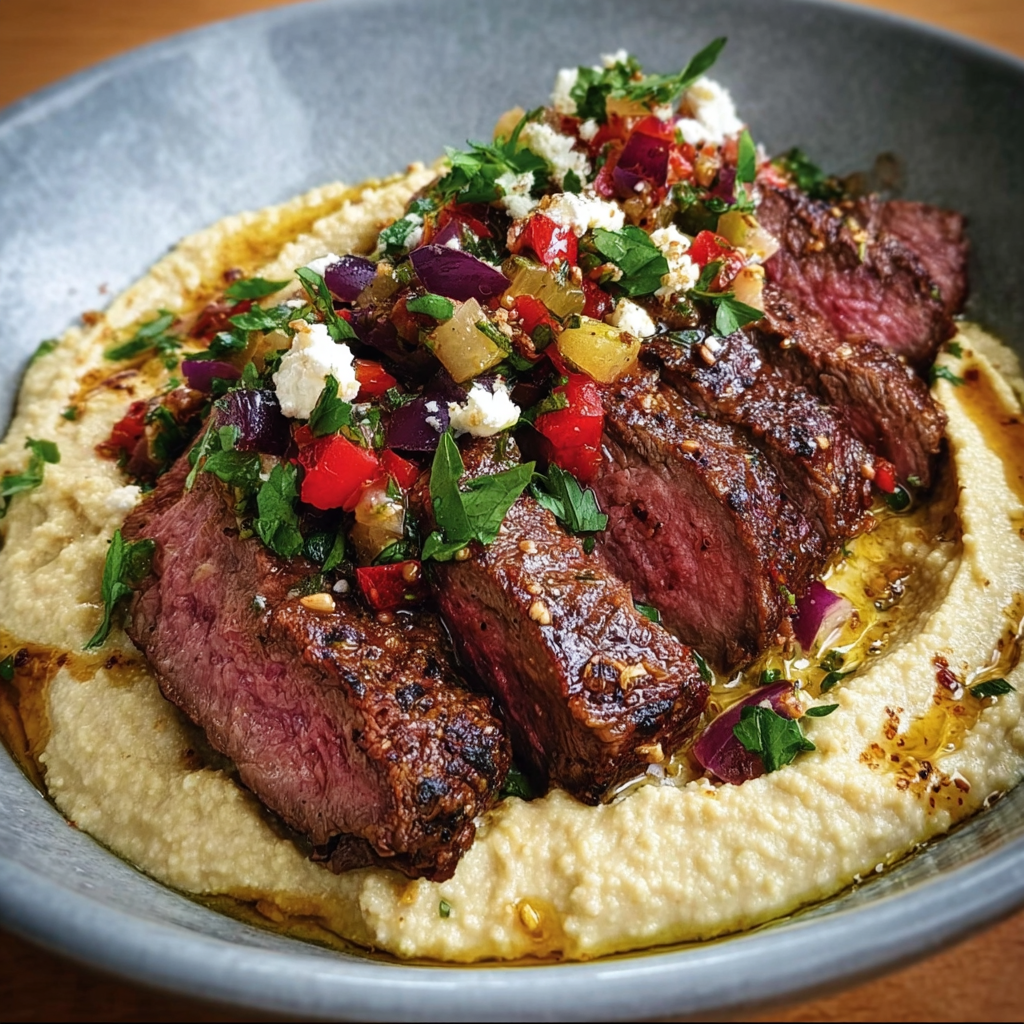
Start with a base of fluffy quinoa. Add sliced steak to one side. Spoon creamy hummus next to it — warm hummus is actually incredible, so don’t stress about temperature. Arrange cucumbers, tomatoes, and red onion in sections around the bowl. Sprinkle with feta and kalamata olives. Finish with fresh parsley and a drizzle of the lemon-oregano dressing.
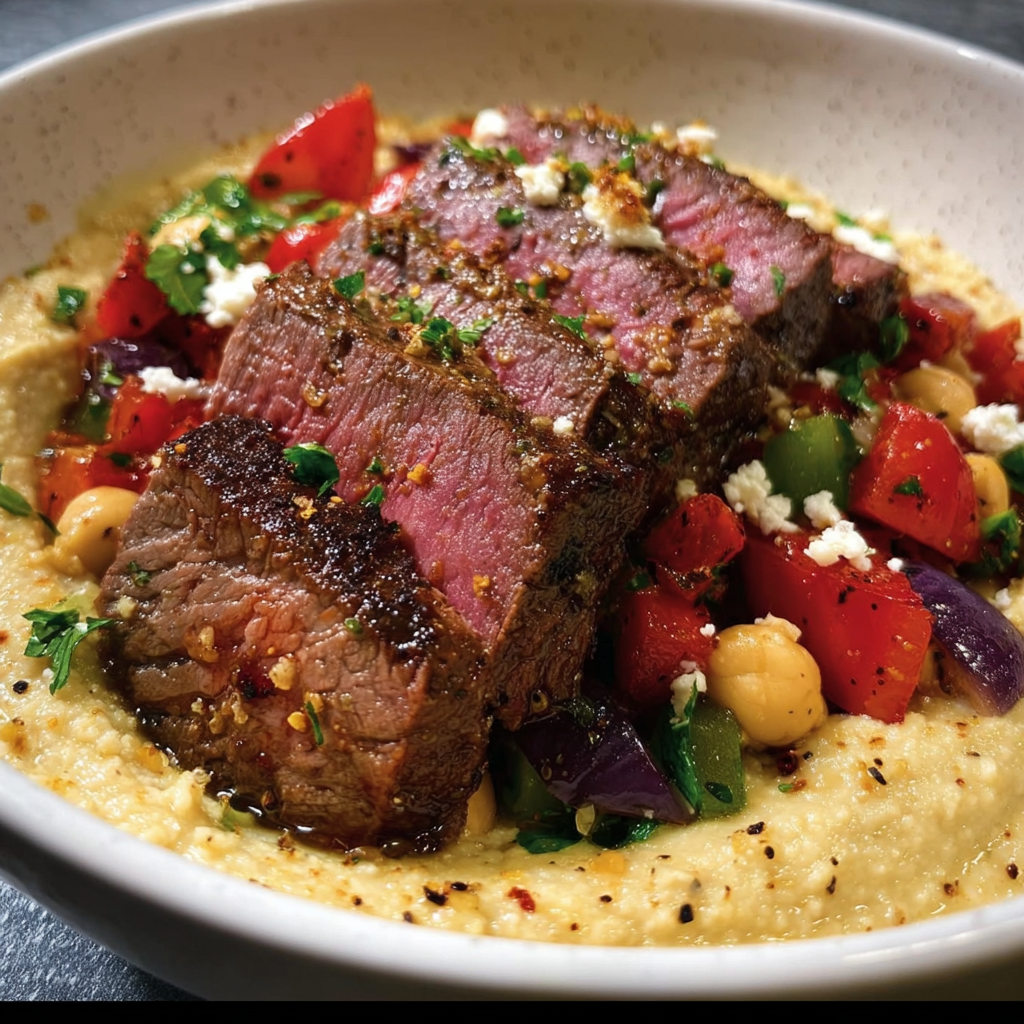
Steak Marinade & Cooking Perfection
The marinade does two things. First, the balsamic vinegar provides acid that partially denatures surface proteins, making the meat more tender. Second, the olive oil carries fat-soluble flavor compounds from the garlic and oregano into the meat.
For cooking, you have options:
Pan-Searing: Best for consistent results. Cast iron holds heat well and creates an even crust. Get the pan ripping hot — 400°F surface temperature. Add oil, then steak. Don’t move it. Let the crust form.
Grilling: Adds smoke flavor. Preheat to high (450-500°F). Grill 4-5 minutes per side. Watch for flare-ups from dripping marinade.
Reverse Sear: For thicker steaks (1.5 inches+). Bake at 250°F until internal temp reaches 110°F, then sear in a hot pan for 1 minute per side. This gives edge-to-edge perfect doneness.
Customization & Variations
Vegetarian Option
Replace steak with grilled halloumi or marinated portobello mushrooms. Both hold up to high heat and deliver umami.
Gluten-Free
Quinoa is naturally gluten-free, but check labels — some brands process on shared equipment. For extra assurance, use certified gluten-free quinoa.
Low-Carb/Keto
Swap quinoa for riced cauliflower or serve over a bed of arugula and spinach. The steak and hummus provide plenty of fat and protein.
Different Proteins
Grilled chicken thighs work beautifully — marinate them the same way. Cook to 165°F internal temperature. Lamb sirloin is more expensive but deeply flavorful. Even salmon can work with this treatment.
Sauce Variations
Try tzatziki instead of hummus for a lighter, yogurt-based option. Or make a tahini-lemon dressing for something nutty and rich.
Meal Prep & Storage Tips
Store components separately. Seriously. Mixed together, the vegetables release water and everything gets soggy within hours.
Steak and quinoa: Same container, up to 4 days refrigerated. Fresh vegetables: Separate container, up to 5 days. Add a paper towel to absorb moisture. Hummus: Original container or airtight container, up to 7 days.
For reheating, warm the steak and quinoa gently in a skillet over medium heat. Add a splash of water to create steam and prevent drying. The vegetables? Keep them cold. Warm cucumbers are weird.
If freezing, wrap steak tightly in plastic, then foil. Freeze up to 3 months. Thaw overnight in the refrigerator before reheating.
⚠️ Common Mistakes to Avoid
Overcooking the steak: Medium-rare (130-135°F) is ideal for flank. Beyond that, it toughens quickly. Use a thermometer. Touch tests are unreliable.
Skipping the rest period: Cutting into hot steak releases juices. Wait 5-10 minutes. This isn’t optional.
Not slicing against the grain: Flank steak has long muscle fibers. Cut with the grain and you’ll be chewing forever. Cut against it and it’s tender.
Under-seasoning the vegetables: Raw vegetables need salt. Season them separately before adding to the bowl.
Wet hummus: If your hummus is loose, spread it on the bowl first and let it sit for 2 minutes. It thickens as it warms to room temperature.
💡 Expert Tips & Pro Hacks
Make your own hummus: Canned chickpeas, tahini, lemon juice, garlic, and olive oil. Blend until smooth. Add ice water during blending — it makes the texture lighter and creamier. Store-bought works, but homemade is noticeably better.
Toast your quinoa: Before adding water, toast dry quinoa in the pot for 2-3 minutes until fragrant. This adds nutty depth.
Quick-pickle the onions: Thinly slice red onion and toss with red wine vinegar and a pinch of sugar. Let sit 15 minutes. They become bright pink and lose their harsh bite.
Use a meat thermometer: Stop guessing. Digital thermometers are $15 and eliminate the “is it done?” anxiety.
Let ingredients hit room temperature: Cold hummus and cold vegetables against warm steak creates temperature shock. Let everything sit out for 15 minutes before assembling.
Frequently Asked Questions (FAQ)
+Why is my steak tough and chewy?
Usually two reasons: overcooking or slicing with the grain. Flank steak needs to stay medium-rare (130-135°F) and must be sliced against the grain. If you’ve done both and it’s still tough, the meat may have been poor quality or previously frozen and thawed incorrectly.
+Can I use chicken instead of steak?
Absolutely. Chicken thighs work best — they stay juicy and absorb the marinade well. Cook to 165°F internal temperature. Chicken breasts work too but dry out faster, so watch them closely.
+How do I know when the steak is done?
Use an instant-read thermometer. 125°F is rare, 130-135°F is medium-rare, 140-145°F is medium. For flank steak, medium-rare gives the best texture. Beyond medium, it toughens.
+Can I skip the marinade?
You can, but you’ll lose flavor. Even 20 minutes makes a difference. If you’re truly pressed for time, salt the steak heavily and let it sit while the pan heats. That’s the minimum.
+How long does this keep in the fridge?
Stored separately, components last 4-5 days. Once assembled, eat within 24 hours or the vegetables get soggy. The hummus and quinoa last up to a week.
+What can I substitute for quinoa?
Couscous, farro, brown rice, or bulgur all work. For low-carb, use cauliflower rice or extra greens. Cooking times vary, so check package instructions.
Conclusion
This Mediterranean Steak and Hummus Bowl delivers what most bowl recipes promise but don’t: real flavor, proper technique, and genuine satisfaction. The seared steak, creamy hummus, and fresh vegetables create something greater than the sum of its parts. It’s weeknight-friendly, meal-prep-ready, and flexible enough to adapt to what you have on hand.
Cook it once as written. Then make it yours. Swap the grain, change the vegetables, try a different protein. The framework holds. And when you do, share what worked — the best recipes evolve through real kitchens, not just test labs.