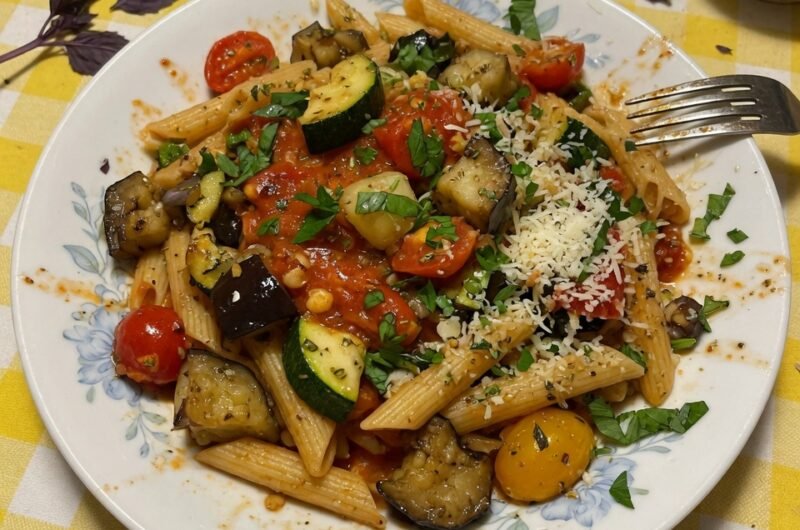
A vibrant, plant-forward dinner where roasted vegetables meet perfectly al dente pasta — ready in 35 minutes with minimal hands-on time.
📋 In This Article
Introduction
Here’s the thing about Mediterranean Veggie Pasta with Zucchini and Eggplant: it sounds simple, and it is — but that simplicity is exactly where the magic happens. When you roast zucchini and eggplant at high heat, something transformative occurs. The exterior browns and caramelizes, developing deep, savory notes that raw or sautéed vegetables simply can’t achieve. This isn’t just “cooking vegetables.” It’s building a foundation of flavor that carries the entire dish.
I’ve made versions of this pasta countless times, and the difference between a mediocre version and a memorable one comes down to a few specific choices. How you cut the vegetables matters. How much space you give them on the baking sheet matters. And whether you reserve that starchy pasta water — well, that’s the difference between a sauce that clings lovingly to every piece of penne and one that pools sadly at the bottom of your bowl.
This Mediterranean Veggie Pasta works because it respects each ingredient. The eggplant becomes creamy and substantial. The zucchini offers a tender, slightly sweet counterpoint. A simple tomato sauce, built from aromatics and good olive oil, ties everything together without overwhelming the vegetables you’ve taken the time to roast properly. It’s weeknight food that doesn’t taste like weeknight food.
Why This Mediterranean Veggie Pasta Works
The brilliance of this dish lies in its technique. Roasting zucchini and eggplant at 400°F triggers the Maillard reaction — the same chemical process that gives browned meat its depth — creating hundreds of new flavor compounds on the surface. This is why roasted vegetables taste fundamentally different from raw or even sautéed ones. The high heat concentrates natural sugars while developing complex, savory notes.
Beyond flavor, this recipe delivers genuine nutritional density. Eggplant brings nasunin, an antioxidant that protects cell membranes, while zucchini contributes vitamin C and manganese. Combined with olive oil and fresh herbs, you’re getting a meal that aligns with the Mediterranean diet’s core principles: plant-forward, healthy fats, minimal processing.
And yes, it makes a difference. The dish adapts easily to vegan diets — simply skip the cheese or use a plant-based alternative. For meal prep, it holds beautifully for days, and the flavors actually improve as they meld. Total hands-on time? About 15 minutes. The oven does the rest.
Key Ingredients
Key Ingredients for Mediterranean Veggie Pasta with Zucchini and Eggplant
Produce
- Eggplant: The backbone of this dish. Look for medium-sized eggplants with smooth, glossy skin and no soft spots. The flesh should feel firm but yield slightly to pressure.
- Zucchini: Medium zucchinis work best — they’re tender without being watery. Avoid the baseball bat-sized ones from the garden; they’re often bitter and seedy.
- Tomatoes: Roma or plum tomatoes are ideal here. Their lower water content and higher flesh-to-seed ratio create a sauce with real body.
- Onion: One medium onion, diced. Yellow or white both work; yellow adds slightly more sweetness.
- Garlic: Fresh cloves, minced. Don’t even think about the jarred stuff.
Pantry Staples
- Pasta: Short shapes like penne, fusilli, or rigatoni catch the roasted vegetables in their nooks. Whole grain adds nuttiness; gluten-free works perfectly.
- Olive oil: Extra virgin, always. You’re not just cooking with it — you’re seasoning with it.
- Salt and Pepper: Kosher salt and freshly cracked black pepper. Non-negotiable for proper seasoning.
Flavor Boosters
- Fresh Herbs: Basil, oregano, or parsley — whatever looks brightest at the store. They’re not garnish here; they’re essential.
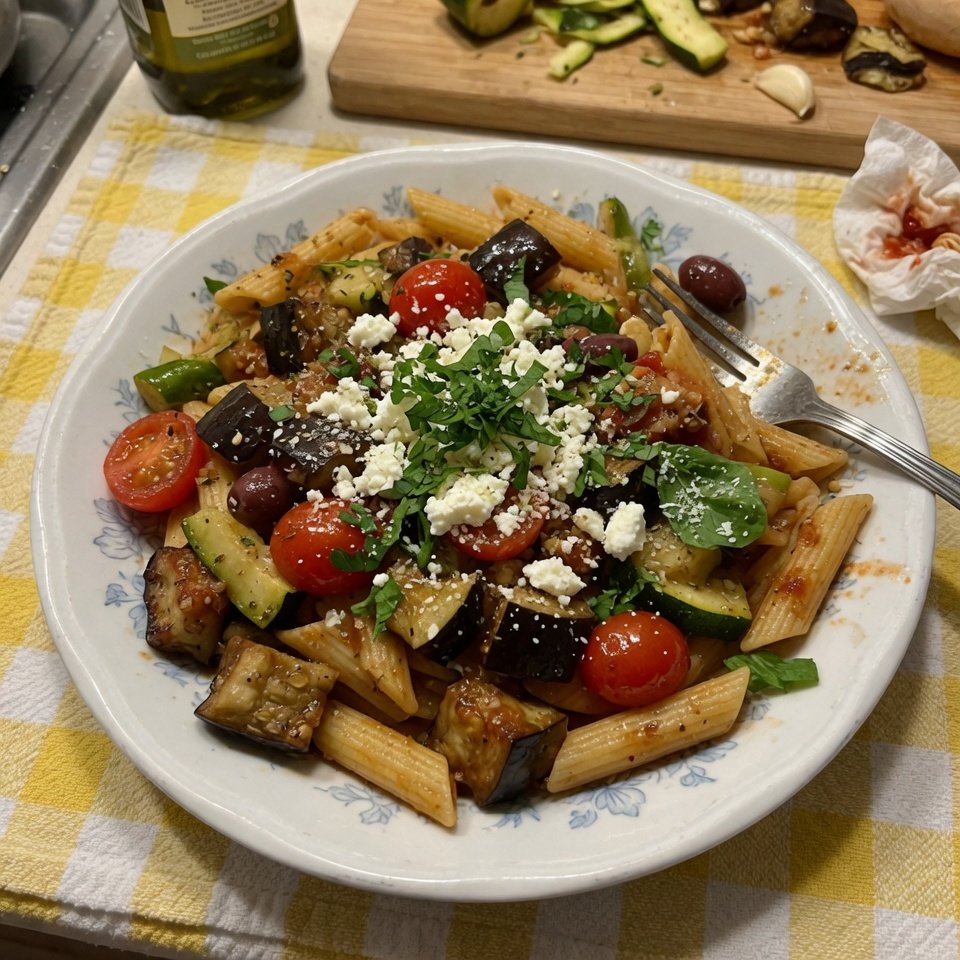
- Feta cheese: Optional but transformative. The salty tang cuts through the sweetness of roasted vegetables.
- Olives: Kalamata or Castelvetrano add briny depth if you want to push the Mediterranean profile further.
Step-by-Step Instructions
Step-by-Step Instructions for Mediterranean Veggie Pasta with Zucchini and Eggplant
- Roast the Vegetables: Preheat your oven to 400°F (200°C). Cut the zucchini and eggplant into ¾-inch cubes — not too small, or they’ll shrivel; not too large, or they won’t cook through evenly. Spread them across two baking sheets (overcrowding is the enemy of caramelization; steam builds when vegetables are packed too tight, and you’ll end up with soggy results). Drizzle each sheet with 1.5 tablespoons of olive oil, season generously with 1 teaspoon of salt and freshly cracked pepper, then toss with your hands to coat evenly. Roast for 25 to 30 minutes, flipping once halfway through, until the edges are deeply golden and the interiors are tender.
- Build the Sauce: While the vegetables roast, warm 1 tablespoon of olive oil in a large, deep skillet over medium heat. Add one diced onion and cook, stirring occasionally, until translucent and just beginning to brown at the edges — about 5 minutes. Add 2 minced garlic cloves and cook for 30 seconds until fragrant, being careful not to let them scorch. Pour in 4 chopped Roma tomatoes (or 1.5 cups of plain tomato sauce), stir to combine, and reduce heat to medium-low. Let the sauce simmer gently, uncovered, for 10 to 15 minutes to concentrate flavors.
- Cook the Pasta: Bring a large pot of water to a rolling boil. Add 1 tablespoon of salt — the water should taste distinctly seasoned, almost like a mild broth. Add 14 oz (400g) of dry pasta and cook until al dente according to package directions. Before draining, reserve 1 cup of the starchy cooking water. This liquid is pure gold for adjusting sauce consistency later.
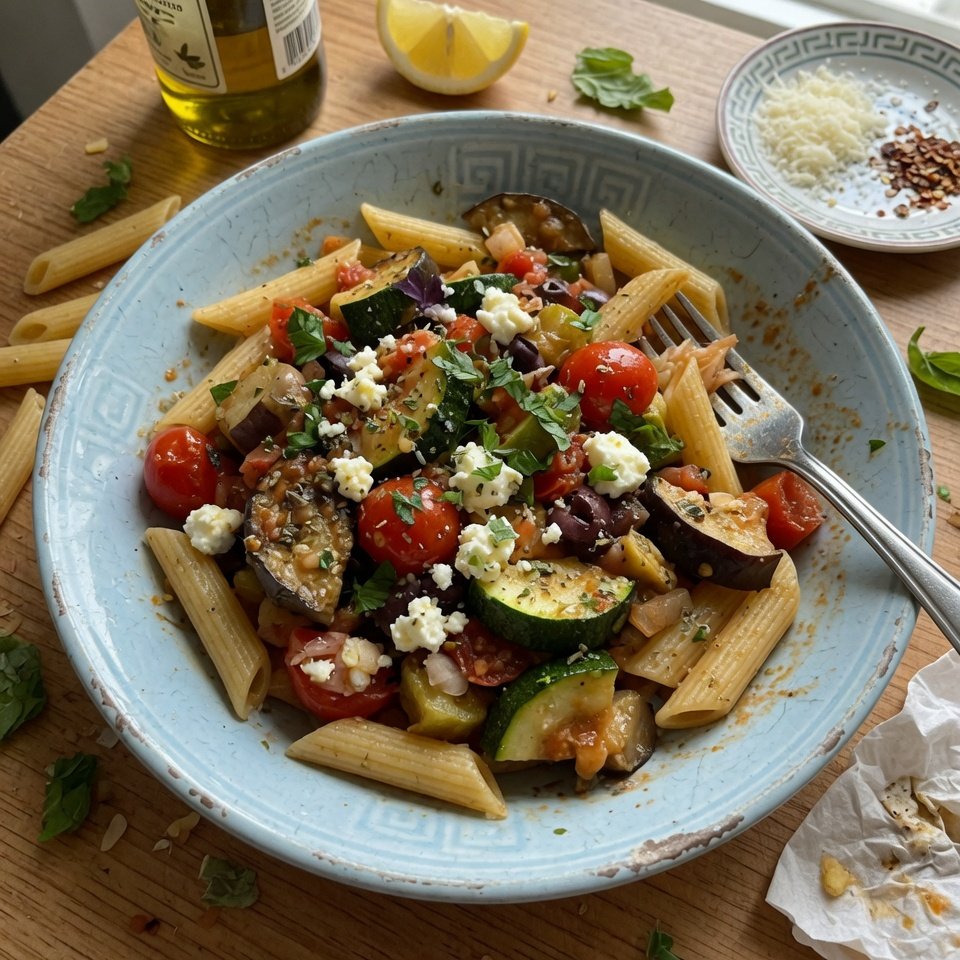
- Bring It Together: Transfer the roasted vegetables into the simmering sauce, folding gently to coat without breaking them down. Drain the pasta and add it directly to the skillet (or return to your pot if the skillet is too small). Pour in half the sauce, toss to combine, then assess the consistency. Too thick? Add pasta water a quarter-cup at a time, tossing vigorously — the starch helps emulsify the oil and tomato into a silky coating rather than a separated mess. Serve in shallow bowls, spooning remaining sauce over each portion and finishing with fresh herbs and crumbled feta if using.
⚠️ Common Mistakes to Avoid
Even straightforward recipes have pitfalls. Here’s what trips people up with Mediterranean Veggie Pasta — and how to avoid them.
Overcrowding the roasting pan. This is the single most common error. When vegetables are packed too close together, they steam instead of roast. Steam = soggy, pale, bland. Caramelization requires dry heat and space. Use two baking sheets if necessary, and give each piece of zucchini and eggplant room to breathe. The browning is where the flavor lives.
Overcooking the pasta. Al dente isn’t a suggestion — it’s essential. Pasta cooked past the point of resistance turns mushy when combined with sauce, and there’s no recovering from it. Start testing two minutes before the package suggests. The pasta should have a slight chew at the center, a tiny core of resistance. It will continue cooking slightly in the sauce.
Under-seasoning. Fear of salt produces bland food. Season the vegetables before roasting. Salt the pasta water generously. Taste the sauce and adjust. Each layer needs its own seasoning — you can’t fix it all at the end.
Skipping the pasta water. That starchy liquid is the difference between a sauce that clings and one that slides off. The starch molecules help bind the oil and tomato solids into a cohesive, velvety emulsion. Don’t dump it down the drain.
Recipe Variations & Customizations
This dish welcomes adaptation. Here’s how to make it yours without losing what makes it work.
Make it vegan: Skip the feta entirely, or substitute with a plant-based alternative. For a cheesy finish without dairy, toss in nutritional yeast — it adds umami depth and a surprisingly creamy quality. A tablespoon of miso paste, whisked into the sauce, provides similar savory richness.
Boost the protein: A can of drained chickpeas or white beans stirred in at the end transforms this from side dish to main. The beans absorb the sauce and add satisfying heft. For a non-vegetarian version, crumbled Italian sausage or anchovies contribute depth.
Go gluten-free: Use your favorite gluten-free pasta, or swap the pasta entirely for zoodles (zucchini noodles). If going the zoodle route, sauté them briefly — 2 minutes max — just until wilted. Overcooked zucchini noodles turn to mush.
Change the flavor profile: Red pepper flakes add heat. Sun-dried tomatoes contribute concentrated umami. A splash of balsamic vinegar at the end brightens everything. Capers or chopped olives push the Mediterranean notes further. Make it yours.
Serving Suggestions & Pairings
This pasta stands well on its own, but the right accompaniments turn dinner into a meal.
A simple green salad — arugula with lemon and olive oil, maybe — provides bitterness that balances the sweetness of roasted vegetables. Crusty bread isn’t just traditional; it’s practical. Use it to swipe up every bit of sauce.
For wine, think acidity. A Sauvignon Blanc or Pinot Grigio cuts through the oil and cleanses the palate between bites. If you prefer red, something light — a Chianti or Valpolicella — won’t overwhelm the vegetables.
Dessert should refresh. Citrus sorbet or a simple fruit salad with mint ends things on a light note, matching the Mediterranean spirit of the meal.
Storage & Reheating Tips
Refrigeration: Cool leftovers to room temperature, then transfer to airtight containers. The pasta will keep for 3 to 5 days refrigerated. The flavors deepen over time — I often prefer day-two leftovers to the fresh version.
Freezing: This dish freezes reasonably well. Portion into freezer-safe containers, leaving space for expansion, and freeze for up to 2 months. Thaw overnight in the refrigerator before reheating. Note: The texture of the vegetables will soften slightly upon freezing and reheating.
Reheating: For best results, use the stovetop. Place the pasta in a skillet over medium-low heat, add a splash of water or olive oil to loosen the sauce, and warm gently, tossing occasionally, until heated through — about 5 to 7 minutes. Microwave works in a pinch: heat in 1-minute intervals, stirring between each, until warm. Add that splash of liquid regardless of method; dried-out leftover pasta is a tragedy.
💡 Pro Tips for Perfect Pasta
Salt your pasta water like you mean it. The standard is 1 tablespoon per pound of pasta, and it matters. This is your only chance to season the pasta itself — the interior of each piece. Under-salted water produces bland pasta that no amount of sauce can fix.
Reserve more pasta water than you think you need. A full cup. Maybe more. This starchy, seasoned liquid is the key to a silky, cohesive sauce. When you add it to the pasta and sauce, toss vigorously. The mechanical action helps the starch molecules bind the oil and tomato solids together in an emulsification that clings rather than separates.
Roast at high heat and give vegetables space. 400°F is the sweet spot. Lower temperatures extend cooking time without improving browning. And those vegetables need room — crowded pans steam instead of roast. Steam produces pale, soggy results. Caramelization requires dry heat and direct contact with the hot pan surface.
Taste and adjust at every stage. Season the vegetables before roasting. Taste the sauce before combining. Sample the final dish. Each layer needs its own seasoning. Waiting until the end to add salt guarantees uneven flavor.
Finish with something bright. A squeeze of lemon juice or a splash of vinegar at the end wakes up flavors that have mellowed during cooking. Acid is the counterpart to the richness of roasted vegetables and olive oil. Don’t skip it.
Frequently Asked Questions (FAQ)
+Do I really need to salt eggplant before cooking?
Modern eggplant varieties are bred to be less bitter than their predecessors, so salting is no longer strictly necessary. However, if you’re using large or older eggplants, salting for 30 minutes and patting dry can help draw out excess moisture and prevent sogginess. For the medium-sized eggplants called for in this recipe, you can skip this step entirely.
+Why are my roasted vegetables soggy instead of caramelized?
Soggy vegetables usually mean one of two things: the pan was overcrowded, or the oven temperature was too low. Vegetables need space for hot air to circulate and evaporate moisture. Use two baking sheets if necessary, and make sure your oven is fully preheated to 400°F before the vegetables go in.
+Can I make this Mediterranean Veggie Pasta ahead of time?
The components can be prepared separately in advance. Roast the vegetables up to 3 days ahead and store refrigerated. The sauce can be made a day ahead and reheated. Cook the pasta fresh when you’re ready to serve — reheated pasta never quite matches the texture of freshly cooked.
+What’s the best pasta shape for this recipe?
Short, sturdy shapes work best. Penne, fusilli, rigatoni, or gemelli all catch the roasted vegetables in their curves and hollows. Long pasta like spaghetti is harder to eat with chunky vegetable pieces and tends to separate from the sauce.
+How do I know when the eggplant is properly roasted?
Properly roasted eggplant should be deeply golden on the exterior, with the flesh tender enough to yield easily to a fork but not collapsing. If the outside is browning faster than the inside cooks, you’ve cut the pieces too large. Aim for consistent ¾-inch cubes for even cooking.
+Can I use canned tomatoes instead of fresh?
Absolutely. A 14-ounce can of crushed or diced tomatoes works perfectly well. Canned tomatoes are often more consistent than fresh, especially outside of peak tomato season. Adjust seasoning as needed, since canned tomatoes sometimes contain added salt.
Conclusion
Mediterranean Veggie Pasta with Zucchini and Eggplant represents what weeknight cooking should be: straightforward, deeply satisfying, and built on techniques that actually work. The caramelization from roasting transforms humble vegetables into something worth savoring. The starchy pasta water creates a sauce that clings rather than pools. Each component plays its role.
This isn’t complicated food. But simple doesn’t mean thoughtless. The choices — cutting vegetables uniformly, giving them space to roast, salting pasta water generously, reserving that liquid gold — separate a good dish from a forgettable one. Make it once, and you’ll understand why these details matter.
Serve it with a simple salad and some bread. Open a bottle of something crisp. It’s dinner. And it’s exactly right.