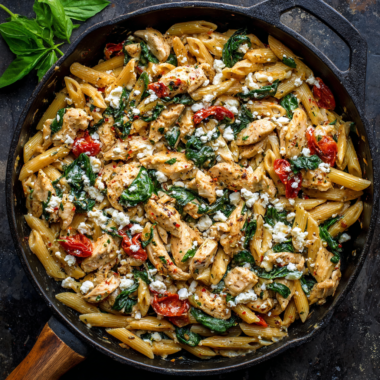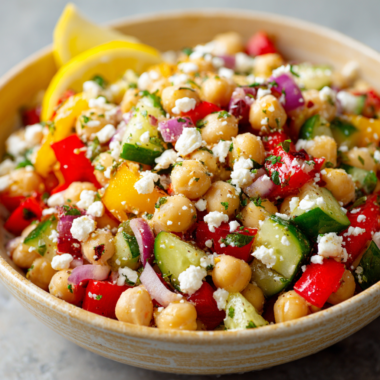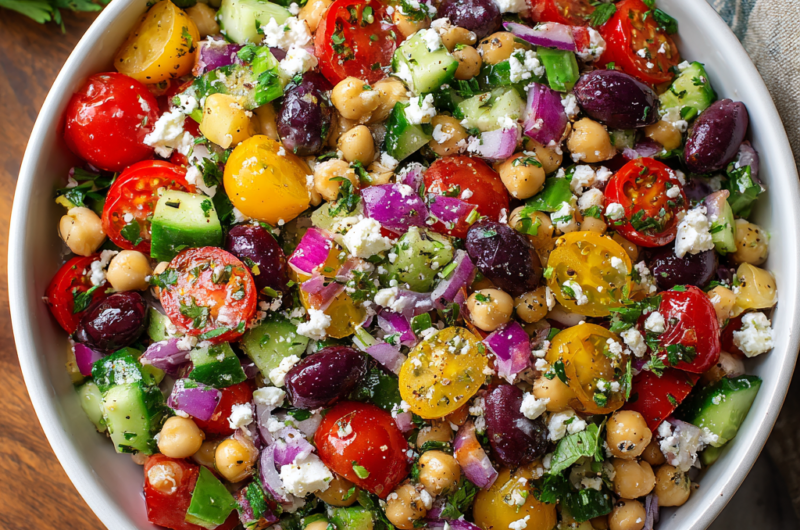
A crisp, no-cook lunch with cucumbers, chickpeas, feta, and a zesty oregano vinaigrette — ready in 15 minutes and sturdy enough to last all week.
📋 In This Article
- Introduction
- Why It Works: The Science of a Perfect Daily Salad
- The Core Ingredients: Crafting Your Mediterranean Chopped Salad
- The Star Dressing: Our Signature Oregano Vinaigrette
- Step-by-Step: Assembling Your Chopped Mediterranean Salad
- Common Mistakes to Avoid for Salad Perfection
- Variations & Customizations: Never Get Bored!
- Meal Prep & Storage: Keep It Fresh All Week Long
- Pro Tips & Hacks for the Ultimate Chopped Salad Experience
- Frequently Asked Questions About This Chopped Mediterranean Salad
Introduction
Let me be clear: I’m not exaggerating when I say I eat this Chopped Mediterranean Salad almost every single day. It’s that rare combination of actually delicious and genuinely convenient — a lunch that survives the fridge, doesn’t require reheating, and still tastes vibrant on day four. The secret lies in choosing ingredients that hold their texture. Cucumbers stay crisp. Chickpeas bring substance. Feta cheese adds the salty punch that makes you want another bite. And the oregano vinaigrette? It emulsifies beautifully, coating every piece without pooling at the bottom of the container.
This isn’t one of those sad desk salads. You know the type — wilted greens, mealy tomatoes, dressing that separated hours ago. This is the opposite. Every component is chosen specifically because it gets better as it sits, absorbing the olive oil and red wine vinegar without turning to mush.
Why It Works: The Science of a Perfect Daily Salad
Here’s the thing. Most salads fail because they ignore basic food science. Leafy greens wilt under acid. Tomatoes release moisture and turn everything soggy. The Chopped Mediterranean Salad solves this through smart ingredient selection and proper technique.
Chickpeas are the backbone here. They’re packed with both protein and dietary fiber — about 15 grams of protein and 12 grams of fiber per cup — which means they stabilize blood sugar and keep you full. That’s not marketing speak. That’s biology. The combination of protein, fiber, and healthy fats from olive oil creates sustained energy rather than the spike-and-crash you get from carb-heavy lunches.
The dressing matters more than you think. When you emulsify olive oil with red wine vinegar and Dijon mustard, you’re creating a temporary suspension where fat molecules surround water molecules. This does two things: it distributes flavor evenly, and it helps the dressing cling to vegetables rather than sliding off. I tested this side-by-side with a quickly whisked dressing — the emulsified version coated every piece uniformly, while the other pooled at the bottom within minutes.
Salt timing is crucial, too. If you salt your cucumbers and let them sit, osmosis pulls moisture out. That’s great if you want them pickled, but not ideal for a salad that needs to last. In this recipe, the salt comes through the dressing, applied right before eating or stored separately for meal prep.
The Core Ingredients: Crafting Your Mediterranean Chopped Salad
For the Vegetables
- 2 medium bell peppers — I use a mix of red and orange for color contrast, diced into 1/2-inch pieces. The sweetness balances the briny elements.
- 1/2 medium English cucumber — seeded varieties work best here since they contain fewer water pockets that can turn soggy.
- 1/2 small red onion — finely diced. If raw onion is too aggressive for you, soak the diced pieces in cold water for 10 minutes first.
- 1/2 head iceberg lettuce — roughly chopped. Yes, iceberg. It provides serious crunch and holds up remarkably well.
- 1 head radicchio — roughly chopped. The bitterness cuts through the richness of feta and dressing.
- 8 small pickled pepperoncinis — sliced. These bring a vinegary heat that permeates the whole salad.
For Protein and Hearty Elements
- 1 (15-ounce) can chickpeas — rinsed thoroughly and drained. The rinsing removes surface starch that can make beans gummy.
- 1/2 cup farro — cooked and cooled. This ancient grain adds a nutty chew that makes the salad feel like a real meal. Quinoa works too if you need gluten-free.
- 6 ounces feta cheese — cut into 1/2-inch cubes. Don’t crumble it — you want distinct, salty pockets throughout.
For the Oregano Vinaigrette
- 2 to 3 cloves garlic — minced finely. Let it sit for 10 minutes after mincing to allow allicin (the beneficial compound) to develop fully.
- 1/4 cup red wine vinegar — provides the sharp acid backbone.
- 1 tablespoon dried oregano — crush it between your palms before adding to release essential oils.
- 1 teaspoon kosher salt
- 1/2 teaspoon Dijon mustard — acts as the emulsifier that binds oil and vinegar.
- 1/2 cup extra-virgin olive oil — add slowly while whisking to build the emulsion.
- Freshly ground black pepper — to taste.
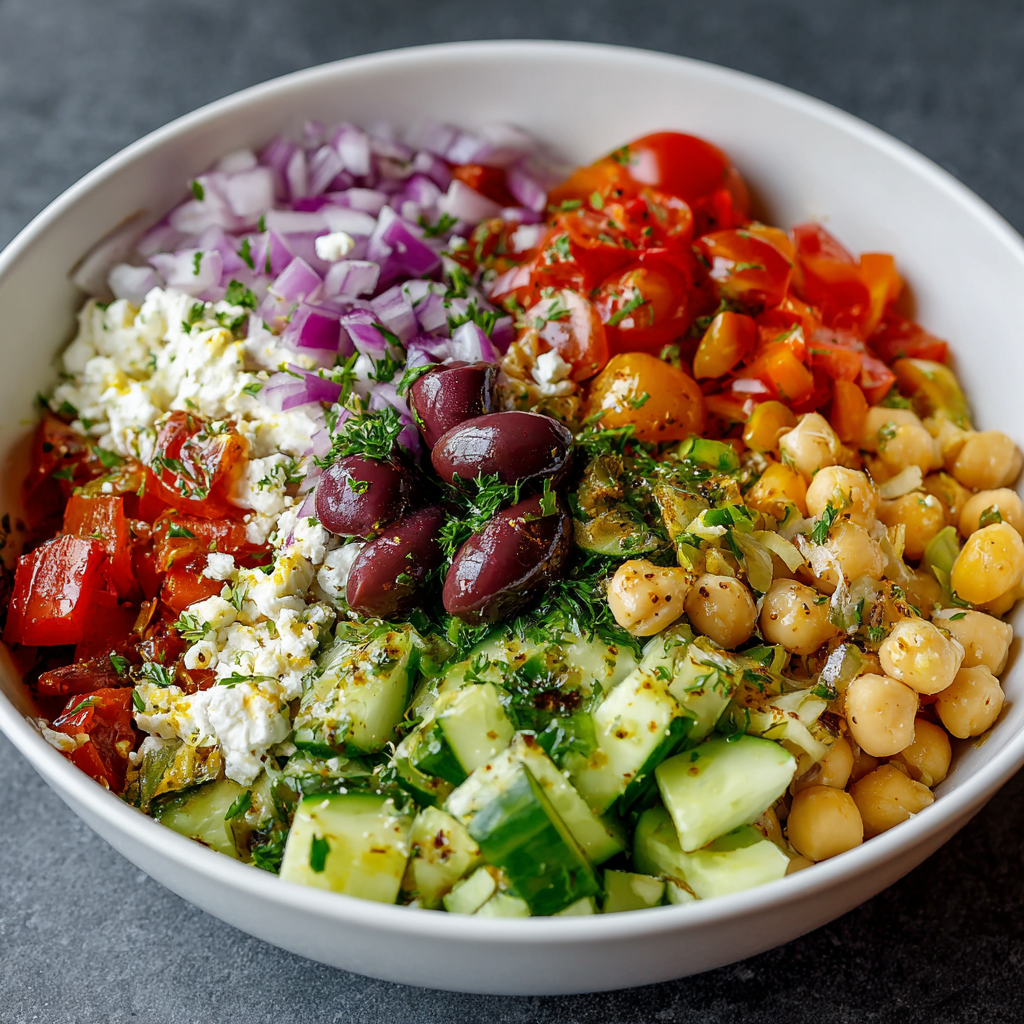
The Star Dressing: Our Signature Oregano Vinaigrette
This dressing is what separates a mediocre salad from one you actually crave. The oregano vinaigrette hits every note — acidic, salty, herbaceous, with just enough richness from the olive oil to carry the flavors.
Start with the garlic, oregano, salt, Dijon mustard, and red wine vinegar in a bowl. Whisk to combine. Now here’s the technique that matters: add the olive oil in a thin, steady stream while whisking constantly. You’re not just mixing — you’re creating an emulsion. The lecithin in the mustard helps stabilize this bond between oil and vinegar. Done correctly, the dressing will be creamy and opaque, not separated and watery.
Taste it. Too sharp? Add more oil. Too flat? Another splash of vinegar. I’ve made this dressing hundreds of times, and I still adjust slightly based on the specific vinegar and oil I’m using. The first time I rushed the oil addition, the dressing broke within an hour. Take the extra thirty seconds to do it right.
The dressing keeps for a week in the refrigerator. Bring it to room temperature and whisk again before using — cold oil solidifies and separates.
Step-by-Step: Assembling Your Chopped Mediterranean Salad
1. Prep the Vegetables
Wash and dry everything thoroughly. Excess moisture is the enemy of a good chopped salad. Use a sharp knife to dice the bell peppers, cucumbers, and red onion into uniform 1/2-inch pieces. Uniformity matters here — it ensures every forkful has the same ratio of ingredients and that flavors distribute evenly. Chop the iceberg lettuce and radicchio slightly larger, about 1-inch pieces, since they’ll compress slightly when tossed.
2. Prepare the Grain
If using farro, cook according to package directions, then spread on a baking sheet to cool completely. Warm grains will wilt the vegetables and cause the dressing to absorb unevenly. Quinoa, bulgur, or brown rice all work as alternatives with slightly different textures.
3. Make the Vinaigrette
Whisk together the garlic, oregano, salt, Dijon mustard, and red wine vinegar. Slowly drizzle in the olive oil while whisking continuously until emulsified and creamy. Set aside or store in a jar if prepping ahead.
4. Combine Everything
In a large bowl, combine the chopped vegetables, cooled farro, drained chickpeas, and cubed feta. Pour the dressing over and toss thoroughly. I use my hands for this — it’s the best way to ensure even coating without bruising delicate ingredients.
5. Serve or Store
Eat immediately, or portion into containers for the week. The flavors will meld and improve after a few hours in the refrigerator.
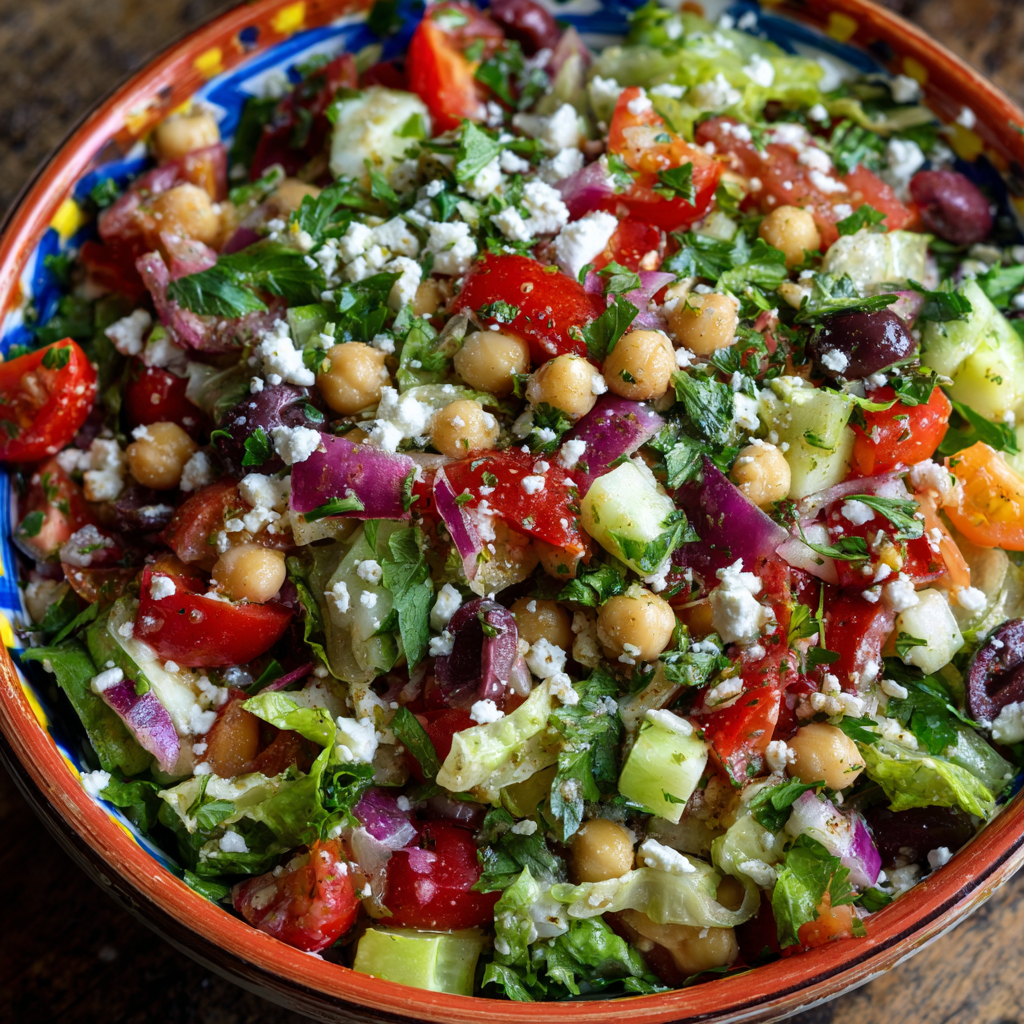
⚠️ Common Mistakes to Avoid for Salad Perfection
Adding dressing too early. This is the number one error. Acid breaks down cell walls in vegetables, drawing out water through osmosis. Within hours, you’ll have a puddle at the bottom of your container and limp vegetables. For meal prep, store dressing separately and add just before eating.
Uneven chopping. Large chunks of onion alongside tiny pieces of cucumber means some bites are overwhelming while others are bland. Take the extra minute to cut things uniformly. Your future self will thank you.
Using the wrong lettuce. Delicate greens like spring mix or butter lettuce wilt almost immediately under the weight of chickpeas, farro, and dressing. Iceberg and radicchio are structural — they maintain crunch for days.
Skipping the grain. Without farro or quinoa, this becomes a side salad. The grain adds bulk, texture, and slow-digesting carbohydrates that transform it into a complete lunch.
Rinsing chickpeas poorly. That thick liquid in the can is aquafaba — great for vegan meringue, terrible for salad. Rinse until the water runs completely clear, then drain well.
Variations & Customizations: Never Get Bored!
The Chopped Mediterranean Salad is a template, not a rulebook. Once you master the technique, the variations become endless.
Protein swaps: Grilled chicken breast, leftover salmon, or hard-boiled eggs all work beautifully. For a vegan version, double the chickpeas or add crispy roasted chickpeas for texture contrast.
Grain alternatives: Quinoa makes it gluten-free with a lighter texture. Bulgur cooks faster and has a pleasant chew. Brown rice works but is softer — add it just before serving to prevent it from breaking down.
Seasonal vegetables: In summer, add diced tomatoes and fresh parsley or mint. Fall calls for roasted eggplant or butternut squash. Winter? Massaged kale holds up beautifully and adds nutritional density.
Cheese options: Goat cheese is creamier and more tangy. Parmesan shavings add umami depth. For a dairy-free version, nutritional yeast provides a surprisingly cheesy flavor.
Dressing twists: A lemon-tahini dressing adds creaminess without dairy. A balsamic reduction brings sweetness and complexity. Just maintain the same oil-to-acid ratio for proper emulsification.
Meal Prep & Storage: Keep It Fresh All Week Long
This salad was designed for meal prep. The key is proper storage technique.
Store the dressed salad in an airtight container for up to four days. The vegetables will soften slightly but maintain their structure — that’s the magic of choosing sturdy ingredients like bell peppers, cucumbers, and iceberg lettuce.
For maximum freshness, store the feta cheese separately and add it just before eating. The salt in feta can draw moisture from vegetables over time.
If you’re prepping for five days, consider keeping the dressing separate for days four and five. The first few days, the salad benefits from marinating in the dressing. By day four, things can get a little too soft.
Glass containers work best — they don’t absorb odors or flavors, and you can see exactly what’s inside. Stackable containers with dividers are ideal if you want to keep components truly separate.
💡 Pro Tips & Hacks for the Ultimate Chopped Salad Experience
Quick-pickle the red onion. Before adding it to the salad, toss the diced red onion with a tablespoon of red wine vinegar and let sit for 15 minutes. This softens the harsh sulfur compounds while adding another layer of acid. The onions turn pink and mellow without losing their crunch.
Toast the farro. Before cooking, toast the dry farro in a dry pan for 3-4 minutes until fragrant. This triggers the Maillard reaction on the grain’s surface, creating nutty, toasty notes that permeate the entire salad. It’s a small step with outsized flavor impact.
Use a salad chopper. If you have one of those bowl-and-blade choppers, use it. Uniform pieces in a fraction of the time. Just don’t over-process — you want chopped vegetables, not a relish.
Add fresh herbs at the end. Parsley, mint, or dill brighten everything, but they’re delicate. Add them right before serving so they don’t blacken or wilt.
Let it sit. This salad improves after 30 minutes in the fridge. The flavors meld, the farro absorbs some dressing, and everything comes together. If you have the time, make it in the morning for lunch, or the night before.
Frequently Asked Questions About This Chopped Mediterranean Salad
+Can I make this salad ahead for meal prep?
Absolutely. The Chopped Mediterranean Salad is specifically designed for meal prep. Store it in airtight containers for up to four days. The sturdy vegetables like bell peppers, cucumbers, and iceberg lettuce hold their texture remarkably well, and the flavors actually improve as they meld.
+How do I keep my salad from getting soggy?
The key is choosing vegetables that resist moisture loss. Avoid tomatoes if you’re prepping ahead — they release water and turn everything soggy. Store feta cheese separately when possible, and add delicate herbs like parsley or mint just before eating. The oregano vinaigrette can be stored separately and added right before serving for maximum crunch.
+Can I substitute quinoa for farro?
Yes, quinoa is an excellent gluten-free alternative to farro. It has a lighter, fluffier texture and cooks faster — about 15 minutes versus 25-30 for farro. Both provide protein and fiber, though farro has a chewier bite that some people prefer in a chopped salad. Cook either grain completely and cool it before adding to prevent wilting.
+Is this Mediterranean chopped salad good for weight loss?
This salad is excellent for weight management. The combination of chickpeas (protein and fiber), farro (complex carbohydrates), and olive oil (healthy fats) creates a meal that’s satisfying and nutritionally balanced. One serving provides roughly 400-500 calories while keeping you full for hours. The high fiber content slows digestion and stabilizes blood sugar, preventing the hunger spikes that derail many diets.
+What can I use instead of feta cheese?
Goat cheese is the closest alternative — creamy, tangy, and equally Mediterranean. For a dairy-free option, avocado provides richness, or try a vegan feta made from tofu. Parmesan shavings work if you want something sharper and more savory. Each changes the character slightly, so choose based on your preference.
+Why does my vinaigrette keep separating?
The emulsion broke, usually because the olive oil was added too quickly or the mixture wasn’t whisked vigorously enough. The Dijon mustard acts as an emulsifier, but it needs time to surround the oil droplets. Add oil in a thin stream while whisking constantly. If it does separate, just whisk it again before using — the flavor remains the same.
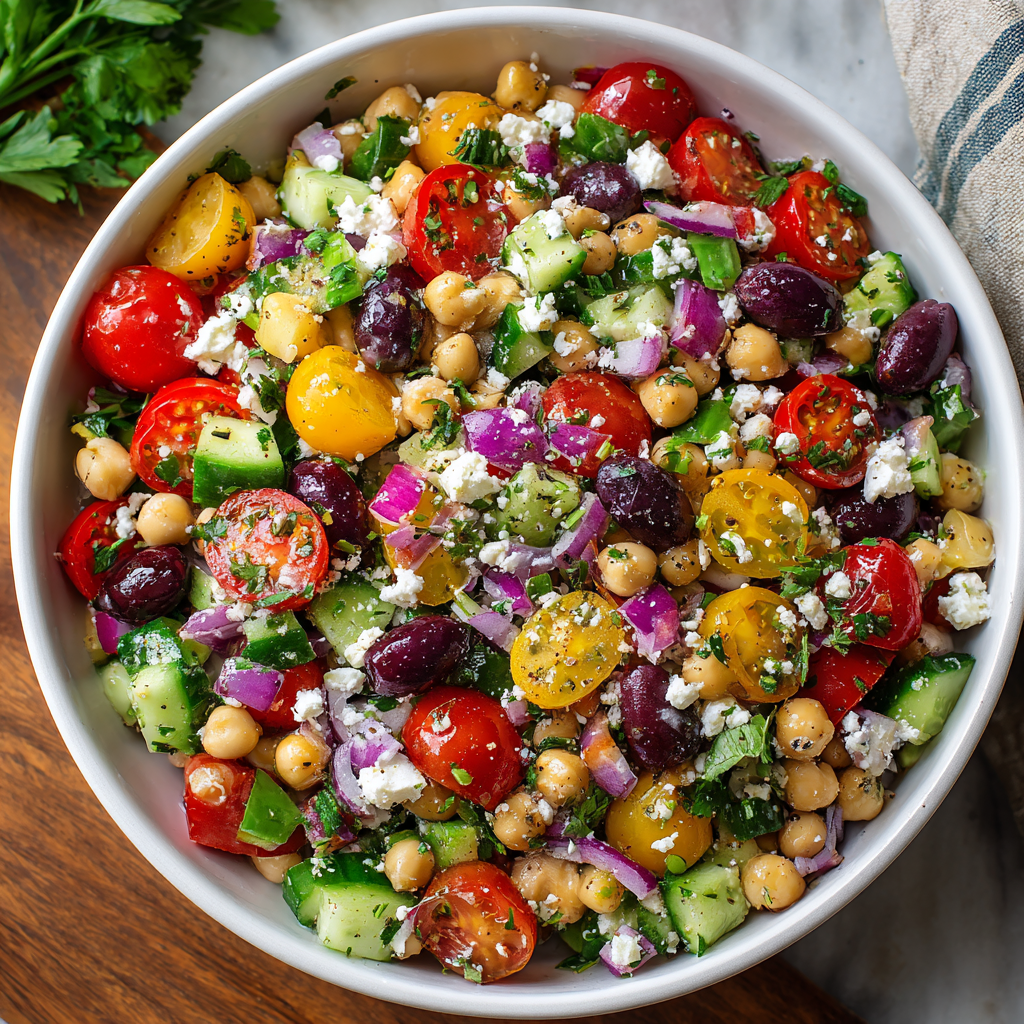
Mediterranean-Style Chopped Salad with Oregano Vinaigrette
Ingredients
Method
- Make the vinaigrette: Mince 2 large or 3 small cloves garlic and place in a large bowl. Add 1/4 cup red wine vinegar, 1 tablespoon dried oregano, 1 teaspoon kosher salt, 1/2 teaspoon Dijon mustard, and several grinds black pepper, and whisk to combine. While whisking constantly, slowly drizzle in 1/2 cup extra-virgin olive oil and continue whisking until emulsified. Pour half into an airtight container and transfer to the refrigerator. Set aside the bowl with the remaining vinaigrette.
- Make the salad: Place 1/2 cup farro in a fine-mesh strainer, rinse under cool running water, and set aside to drain. Bring 6 cups of water to a boil in a medium saucepan over medium-high heat. Stir in the farro and 1 teaspoon kosher salt. Boil until farro is tender but has a slight chew in the center, 10 to 15 minutes for pearled and 25 to 30 minutes for semi-pearled. Drain and return to the saucepan to cool.
- Prep the following ingredients, adding each one to the bowl of vinaigrette as you complete it: Core, seed, and dice 2 bell peppers (about 2 cups). Dice 2 large or 4 small celery stalks (about 1 cup). Dice 1/2 English cucumber (about 1 cup). Thinly slice 1/2 small red onion into half-moons. Slice 8 small pepperoncinis (about 1/4 cup). If needed, cut 6 ounces feta cheese into 1/2-inch cubes. Drain and rinse the can of chickpeas.
- Add the farro to the vinaigrette bowl and toss to combine. Taste and season with more salt as needed (likely about 1/2 teaspoon). If the salad is at all dry, drizzle with a bit of the reserved vinaigrette. Cover and store in the refrigerator.
- Core and chop 1/2 head of iceberg lettuce into thin strips (4 packed cups). Core and chop 1 head radicchio into thin strips (3 packed cups). Transfer both to a large airtight container, toss to combine, and refrigerate.
- When ready to eat, toss together equal amounts the chickpea mixture and lettuce mixture (heaping 1 cup of each). Drizzle with the reserved dressing, if desired.
- Recipe Notes
Notes
- For maximum flavor, let the chopped salad sit in the fridge for at least 30 minutes after mixing so the veggies and farro can absorb the oregano vinaigrette.
- If you want a creamier texture, consider using crumbled goat cheese instead of feta, which adds a tangy richness to the salad.
- To prevent the dressing from breaking, always whisk the olive oil in slowly while mixing to ensure a smooth emulsion.
- Store any leftover salad in an airtight container in the fridge for up to 3 days, but keep the lettuce separate until ready to serve to maintain its crispness.
- For a quicker prep, use pre-cooked farro or even quinoa, which cooks in about 15 minutes, saving you time without sacrificing nutrition.