Introduction
On a chilly day, nothing beats the warmth of a hearty beef stew. The combination of tender meat, vibrant vegetables, and a rich broth creates a dish that's not only satisfying but also deeply comforting. This recipe invites you to slow down and savor the process of cooking, allowing the flavors to meld beautifully over time.
Beef stew is an age-old dish that varies across cultures, yet its core remains enticingly similar. The beauty lies in its versatility; you can empty your fridge and use what you have, enhancing the dish to your taste. Gather your ingredients, maybe invite a friend, and let’s dive into making this classic meal.
Ingredients
- 2 pounds chuck roast, cut into 1-inch cubes
Chuck roast is a flavorful cut that becomes incredibly tender when simmered slowly. Its marbling provides a rich taste and helps create a hearty stew. - 2 tablespoons vegetable oil
This oil is essential for browning the meat later on, which adds depth and enhances flavor through the Maillard reaction. - 1 large onion, chopped
Onions provide a sweet base that instills warmth and complexity. They also contribute to the overall aroma of the stew as they cook down. - 3 cloves garlic, minced
Garlic infuses the stew with a robust flavor that complements the beef. It becomes pleasantly milder as it simmers. - 4 carrots, chopped
Carrots add natural sweetness and vibrant color, enhancing both the visual appeal and the flavor profile of the stew. - 3 stalks celery, chopped
Celery contributes a subtle earthy note and texture, rounding out the backbone of the stew's vegetable medley. - 3 medium potatoes, diced
Potatoes not only absorb the flavors of the stew but also help thicken the broth, making it hearty and satisfying. - 1 cup red wine
Wine adds acidity and depth to the flavors, helping to tenderize the meat and enrich the overall broth. - 4 cups beef broth
A good quality broth serves as the foundational liquid, imparting savory richness and providing moisture for the stew. - 2 teaspoons dried thyme
Thyme offers an aromatic note that complements the meat and vegetables, enhancing the stew’s flavor profile. - 2 bay leaves
Bay leaves infuse a subtle, earthy flavor that ties the dish together, although they should be removed before serving. - Salt and pepper, to taste
Seasoning is crucial for bringing out the inherent flavors of the meat and vegetables. Adjust according to personal preference.
Directions & Preparation
Step 1: Heat the vegetable oil in a large pot over medium-high heat.
Starting with a hot pot is key for browning the beef. This caramelization adds layers of flavor that will make your stew more delicious. Make sure the oil is shimmering before adding the meat.
Step 2: Add the beef cubes and sear them until browned on all sides, about 8-10 minutes.
Browning the beef develops a rich, complex flavor through the Maillard reaction. It’s important not to overcrowd the pot; do this in batches if necessary. Once browned, transfer the beef to a plate.
Step 3: In the same pot, add the chopped onion and sauté until translucent, about 5 minutes.
Sautéing the onions in the rendered beef fat infuses them with flavor, which will form the base of your stew. Stir occasionally to prevent sticking and ensure even cooking.
Step 4: Add the minced garlic, carrots, and celery; sauté for an additional 3-4 minutes.
This step builds flavor by allowing the vegetables to soften and release their juices. The garlic will mellow out, while the carrots and celery start to sweeten as they cook.
Step 5: Return the seared beef to the pot and stir in the diced potatoes.
Reintroducing the meat at this stage allows it to mingle with the aromatic vegetables, intensifying the flavors. Adding potatoes early lets them soak in the juices and become perfectly tender.
Step 6: Pour in the red wine and scrape up any browned bits from the bottom of the pot.
Deglazing with wine lifts all the flavorful bits that can stick to the bottom. These bits, known as fond, add a deep richness to the broth, which ultimately enhances the flavor of your stew.
Step 7: Add the beef broth, thyme, bay leaves, salt, and pepper; bring to a simmer.
Simmering allows all the flavors to meld, with the broth forming the stewing base that envelops the meat and vegetables. This step is essential for developing depth; make sure to keep it at a gentle simmer.
Step 8: Cover the pot and reduce the heat to low, cooking for 2-3 hours until the beef is tender.
Slow cooking breaks down tough fibers in the meat, resulting in a tender and flavorful stew. Stir occasionally to prevent sticking, and check for seasoning adjustments as it cooks.
Step 9: Once the beef is tender, taste the stew and adjust seasoning if necessary.
This is the final chance to enhance your stew. Taste before serving to ensure the flavors are balanced. If it's too thick, you can add more broth; if it's a bit bland, a pinch more salt or spices can elevate the taste.
Step 10: Serve hot, garnished with fresh herbs if desired.
Presentation matters! A sprinkle of fresh herbs can add a burst of fresh flavor and visual appeal. Serve with crusty bread or a side salad for a complete meal.

The Magic of Marination
While this stew can be made in a single day, marinating the beef overnight can add an extra layer of flavor. By allowing the meat to soak in your choice of seasonings or even just simple salt and pepper, you can enhance the beef’s natural taste. The acid in your marinade helps tenderize the meat, resulting in an even richer stew.
Customizing Your Veggies
Feel free to get creative with the vegetable mix in your beef stew. Seasonal vegetables like parsnips, turnips, or mushrooms can be excellent additions. They bring unique flavors and textures, making the stew even more delightful. Just remember to chop vegetables into similar sizes for even cooking.
Choosing the Right Wine
The choice of wine can significantly impact the flavor of your stew. Opt for a dry red wine, such as Cabernet Sauvignon or Merlot, which pairs well with beef. The wine's acidity balances the richness of the meat and broth, enhancing the overall flavor profile of the stew.
FAQs
What can I do if the stew is too thick?
If your stew has thickened too much, simply add more beef broth or water until the desired consistency is reached. Stir well and allow it to cook for a few more minutes.
How can I prevent the beef from being overcooked?
Start checking for doneness around the 2-hour mark. The meat should be fork-tender but not falling apart. Adjust cooking time based on the size of your beef cubes.
What types of beef can I use besides chuck roast?
You can experiment with other cuts like brisket or round, but ensure they have enough marbling for tenderness. Each cut will lend its own unique flavor.
Can I use frozen vegetables in this recipe?
Absolutely! Frozen vegetables can be added during the last 30 minutes of cooking. They won’t need as much time to soften and will retain their texture well.
Is there a way to enhance the flavor of the broth?
Consider adding a tablespoon of soy sauce or Worcestershire sauce for an umami boost. A splash of vinegar can also brighten the flavors toward the end.
What can I do if my stew tastes bland?
Taste and adjust the seasoning with additional salt, pepper, or herbs. A touch of vinegar or a squeeze of citrus can also brighten flavors.
Conclusion
Crafting a beef stew is an art that invites creativity and personalization. With a few simple ingredients and time, you can create a meal that nurtures both body and soul. Don’t hesitate to adjust the recipe to suit your tastes and preferences—after all, that’s what home cooking is all about.
Enjoy your hearty beef stew alongside loved ones. It’s a dish that not only warms the stomach but also fosters connection. Each spoonful is a reminder of the comfort found in home-cooked meals. Happy cooking!
Recipe Card
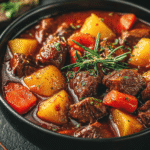
Comforting Beef Stew for Every Occasion
Ingredients
- 2 pounds chuck roast cut into 1-inch cubes
- 2 tablespoons vegetable oil
- 1 large onion chopped
- 3 cloves garlic minced
- 4 carrots chopped
- 3 stalks celery chopped
- 3 medium potatoes diced
- 1 cup red wine
- 4 cups beef broth
- 2 teaspoons dried thyme
- 2 bay leaves
- Salt and pepper to taste
Instructions
- Heat the vegetable oil in a large pot over medium-high heat.
- Add the beef cubes and sear them until browned on all sides, about 8-10 minutes.
- In the same pot, add the chopped onion and sauté until translucent, about 5 minutes.
- Add the minced garlic, carrots, and celery; sauté for an additional 3-4 minutes.
- Return the seared beef to the pot and stir in the diced potatoes.
- Pour in the red wine and scrape up any browned bits from the bottom of the pot.
- Add the beef broth, thyme, bay leaves, salt, and pepper; bring to a simmer.
- Cover the pot and reduce the heat to low, cooking for 2-3 hours until the beef is tender.
- Once the beef is tender, taste the stew and adjust seasoning if necessary.
- Serve hot, garnished with fresh herbs if desired.
Notes
Additional serving suggestions: pair with a crisp salad, garlic bread, or roasted seasonal vegetables for balance.
For make-ahead, prep components separately and assemble just before heating to preserve texture.
Taste and adjust with acid (lemon/vinegar) and salt right at the end to wake up flavors.