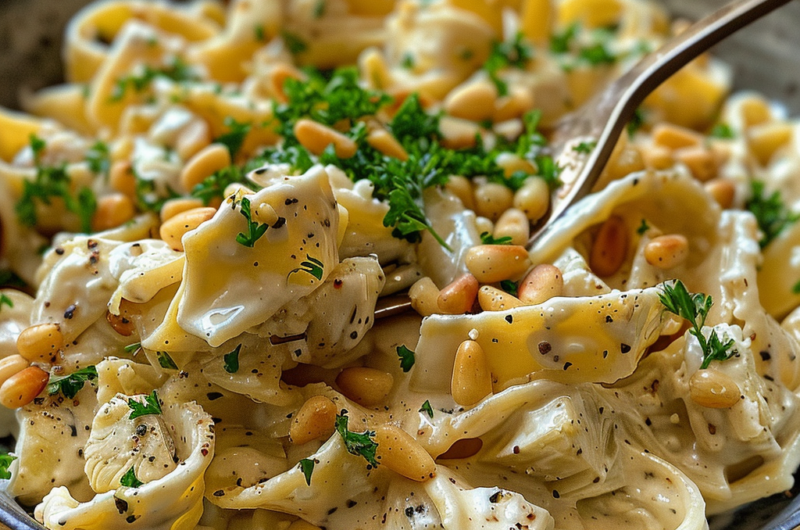
A bright, velvety weeknight pasta that comes together in the time it takes to boil water—no heavy cream required.
📋 In This Article
- Introduction
- Why This Recipe Works (The Mediterranean Advantage)
- The Stars of the Dish: Ingredients You’ll Need
- Step-by-Step Perfection: How to Make Creamy Mediterranean Lemon-Artichoke Pasta
- Tips for the Creamiest Sauce
- Common Mistakes to Avoid
- Variations & Customizations: Make It Your Own!
- Storing & Reheating for Best Results
- Pro Tips for Next-Level Flavor
- Frequently Asked Questions (FAQ)
Introduction
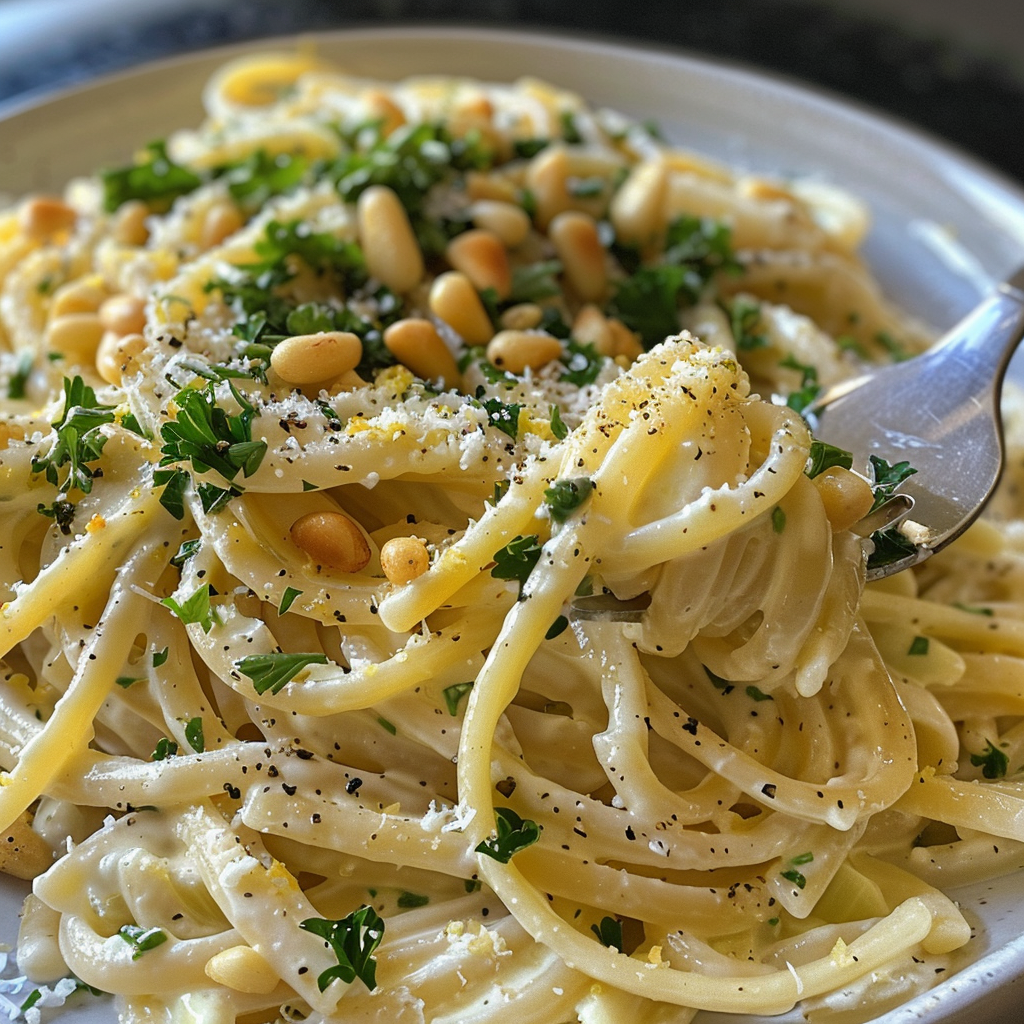
There is a specific kind of magic that happens when lemon meets artichoke. It’s a pairing that defines so much of what we love about Mediterranean cuisine: sharp, earthy, and undeniably fresh. This Creamy Mediterranean Lemon-Artichoke Pasta with Toasted Pine Nuts & Fresh Parsley for a Quick Dinner is the result of countless Tuesday nights trying to get dinner on the table without resorting to takeout. It leverages the power of pantry staples—jarred artichokes and good olive oil—while feeling surprisingly elegant. The sauce isn’t a heavy, gut-busting alfredo; instead, it relies on an emulsion of starchy pasta water and a splash of cream (or yogurt) to coat every strand in a silky, lemon-scented glaze.
Why This Recipe Works (The Mediterranean Advantage)
The brilliance of this dish lies in its texture and balance. We use the artichoke hearts not just for their tender bite, but because their natural slight acidity cuts through the richness of the sauce, providing a complexity that you rarely get in a 30-minute meal.
Scientifically, the “creaminess” here is a study in emulsification. By vigorously mixing the heavy cream (or Greek yogurt) with the reserved starchy pasta water, we create a stable emulsion. The starch granules swollen with water act as thickening agents, preventing the fat in the cream from separating and yielding a velvety consistency that clings to the pasta rather than pooling at the bottom of the bowl. It’s a technique that delivers the mouthfeel of a restaurant sauce with a fraction of the fat.
The Stars of the Dish: Ingredients You’ll Need
Quality matters immensely here because the ingredient list is short.
- Pasta: Long shapes like linguine or fettuccine are best; their increased surface area grabs the sauce better than short shapes.
- Artichoke Hearts: Use canned or jarred artichoke hearts packed in water or oil. If using marinated ones, drain them well to control the salt level.
- Lemon: You need both the zest and the juice. The zest contains aromatic oils that provide a top-note fragrance, while the juice adds the sharp acid needed to balance the fat.
- Pine Nuts: These are non-negotiable for the classic Mediterranean profile. When toasted, their high oil content creates a buttery crunch.
- Fresh Parsley: Flat-leaf fresh parsley adds a necessary herbal “green” note that lifts the heavy earthiness of the artichokes.
- Garlic: Fresh garlic is essential; granulated garlic won’t provide the same punch when sautéed in olive oil.
- Olive Oil: A high-quality extra virgin olive oil is your cooking fat and flavor base.
- Parmesan Cheese: Parmesan cheese adds umami and helps thicken the sauce (optional for vegans).
- Vegetable Broth: Just a splash of vegetable broth to help scrape up the fond and build the sauce base.
- Heavy Cream: Heavy cream creates the classic texture, though the recipe is flexible (see variations).
- Salt and Black Pepper: Season generously with salt and black pepper.
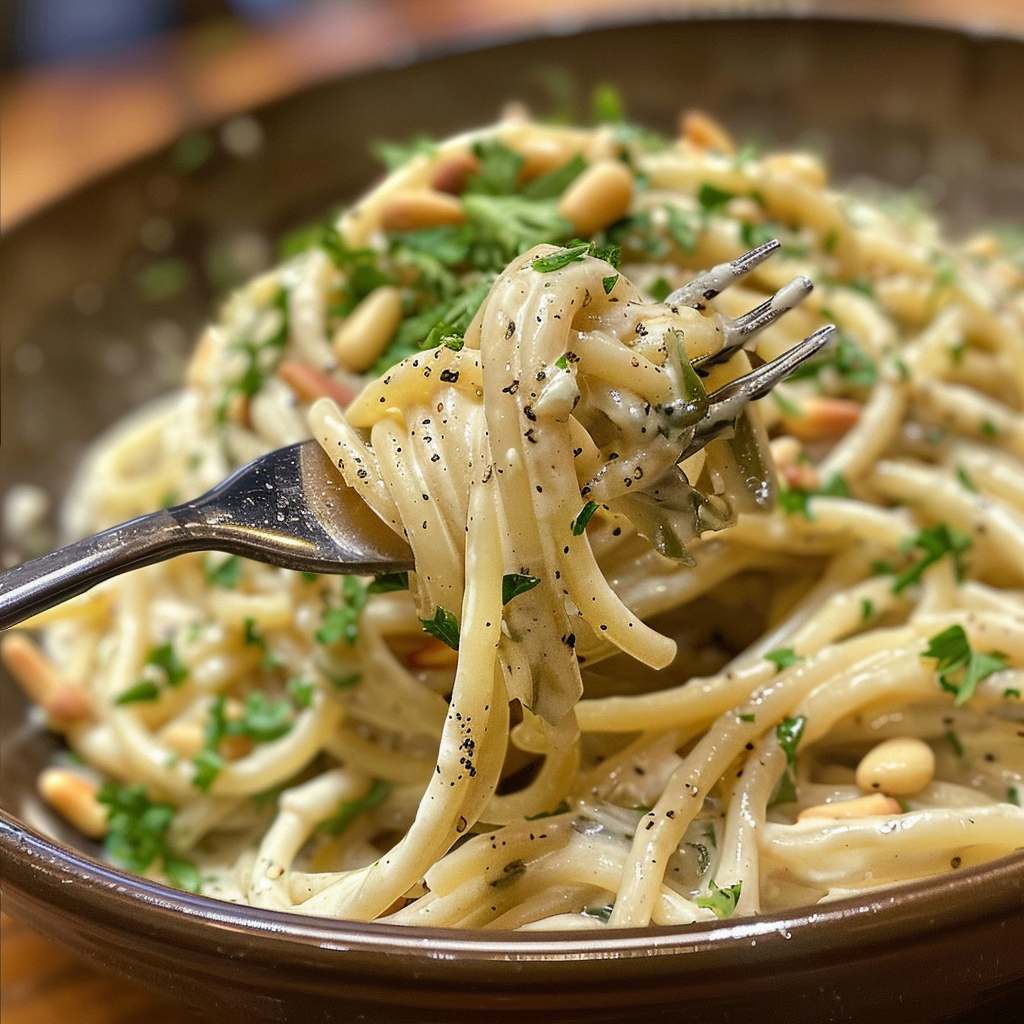
Step-by-Step Perfection: How to Make Creamy Mediterranean Lemon-Artichoke Pasta
This dish moves fast. Have all your ingredients prepped before you turn on the stove.
Step 1: Boil the Pasta (10 minutes)
Bring a large pot of water to a rolling boil. Salt it heavily—it should taste like the ocean. This is your only chance to season the actual pasta structure. Add your pasta and cook to just shy of al dente (about 1 minute less than the package instructions). Before draining, reserve 1 cup of pasta water. This liquid gold is crucial for your sauce.
Step 2: Prepare the Artichokes (5 minutes)
While the water heats, drain the artichoke hearts. I like to squeeze them gently in a paper towel to remove excess moisture—this ensures they fry up golden rather than steaming. Chop them into quarters for maximum surface area.
Step 3: Sauté Garlic and Toast Pine Nuts (5 minutes)
In a large skillet, heat 2 tablespoons of olive oil over medium heat. Add the garlic and sauté for 30 seconds until fragrant. Don’t let it brown. Add the pine nuts and stir constantly. Watch them closely; they contain high amounts of polyunsaturated fats, which means they can go from golden to burnt in seconds. You want a deep golden-brown color to maximize the Maillard reaction flavors.
Step 4: Create the Lemon Cream Sauce (5 minutes)
Add the chopped artichokes to the skillet and toss to coat. Pour in the lemon juice and add the zest. Reduce heat to low. Add 1/2 cup of the hot pasta water and your heavy cream (or Greek yogurt). Stir vigorously with a wooden spoon or whisk to emulsify. If the sauce looks too tight, add more pasta water a splash at a time.
Step 5: Combine Ingredients (3 minutes)
Add the drained pasta directly into the skillet. Toss continuously for a minute. The starch released from the pasta will mix with the sauce, thickening it instantly. Remove from heat and stir in the Parmesan cheese if using.
Step 6: Garnish and Serve (2 minutes)
Fold in the fresh parsley. Taste. Does it need more salt? Probably. Add black pepper and serve immediately.
Tips for the Creamiest Sauce
Getting that restaurant-quality texture at home comes down to one specific variable: heat and timing.
The most common failure point is heat management. If you add dairy to a pan that is too hot, the proteins will coagulate and separate, resulting in a broken, grainy sauce. By reducing the heat to low before adding your heavy cream or Greek yogurt, you allow the casein proteins to relax and integrate with the fat and starch, creating a stable, smooth emulsion.
If you are looking for a lighter alternative, cashew cream is an excellent substitute. It mimics the fat content of dairy without the cholesterol, and its neutral flavor profile allows the lemon and artichoke to shine through without competition. For those avoiding dairy entirely, nutritional yeast can replicate the savory, cheesy depth of Parmesan while adding a boost of B vitamins.
⚠️ Common Mistakes to Avoid
Even simple recipes can go wrong. Here is how to ensure flawless execution.
- Overcooked Pasta: Since the pasta finishes cooking in the sauce, it must be pulled from the water while it still has a firm bite. Overcooked pasta will turn to mush during the tossing phase.
- Burnt Garlic: Garlic has a low sugar content compared to onions, so it burns quickly. Sauté it only until fragrant, then add the pine nuts or liquid to drop the pan temperature.
- Soggy Artichokes: Jarred artichokes often sit in brine. If you don’t dry them thoroughly, they will water down your sauce. Pat them dry with paper towels before chopping.
- Lack of Seasoning: Because we are using mild ingredients like pasta and cream, the dish relies heavily on the pasta water and finishing salt. Under-seasoning results in a bland, flat flavor profile.
- Splitting Sauce: If your sauce looks greasy or curdled, it was likely too hot. You can save it by removing the pan from the heat immediately and whisking in a few ice-cold tablespoons of pasta water to re-emulsify the fats.
- Toasted Pine Nuts Burning: Pine nuts are expensive. Toast them in a dry pan separately if you are unsure, or keep them moving constantly. Burnt pine nuts are bitter and ruin the dish.
Variations & Customizations: Make It Your Own!
This pasta is a template, not a rulebook.
To boost the protein, toss in grilled chicken or seared shrimp during the last few minutes of cooking. For a vegetarian protein that fits the Mediterranean profile, add a can of drained chickpeas.
If you want more greens, spinach wilts perfectly into the hot sauce at the very end. Sun-dried tomatoes add a chewy texture and intense umami punch that contrasts beautifully with the creamy sauce.
For those with dietary restrictions, swapping standard pasta for gluten-free pasta works seamlessly, though you may need a bit more starch water to achieve the same consistency. For a dairy-free version, use full-fat coconut milk instead of cream—it adds a subtle sweetness that pairs surprisingly well with the lemon.
Storing & Reheating for Best Results
Creamy pasta is best eaten immediately, but leftovers can be saved.
Transfer cooled pasta to airtight Storage Containers and refrigerate for up to 3 days. Avoid freezing; the high water content in the sauce and vegetables will form ice crystals that rupture the cell walls, leading to a mushy texture upon thawing.
When reheating, the sauce will likely have absorbed into the pasta and thickened. Place the pasta in a skillet over low heat. Add a splash of water or broth—about a tablespoon at a time—and toss gently. The steam and moisture will rehydrate the starches and bring the sauce back to its original creamy consistency. Microwave reheating often creates hot spots that separate the sauce, so the stovetop method is highly recommended.
💡 Pro Tips for Next-Level Flavor
To bridge the gap between a good dinner and a great one, focus on the finishing touches.
Always finish with high-quality extra virgin olive oil. The heat of the pasta volatilizes the aromatic compounds in the oil, enhancing the sensory experience before you even take a bite. Be generous with the lemon zest added at the very end; the volatile oils in the zest are fragile and dissipate quickly with heat, so adding it fresh ensures a bright, punchy aroma.
Layer your seasoning. Salt the pasta water, salt the sauce, and taste again before serving. I used to rush this step—don’t. That final adjustment is what makes the flavors pop.
Frequently Asked Questions (FAQ)
+Can I make this pasta dairy-free?
Yes. Substitute the heavy cream with full-fat coconut milk or a cashew cream base. Use nutritional yeast in place of Parmesan cheese to maintain that savory, umami flavor profile.
+Why is my pasta sauce runny?
A runny sauce usually means the pasta water wasn’t starchy enough or the ratio of water to cream was too high. To fix it, increase the heat slightly and simmer the sauce for a minute or two to reduce, or add a slurry of cornstarch and water to thicken it rapidly.
+Can I use frozen artichoke hearts?
Absolutely. Frozen artichokes are often fresher in flavor than canned varieties. Thaw them completely and squeeze out all excess moisture before sautéing to prevent the dish from becoming watery.
+How do I know when the pine nuts are toasted?
Pine nuts go from pale to burnt very quickly. Look for a golden-brown color on the flat sides and smell for a distinct nutty, buttery aroma. Remove them from the pan immediately, as residual heat will continue to cook them.
+What can I substitute for pine nuts?
If pine nuts are unavailable or too pricey, hazelnuts or even toasted almonds make a great crunchy substitute. For a nut-free version, toasted breadcrumbs (pangrattato) provide a similar textural contrast.