Introduction
If you’ve ever enjoyed a succulent lobster tail at a fine restaurant, you may have left wondering if you could recreate that luxurious experience at home. A simple butter poached lobster tail is not only exquisite but also surprisingly achievable for home cooks.
The technique of butter poaching gently cooks the lobster, enhancing its natural sweetness and delivering a rich, indulgent flavor. This approach is perfect for special occasions or anytime you want to indulge in something extraordinary without the need for complicated methods.
Ingredients
- 4 lobster tails
Fresh or frozen lobster tails are the star of this dish. They provide a tender, sweet meat that becomes buttery and succulent when poached. Using high-quality tails ensures the best flavor and texture. - 1 cup unsalted butter
Unsalted butter contributes a rich flavor and creamy texture to the dish without the interference of additional salt. It’s critical for achieving that silky mouthfeel that characterizes exquisite butter-poached updates. - 1 cup water
Water is used to create a poaching liquid that helps regulate the temperature as the lobster cooks. It also prevents the butter from burning, allowing for gentle cooking that keeps the lobster tender. - 1 tablespoon fresh lemon juice
Lemon juice adds a touch of acidity that balances the richness of the butter and enhances the natural sweetness of the lobster. This element brightens the overall flavor profile. - Salt to taste
Salt is essential to bring out the flavors of the lobster and the overall dish. Seasoning to taste allows you to customize the dish according to your preference. - Fresh herbs (such as parsley or tarragon) for garnish
Garnishing with fresh herbs adds a pop of color and freshness, enhancing visual appeal and introducing an aromatic element that complements the rich lobster.
Directions & Preparation
Step 1: Thaw the lobster tails if using frozen.
If you're starting with frozen lobster tails, place them in the refrigerator overnight for a gentle thaw. Quick thawing methods, such as warm water, can change texture and lead to tough meat. This step ensures even cooking once they are poached.
Step 2: Prepare the poaching liquid.
In a large saucepan, combine the butter and water. Gradually heating allows the butter to melt without splattering, creating a smooth mixture. Adding lemon juice at this stage will result in a well-rounded flavor in the final dish.
Step 3: Heat the poaching liquid gently.
Set the saucepan over low to medium-low heat. It's crucial to avoid boiling as it can separate the butter. Monitoring the temperature ensures a steady poach, allowing the lobster tails to absorb the rich flavors while cooking evenly.
Step 4: Prepare the lobster tails for cooking.
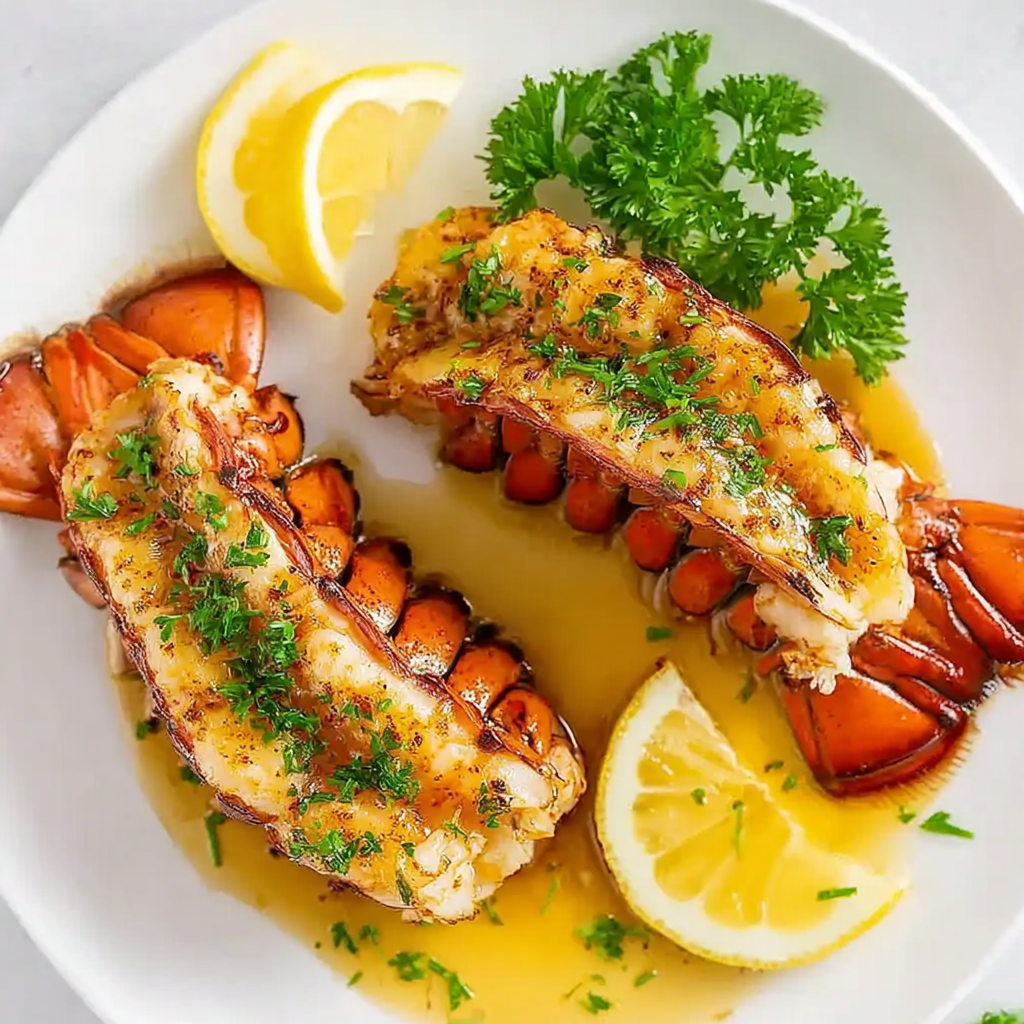
With kitchen shears, carefully cut down the top shell and pull apart the shell to expose the meat. This allows the flavors of the butter to permeate, speeding up the cooking process and resulting in an appealing presentation.
Step 5: Poach the lobster tails.
Carefully place the prepared lobster tails into the poaching liquid, ensuring they are submerged. Cooking them for 6 to 8 minutes will yield a perfectly tender texture; the lobster should be opaque and firm to the touch, indicating it has cooked through.
Step 6: Remove from heat and let rest.
Once cooked, remove the lobster tails from the poaching liquid using tongs, allowing excess butter to drip off. Letting them rest for a couple of minutes helps the meat firm up and makes serving easier.
Step 7: Dress and serve.
Garnish the lobster tails with fresh herbs and a sprinkle of salt just before serving. This final touch amplifies flavors and adds a professional touch to your home-cooked dish, making it a showstopper at dinner.

Choosing the Perfect Lobster Tails
When selecting lobster tails for your butter poaching, opt for fresh or high-quality frozen varieties. They should feel firm to the touch with a slightly rigid shell. Avoid any that show signs of discoloration or a foul odor. Sizing matters, too; larger tails deliver more meat, while smaller ones provide a delicately sweet profile. Tailoring your choice to your menu will elevate your lobster experience.
Enhancing the Poaching Liquid
While the essential poaching liquid consists of butter and water, you can elevate the flavor by infusing the liquid with aromatics. Consider adding garlic cloves, shallots, or even a splash of white wine for a depth of flavor that pairs wonderfully with the lobster. Just ensure any additional ingredients do not overpower the delicate nature of the lobster.
Serving Suggestions for Butter Poached Lobster
Butter poached lobster tails shine when paired with light, elegant sides. Consider serving them alongside a fresh arugula salad tossed with a vinaigrette or creamy garlic mashed potatoes that can soak up the luxurious butter. For an indulgent twist, prepare a saffron risotto that complements the richness of the lobster, creating a sophisticated dining experience.
FAQs
What should I do if my lobster tails are overcooked?
If your lobster tails are overcooked, they may become tough and rubbery, a common challenge with seafood. To remedy this, consider slicing the tails into smaller pieces and serving them in a sauce or with a flavorful dip to enhance moisture and taste.
Can I add spices to the butter when poaching?
Yes, feel free to include spices like paprika, cayenne, or even Old Bay seasoning to the butter for extra flavor. Just be cautious not to overpower the natural sweetness of the lobster.
What can I do if my poaching liquid is too thick?
If your poaching liquid turns out too thick, it can be adjusted by adding a bit more water to achieve a more liquid consistency. Ensure to stir gently to maintain the emulsion of butter and water.
How do I know when the lobster tails are cooked perfectly?
Perfectly cooked lobster tails will appear opaque and feel firm when gently pierced. The internal temperature should reach about 140°F (60°C). Keeping a close watch toward the end of the cooking process is key.
Can I scale this recipe for larger gatherings?
Absolutely! You can scale up the number of lobster tails and simply increase the quantities of butter and water proportionally. Ensure you have a large enough pot to maintain even cooking.
Is it okay to use leftover poaching liquid?
Yes, the leftover poaching liquid can be strained and saved for use in sauces or soups. Its rich butter flavor will enhance many dishes, making it a valuable addition to your kitchen.
Conclusion
Butter poached lobster tails are an outstanding choice for any seafood lover looking to make a statement. With a few basic ingredients and a straightforward technique, you can produce restaurant-quality results right from your kitchen.
Embrace the joy of cooking with this simple recipe, experimenting with flavors and sides to suit your taste. You'll find that the process is just as rewarding as the delicious result, making every occasion special.
Recipe Card

Decadent Butter Poached Lobster Tails at Home
Ingredients
- 4 lobster tails
- 1 cup unsalted butter
- 1 cup water
- 1 tablespoon fresh lemon juice
- Salt to taste
- Fresh herbs such as parsley or tarragon for garnish
Instructions
- Thaw the lobster tails if using frozen.
- Prepare the poaching liquid.
- Heat the poaching liquid gently.
- Prepare the lobster tails for cooking.
- Poach the lobster tails.
- Remove from heat and let rest.
- Dress and serve.
Notes
Additional serving suggestions: pair with a crisp salad, garlic bread, or roasted seasonal vegetables for balance.
For make-ahead, prep components separately and assemble just before heating to preserve texture.
Taste and adjust with acid (lemon/vinegar) and salt right at the end to wake up flavors.