Introduction
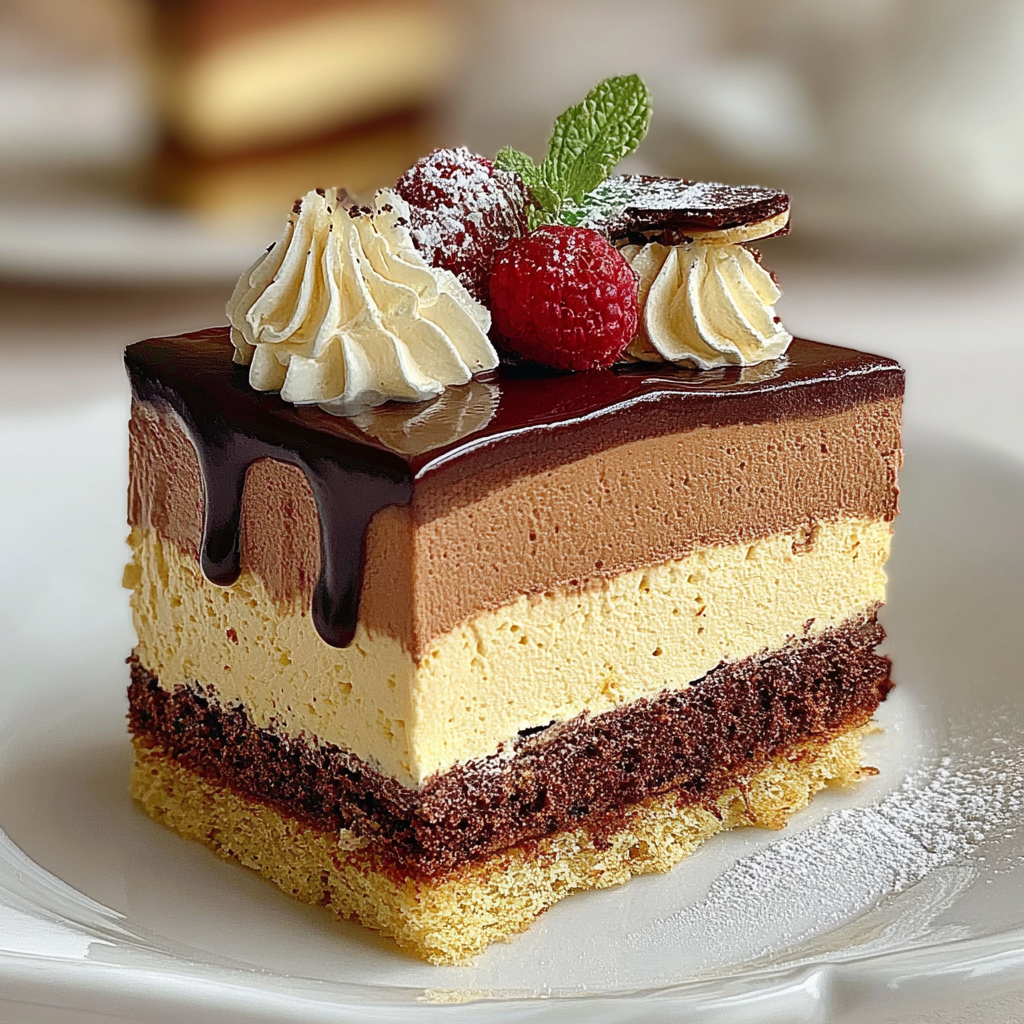
Opera cake is an exquisite French dessert that showcases the delicate balance between flavors and textures. This multi-layered treat combines almond sponge cake, coffee buttercream, chocolate ganache, and a glossy glaze, creating a symphony of taste in every bite.
Originally created in Paris, this cake is beloved for its complexity and elegance, often found in patisseries and fine dining establishments. Making opera cake at home may seem daunting, but with patience and practice, anyone can create this indulgent masterpiece.
Ingredients
- 6 ounces almond flour
Almond flour gives the cake its unique flavor and moist texture. It contributes to the rich nutty undertones which are central to the overall taste profile of opera cake. - 4 large eggs
Eggs provide structure, stability, and moisture. They also help to leaven the cake, ensuring it rises properly and achieves a light, airy texture. - 1 cup granulated sugar
Sugar not only sweetens the cake but also aids in leavening by trapping air when creamed with butter. It enhances the overall flavor and helps in browning the cake. - 1/2 cup unsalted butter
Butter adds richness and flavor, contributing to the moistness of the cake. Its fat content helps create a tender crumb. - 1 cup all-purpose flour
All-purpose flour provides the structure necessary for the cake layers. It balances with almond flour to create a well-rounded texture. - 1/2 teaspoon baking powder
Baking powder acts as a leavening agent, ensuring the cake rises appropriately and has a fluffy consistency. - 1/4 cup strong brewed coffee
Coffee gives depth of flavor to the buttercream and can amplify the overall taste profile of the dessert. It complements the chocolate elements beautifully. - 1/2 cup heavy cream
Heavy cream is used to make the chocolate ganache smooth and luscious. Its high fat content gives the ganache a rich texture. - 8 ounces dark chocolate
Dark chocolate is a key ingredient in the ganache layer. Its bitterness contrasts with the sweetness of the cake, adding a sophisticated flavor. - 1 cup butter, softened (for buttercream)
Softened butter is crucial for making smooth, creamy buttercream. It helps incorporate air, providing a light texture and rich flavor. - 2 tablespoons coffee liqueur
Coffee liqueur enhances the coffee flavor in the buttercream and adds complexity to the taste, making it more indulgent. - 1/4 cup simple syrup
Simple syrup moistens the cake layers, ensuring they remain tender. It also helps bind the flavors together, especially when infused with coffee. - 1 tablespoon gelatin (optional for glaze)
Gelatin can be added to the glaze for a shimmering finish. It ensures the glaze adheres properly to the cake and creates a professional look.
Directions & Preparation
Step 1: Prepare the almond cake layers by mixing egg whites and sugar until foamy, then add in almond flour, all-purpose flour, and baking powder.
This step involves creating a meringue with the egg whites which provides the lift to the almond cake layers. Folding the dry ingredients gently ensures you maintain the airy texture achieved by the meringue.
Step 2: Bake the cake layers in a preheated oven at 350°F (175°C) for about 15-20 minutes, or until golden and a toothpick comes out clean.
Proper baking temperature and time are critical to achieving the right texture; too long, and the cake will dry out. Allowing the layers to cool completely before assembling is vital to avoid melting the buttercream.
Step 3: Make the coffee buttercream by whipping softened butter until creamy, then gradually add powdered sugar and brewed coffee.
Whipping the butter well at this stage is essential for a light, fluffy buttercream. Gradually incorporating the powdered sugar prevents clumping and ensures a smooth consistency.
Step 4: Prepare the chocolate ganache by heating heavy cream, then pouring it over chopped dark chocolate, allowing it to sit before mixing until smooth.
Tempering the chocolate with hot cream helps achieve a glossy ganache. This luscious layer is crucial as it adds richness and depth to every bite of the cake.
Step 5: Assemble the cake by layering almond cake, coffee buttercream, chocolate ganache, and repeating until all layers are used.
Layering is where the opera cake comes to life. Carefully spreading each layer helps maintain balance and ensures that every slice has a perfect cross-section of flavors.
Step 6: Chill the assembled cake for several hours to allow the flavors to meld together and the structure to firm up.
Chilling is essential, as it helps the layers set properly, making it easier to cut clean slices. This resting period enhances the overall flavor by allowing the coffee and chocolate notes to meld.
Step 7: Prepare the glaze using gelatin (if desired) and simple syrup, pouring it over the cooled cake to create a shiny finish.
A glossy glaze not only makes the cake visually appealing but also seals in moisture. Ensuring even coverage ensures that each piece looks as beautiful as it tastes.
Step 8: Slice the cake into small pieces using a hot knife for clean edges, presenting it elegantly on a platter.
Presentation is key with opera cake as its beauty can rival its taste. Use a serrated knife dipped in hot water to cleanly cut through the layers without squishing them.

The Art of Layering: Secrets to Success
Layering the different components of opera cake is where artistry meets technique. Each layer should be spread evenly to ensure a balance of flavors in every bite. Take your time in assembly, ensuring that the coffee buttercream fills any gaps between the delicate almond sponge and the rich ganache. Proper assembly not only enhances the presentation but also provides a delightful experience as the flavors harmonize.
Understanding Ganache: The Heart of the Cake
Ganache is more than just a layer; it's a luxurious component that can elevate your opera cake. The key is to use high-quality dark chocolate, as it contributes significantly to the flavor. The ganache should be allowed to cool slightly before pouring it over the assembled cake, creating a smooth, glossy finish that locks in moisture and complements the other flavors.
Choosing the Right Coffee: A Flavorful Foundation
The coffee flavor in opera cake is pivotal, so selecting the right brew is crucial. Opt for a robust coffee that can stand up to the richness of chocolate and cream. Brew a fresh cup of espresso if possible, as it offers a concentrated flavor that permeates the buttercream and syrup, enriching the dessert's overall profile.
FAQs
What type of chocolate works best for the ganache?
Dark chocolate with a cocoa content of 60-70% is ideal for a rich flavor without being overly sweet. It balances perfectly with the coffee.
Can I make the opera cake simpler or cut down on layers?
While traditional opera cake has multiple layers, you can simplify by reducing the number of layers or using fewer components, like a single layer of ganache.
What should I do if my buttercream is too thick?
If your buttercream is too thick, gradually add a teaspoon of brewed coffee or cream until you achieve your desired consistency.
How can I enhance the chocolate flavor in the ganache?
Incorporate a pinch of sea salt or an espresso powder into the ganache to intensify the chocolate flavor, giving it a richer depth.
What happens if the ganache is too runny?
If your ganache is too runny, you can chill it slightly to help it thicken or add more melted chocolate to achieve a desired consistency.
Is it necessary to use coffee liqueur in the buttercream?
While coffee liqueur adds depth, you can substitute it with additional brewed coffee if you prefer an alcohol-free version.
Conclusion
Creating opera cake at home might take some time, but the journey is well worth it. The blend of coffee, chocolate, and almond creates an unforgettable dessert that impresses any guest.
By mastering this recipe, you've not only learned a sophisticated technique but also added an elegant dessert to your repertoire. Enjoy the process and celebrate the delicious results of your hard work.
Recipe Card

Decadent Butter Poached Lobster Tails at Home
Ingredients
- 4 lobster tails
- 1 cup unsalted butter
- 1 cup water
- 1 tablespoon fresh lemon juice
- Salt to taste
- Fresh herbs such as parsley or tarragon for garnish
Instructions
- Thaw the lobster tails if using frozen.
- Prepare the poaching liquid.
- Heat the poaching liquid gently.
- Prepare the lobster tails for cooking.
- Poach the lobster tails.
- Remove from heat and let rest.
- Dress and serve.
Notes
Additional serving suggestions: pair with a crisp salad, garlic bread, or roasted seasonal vegetables for balance.
For make-ahead, prep components separately and assemble just before heating to preserve texture.
Taste and adjust with acid (lemon/vinegar) and salt right at the end to wake up flavors.