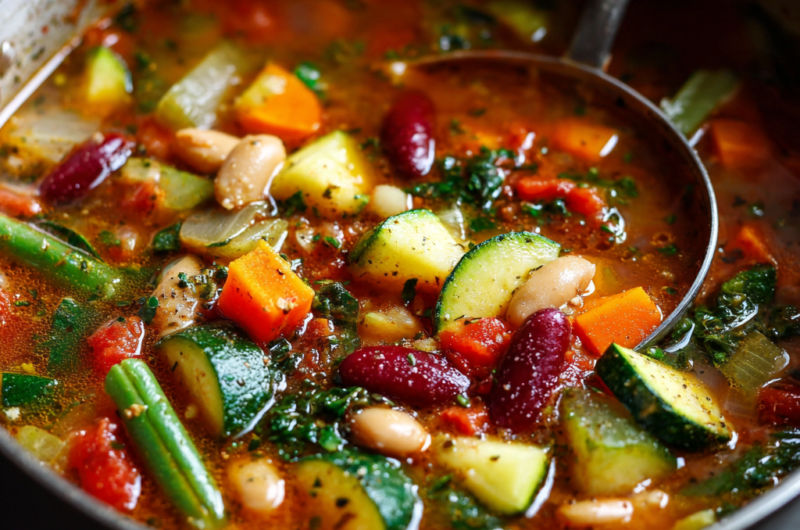
A vibrant, brothy bowl loaded with zucchini, squash, and tomatoes—ready in 30 minutes flat.
📋 In This Article
- Introduction
- Why It Works: The Science of Freshness
- Ingredients You’ll Need for Garden-Fresh Goodness
- Step-by-Step Instructions: Crafting Your Perfect Summer Soup
- Common Mistakes to Avoid for a Flawless Minestrone
- Variations & Customizations: Make It Your Own!
- Storage & Reheating: Enjoying Your Minestrone All Week Long
- Pro Tips for the Ultimate Summer Minestrone
- Frequently Asked Questions About Summer Minestrone
- Conclusion
Introduction
There is a specific kind of joy found in a pot of Fresh Summer Minestrone Soup Loaded With Garden Vegetables You’ll Want on Repeat. It’s the kind of dish that doesn’t fight the season but embraces it. Unlike the heavy, tomato-heavy winter versions that rely on long simmers to break down tough greens and root vegetables, summer minestrone is all about speed. We are talking crisp-tender zucchini, snap peas or green beans that actually snap, and sweet tomatoes that barely see the heat before they hit the bowl.
The problem with most recipes? They treat all vegetables the same, dumping them in at once and boiling the life out of them. The result is a drab, mushy mess. This recipe respects the ingredients. By staggering the addition of vegetables—cooking the aromatics first, then the hardy veg, and finishing with delicate greens—we preserve the distinct textures and flavors that make summer produce so special. It’s a simple technique that transforms a standard soup into a showcase.
Why It Works: The Science of Freshness
The magic of this Fresh Summer Minestrone Soup lies in respecting the cellular structure of summer produce. When you apply heat to vegetables, you break down pectin and hemicellulose—the “glue” holding cell walls together. Winter vegetables like carrots and potatoes need time to soften. Summer squash and spinach? They structurally collapse in minutes.
We use a technique called staggered cooking.
- Aromatics first: We sauté onions and garlic to develop flavor precursors via the Maillard reaction and simple softening, creating a savory base.
- Hardy veg second: Green beans need a few minutes to lose their raw edge.
- Soft veg last: Zucchini and summer squash cook almost instantly. If you add them too early, they release excess water, diluting your broth and turning your soup into a stew.
- Acid balance: Tomatoes provide acidity, but a final squeeze of lemon or a swirl of pesto brightens the flat, “boiled” flavor that often plagues vegetable soups.
Ingredients You’ll Need for Garden-Fresh Goodness
To create a pot of Fresh Summer Minestrone Soup Loaded With Garden Vegetables You’ll Want on Repeat, you need ingredients that look like they were just plucked from the soil.
- 1 medium Zucchini, diced (look for firm skin; soft spots mean it’s past its prime)
- 1 medium Yellow Squash, diced (uniform size ensures even cooking)
- 1 cup Cherry Tomatoes, halved (sweetness concentrated in a small package)
- 1 cup Green Beans, trimmed and cut into bite-sized pieces
- 2 cups Spinach, roughly chopped (stems removed)
- 1/4 cup Fresh Basil, torn (plus more for garnish)
- 3 cloves Garlic, minced
- 1 medium Onion, diced
- 4 cups Vegetable Broth (low sodium preferred so you control the salt)
- 1 cup Small Pasta (ditalini or small shells work best to fit on the spoon)
- 1 can (15 oz) Cannellini Beans, drained and rinsed
- 2 tablespoons Olive Oil
- Salt and Pepper, to taste
- Parmesan Cheese (optional), for serving
Choosing Produce: The quality of your ingredients is the quality of your soup. There is no heavy cream or meat stock to hide behind here. If your zucchini is spongy, your soup will be watery. If your tomatoes are mealy, the broth won’t have that bright acidity. Choose firm, unblemished vegetables.
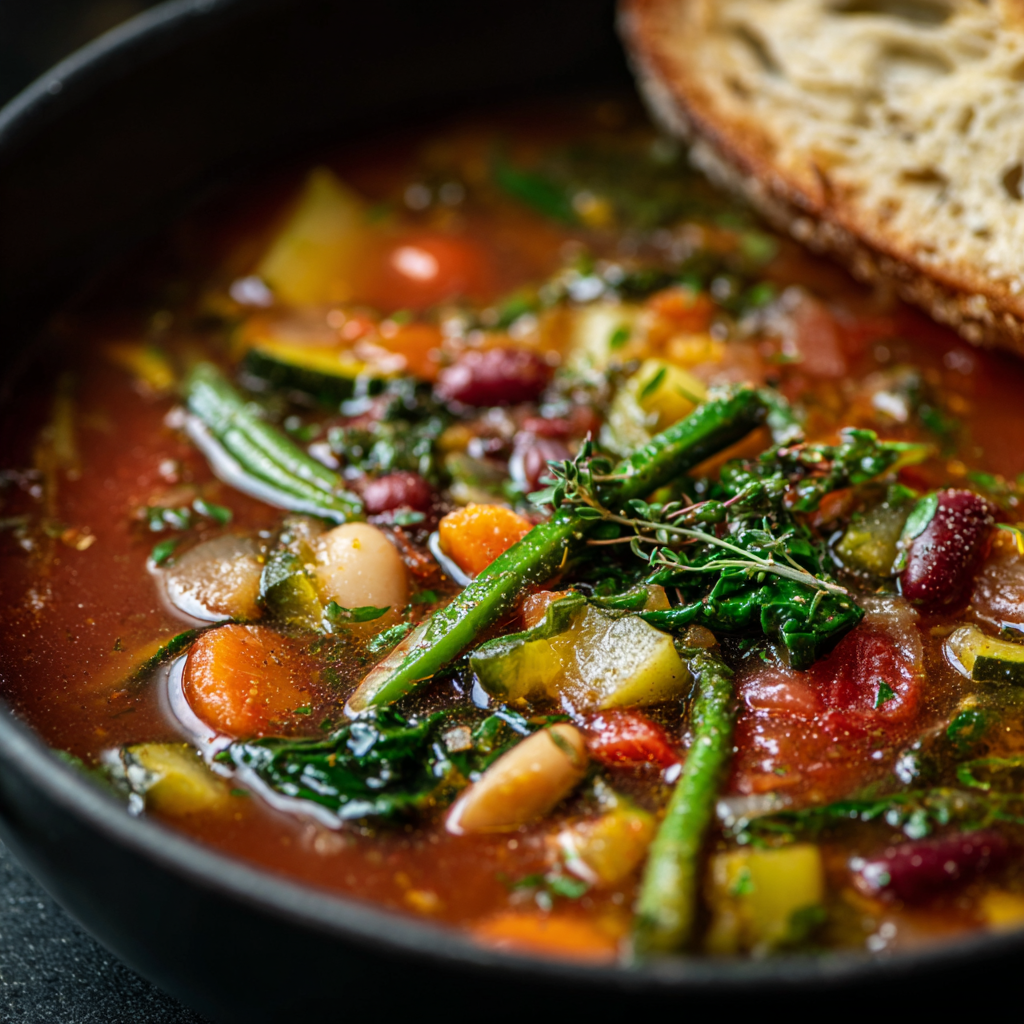
Step-by-Step Instructions: Crafting Your Perfect Summer Soup
Cooking this Fresh Summer Minestrone Soup Loaded With Garden Vegetables You’ll Want on Repeat is less about following a rigid formula and more about watching the pot.
- Mise en Place (Preparation Time: 10 minutes): Before you turn on the stove, chop everything. Dice the onions, mince the garlic, trim the beans, and chop the squash. Having everything ready—what the French call mise en place—prevents you from burning the garlic while you’re frantically hunting for the spinach.
- Sauté the Aromatics (Cooking Time: 5 minutes): In a large pot, heat the olive oil over medium heat. Add the onions and a pinch of salt. Sauté until translucent, about 4 minutes. Add the garlic and cook for 30 seconds until fragrant. Do not brown the garlic; burnt garlic is bitter and will ruin the delicate flavor profile.
- Build the Base (Cooking Time: 5 minutes): Add the green beans. Sauté for 2 minutes to coat in oil. Pour in the vegetable broth and bring to a gentle simmer. Resist the urge to crank the heat. A rolling boil will evaporate your liquid too fast and toughen the beans.
- Cooking Pasta (Cooking Time: 8-10 minutes): Here is where most recipes go wrong. Do not cook the pasta in the soup. It releases starch that clouds the broth and absorbs all the liquid, turning your soup into a dense block overnight.
- The Fix: Cook the pasta in a separate pot of salted water until al dente. Drain it. Add it to individual bowls or the pot just before serving. This keeps the broth clear and the pasta distinct.
- Add Delicate Vegetables (Final Cooking Time: 3-5 minutes): Once the broth is simmering and the beans are nearly tender, add the zucchini, yellow squash, and cannellini beans. Simmer for 3 minutes. Add the cherry tomatoes and spinach. Cook for 1 final minute—just until the spinach wilts but retains its vibrant green color.
- Serving: Turn off the heat. Stir in the fresh basil. Ladle the soup over the cooked pasta (if you kept it separate) or add the pasta to the pot if you plan to eat it all immediately. Top with Parmesan and a final drizzle of olive oil.
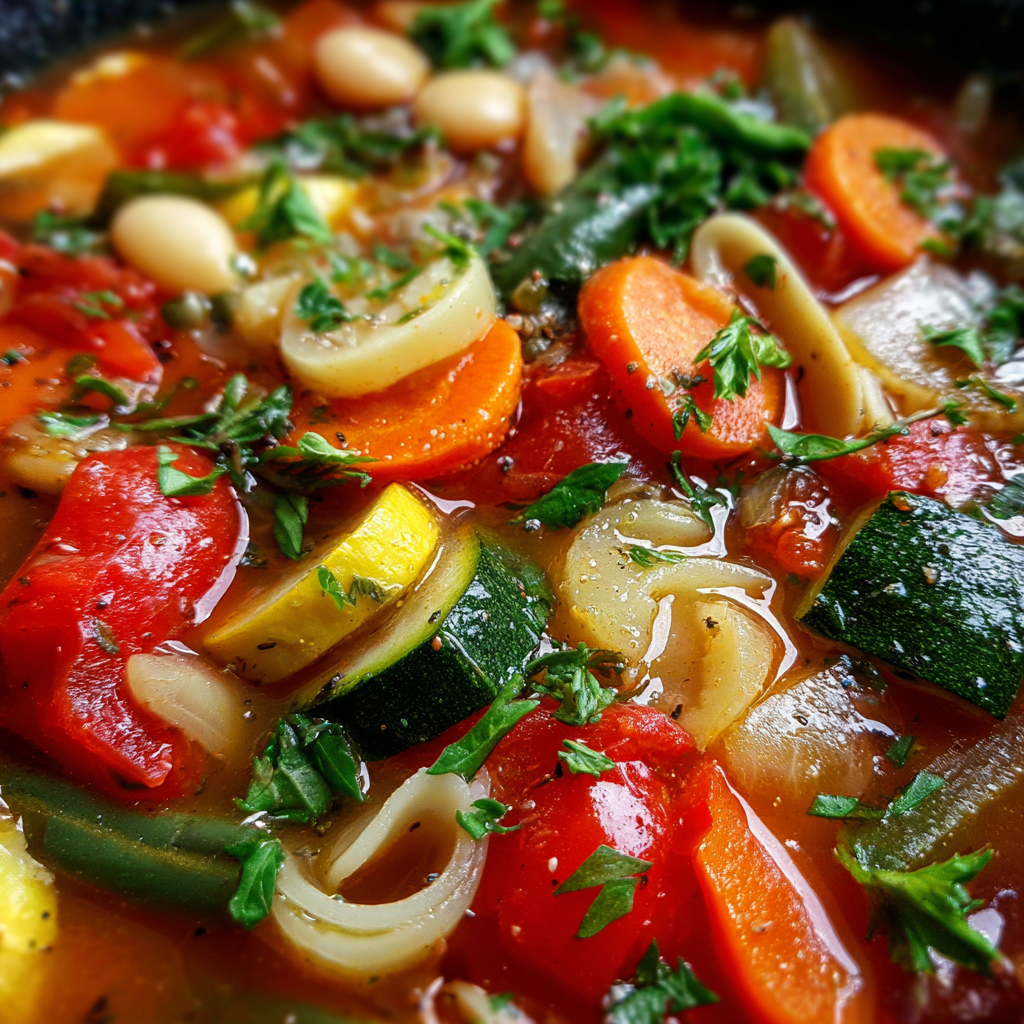
⚠️ Common Mistakes to Avoid for a Flawless Minestrone
Even a simple soup can go wrong. Here is how to avoid the pitfalls.
- Overcooked Vegetables: This is the cardinal sin. Zucchini and squash should have a slight bite, not dissolve into mush. If your knife cuts through the raw vegetable with resistance, it should have a little resistance in the soup, too.
- Mushy Pasta: As mentioned, cooking pasta in the broth is risky. If you must do it, undercook it by 2 minutes. But really, just use a separate pot. I used to rush this step to save on dishes; the result was always a thick, gummy stew the next day.
- Under-Seasoning: Vegetable broth can be bland. You must season in layers—salt the onions, salt the pasta water, and taste the broth before serving. If it tastes “flat,” it needs salt or acid (lemon juice).
- Ignoring Texture: A soup needs textural contrast. If everything is the same soft texture, it’s boring. That’s why we add the beans and pasta—they provide a firm, creamy counterpoint to the soft vegetables.
Variations & Customizations: Make It Your Own!
This Fresh Summer Minestrone Soup Loaded With Garden Vegetables You’ll Want on Repeat is a template, not a law.
- Protein Additions: While cannellini beans are traditional, you can add grilled chicken or Italian sausage for a heartier meal. Cook the meat first, remove it, and add it back in at the end.
- Vegan Minestrone: Ensure your pasta is egg-free and skip the Parmesan. Nutritional yeast can add a cheesy, savory depth without dairy.
- Gluten-Free Options: Swap the wheat pasta for gluten-free varieties or use cooked quinoa. Or, spiralize some extra zucchini for “zoodles” to keep it grain-free.
- The “Pesto” Finish: If you want to elevate this from “good” to “restaurant quality,” stir in a tablespoon of fresh pesto just before serving. The basil and pine nuts add an aromatic punch that dried herbs simply cannot match.
Storage & Reheating: Enjoying Your Minestrone All Week Long
To ensure your Fresh Summer Minestrone Soup Loaded With Garden Vegetables You’ll Want on Repeat retains its vibrant flavor and texture, proper storage is key.
Transfer leftovers to an airtight container. The soup will keep in the refrigerator for up to 4 days. However, if you cooked the pasta in the soup, it will soak up the broth and become mushy. For best results, store the soup and pasta separately.
Freezing: You can freeze the soup (without pasta) for up to 3 months. The texture of the zucchini and spinach may soften slightly upon thawing, but the flavor remains excellent.
Reheating: Reheat gently on the stovetop over medium heat. Avoid a rolling boil, which will disintegrate the vegetables. If the soup has thickened, add a splash of water or broth to loosen it.
💡 Pro Tips for the Ultimate Summer Minestrone
- Toast Your Pasta: Before boiling the pasta, try toasting it in a dry pan for 2-3 minutes until it smells nutty. This “fortifies” the starch, helping it hold up better in the broth and adding a toasted flavor dimension.
- Save the Parmesan Rind: If you have a rind from a wedge of Parmesan, throw it into the broth while it simmers. It melts slightly, adding a profound umami richness and savory body that salt alone cannot achieve. Remove it before serving.
- Deglaze with Wine: After sautéing the onions, splash in a little dry white wine (about 1/4 cup) and scrape up the browned bits (the fond) from the bottom of the pot. This step adds complexity to the flavor base.
- Fresh Herbs at the End: Dried herbs like oregano can be added early, but fresh basil and parsley are delicate. Add them right before you serve to preserve their volatile oils and bright flavor.
Frequently Asked Questions About Summer Minestrone
+Can I make minestrone soup vegetarian or vegan?
Yes, this recipe is naturally vegetarian if you use vegetable broth. To make it vegan, simply omit the Parmesan cheese garnish or use a vegan alternative. The beans provide plenty of protein.
+What vegetables are best for minestrone soup?
The best vegetables are seasonal and firm. For Fresh Summer Minestrone, stick to zucchini, yellow squash, green beans, and tomatoes. Avoid root vegetables like potatoes or carrots unless you cut them small and simmer them longer; they require different cooking times than summer squash.
+Can you freeze minestrone soup?
Yes, but with a caveat. Freeze the soup base without the pasta or spinach. Pasta becomes mushy when frozen and thawed, and spinach loses its texture. Add fresh pasta and spinach when you reheat the soup.
+Why is my minestrone soup bland?
It likely needs more salt or acid. Vegetable broth is notoriously low in sodium, so you must season aggressively. If it tastes “flat,” add a squeeze of fresh lemon juice or a dash of vinegar to brighten the flavors.
+How do I know when the vegetables are done?
Test a piece of zucchini or green bean. It should be tender enough to chew easily but still offer a slight resistance—what chefs call tender-crisp. If it’s mushy, you’ve gone too far.
Conclusion
Fresh Summer Minestrone Soup Loaded With Garden Vegetables You’ll Want on Repeat is more than a recipe; it is a method for enjoying the season’s best produce without heating up the kitchen for hours. It is forgiving, adaptable, and infinitely better than anything you can buy in a can. Whether you stick to the classic vegetables or raid your own garden for whatever is growing, the key is timing—treat each ingredient with the respect it deserves. Now, grab that pot and start chopping. Your summer dinner is 30 minutes away.