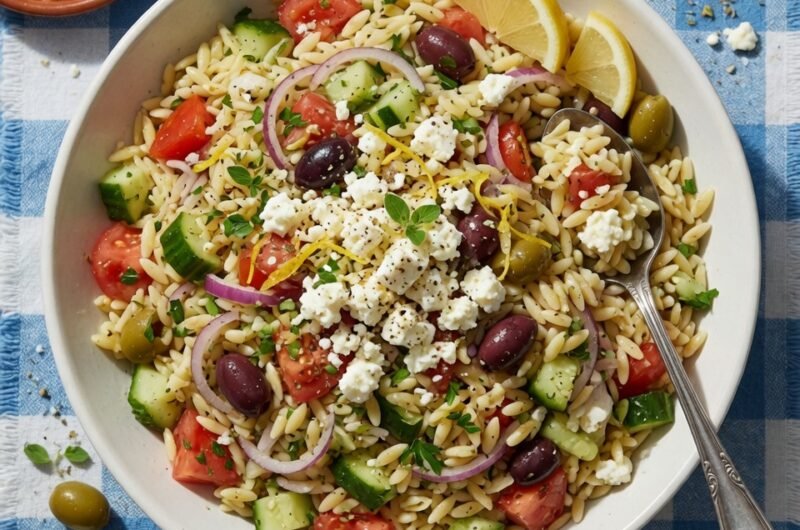
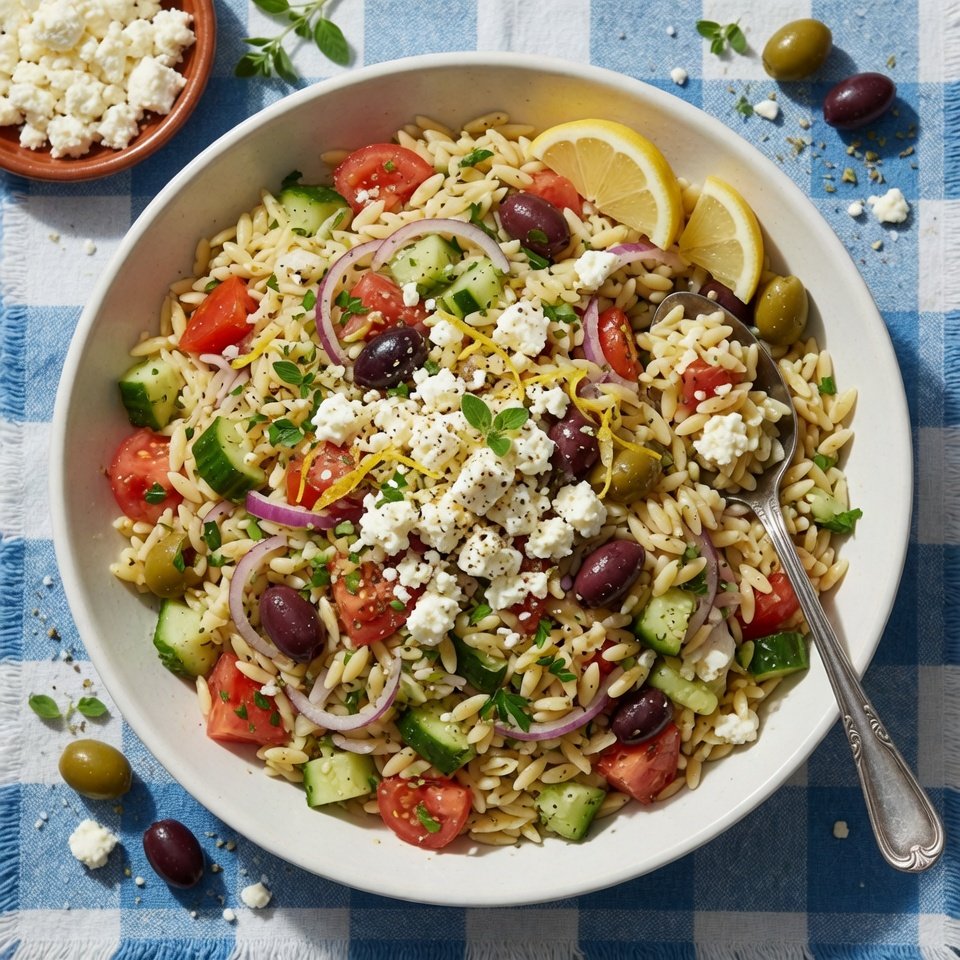
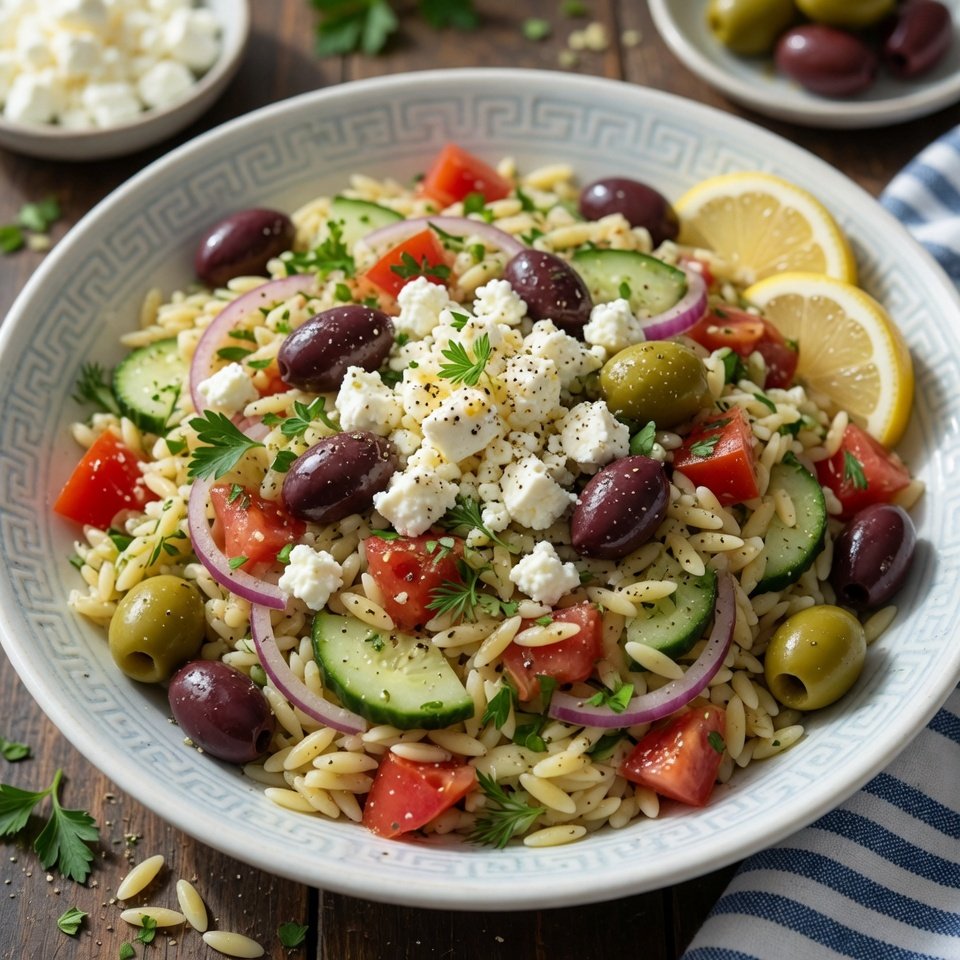
Greek Orzo Salad
Ingredients
Method
- In a medium mixing bowl whisk together olive oil, lemon juice, garlic and season with salt and pepper to taste, set aside.
- Cook orzo according to directions listed on package to al dente or just 1 minute shy. Drain and rinse under cold water for about 10 seconds. Drain well.
- Add all of the salad ingredients, including cooked orzo, to a large bowl and toss. Pour dressing over top and toss to evenly coat.
- Store in refrigerator up to 2 days.
Notes
- Rinse the orzo under cold water for about 10 seconds after draining; this stops the cooking process and prevents the pasta from becoming mushy.
- To enhance flavor without adding too much salt, consider using low-sodium olives or feta cheese, as both can be quite salty on their own.
- If you want to add some protein, chickpeas are a fantastic substitute that complements the salad well without overpowering other flavors.
- For optimal taste, let the salad sit in the refrigerator for at least 30 minutes before serving; this allows the flavors to meld beautifully.
- Store any leftovers in an airtight container in the fridge for up to 2 days; be aware that the salad may become slightly drier as it sits, so a splash of olive oil or lemon juice can refresh it before serving.
A vibrant, 25-minute side dish featuring tender orzo, briny feta, and a zesty lemon vinaigrette that improves as it sits.
📋 In This Article
- Introduction
- Why This Greek Orzo Salad Recipe Works
- Essential Ingredients for Your Greek Orzo Salad
- Step-by-Step Instructions
- Common Mistakes to Avoid
- Variations & Customizations
- Storage & Make-Ahead Tips
- Pro Tips for the Best Greek Orzo Salad
- Serving Suggestions
- Frequently Asked Questions (FAQ)
- Conclusion
Introduction
There is a specific kind of sadness that comes from a bowl of bland, mayonnaise-heavy pasta salad sitting out in the sun. This Greek Orzo Pasta Salad with Feta & Olives is the antithesis of that. It’s sharp, salty, and incredibly fresh. Orzo is a fascinating shape—it behaves like rice but eats like pasta, acting as a perfect vehicle for a bold lemon vinaigrette.
I spent years thinking orzo salad was just “meh” until I realized the issue wasn’t the pasta; it was the lack of salting the water and the fear of acid. This recipe fixes both. We use a high ratio of fresh herbs and a double-hit of acid—both lemon juice and red wine vinegar—to cut through the richness of the olive oil and feta cheese. It’s the kind of dish that disappears first at a potluck.
Why This Greek Orzo Salad Recipe Works
Most pasta salads fail because they treat the pasta as an afterthought. Here, we treat the orzo with the same respect we’d give a risotto. The key to this recipe’s success lies in the texture contrast: the smooth, slippery bite of the orzo against the crunch of English cucumber and the creaminess of the cheese.
Then there’s the absorption factor. Because orzo has a high surface-area-to-volume ratio, it drinks up the vinaigrette greedily. We account for this by making a robust dressing and tossing the salad while the pasta is still slightly warm, which allows the flavors to penetrate deep into the grain rather than just coating the outside. It’s a simple chemical reality: fat and acid permeate porous starch structures more efficiently when warm.
Essential Ingredients for Your Greek Orzo Salad
To build a salad that tastes like the Aegean, you need specific components. Don’t skimp on the quality here.
Salad Ingredients
- 1 1/4 cups (8 oz) dry orzo pasta: The foundation. Orzo translates to “barley” in Italian, but this wheat pasta shape is perfect for fork-twirling.
- 1 cup (5 oz) crumbled feta cheese: Always buy a block of feta in brine and crumble it yourself. Pre-crumbled varieties are coated in anti-caking agents that prevent them from melting into the salad, leaving you with dry, dusty nuggets.
- 1 medium English cucumber, diced: English (or hothouse) cucumbers have thinner skins and fewer seeds, meaning better texture without the hassle of peeling.
- 1 (10.5 oz) package grape tomatoes, halved: Grape tomatoes hold their shape better than cherry tomatoes and offer a sweeter, more concentrated pop of flavor.
- 1/2 cup sliced Kalamata olives: These provide the essential briny depth. Rinse them briefly if the salt level is a concern, but keep some of that savory punch.
- 1/2 cup chopped red onion: Soak these in ice water for 10 minutes if you find raw onion too aggressive; it tames the sulfur bite while keeping the crunch.
- 3 tablespoons chopped fresh basil: Sweet basil adds an aromatic lift that dried herbs simply cannot replicate.
- 3 tablespoons chopped fresh parsley: Use flat-leaf (Italian) parsley for a clean, herbal finish.
Dressing Ingredients
- 1/3 cup extra virgin olive oil: Since this is a cold dish, the flavor of the oil shines through. Use a high-quality, peppery EVOO.
- 3 tablespoons fresh lemon juice: Acid doesn’t just add sourness; it balances the fat and “cooks” the raw garlic slightly.
- 1 tablespoon red wine vinegar: Adding a second acid source creates a more complex flavor profile than lemon alone.
- 1 clove garlic, minced: For raw garlic applications, mince it finely and let it sit in the acid for a few minutes to mellow its harshness.
- Salt and freshly ground black pepper: Essential for bringing the flavors into focus.
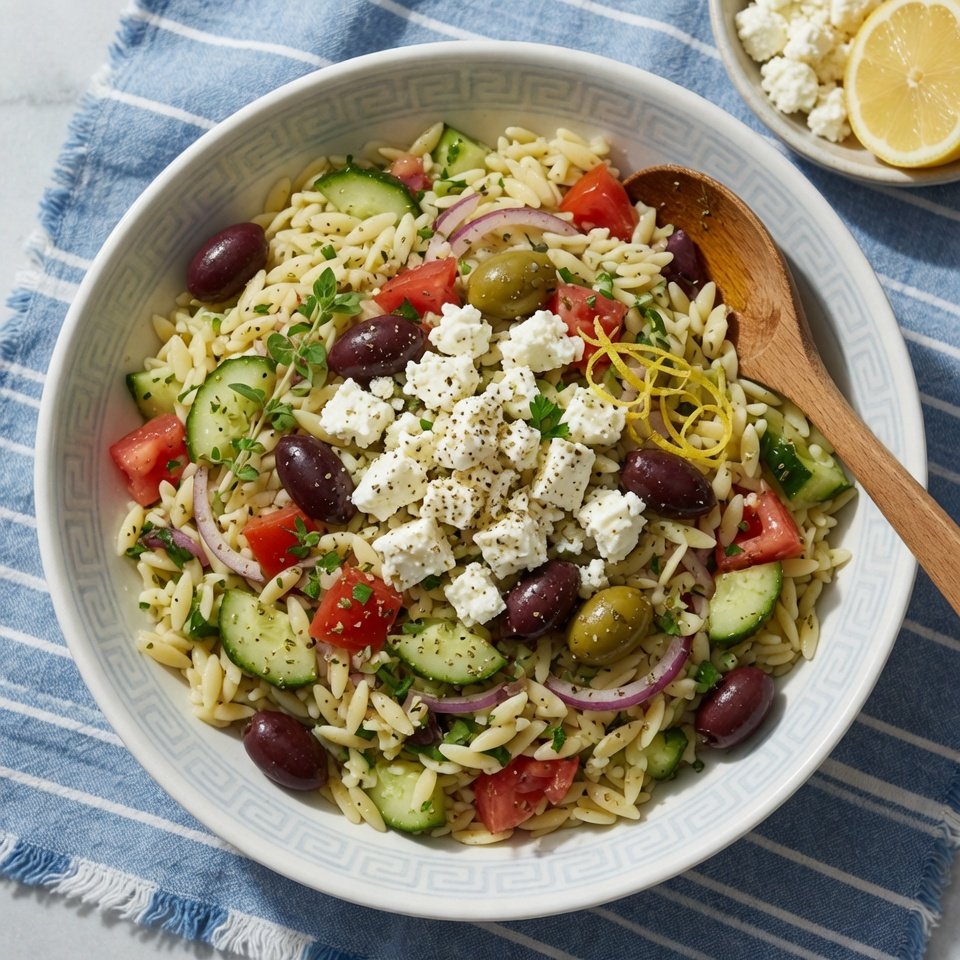
Step-by-Step Instructions
- Prepare the Dressing: In a medium bowl or jar, whisk together 1/3 cup of olive oil, 3 tablespoons of fresh lemon juice, 1 tablespoon of red wine vinegar, and 1 minced clove of garlic. Season generously with salt and pepper. Whisk vigorously to create a temporary emulsion. Set this aside to let the garlic infuse the liquid.
- Cook the Orzo: Bring a large pot of water to a rolling boil. Add a generous amount of salt—it should taste like a well-seasoned soup. Add 1 1/4 cups of dry orzo and cook according to package instructions until al dente, usually about 8-10 minutes.
- The Critical Rinse: Drain the orzo in a colander. Rinse immediately under cold water for about 10 seconds. This is non-negotiable. Rinsing removes surface starch that would otherwise turn your salad into a gummy block as it cools. Shake off excess water thoroughly.
- Chop the Vegetables: While the orzo cooks, prep your produce. Dice 1 medium English cucumber, halve 1 cup of grape tomatoes, and finely chop 1/2 cup of red onion. Slice 1/2 cup of Kalamata olives and chop 3 tablespoons each of fresh basil and parsley.
- Combine and Toss: In a large mixing bowl, combine the cooled (but still slightly damp) orzo, chopped vegetables, and 1 cup of crumbled feta cheese. Pour the dressing over the top. Toss gently but thoroughly to ensure every grain of pasta is coated.
- Chill the Salad: Cover the bowl and refrigerate for at least 1 hour. This marination time allows the orzo to absorb the vinaigrette and the flavors to meld.
- Serve and Adjust: Before serving, taste the salad. Orso is thirsty and will soak up dressing as it sits. If it looks dry, add a splash of olive oil or a squeeze of lemon juice to revive it.
⚠️ Common Mistakes to Avoid
Even simple recipes have pitfalls. Here is how to ensure your Greek Orzo Pasta Salad with Feta & Olives turns out perfectly.
Overcooking the Orzo: This is the number one crime. Mushy orzo creates a texture akin to paste. Aim firmly for al dente. Remember that the pasta will soften slightly as it absorbs the dressing in the fridge.
Under-salting the Water: Pasta water is your only chance to season the actual pasta itself. If the water isn’t salty, the inside of the orzo will taste bland, no matter how much dressing you add later.
Skipping the Rinse: Unlike hot pasta dishes where starch helps sauce cling, cold pasta salads require distinct, separate grains. Rinsing washes away that excess starch, ensuring the salad remains fluffy and spoonable.
Using Pre-Crumbled Feta: I mentioned this earlier, but it bears repeating. Pre-crumbled feta is dry and lacks the creamy tang of a block stored in brine. Treat yourself to the block.
Variations & Customizations
This recipe is a template, not a law. Here is how to riff on it.
Protein Additions
To make this a main course, fold in grilled chicken, shrimp, or chickpeas. The chickpeas add a nice nutty element that complements the creamy feta.
Vegetable Swaps
Seasonality matters. In summer, use heirloom cherry tomatoes for color variation. In cooler months, marinated artichoke hearts or roasted red peppers add a sweet, smoky depth that mimics the brightness of fresh tomatoes.
Cheese Alternatives
If you aren’t a fan of feta, halloumi (grilled and cubed) adds a chewy, salty contrast. For a vegan version, use a plant-based feta or simply increase the olives and add capers for that salty, briny kick.
Storage & Make-Ahead Tips
This salad is a meal-prepper’s dream, but it has rules. Store it in an air-tight container in the refrigerator for up to 3 days.
However, texture changes. The cucumbers will release water over time, slightly diluting the dressing. If you are making this strictly for meal prep, consider storing the dressing separately and tossing it in just before eating. This keeps the vegetables crisp and the flavors sharp. Freezing is not recommended; the high water content in the fresh vegetables leads to a mushy, watery mess upon thawing.
💡 Pro Tips for the Best Greek Orzo Salad
The Warm Toss Trick: Tossing the dressing with the orzo while it is still slightly warm (but rinsed) helps the pasta absorb the vinaigrette more deeply. It creates a marinated effect rather than just a coated one.
Taste as You Go: Feta and olives vary wildly in salt content. Always taste your salad after the feta is added before adding extra salt to the dressing. You might find it needs none at all.
Reviving Leftovers: Leftover salad often looks dry because the orzo has drank all the oil. Don’t add more dressing immediately. A splash of water or a squeeze of lemon juice can often loosen it up without adding unnecessary calories.
Serving Suggestions
This dish is incredibly versatile. Serve it alongside grilled lamb chops for a classic Greek spread, or pair it with salmon for a lighter dinner. It holds up beautifully at BBQs next to heavier items like burgers, providing a bright, acidic counterpoint to rich meats. For a quick lunch, I often just top a bowl of it with a can of tuna or some white beans.
Frequently Asked Questions (FAQ)
+Why is my orzo salad dry?
Orzo is highly absorbent. As it sits in the fridge, it continues to soak up the oil and liquid from the dressing. To fix this, simply whisk together a small amount of olive oil and lemon juice and toss it in right before serving to refresh the texture.
+Can I make orzo salad the day before?
Yes, you can. In fact, the flavor improves overnight as the herbs and garlic infuse the pasta. Just be sure to store it in an airtight container and give it a vigorous toss, and perhaps a fresh squeeze of lemon, before serving.
+Do you rinse orzo for cold salad?
Absolutely. For cold salads, you must rinse the orzo under cold water to stop the cooking process and remove surface starch. If you skip this step, the pasta will stick together in a solid clump as it cools.
+What protein goes best with Greek orzo salad?
Grilled chicken and shrimp are classic choices that fit the Mediterranean theme. For a vegetarian protein, chickpeas or white beans blend seamlessly into the mix without overpowering the fresh herbs.
Conclusion
This Greek Orzo Pasta Salad with Feta & Olives is more than just a side dish; it is a lesson in balancing salt, acid, and fat. It comes together quickly, travels well, and actually gets better with time. Whether you stick to the classic recipe or throw in your own favorite vegetables, the technique remains the same: salt your water, rinse your pasta, and don’t skimp on the feta. Give it a try, and let me know how you made it your own in the comments below.
Greek Orzo Salad
Ingredients
Method
- In a medium mixing bowl whisk together olive oil, lemon juice, garlic and season with salt and pepper to taste, set aside.
- Cook orzo according to directions listed on package to al dente or just 1 minute shy. Drain and rinse under cold water for about 10 seconds. Drain well.
- Add all of the salad ingredients, including cooked orzo, to a large bowl and toss. Pour dressing over top and toss to evenly coat.
- Store in refrigerator up to 2 days.
Notes
- Rinse the orzo under cold water for about 10 seconds after draining; this stops the cooking process and prevents the pasta from becoming mushy.
- To enhance flavor without adding too much salt, consider using low-sodium olives or feta cheese, as both can be quite salty on their own.
- If you want to add some protein, chickpeas are a fantastic substitute that complements the salad well without overpowering other flavors.
- For optimal taste, let the salad sit in the refrigerator for at least 30 minutes before serving; this allows the flavors to meld beautifully.
- Store any leftovers in an airtight container in the fridge for up to 2 days; be aware that the salad may become slightly drier as it sits, so a splash of olive oil or lemon juice can refresh it before serving.