Introduction
Swiss steak is an enduring comfort dish that brings warmth and nostalgia to any dining table. This classic recipe transforms tougher cuts of meat into succulent, flavorful meals through a slow cooking process. The rich combination of tomatoes, vegetables, and seasonings melds beautifully, creating a satisfying sauce that’s perfect for spooning over your favorite side.
Often served with mashed potatoes or rice, Swiss steak is not just a meal; it’s an experience reminiscent of cozy family dinners. The method of braising the meat allows it to become tender and juicy while absorbing a depth of flavor from the accompanying sauce. Whether you’re cooking for a family gathering or a simple weeknight dinner, this dish is sure to impress.
Ingredients
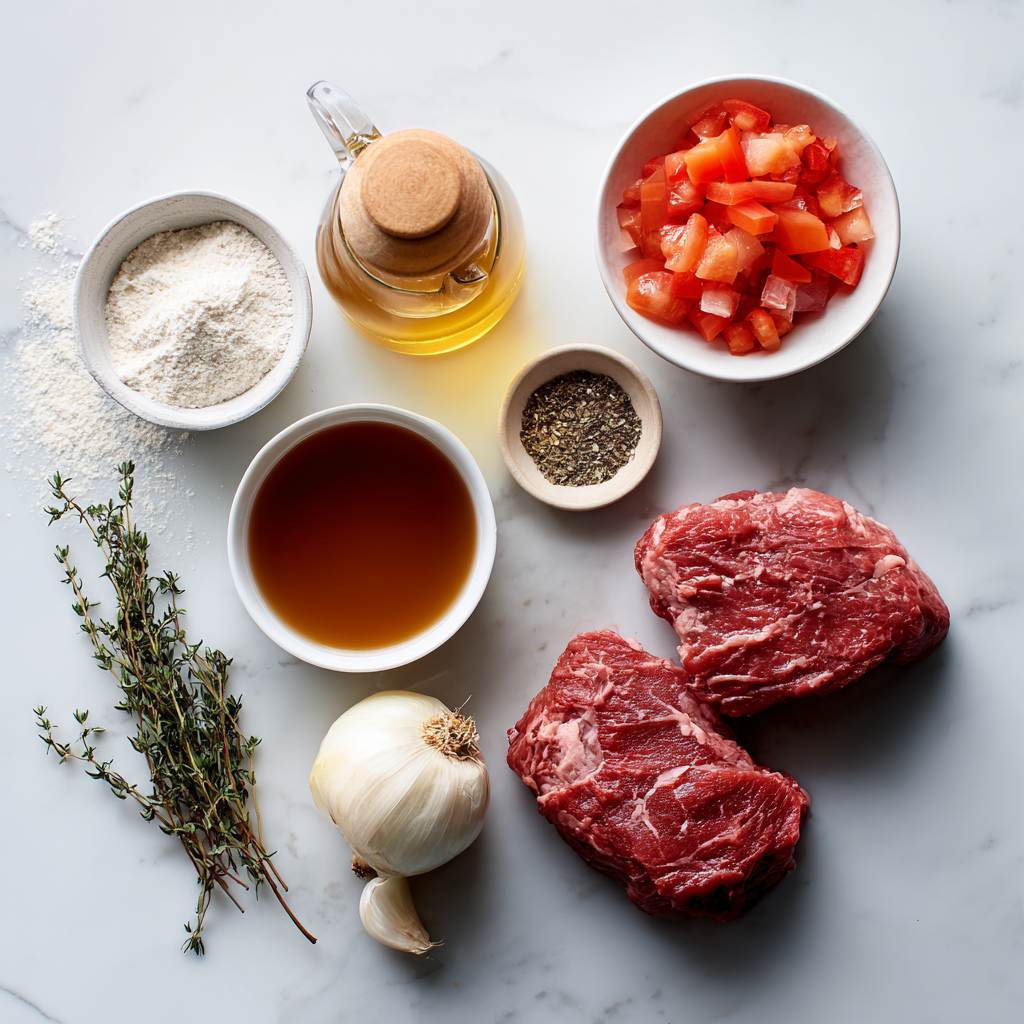
- 2 pounds round steak
Round steak is a lean cut of meat that benefits from slow cooking. It becomes tender when braised, making it ideal for dishes like Swiss steak that require long cooking times. - 1/4 cup all-purpose flour
Flour is used to coat the steak, helping to create a brown crust during searing. This crust adds flavor and contributes to the thickness of the sauce. - 2 tablespoons vegetable oil
Vegetable oil is used for frying the steak to achieve the desired sear. It has a high smoke point, which is ideal for browning meat. - 1 large onion, chopped
Onions provide sweetness and depth of flavor to the dish. They soften during cooking and become part of the delectable sauce. - 2 garlic cloves, minced
Garlic enhances the overall flavor profile with its aromatic essence. It melds well with the other vegetables and adds a zesty note. - 1 can (14.5 ounces) diced tomatoes
Canned tomatoes add acidity and balance to the dish while providing liquid for braising. They contribute to the sauce’s robust flavor. - 1 cup beef broth
Beef broth adds another layer of savory flavor to the dish. It helps keep the steak moist during cooking while enhancing the richness of the sauce. - 1 teaspoon Worcestershire sauce
Worcestershire sauce gives a depth of umami flavor, which helps to round out the taste of the dish, enriching the sauce. - 1 teaspoon dried thyme
Dried thyme adds herbal notes that complement the meat and vegetables. It’s a classic seasoning in many comforting dishes. - Salt and pepper, to taste
Seasoning is crucial in elevating the overall dish. Salt enhances flavors, while pepper adds a hint of warmth and complexity.
Directions & Preparation
Step 1: Prepare the steak by cutting it into portions.
Begin by slicing the round steak into manageable-sized pieces, about 2 to 3 inches thick. This helps in even cooking and ensures that each piece can easily absorb the flavors from the sauce. As you cut, consider the grain of the meat; cutting against it will yield more tender bites.
Step 2: Dredge the steak in flour, seasoning with salt and pepper.
Coating the steak in flour not only helps develop a crispy crust but thickens the sauce during cooking. Make sure to season the flour with salt and pepper for added flavor. This step is essential as it sets the stage for a deliciously browned surface.
Step 3: Heat oil in a large skillet over medium-high heat.
Using a skillet allows for a good sear on the meat, helping to lock in juices and flavors. Ensure the oil is adequately heated before adding the steak; you should hear a sizzle when the meat hits the pan, which is crucial for browning.
Step 4: Sear the steak on both sides until browned.
Searing the steak creates a Maillard reaction, resulting in rich flavors and a beautiful crust. This step should take about 3-4 minutes per side—avoid overcrowding the pan to maintain heat and achieve proper browning.
Step 5: Remove the steak and add onions and garlic to the skillet.
After removing the steak, the residual oil and fond (brown bits) in the pan provide a flavorful base for the onions and garlic. Sautéing these ingredients allows them to soften and develop their flavors before linking back to the meat.
Step 6: Add diced tomatoes, beef broth, Worcestershire sauce, and thyme.
This combination of liquid ingredients forms the heart of the sauce. The acidity from the tomatoes balances the richness of the beef, while the broth adds depth. Stir well to dissolve any fond stuck to the bottom of the pan for maximum flavor.
Step 7: Return the steak to the skillet, cover, and simmer.
Covering the skillet locks in moisture, allowing the steak to braise in the sauce. Simmering on low heat for at least 1.5 to 2 hours ensures that the meat becomes fork-tender. Check occasionally, giving it a stir to prevent sticking.
Step 8: Once cooked, adjust seasoning and serve hot.
After cooking, taste the sauce for flavor balance, adjusting as needed with extra salt or pepper. The Swiss steak is best served hot over mashed potatoes, rice, or noodles, where the flavorful sauce can enhance every bite.
Choosing the Right Cut: Why Round Steak Works Best
Round steak, although often viewed as tough, becomes beautifully tender when cooked low and slow. This cut is a budget-friendly option that absorbs flavors exceptionally well during braising. The connective tissues break down, enriching the dish significantly. If round steak isn’t available, consider flank or chuck steak as suitable substitutes that will still yield tender results.
Transforming Simple Ingredients into Culinary Magic
The magic of Swiss steak lies in the slow cooking process that combines simple ingredients to create an extraordinary dish. Each component plays a vital role, from the aromatic garlic and onion to the robust tomatoes and broth. This recipe offers an excellent opportunity to explore the art of braising, turning average ingredients into a remarkable meal that resonates with comfort and nostalgia.
Perfect Pairings: What to Serve with Swiss Steak
Swiss steak pairs well with a variety of sides that enhance its comforting, hearty nature. Creamy mashed potatoes are a classic choice, as they soak up the delicious sauce beautifully. Alternatively, consider serving it with hearty rice, buttery noodles, or even a simple green salad to balance the meals. Each option complements the dish’s rich flavors while adding a refreshing contrast.
FAQs
Why is my Swiss steak sauce too thick?
If the sauce is too thick, you can thin it out by adding a bit more beef broth or water while it simmers. Stir well to integrate the liquid, and check the consistency as it cooks.
What can I do if my Swiss steak turned out bland?
If the flavor is lacking, try enhancing it with additional Worcestershire sauce, salt, or freshly cracked black pepper. You can also boost the aromatic components by adding more herbs or spices.
Can I use a slow cooker for Swiss steak?
Absolutely! You can transfer the browned steak and sautéed veggies to a slow cooker, add the liquids, and cook on low for 6-8 hours, ensuring a tender and flavorful result.
What if my onions and garlic burn during cooking?
If they burn, they can impart a bitter flavor to the sauce. Make sure to sauté them at medium heat and stir frequently. If they do burn, it’s best to replace them with fresh onions and garlic.
Can I adjust the cooking time for smaller steak pieces?
Yes, if you’re using smaller pieces of steak, reduce the cooking time accordingly. Start checking for tenderness around the 1-hour mark to avoid overcooking.
Is it possible to add vegetables into the dish?
Certainly! Bell peppers, carrots, or celery can make a great addition. Add them alongside the onions and garlic for a boost of flavor and nutrition.
Conclusion
Old-Fashioned Swiss steak is a dish that not only connects us to our culinary roots but also provides an opportunity to savor deep, rustic flavors. Through time and patience, tougher cuts of meat can be transformed into tender bites that melt in your mouth, making each serving a true delight.
Whether you’re cooking for family or friends, this dish brings a sense of warmth and togetherness. So, roll up your sleeves and embrace the comforting tradition of Swiss steak—it’s a classic that belongs in every home cook’s repertoire.
Recipe Card
Old-Fashioned Swiss Steak: A Tender, Flavorful Classic
Ingredients
- 2 pounds round steak
- 1/4 cup all-purpose flour
- 2 tablespoons vegetable oil
- 1 large onion chopped
- 2 garlic cloves minced
- 1 can 14.5 ounces diced tomatoes
- 1 cup beef broth
- 1 teaspoon Worcestershire sauce
- 1 teaspoon dried thyme
- Salt and pepper to taste
Instructions
- Prepare the steak by cutting it into portions.
- Dredge the steak in flour, seasoning with salt and pepper.
- Heat oil in a large skillet over medium-high heat.
- Sear the steak on both sides until browned.
- Remove the steak and add onions and garlic to the skillet.
- Add diced tomatoes, beef broth, Worcestershire sauce, and thyme.
- Return the steak to the skillet, cover, and simmer.
- Once cooked, adjust seasoning and serve hot.
Notes
Additional serving suggestions: pair with a crisp salad, garlic bread, or roasted seasonal vegetables for balance.
For make-ahead, prep components separately and assemble just before heating to preserve texture.
Taste and adjust with acid (lemon/vinegar) and salt right at the end to wake up flavors.