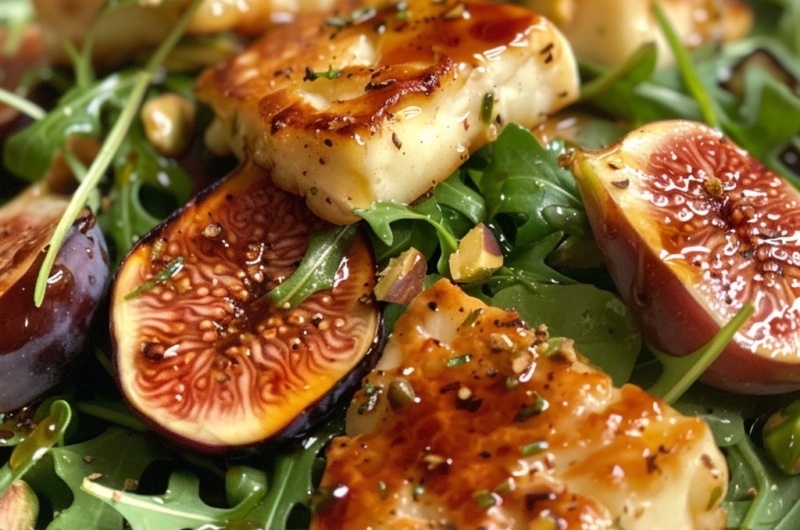
A vibrant interplay of salty, sweet, and peppery flavors, featuring golden-browned cheese and fresh summer fruit—ready in just 20 minutes.
📋 In This Article
- Introduction
- Why This Salad Works: The Science of Salty and Sweet
- Gather Your Ingredients: What You’ll Need
- Step-by-Step Instructions: Crafting Your Perfect Salad
- Common Mistakes to Avoid for a Flawless Salad
- Creative Variations & Substitutions
- Storage and Make-Ahead Tips
- Pro Tips for an Extra Special Salad
- Frequently Asked Questions (FAQ)
Introduction
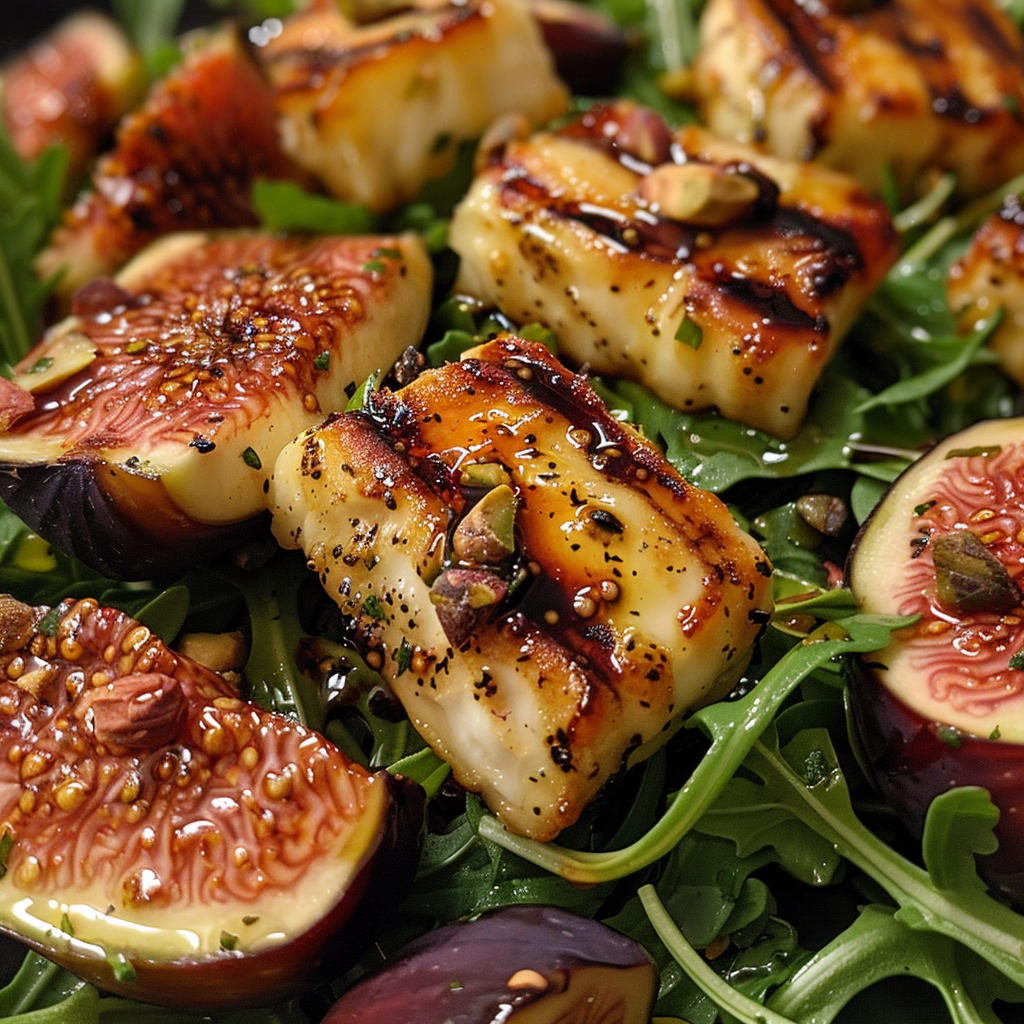
There is a specific kind of magic that happens when you introduce heat to a block of halloumi. It transforms from a rubbery, salty slab into a golden-crusted, savory pillow that practically begs to be paired with something sweet. That’s exactly what we’re doing here. This Refreshing Mediterranean Grilled Halloumi & Fig Salad with Arugula, Pistachios, and Honey-Balsamic Glaze brings that magic to your table. It isn’t just a pile of greens; it’s a study in contrast. You get the sharp, peppery bite of arugula cutting through the rich, salty cheese, while fresh figs burst with jammy sweetness. It’s the kind of dish that feels effortless but tastes like you spent an afternoon planning it.
Why This Salad Works: The Science of Salty and Sweet
We often talk about “balance” in food, but here, it’s structural. Halloumi is a Cypriot cheese made from a blend of goat and sheep milk, unique because it has a high melting point. Unlike a cheddar or brie that would liquify on the grill, halloumi’s proteins form a tight network that softens but holds its shape. When it hits the hot grates, the sugars on the surface undergo the Maillard reaction, creating that gorgeous brown crust and complex, nutty flavor notes.
This richness needs a counterpoint. Enter the fresh figs. Their natural sugars and mild acidity provide the perfect foil to the cheese’s salinity. We pair this with arugula (or “rocket”), which contains compounds like glucosinolates that give it its signature pungent, peppery kick. This isn’t just about flavor variety; it’s about chemical harmony. The honey-balsamic glaze acts as the bridge, its viscosity coating the cheese and greens to ensure every bite hits the same high notes.
Gather Your Ingredients: What You’ll Need
Quality matters here. Because the ingredient list is short, every item has to pull its weight.
Salad Components:
- Cypriot Halloumi or grilling cheese: Look for a block packed in brine. The brine preserves the cheese’s moisture, which is crucial for getting that squeaky, tender interior after grilling.
- Fresh figs: You want figs that yield slightly to pressure but aren’t mushy. If they feel hard, they’ll lack the jammy texture we want.
- Arugula: Baby arugula is usually more tender, but mature arugula offers a stronger, more bitter punch. Choose based on your preference for bite.
- Toasted pistachios: Raw nuts lack depth. Toasting them awakens their volatile oils, intensifying their nutty profile and adding a necessary crunch.
Honey-Balsamic Glaze Ingredients:
- Aged balsamic or Modena balsamic vinegar: Don’t use the cheap stuff. Aged balsamic is thicker and sweeter naturally. If yours is thin, you’ll need to reduce it longer.
- Honey: A mild clover honey works best so it doesn’t overpower the vinegar.
- Olive oil: Use a high-quality extra virgin olive oil for drizzling. Its grassy notes and low acidity are essential for the final finish.
- Salt and black pepper: Season the greens before dressing them.
- Lemon juice: Just a splash to cut through the oil.
Optional Additions:
- Fresh mint or basil: Tearing these herbs right before serving releases their aromatic oils, adding a fresh top note to the dish.
Step-by-Step Instructions: Crafting Your Perfect Salad
Step 1: Prepare the Honey-Balsamic Glaze
Start with the glaze so it has time to cool and thicken. In a small saucepan over medium heat, combine 1 cup of balsamic vinegar with 2 tablespoons of honey. Bring it to a gentle simmer. You’re looking for reduction—as the water content evaporates, the sugars concentrate, and the viscosity increases. Let it go for about 10-15 minutes until it coats the back of a spoon. It will thicken further as it cools. If it gets too sticky, just whisk in a drop of hot water.
Step 2: Grill the Halloumi
While the glaze reduces, prep the cheese. Slice the halloumi into 1/2-inch thick slabs. Thinner slices dry out; thicker ones don’t heat through. Pat them completely dry with paper towels—excess surface moisture creates steam, which inhibits browning.
Preheat your grill or grill pan to medium-high. Brush the grate lightly with oil. Place the halloumi on the grill and let it cook undisturbed for 2-3 minutes. We want a deep golden-brown char. Flip and grill the other side for another 2 minutes. The cheese should feel soft but not melting. I used to move the cheese around constantly thinking it would cook faster; trust me, just let it sit.
Step 3: Prepare the Figs and Arugula
While the cheese browns, slice the fresh figs into quarters. Place your arugula in a large bowl. Drizzle it with a little olive oil, a squeeze of lemon juice, and a pinch of salt. Tossing the greens with oil before adding the heavy dressing helps prevent the leaves from wilting too quickly.
Step 4: Assemble the Salad
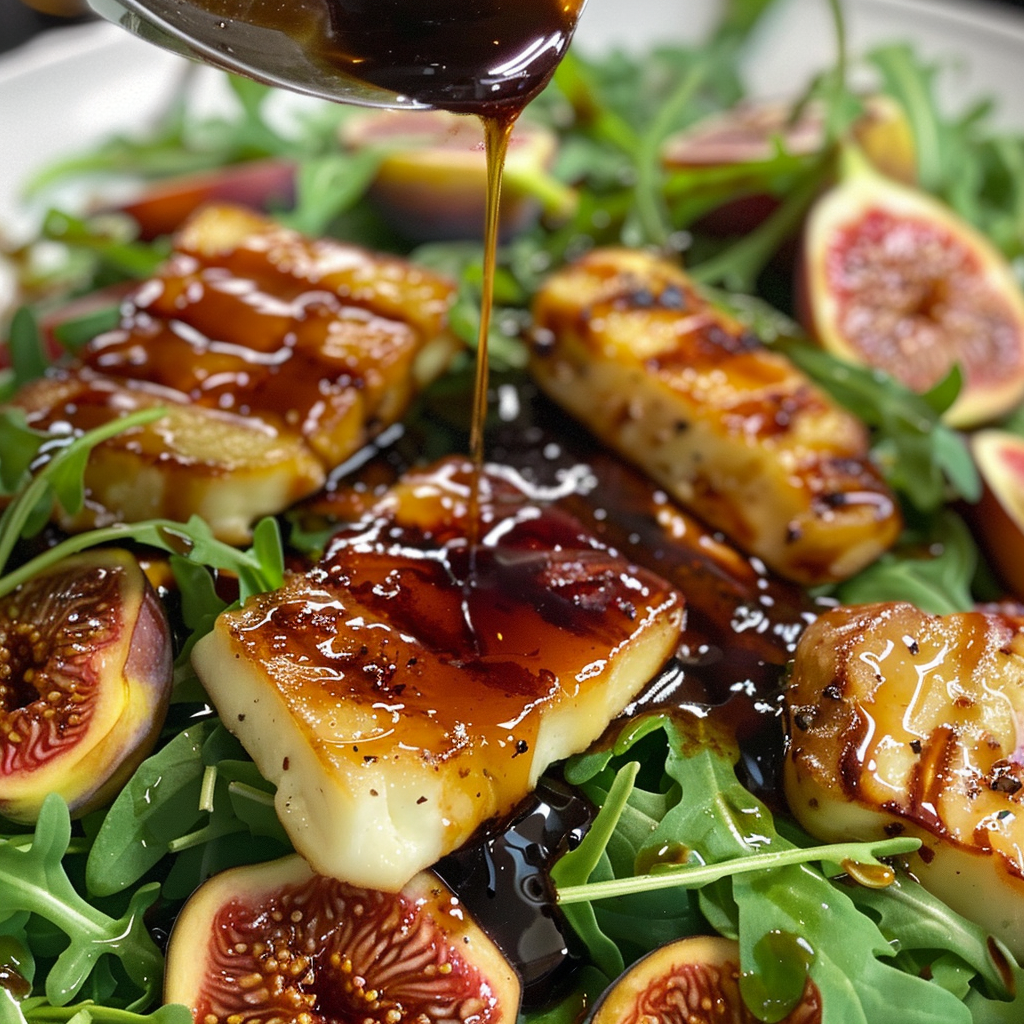
Pile the seasoned arugula onto a serving platter. Arrange the warm grilled halloumi and figs on top. Scatter the pistachios over the dish. Finally, drizzle the honey-balsamic glaze in a zigzag pattern across the top. Serve immediately while the cheese is still warm and the contrast between hot and cold is at its peak.
⚠️ Common Mistakes to Avoid for a Flawless Salad
Even a simple recipe has pitfalls. Here’s how to sidestep them:
- Overcooking Halloumi: Halloumi has a narrow window between “perfectly crisp” and “rubber bullet.” Once it’s golden, get it off the heat. If you leave it too long, the proteins tighten completely, squeezing out all moisture and making the texture tough.
- Using Under-Ripened Figs: Figs do not ripen much after picking. If you buy hard, green figs, they will be tasteless. Look for fruit that is slightly soft and drooping at the neck.
- Watery Dressing: If you don’t reduce the balsamic enough, it will run right off the greens and pool on the plate. You want a syrupy consistency that clings to the ingredients.
- Soggy Greens: Dressing the salad too early kills the texture. The acid in the vinaigrette breaks down the cell walls of the arugula. Wait until the last second to toss and dress.
- Lack of Grill Marks: This usually happens when the grill isn’t hot enough or the cheese is moved too soon. Ensure your grates are hot and oiled, and have patience.
Creative Variations & Substitutions
This recipe is a template, not a law. Feel free to riff on it.
If you can’t find halloumi, paneer or a firm feta works, though feta won’t hold its shape as well on the grill. For a non-vegetarian version, drape prosciutto or crispy bacon over the top; the cured pork fat echoes the saltiness of the cheese beautifully. If pistachios aren’t available, try walnuts or pecans, but toast them first. If figs are out of season, grilled peach wedges or even fresh berries offer a similar sweet profile. For a different green, baby kale or spinach provide a milder base if arugula’s bite is too aggressive.
Storage and Make-Ahead Tips
This dish is best eaten the moment it is assembled, but you can prep components ahead. Store the honey-balsamic glaze in a jar at room temperature for up to a week. Keep grilled halloumi and figs in separate airtight containers in the fridge. Note that refrigerated halloumi will lose its squeaky texture and become firmer. While you can reheat it in a skillet, it’s never quite the same as fresh off the grill. Store arugula and pistachios separately to maintain crunch. Assemble only when ready to serve.
💡 Pro Tips for an Extra Special Salad
To take this from “good” to “unforgettable,” consider these finishing touches. First, seasoning halloumi with a pinch of flaky sea salt after grilling highlights its savory notes. Second, use high-quality olive oil for the final drizzle; its grassy, peppery flavor cuts through the richness. Third, master the balsamic reduction technique—watch it like a hawk in the final minutes; sugar burns fast. Fourth, toast the nuts in a dry pan until fragrant. Finally, consider your plating; use a wide, shallow bowl so the ingredients don’t get buried, ensuring every forkful has a bit of cheese, fruit, and nut.
Frequently Asked Questions (FAQ)
+Why is my halloumi rubbery?
You likely overcooked it. Halloumi’s proteins tighten up rapidly once the internal moisture evaporates. Aim for a golden exterior with a still-soft center. Also, make sure you slice it thick enough; thin slices dry out instantly.
+Can I use dried figs instead of fresh?
You can, but the texture will be completely different. Dried figs are chewy and intensely sweet. If you must use them, rehydrate them in warm water for 20 minutes, or sauté them briefly in butter to soften.
+How do I make balsamic glaze thicker?
Simmer it longer. The water needs to evaporate. If it looks thin in the pan, don’t worry—it thickens significantly as it cools. If it’s still runny at room temperature, put it back on the heat for another 2 minutes.
+Is this salad gluten-free?
Yes, strictly speaking, halloumi, figs, and arugula are naturally gluten-free. However, always check your cheese packaging, as some cheaper brands may use additives or processing aids that contain gluten.
+What wine pairs well with this salad?
A crisp, acidic white wine like Sauvignon Blanc or a dry Rosé cuts through the richness of the cheese and matches the acidity of the balsamic. Avoid heavy reds, which can clash with the salad’s fresh, peppery notes.
+Can I make this salad ahead of time?
You can prep the components, but do not assemble it. The arugula will wilt under the weight of the cheese and dressing, and the halloumi will lose its appealing texture. Keep everything separate until serving.