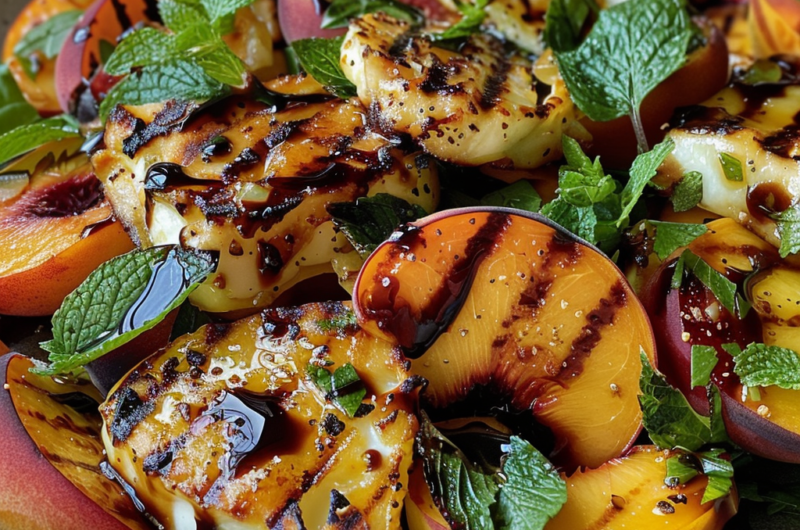
Sweet, smoky peaches and salty, seared halloumi meet a tangy balsamic reduction in this 20-minute summer salad.
📋 In This Article
- Introduction
- Why This Salad Works: A Study in Contrasts
- The Essential Ingredients for Your Mediterranean Masterpiece
- Step-by-Step: Crafting Your Grilled Peach & Halloumi Salad
- Common Mistakes to Avoid for a Flawless Salad
- Creative Variations: Customize Your Mediterranean Salad
- Serving Suggestions & Perfect Pairings
- Storage & Make-Ahead Tips
- Pro Tips for Next-Level Flavor
- Frequently Asked Questions (FAQ)
Introduction
There is a specific kind of magic that happens when heat hits fruit. It’s a transformation worth waiting for. This Refreshing Mediterranean Grilled Peach & Halloumi Salad with Mint and Balsamic Glaze relies on that exact alchemy, turning simple ingredients into a dish that feels far more composed than the effort it requires. We are talking about the intense contrast of warm, salty cheese against cool, juicy fruit—a combination that has anchored Mediterranean tables for generations.
But let’s be honest: a great ingredient list doesn’t guarantee a great salad. The success here lies in the technique. You need to understand how to manage heat so the halloumi develops a crust without turning rubbery, and how to caramelize the natural sugars in peaches without reducing them to mush. When you get it right, the savory, “squeaky” texture of the cheese plays perfectly against the syrupy balsamic and fresh mint. It is a masterclass in balancing fat, acid, and sweet.
Why This Salad Works: A Study in Contrasts
This isn’t just a pile of greens. It is a study in texture and temperature. The sweet-salty balance is the headline act, but the real depth comes from the Maillard reaction—the browning that occurs when the peach sugars and cheese proteins hit a hot grate. This creates hundreds of new flavor compounds, adding a savory depth that raw fruit simply cannot provide.
Halloumi is unique because it is an acid-set cheese. Unlike rennet-set cheeses that melt into goo, the proteins in halloumi form a tight, tangled mesh. This structure allows the cheese to hold its shape at high temperatures, giving you that satisfyingly crisp exterior and soft, chewy interior. Paired with the high acidity of the balsamic glaze and the aromatic volatility of fresh mint, you cut through the richness of the cheese, cleansing the palate between bites.
The Essential Ingredients for Your Mediterranean Masterpiece
Success starts at the grocery store. Because this recipe has so few components, the quality of each one matters immensely.
For the Salad
- 2 firm but ripe peaches: Look for fruit that gives slightly under thumb pressure but isn’t soft. Over-ripe peaches will disintegrate on the grill.
- 200g Halloumi cheese: Slice this into 8 thick slabs about 1/2 inch thick.
- 3 cups mixed greens or arugula: Arugula offers a peppery bite that stands up well to the rich cheese.
- 1 small red onion: Thinly sliced into rings.
- 1/4 cup toasted pistachios: For a textural crunch (optional but recommended).
For the Finish
- Fresh mint leaves: Tear these by hand rather than cutting them to prevent bruising.
- High-quality olive oil: You’ll use this for brushing the grill and finishing the salad.
- Balsamic vinegar: The foundation of your glaze.
Step-by-Step: Crafting Your Grilled Peach & Halloumi Salad
The process is fast, so having your “mise en place” (ingredients prepped and ready) is non-negotiable.
Step 1: The Balsamic Reduction
Before you touch the grill, get the glaze going. Pour 1 cup of balsamic vinegar into a small saucepan. Simmer over medium heat. Watch it closely. You are looking for the vinegar to reduce by about half, which usually takes 10 to 15 minutes.
To test if it’s done, dip a spoon in—the vinegar should coat the back of it lightly. It will thicken further as it cools. Remove it from the heat and let it rest. This concentration of flavor is essential; you want a viscous, syrupy consistency that clings to the cheese, not a thin liquid that pools at the bottom of the bowl.
Step 2: Preparing the Grill
Heat your grill or grill pan to medium-high. You want it hot enough to sear instantly. Clean the grates and brush them lightly with vegetable oil.
Step 3: Grilling the Peaches
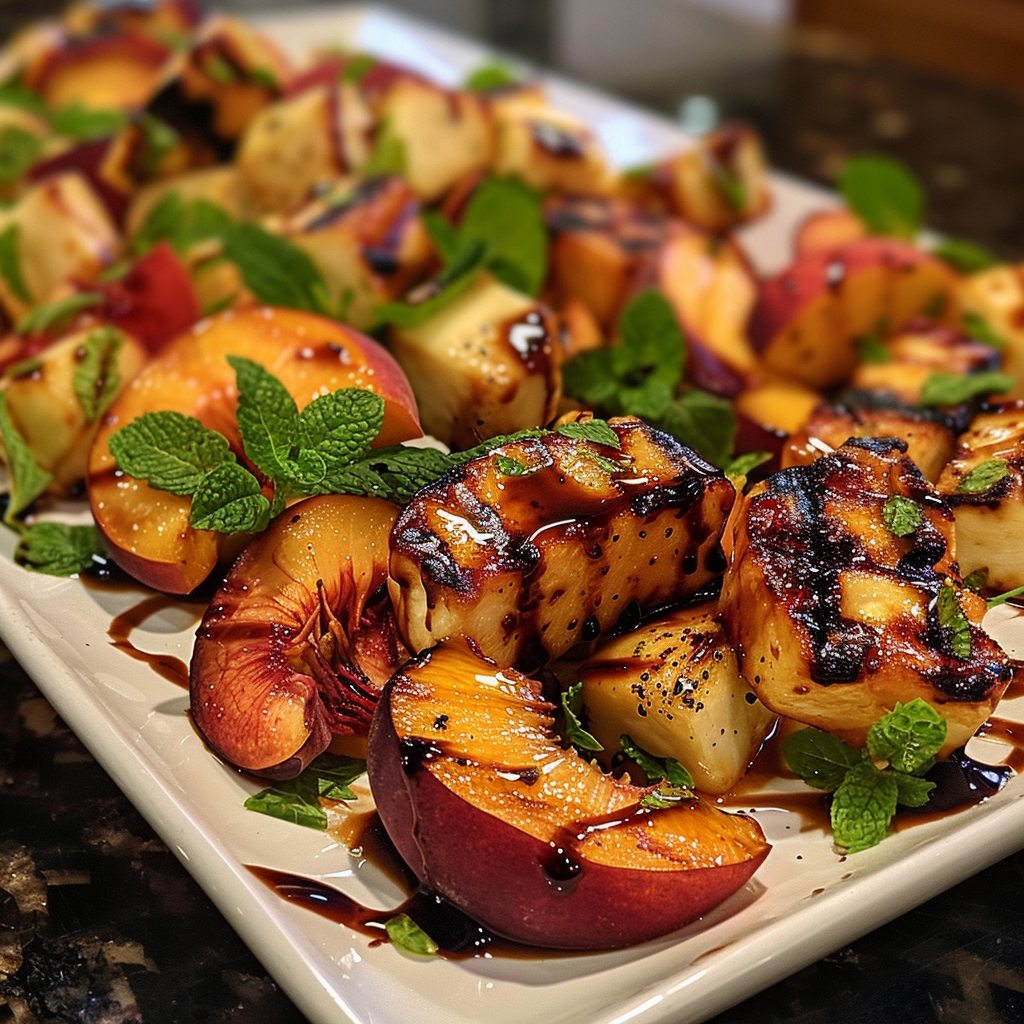
Slice the peaches into thick wedges (about 6 per peach). Brush the cut sides lightly with oil. Place them cut-side down on the grill. Cook for 3 to 4 minutes. You are looking for deep char marks—this is the caramelization that intensifies the sweetness. Flip and cook for another 2 minutes. Remove them before they get mushy.
Step 4: Searing the Halloumi
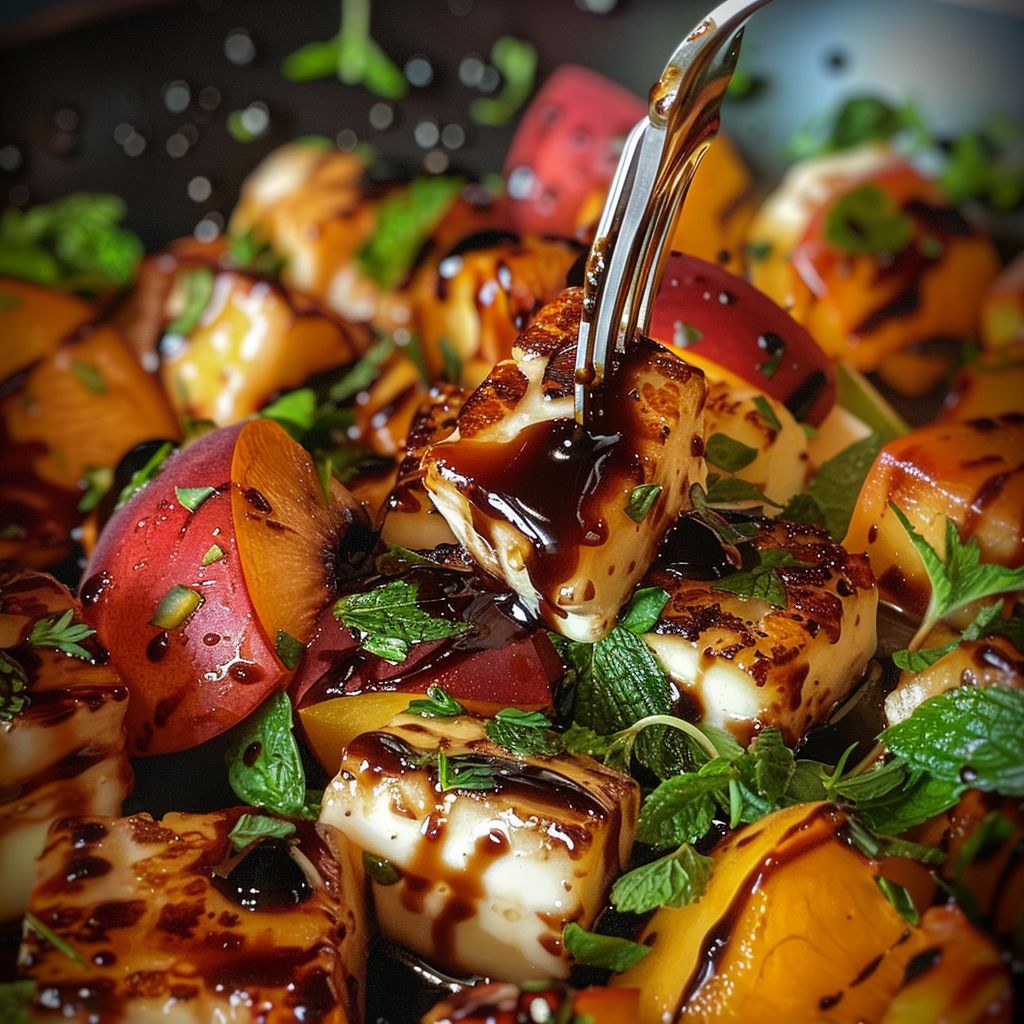
Pat the halloumi slices dry with a paper towel. Moisture is the enemy of a good sear here. Lightly brush with oil and place on the grill. Cook for 2 to 3 minutes per side. The cheese should be golden brown with a defined crust.
Important: Do not walk away. Halloumi goes from perfectly golden to burnt quickly due to its high salt content. Remove immediately once both sides are crusted.
Step 5: Assembly
Arrange your greens on a platter. Top with the warm grilled peaches and halloumi. Scatter the red onion and torn mint. Finish with a drizzle of the balsamic glaze and a final splash of olive oil. Serve immediately while the cheese is still warm.
⚠️ Common Mistakes to Avoid for a Flawless Salad
Even a simple recipe has pitfalls. Here is how to sidestep them.
Overcooking the Halloumi This is the most common error. Halloumi does not get better with more time. Once it hits that golden-brown hue, pull it. If you leave it too long, the moisture evaporates, and you are left with a rubbery, unpleasant texture. 2 to 3 minutes per side is the sweet spot.
Soggy Peaches Using overripe fruit is a guarantee for a mess. The heat breaks down the pectin rapidly. Stick to firm, slightly underripe peaches if anything; the heat will soften them perfectly.
Cold Cheese Halloumi releases more flavor and has a better texture when warm. If you grill it ahead of time, reheat it gently in a skillet for 30 seconds per side before serving. Cold halloumi can feel waxy on the palate.
Creative Variations: Customize Your Mediterranean Salad
Once you have the base technique down, the variations are endless.
- The Protein Boost: Grilled shrimp or chicken breast marinated in lemon and oregano pairs beautifully. The char on the meat mirrors the grill marks on the peaches.
- The Cheese Swap: If you cannot find halloumi, paneer is a great substitute with a similar texture, though it is milder in flavor. For a completely different profile, use thick slabs of feta, but note that feta will not grill the same way—it will soften but won’t develop a crust.
- Nutty Elements: Toasted walnuts or pine nuts add an earthy crunch that bridges the gap between the fruit and the cheese.
- Spicy Kick: A pinch of Aleppo pepper or chili flakes cuts through the sugar of the peaches and the balsamic.
Serving Suggestions & Perfect Pairings
This salad stands tall on its own, but it plays well with others. Serve it alongside a grilled protein like lemon-herb chicken or cedar-plank salmon for a substantial meal. If you are leaning vegetarian, a side of warm pita bread or a grain pilaf rounds out the plate.
For wine pairings, reach for a Sauvignon Blanc or a dry Rosé. The high acidity and citrus notes in these wines mirror the balsamic and mint, cleansing the palate between bites. Avoid heavy reds, which will clash with the acidity of the glaze.
Storage & Make-Ahead Tips
This dish is best eaten the moment it hits the plate. However, you can prep components ahead of time.
- The Glaze: Make the balsamic reduction up to a week in advance. Store it in a jar in the pantry.
- The Prep: Slice the onions, wash the greens, and chop the mint a day ahead. Keep them in airtight containers.
- The Leftovers: Store leftover assembled salad in the fridge for up to 24 hours, but know that the greens will wilt from the heat of the cheese and the acidity. Reheat the halloumi separately in a pan to revive its texture.
💡 Pro Tips for Next-Level Flavor
Dry the Cheese I used to skip this step and wondered why my cheese didn’t brown evenly. Patting the halloumi dry with paper towels before oiling it ensures you get a Maillard reaction (browning) rather than steaming.
Room Temperature Ingredients Take the chill off the cheese for about 20 minutes before grilling. Cold cheese hitting a hot grill seizes up and can cook unevenly. Room temperature cheese browns more uniformly.
Layer Your Seasoning Don’t just rely on the glaze for flavor. Sprinkle a pinch of flaky sea salt over the peaches right as they come off the grill. It highlights their sweetness and contrasts with the tangy glaze.
Frequently Asked Questions (FAQ)
+Why is my halloumi rubbery?
You likely overcooked it or sliced it too thin. Halloumi needs high heat for a short duration. Think of it like searing a scallop—fast and hot. Once it browns, the proteins tighten; cooking longer just expels moisture and toughens the texture.
+Can I make this salad without a grill?
Absolutely. Use a cast-iron skillet or grill pan on the stovetop. Heat it until it’s smoking slightly before adding the peaches and cheese. You won’t get the smoky flavor from charcoal, but you will still achieve the necessary caramelization and char marks.
+What can I substitute for balsamic glaze?
If you don’t have time to reduce vinegar, mix 1 tablespoon of balsamic vinegar with 1 teaspoon of honey or maple syrup. It won’t have the same viscosity, but it provides the necessary sweet-and-sour balance. A high-quality pomegranate molasses also works well.
+How do you pick a good peach for grilling?
Smell it. A ripe peach should smell distinctly floral and sweet. For grilling, give it a gentle squeeze; it should yield slightly but feel firm. If it feels like a water balloon, save it for eating raw.
+Is halloumi safe to eat without cooking?
Yes, halloumi is safe to eat raw. It is a preserved cheese packed in brine. However, its high melting point and salty nature make it much more palatable when heated, which mellows the saltiness and improves the texture.