Introduction
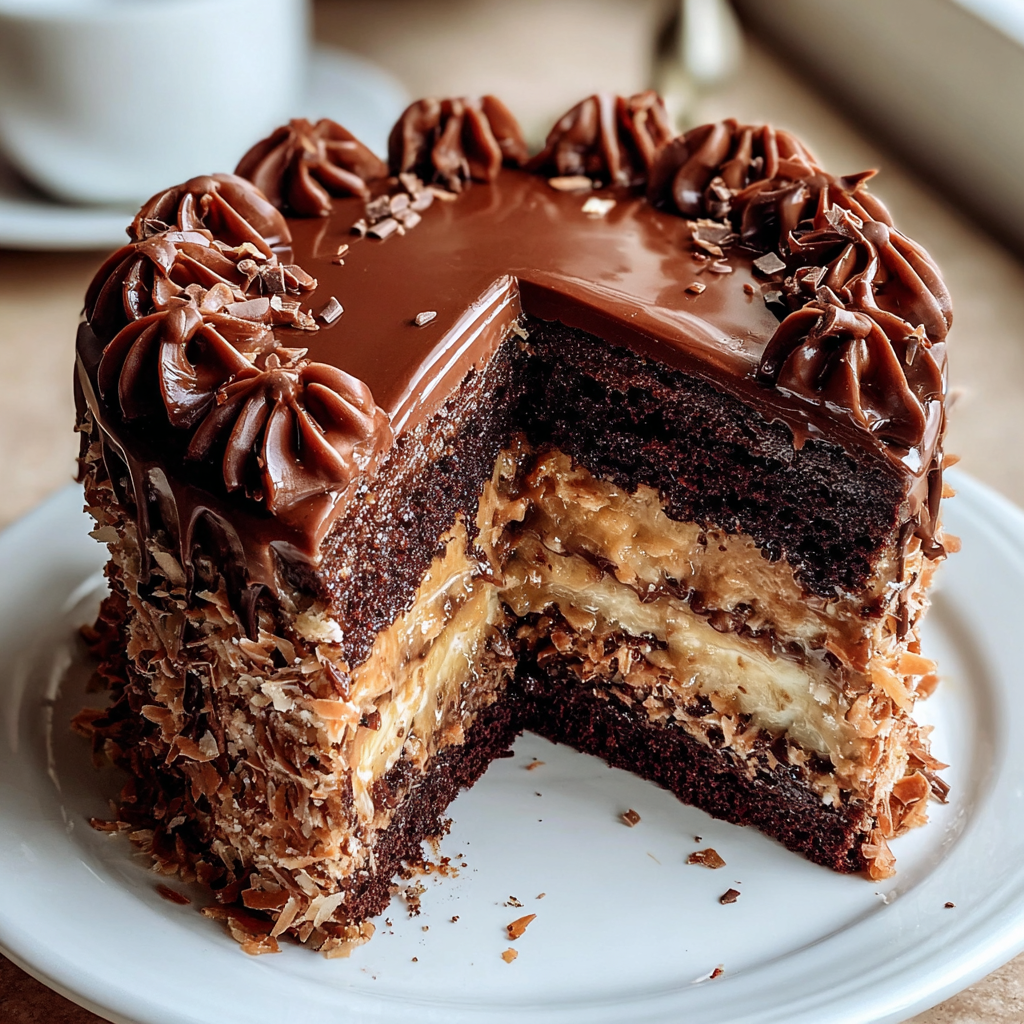
German Chocolate Cake is a beloved dessert that combines rich chocolate layers with a uniquely textured coconut-pecan frosting. Despite its name, the cake does not hail from Germany, but rather it's named after an American named Samuel German, who invented a dark-baking chocolate in 1852.
This delightful cake is perfect for celebrations, gatherings, or simply indulging in at home. With its moist layers and nutty topping, it strikes a balance between sweetness and texture, making every bite a memorable experience. Let’s dive into the ingredients and the process that will bring this classic recipe to life.
Ingredients
- 2 cups all-purpose flour
All-purpose flour provides the structure for the cake, allowing it to rise properly and maintain a moist yet airy texture. - 2 cups granulated sugar
Sugar not only sweetens the cake but also aids in its ability to retain moisture, contributing to a tender crumb. - 3/4 cup unsweetened cocoa powder
Cocoa powder imparts the rich chocolate flavor that defines this cake, while also adding to the cake's dark color. - 1 1/2 teaspoons baking powder
Baking powder acts as a leavening agent, helping the cake to rise and achieve a light, fluffy texture. - 1 1/2 teaspoons baking soda
Similar to baking powder, baking soda is a leavening agent that, combined with an acid, promotes the rise of the cake. - 1 teaspoon salt
Salt enhances the overall flavor profile of the cake, balancing sweetness and enriching the chocolate notes. - 1 cup buttermilk, room temperature
Buttermilk adds moisture to the batter and reacts with the leavening agents to create a fluffy texture. - 1/2 cup vegetable oil
Oil keeps the cake moist and adds richness, creating a tender crumb that melts in your mouth. - 2 large eggs
Eggs act as a binding agent in the cake, providing structure and moisture, which helps the cake to hold its shape. - 2 teaspoons vanilla extract
Vanilla extract contributes to the cake's overall flavor, enhancing the sweetness and chocolate notes. - 1 cup boiling water
The boiling water helps to bloom the cocoa, enhancing its flavor, and it increases the moisture content of the cake. - 1 cup sweetened shredded coconut
Coconut adds texture and a subtle sweetness, which contrasts beautifully with the chocolate layers. - 1 cup chopped pecans
Pecans provide a crunchy texture and a nutty flavor that complements the sweetness of the frosting. - 1/2 cup heavy cream
Heavy cream adds creaminess to the frosting, making it smooth and rich. - 1 cup confectioners' sugar
Used for sweetness and thickness, confectioners' sugar gives the frosting its desired sweetness and creamy consistency. - 1 cup semi-sweet chocolate chips
Chocolate chips bring an additional hit of chocolate flavor to the frosting, enhancing the overall chocolate experience.
Directions & Preparation
Step 1: Preheat your oven to 350°F (180°C).
Preheating the oven is crucial for even baking. A hot oven ensures that the cake rises properly and develops a good texture. Make this step a priority to avoid uneven baking.
Step 2: Grease and flour three 9-inch round cake pans.
Greasing and flouring prevents the cake from sticking to the pans, allowing for easy removal once baked. It's best to use a generous coating of grease followed by flour to ensure smooth release.
Step 3: In a large mixing bowl, whisk together the dry ingredients: flour, sugar, cocoa powder, baking powder, baking soda, and salt.
Mixing the dry ingredients before adding wet ingredients helps to evenly distribute the leavening agents and cocoa. This step is essential for achieving a uniform texture in the cake.
Step 4: In another bowl, mix the wet ingredients: buttermilk, oil, eggs, and vanilla extract until well combined.
Combining wet ingredients thoroughly ensures that the eggs are well integrated, which helps with the emulsification process. This contributes to a smooth batter, crucial for the cake's final texture.
Step 5: Gradually add the wet mixture to the dry ingredients and mix until just combined. Then stir in the boiling water until smooth.
Merging wet and dry mixtures should be done gently to avoid overmixing, which can lead to a dense cake. The boiling water helps to hydrate the ingredients and improve texture, yielding a moist cake.
Step 6: Divide the batter evenly among the prepared pans and smooth the tops.
Dividing the batter ensures even baking among all layers. Smoothing the tops allows for consistent rising and a flat surface to frost later.
Step 7: Bake for 30-35 minutes or until a toothpick comes out clean from the center.
Keep an eye on the cakes toward the end of baking. Overbaking can lead to dryness, so this is where your toothpick test comes in. Remove from the oven once they’re just done.
Step 8: Allow the cakes to cool in the pans for 10 minutes, then remove and cool completely on wire racks.
Cooling in the pan briefly helps set the cake's structure, making it easier to remove without breaking. Transferring to wire racks allows for even cooling, essential for frosting.
Step 9: In a saucepan, combine coconut, pecans, and heavy cream over medium heat. Cook until thickened, about 10 minutes.
Cooking the frosting base develops flavors and thickens it to the right consistency for spreading. Stir regularly to prevent sticking and burning.
Step 10: Once thickened, remove from heat and let cool before mixing in confectioners' sugar and chocolate chips until smooth.
Allowing the mixture to cool prevents the chocolate from melting into a runny state. This step also ensures the frosting spreads easily on your cake layers.
Step 11: Frost the first cake layer and then stack the second on top, repeating the process. Finally, frost the top and sides of the cake.
Layering and frosting in this manner allows for even distribution of the frosting, ensuring every layer is flavorful. Take your time to smooth the frosting for a beautiful finish.
Step 12: Garnish with additional coconut and pecans if desired.
Garnishing adds visual appeal and highlights the cake’s flavors. It’s a great way to make the cake look even more inviting.
Step 13: Slice, serve, and enjoy the rich flavors of your German Chocolate Cake!
Serving the cake allows everyone to experience its delicious layers. Consider pairing it with a scoop of vanilla ice cream to elevate the dessert experience.

Understanding the Origins of German Chocolate Cake
While the cake is often misattributed to German culinary traditions, it actually has American roots. Named after Samuel German, its unique flavor comes from the dark-baking chocolate he developed. This cake has evolved into a rich dessert showcasing chocolate, coconut, and pecans, a trio that has become a signature combination in American baking.
The Role of Coconut and Pecans in the Frosting
Coconut and pecans are not merely decorative; they provide essential texture and flavor contrasts to the creamy frosting. The sweet, chewy coconut pairs excellently with the crunchy pecans, creating an engaging mouthfeel. They complement the chocolate cake layers beautifully, making each bite a delightful experience of flavors and textures.
Tips for Perfectly Layered Cakes
Achieving perfectly layered cakes requires attention to detail. Ensure cakes are completely cooled before frosting to maintain the integrity of the layers. Use a serrated knife to level the tops, ensuring an even stacking process. Utilize the 'crumb coat' technique—applying a thin layer of frosting to seal in crumbs—before applying the final coat for a smooth finish.
FAQs
What if my cake batter is too thick?
If your cake batter is too thick, try adding a little more boiling water or buttermilk, a tablespoon at a time, until you achieve a smoother consistency.
How do I adjust the recipe for a different pan size?
If using different pan sizes, adjust the baking time accordingly. Smaller pans may require less time, while larger pans may need additional time. Always check for doneness with a toothpick.
Why did my frosting turn out too runny?
A runny frosting often results from either too much liquid or not enough powdered sugar. To thicken it, gradually add more confectioners' sugar until it reaches your desired consistency.
Can I use unsweetened chocolate instead of semi-sweet chocolate chips?
You can use unsweetened chocolate, but you'll need to adjust the sugar content in the frosting as it will make it less sweet. For every ounce of unsweetened chocolate, add two teaspoons of sugar.
What can I do to enhance the flavor of my cake?
Consider adding espresso powder to the dry ingredients; it deepens the chocolate flavor without making the cake taste like coffee.
Why is my cake dense instead of fluffy?
Dense cakes can occur from overmixing the batter or not incorporating enough air into the ingredients. Be gentle when mixing to maintain some air, and ensure you measure your ingredients accurately.
Conclusion
Creating a German Chocolate Cake is a rewarding endeavor that brings joy to both the baker and those fortunate enough to indulge in it. The unique combination of chocolate, coconut, and pecans offers a delightful treat that stands out in any dessert lineup.
Whether baking for a special occasion or just to satisfy a sweet craving, this cake is sure to impress. Embrace your creativity as you bake and share the love of this classic dessert with friends and family.
Recipe Card
Rich Delight: Celebrating German Chocolate Cake
Ingredients
- 2 cups all-purpose flour
- 2 cups granulated sugar
- 3/4 cup unsweetened cocoa powder
- 1 1/2 teaspoons baking powder
- 1 1/2 teaspoons baking soda
- 1 teaspoon salt
- 1 cup buttermilk room temperature
- 1/2 cup vegetable oil
- 2 large eggs
- 2 teaspoons vanilla extract
- 1 cup boiling water
- 1 cup sweetened shredded coconut
- 1 cup chopped pecans
- 1/2 cup heavy cream
- 1 cup confectioners' sugar
- 1 cup semi-sweet chocolate chips
Instructions
- Preheat your oven to 350°F (180°C).
- Grease and flour three 9-inch round cake pans.
- In a large mixing bowl, whisk together the dry ingredients: flour, sugar, cocoa powder, baking powder, baking soda, and salt.
- In another bowl, mix the wet ingredients: buttermilk, oil, eggs, and vanilla extract until well combined.
- Gradually add the wet mixture to the dry ingredients and mix until just combined. Then stir in the boiling water until smooth.
- Divide the batter evenly among the prepared pans and smooth the tops.
- Bake for 30-35 minutes or until a toothpick comes out clean from the center.
- Allow the cakes to cool in the pans for 10 minutes, then remove and cool completely on wire racks.
- In a saucepan, combine coconut, pecans, and heavy cream over medium heat. Cook until thickened, about 10 minutes.
- Once thickened, remove from heat and let cool before mixing in confectioners' sugar and chocolate chips until smooth.
- Frost the first cake layer and then stack the second on top, repeating the process. Finally, frost the top and sides of the cake.
- Garnish with additional coconut and pecans if desired.
- Slice, serve, and enjoy the rich flavors of your German Chocolate Cake!
Notes
Additional serving suggestions: pair with a crisp salad, garlic bread, or roasted seasonal vegetables for balance.
For make-ahead, prep components separately and assemble just before heating to preserve texture.
Taste and adjust with acid (lemon/vinegar) and salt right at the end to wake up flavors.