Introduction
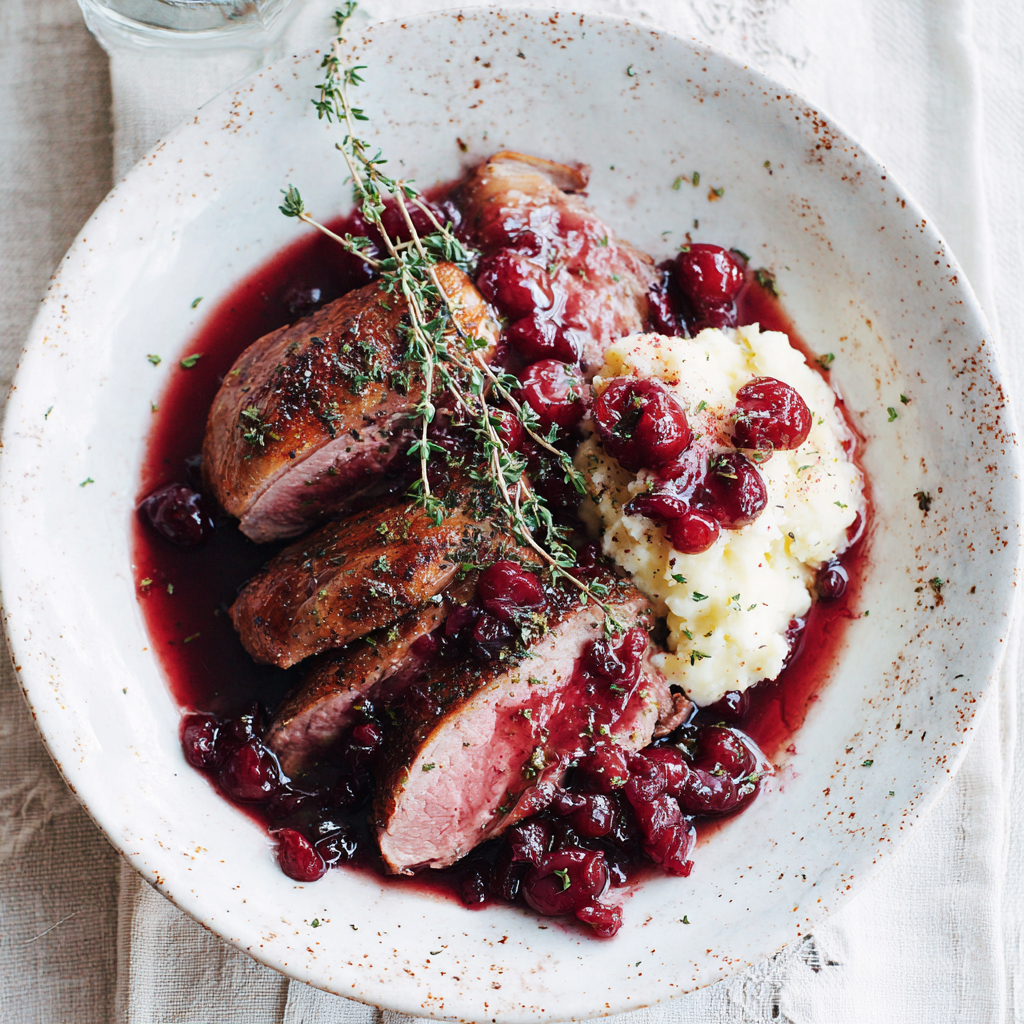
Duck can be a luxurious centerpiece for any meal, and when paired with a rich cherry-port sauce, it transforms into an unforgettable dish filled with depth and flavor. The sweetness of the cherries complements the savory notes of the duck beautifully, making for a dish that captures the essence of fine dining right in your home kitchen.
This combination is not just about taste; it brings the warmth of home cooking with the sophistication often found in high-end restaurants. As you delve into this recipe, prepare to impress yourself and your guests with a creation that’s as visually stunning as it is delicious. From selecting the right duck to mastering the sauce, each element plays a crucial role in the final result.
Ingredients
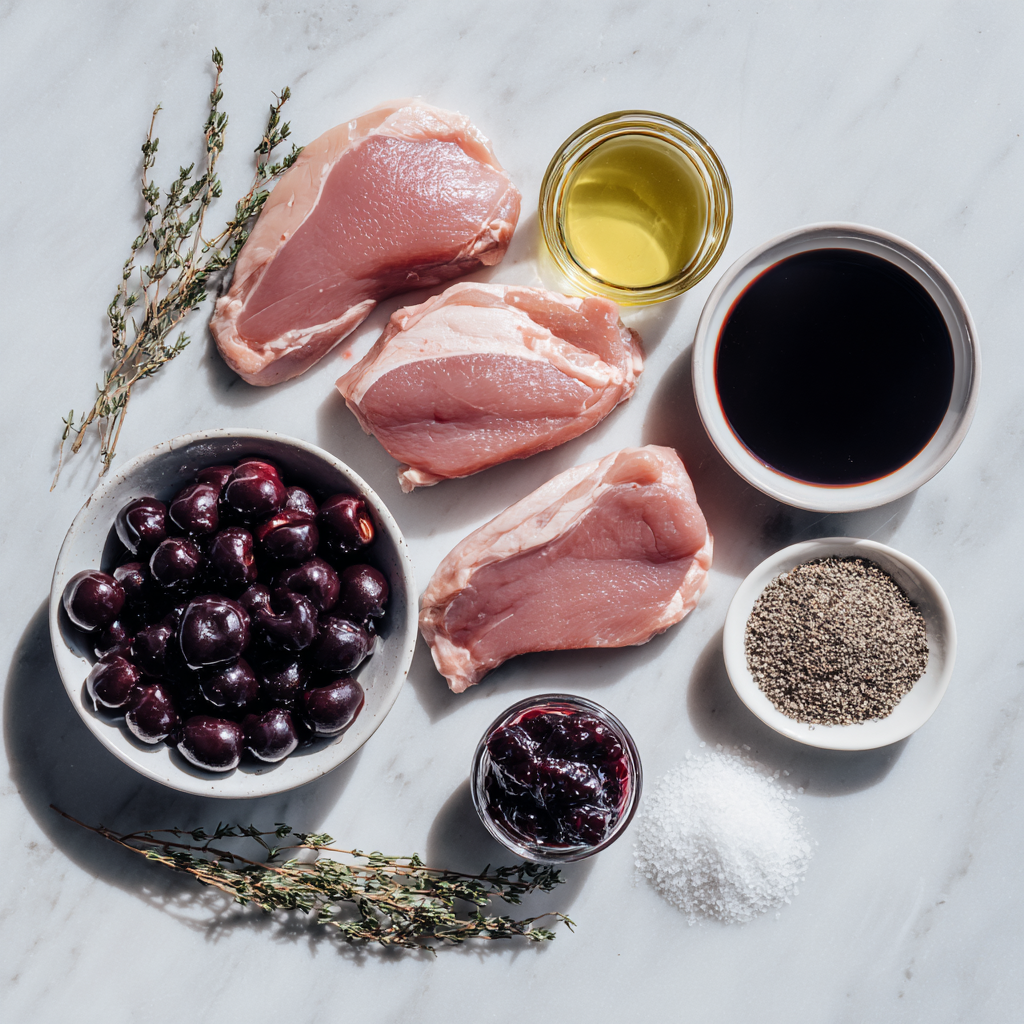
- 4 duck breasts
Duck breasts are the star of this recipe, providing a rich, gamey flavor that is enhanced by the sauce. Their tender texture and layer of fat make them perfect for searing, allowing the fat to render and create a delicious crispy skin. - 1 cup cherries (fresh or frozen)
Cherries bring a burst of sweetness and a hint of tartness that elevates the flavor of the dish. They also add color and a beautiful texture to the sauce, creating visual appeal on the plate. - 1/2 cup port wine
Port wine contributes a deep, sweet complexity that pairs perfectly with both the duck and the cherries. Its richness enhances the sauce, creating a luxurious coating for the meat that balances the dish beautifully. - 1 tablespoon balsamic vinegar
Balsamic vinegar adds acidity, brightening the overall flavor profile of the sauce. It cuts through the richness of the duck and complements the sweetness of the cherries. - 2 tablespoons honey
Honey acts as a natural sweetener, enhancing the cherries’ flavor while also adding a glaze-like quality to the sauce. This helps in creating a luscious, thick sauce that clings to the duck. - Salt and pepper to taste
Seasoning is essential for balancing flavors. Salt enhances the natural taste of the duck and other ingredients, while pepper adds a hint of spice that rounds out the dish. - 1 tablespoon fresh rosemary (or 1 teaspoon dried)
Fresh rosemary adds an aromatic herbaceous note that elevates the dish. It complements the duck well and infuses the sauce with earthy depth.
Directions & Preparation
Step 1: Prepare the duck breasts.
Start by scoring the skin of the duck breasts in a crosshatch pattern without cutting into the meat. This is crucial for rendering the fat and achieving a crispy skin. Season both sides generously with salt and pepper, ensuring a well-balanced flavor throughout the dish.
Step 2: Sear the duck breasts.
Place the duck breasts skin-side down in a cold, dry skillet over medium heat. This method allows the fat to render gradually. As the pan heats, watch for the skin to begin browning and crisping, which usually takes about 6-8 minutes. Once golden and crispy, flip the breasts to sear the other side briefly.
Step 3: Finish cooking the duck.
After searing, transfer the duck to a preheated oven set at 375°F (190°C) to finish cooking. This method ensures the meat stays juicy while the skin remains crispy. Cook for about 10-15 minutes until the internal temperature reaches 135°F (57°C) for medium-rare; adjust cooking time for your preferred doneness.
Step 4: Rest the duck breasts.
Once cooked, remove the duck from the oven and let it rest on a cutting board for about 5-10 minutes. Resting is critical as it allows the juices to redistribute throughout the meat, preventing them from spilling out when you cut into the breasts.
Step 5: Prepare the cherry-port sauce.
In the same skillet used for the duck, drain excess fat leaving about a tablespoon. Over medium heat, add cherries, port wine, honey, balsamic vinegar, and rosemary. Simmer the mixture, scraping the browned bits from the skillet—an essential step for maximizing flavor—as it reduces into a glossy sauce.
Step 6: Serve the duck with sauce.
Slice the rested duck breasts and arrange them on serving plates. Spoon the cherry-port sauce generously over the top, allowing the vibrant color and rich aroma to entice your guests. Garnish with fresh herbs for an added touch before serving, and enjoy a truly impressive meal.
Unlocking the Secrets of Duck Cooking
Cooking duck requires understanding the unique properties of its meat. The key is in rendering the fat properly and achieving a crisp skin without overcooking the flesh. Since duck is richer than chicken, it benefits from a careful balance of seasonings and accompaniments like the cherry-port sauce, which beautifully contrasts with its bold character.
Choosing the Right Cherries
Whether using fresh or frozen cherries, it’s essential to select high-quality fruit for your sauce. Fresh cherries should be firm, plump, and free from blemishes. If opting for frozen, ensure they are unsweetened to avoid an overly sweet sauce. The natural sweetness and tartness of good cherries make all the difference in enhancing the dish’s complexity.
Pairing Wine with Duck
When serving duck, particularly with a cherry-port sauce, a complementary wine can elevate the dining experience. Choose a medium-bodied red wine, such as Pinot Noir or a fruity Zinfandel, which can harmonize with the sauce’s sweetness while still standing up to the duck’s richness. Consider serving the same port you used in the sauce for a seamless flavor connection.
FAQs
What should I do if the sauce is too thick?
If your sauce turns out thicker than desired, you can add a splash of water or broth while it’s simmering. This will help achieve your desired consistency without compromising the flavor.
Can I substitute with another type of fruit?
Yes, you can experiment with other fruits like apricots or plums for the sauce. Each fruit will bring its unique flavor and sweetness, so adjust the honey accordingly.
What if my duck is overcooked?
If your duck turns out overcooked, serve it with a generous amount of the sauce, which can help mask the dryness. Consider adding a touch more honey to the sauce for a richer flavor that enhances juiciness.
How can I enhance the sauce flavor?
To deepen the sauce’s flavors, consider adding a splash of orange juice or a small amount of grated ginger. Both additions can create an aromatic lift and additional complexity.
Is it okay to use chicken instead of duck?
While chicken can be used, the flavor profile will be different. Duck’s richness plays a vital role in this dish, so if using chicken, consider adjusting the sauces to ensure balanced flavors.
Can I use different herbs for the sauce?
Absolutely! You can try thyme or sage instead of rosemary, each offering its unique aroma and flavor that can complement the duck and cherries beautifully.
Conclusion
Preparing duck with cherry-port sauce at home may seem daunting, but with practice and attention, you can master this exquisite dish. The layers of flavor from the fatty duck, sweet cherries, and robust port create an unforgettable dining experience.
With the right ingredients and techniques, you can create an impressive meal that surprises and delights. So roll up your sleeves, embrace the process, and enjoy the fruits of your labor as you share this delightful creation with friends and family.
Recipe Card
Savoring Duck with Cherry-Port Sauce at Home
Ingredients
- 4 duck breasts
- 1 cup cherries fresh or frozen
- 1/2 cup port wine
- 1 tablespoon balsamic vinegar
- 2 tablespoons honey
- Salt and pepper to taste
- 1 tablespoon fresh rosemary or 1 teaspoon dried
Instructions
- Prepare the duck breasts.
- Sear the duck breasts.
- Finish cooking the duck.
- Rest the duck breasts.
- Prepare the cherry-port sauce.
- Serve the duck with sauce.
Notes
Additional serving suggestions: pair with a crisp salad, garlic bread, or roasted seasonal vegetables for balance.
For make-ahead, prep components separately and assemble just before heating to preserve texture.
Taste and adjust with acid (lemon/vinegar) and salt right at the end to wake up flavors.