Introduction
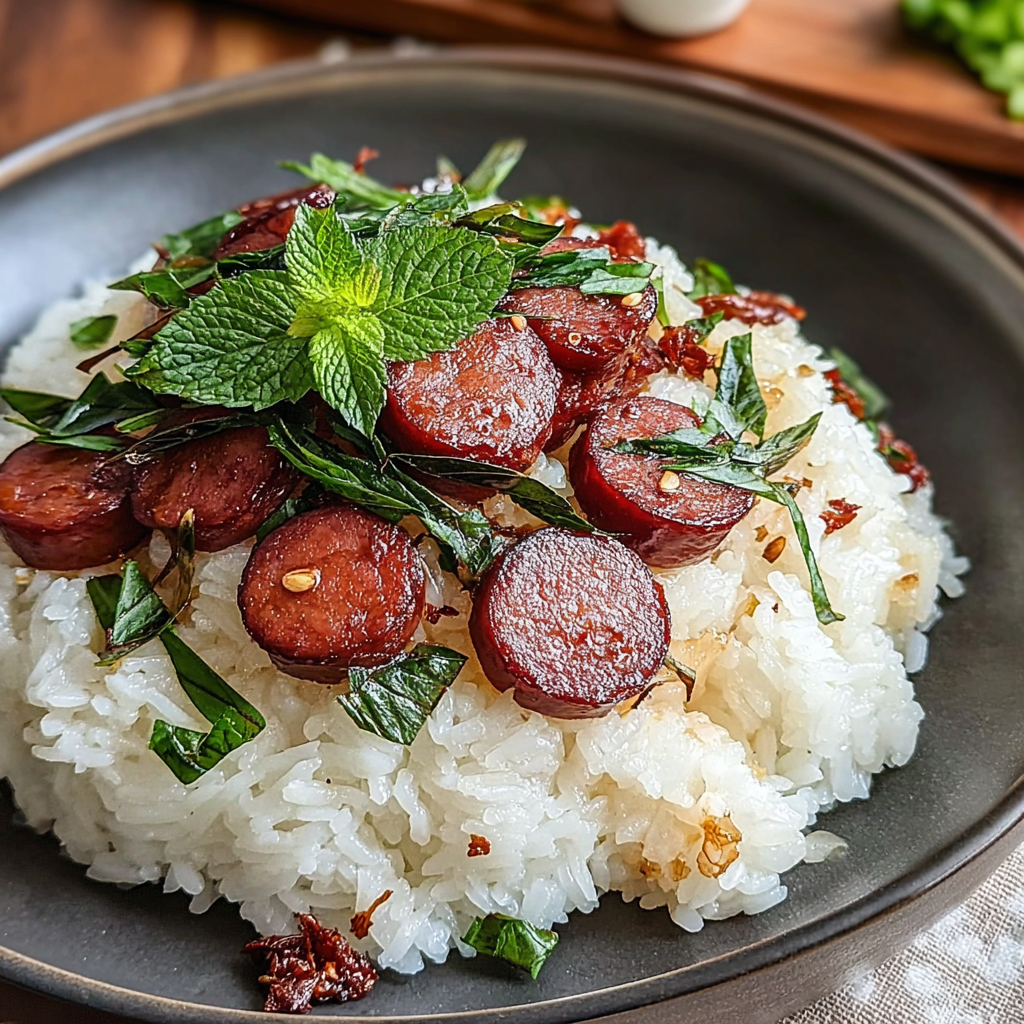
Vietnamese sticky rice, or xôi, is a beloved dish known for its tantalizing flavor and delightful texture. This comforting meal captures a fusion of ingredients and culinary traditions, often enjoyed during festivals or family gatherings.
The addition of Chinese sausage, with its rich and savory profile, elevates the sticky rice into a dish that can stand alone or serve as a perfect accompaniment. It embodies the harmony found in Vietnamese cuisine—balancing textures and flavors in every bite.
Ingredients
- 2 cups glutinous rice
Glutinous rice is essential for this dish as it holds moisture and becomes sticky when cooked. Its chewy texture is the hallmark of xôi, making each bite satisfying. - 3 Chinese sausages (lap Cheong)
Chinese sausages contribute a sweet and savory profile to the dish. Their fat content enhances the overall richness, adding depth to the rice. - 1 cup water (or broth)
Water or broth is used to steam the rice, infusing it with flavor. Using broth can significantly enhance the taste, adding an extra layer of richness. - 1 tablespoon vegetable oil
Oil helps to sauté the sausage, releasing its flavor and aroma. It also prevents the rice from sticking to the pot during cooking. - Salt, to taste
Salt enhances the overall flavor of the dish, balancing the sweetness of the sausage. A pinch is usually sufficient, considering the sausages are already salty. - Optional: chopped scallions for garnish
Scallions offer a fresh, crisp contrast to the sticky rice. They not only add color but also a hint of pungency that brightens up the dish.
Directions & Preparation
Step 1: Rinse the glutinous rice until the water runs clear.
Rinsing the rice removes excess starch, preventing the final dish from becoming gummy. This step is crucial as it maintains the ideal texture of the sticky rice.
Step 2: Soak the rinsed rice in water for at least 4 hours or overnight.
Soaking the rice allows it to absorb water, leading to even cooking and improved texture. Overnight soaking is recommended for optimal results, ensuring the grains become tender.
Step 3: Drain the rice and place it in a steaming basket lined with cheesecloth or parchment paper.
Using a steaming basket ensures even cooking and prevents the rice from falling through the holes. Lining the basket keeps the rice from sticking, making it easier to serve.
Step 4: Steam the rice over simmering water for about 30 minutes, or until translucent and sticky.
Steaming rather than boiling retains the rice's structure and moisture. The goal is to achieve a slightly translucent appearance, indicating that it is perfectly cooked.
Step 5: While the rice is steaming, heat the vegetable oil in a pan over medium heat.
Heating the oil now preps your cooking pan for the sausages. The right temperature is key; you want the oil hot enough to render fat from the sausages, enhancing their flavor.
Step 6: Slice the Chinese sausages thinly and sauté until browned and fragrant, about 4-5 minutes.
Cooking the sausages allows their sweetness to caramelize while the fat renders, making them crispy on the outside. This step adds vital flavor to both the sausages and the oil.
Step 7: Once the rice is done steaming, combine it with the sausage and mix gently.
Carefully mingling the rice and sausage ensures that the flavors intermingle without breaking the rice grains. Gently folding keeps the integrity of the sticky rice intact.
Step 8: Season with salt to taste, adding more if necessary based on the sausage's saltiness.
The salt will enhance the overall flavor, so adjust it according to your preference. Tasting at this stage is vital to achieve a well-balanced final dish.
Step 9: Serve warm and garnish with chopped scallions if desired.
Serving the sticky rice warm is crucial as this dish is best enjoyed fresh. Garnishing with scallions adds a pop of color, freshness, and a slight crunch to the dish.

The Flavors of Xôi: A Cultural Insight
Vietnamese sticky rice showcases a remarkable flavor profile that reflects the country’s agricultural bounty. Traditionally enjoyed during celebrations, this rice dish brings families together, often accompanied by various toppings. The reassurance of dependable comfort food combined with nostalgia makes sticky rice a staple in many households.
Choosing the Right Sausage: A Flavorful Addition
When selecting Chinese sausage, variety matters. Lap Cheong comes in different styles, some sweeter, others saltier. Depending on your preference, these variations can dramatically impact the overall taste of the dish. Opt for a mixture of sweet and savory sausages for a more complex flavor, enhancing the dish's authenticity.
Inevitability of Texture in Vietnamese Cuisine
Texture plays a vital role in Vietnamese culinary tradition. The sticky, chewy nature of glutinous rice combined with the crispy elements of sautéed sausage creates a balanced bite. This attention to texture not only satisfies the palate but also enriches the overall dining experience, elevating simple ingredients into a harmonious dish.
FAQs
What can I do if the rice is too dry after steaming?
If the rice turns out dry, adding a bit of water and gently re-steaming it can bring back moisture. Alternatively, mixing in a little broth or oil can compensate for the dryness.
How can I adjust the recipe for a larger serving?
To scale the recipe, simply maintain the same rice-to-sausage ratio. For every extra cup of rice, include an additional sausage. Adjust water accordingly to ensure proper cooking.
What if my sticky rice is not sticky enough?
If the rice isn't sticky, it may be due to insufficient soaking or overcooking. Ensure the rice is soaked adequately next time, and monitor the steaming time closely.
Can I use other types of sausage in this recipe?
Yes, you can experiment with different sausages like pork or turkey varieties. Adjust seasoning based on their flavor profile to ensure balance.
How can I enhance the dish with additional ingredients?
Consider adding mushrooms or peas to infuse more flavor and texture. Pre-cook these ingredients along with the sausage for a harmonious blend.
What should I do if the dish is too salty?
If your rice becomes too salty, offsetting with a squeeze of lime or adding diced vegetables can help balance the flavors.
Conclusion
Vietnamese sticky rice with Chinese sausage is a delightful dish that beautifully marries tradition with flavor. Each ingredient contributes to a complex yet comforting experience, perfect for any meal.
This recipe highlights the essence of Vietnamese cuisine, emphasizing texture, flavor, and the importance of fresh ingredients. Enjoy this dish at home for an authentic taste of Vietnam.
Recipe Card
Savoring Vietnamese Sticky Rice with Chinese Sausage
Ingredients
- 2 cups glutinous rice
- 3 Chinese sausages lap Cheong
- 1 cup water or broth
- 1 tablespoon vegetable oil
- Salt to taste
- Optional: chopped scallions for garnish
Instructions
- Rinse the glutinous rice until the water runs clear.
- Soak the rinsed rice in water for at least 4 hours or overnight.
- Drain the rice and place it in a steaming basket lined with cheesecloth or parchment paper.
- Steam the rice over simmering water for about 30 minutes, or until translucent and sticky.
- While the rice is steaming, heat the vegetable oil in a pan over medium heat.
- Slice the Chinese sausages thinly and sauté until browned and fragrant, about 4-5 minutes.
- Once the rice is done steaming, combine it with the sausage and mix gently.
- Season with salt to taste, adding more if necessary based on the sausage's saltiness.
- Serve warm and garnish with chopped scallions if desired.
Notes
Additional serving suggestions: pair with a crisp salad, garlic bread, or roasted seasonal vegetables for balance.
For make-ahead, prep components separately and assemble just before heating to preserve texture.
Taste and adjust with acid (lemon/vinegar) and salt right at the end to wake up flavors.