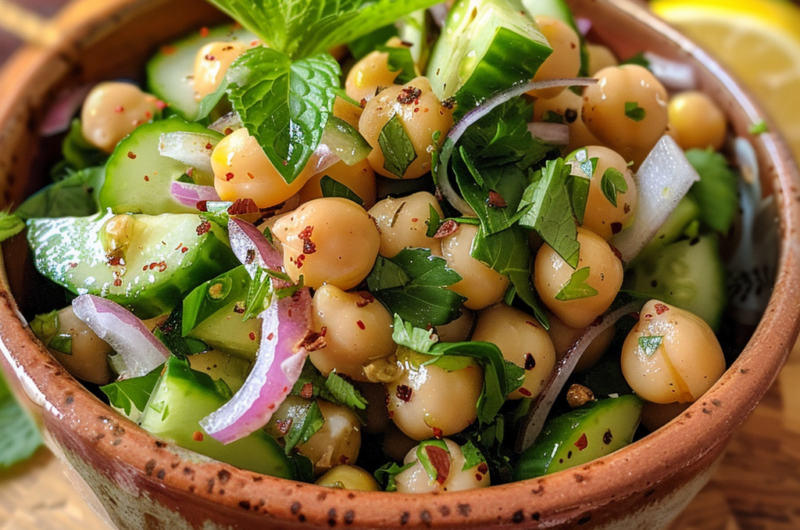
A 15-minute, no-cook wonder packed with protein, crunch, and the kind of bright, herby flavor that makes this the first thing to disappear from any potluck table.
📋 In This Article
Introduction
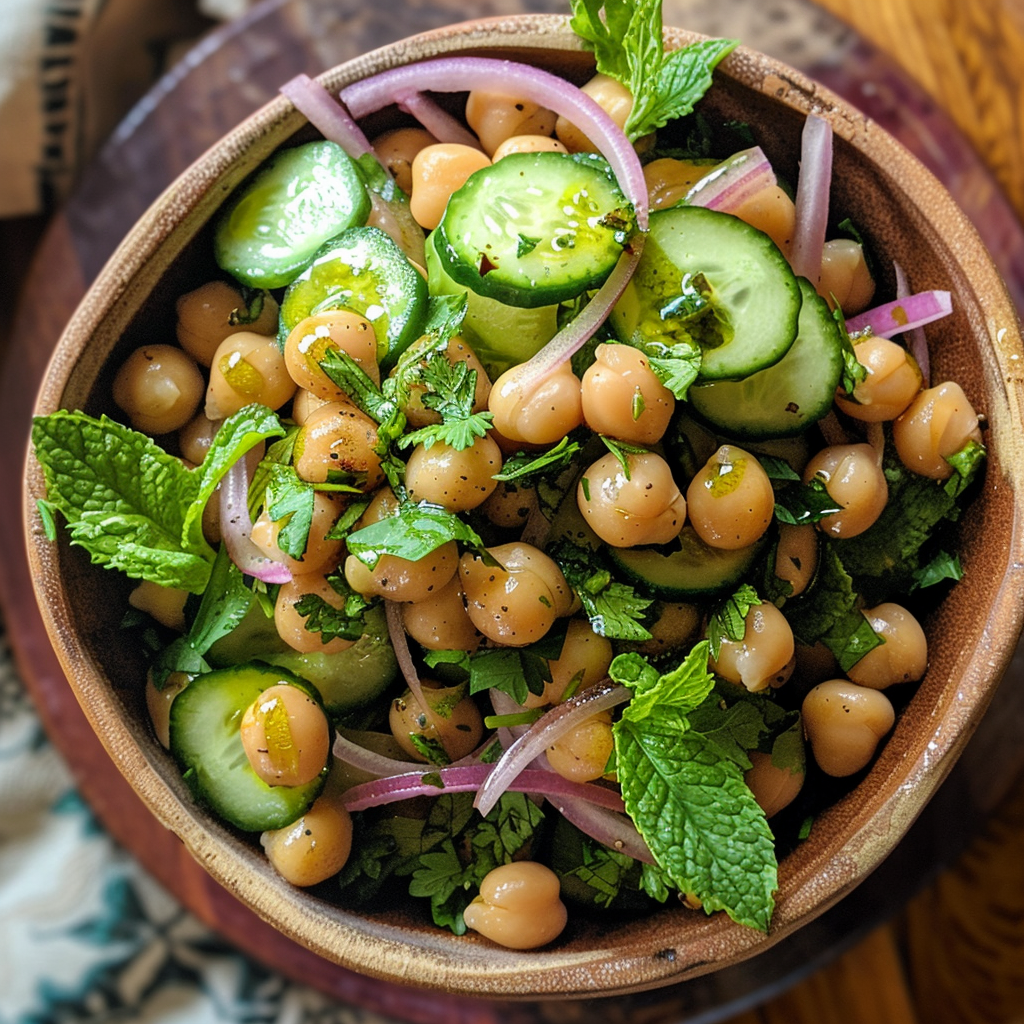
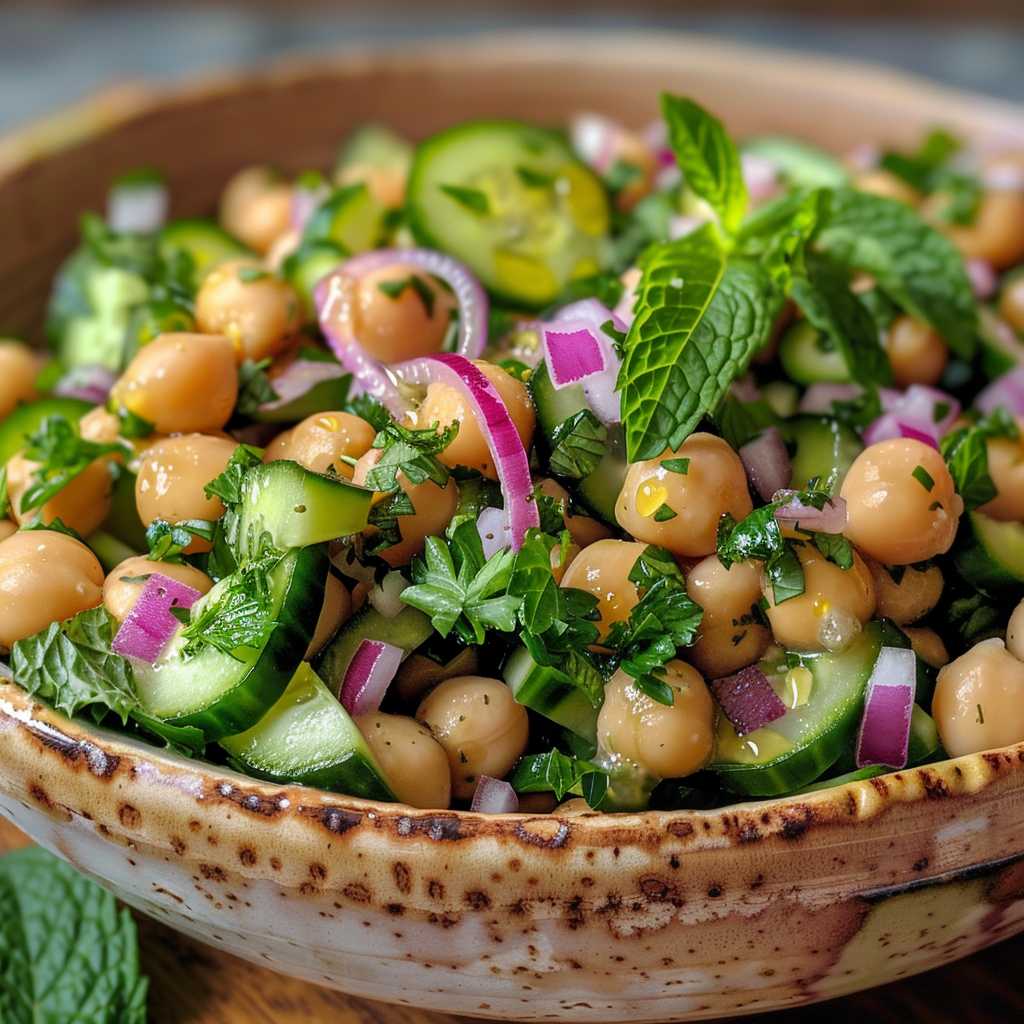
Some salads try too hard. This isn’t one of them. The Vibrant Mediterranean Chickpea and Cucumber Salad with Fresh Herbs and Tangy Lemon Vinaigrette succeeds because it understands a fundamental truth: when you start with great ingredients, you don’t need to fuss over them. Chickpeas bring substance and plant-based protein. Cucumbers contribute that irresistible snap. A handful of fresh herbs—parsley, dill, mint—transforms the ordinary into something that tastes like summer on a plate.
I’ve made variations of this salad more times than I can count. It’s the recipe I turn to when the refrigerator looks bare but I need something satisfying. It’s the dish that convinced my chickpea-skeptical friend that legumes could actually be delicious. The tangy lemon vinaigrette ties everything together with a brightness that cuts through the richness of feta and the earthiness of the beans. This is Mediterranean diet eating at its most accessible.
Why This Salad Earns a Permanent Spot in Your Rotation
Let’s be honest: most “quick” recipes still require hovering over a stove or chopping vegetables for twenty minutes. This one genuinely delivers on the promise. Fifteen minutes, one bowl, zero cooking. The protein-rich chickpeas make it substantial enough to stand alone as a light meal, while the fiber-rich combination keeps you satisfied far longer than a leafy green salad ever could.
The real magic happens in the interplay between textures and temperatures. Cold, crisp cucumbers. Creamy beans. Salty crumbles of feta. A dressing sharp enough to wake up your palate but balanced enough that you’ll want to scrape the bowl clean. Whether you need a quick meal for busy weeknights, a reliable potluck recipe that travels well, or a meal prep champion that actually improves after a day in the fridge, this salad does the job.
Ingredients You’ll Need
The Base
- Chickpeas (2 cans, 15 oz each): Also called garbanzo beans. I prefer canned for convenience—rinse them thoroughly to remove the starchy liquid that can make salads gummy. If you’re committed to dried beans, cook them until tender but not falling apart.
- Cucumbers (2 medium): English cucumbers work beautifully because their thin skin doesn’t require peeling and their seeds are minimal. Persian cucumbers are equally excellent—slightly sweeter and crunchier. Standard slicing cucumbers? Fine, but consider scooping out the seedy center.
- Red Onion (1/4 cup, finely diced): Provides sharpness and color. If raw onion reads too aggressive for your taste, soak the diced pieces in cold water for 10 minutes before adding.
- Cherry Tomatoes (1/2 cup, halved): Sweet pops of acidity that complement the lemon dressing. In winter when tomatoes are lackluster, omit them rather than suffer through mealy specimens.
- Bell Pepper (1/2, diced): Optional but adds crunch and visual appeal. Red or orange brings sweetness; green contributes a more vegetal note.
The Flavor Builders
- Feta Cheese (1/2 cup, crumbled): Seek out sheep’s milk feta if possible—it’s creamier and more complex than cow’s milk versions. Greek feta tends to be saltier and more assertive; French milder.
- Fresh Parsley (1/4 cup, chopped): Flat-leaf (Italian) parsley offers more flavor than the curly variety. Don’t be shy with the stems—they pack concentrated flavor.
- Fresh Dill (2 tablespoons, chopped): That distinctive anise-like brightness is irreplaceable. Dried dill loses too much personality in this context.
- Fresh Mint (2 tablespoons, chopped): Might seem surprising in a savory salad, but mint adds a cooling element that makes the whole dish feel more vibrant.
For the Tangy Lemon Vinaigrette
- Extra Virgin Olive Oil (1/2 cup): This is not the place for your most delicate, expensive oil, but don’t use rancid supermarket stuff either. A middle-ground extra virgin olive oil with grassy notes works perfectly.
- Fresh Lemon Juice (1/4 cup): Always fresh. Bottled juice lacks the aromatic oils from the zest and tastes flat.
- Lemon Zest (1 teaspoon): Don’t skip this. The zest contains the essential oils that provide intense citrus fragrance without additional acidity.
- Garlic (1 clove, minced): One clove adds subtle background warmth. If you love garlic, go to two—but mince it finely so no one bites into a harsh chunk.
- Dried Oregano (1 teaspoon): Greek oregano has the most pronounced flavor. Crush it between your palms before adding to release the aromatic compounds.
- Salt and Black Pepper: Season to taste, remembering that feta contributes significant saltiness.
Making the Tangy Lemon Vinaigrette
Here’s where a little technique pays dividends. Whisk the fresh lemon juice, lemon zest, minced garlic, and dried oregano together first. Then—and this matters—drizzle the extra virgin olive oil in slowly while whisking constantly.
Why the fuss? You’re creating an emulsion. The vigorous whisking breaks the oil into microscopic droplets that become suspended in the acidic liquid. The result is a creamy, cohesive dressing that clings to ingredients rather than pooling at the bottom of the bowl. This is basic chemistry in service of better eating. If the vinaigrette separates after sitting, just whisk it again before using.
Taste your dressing before adding it to the salad. Too sharp? Add a pinch more oil or a tiny drizzle of honey. Too flat? Another squeeze of lemon or pinch of salt. Seasoning is personal—trust your palate over any recipe’s exact measurements.
Step-by-Step Instructions
1. Prepare the Chickpeas
Drain and rinse both cans of chickpeas under cold running water. Don’t just give them a quick splash—really rinse them until the water runs clear and no foam remains. This removes the aquafaba (that thick liquid in the can) that can make salads slimy.
Here’s a trick I learned the hard way: gently mash about a quarter of the chickpeas with a fork before adding them to the bowl. The smashed beans create a creamy element that helps the dressing adhere to the remaining whole chickpeas.
2. Handle the Cucumbers
Wash the cucumbers thoroughly. Slice off the ends—those can be bitter. Cut them in half lengthwise, then into half-moons about 1/4 inch thick. If you’re using standard cucumbers with large seed cavities, scoop those out first; otherwise, you’ll end up with watery pockets that dilute your carefully balanced dressing.
Some cooks salt their cucumber slices and let them drain for 15 minutes before adding to salads. This draws out excess moisture through osmosis—the salt pulls water from the plant cells. For this salad, I typically skip that step because I want the cucumber juice to meld with the dressing. Your call.
3. Prep the Herbs
Wash and thoroughly dry the fresh parsley, mint, and dill. Strip the leaves from the tough stems (though tender parsley stems are fine to include). Chop them reasonably fine—you want distribution throughout the salad, not giant leaf clusters.
Use a sharp knife. Dull blades bruise herbs, turning them dark and releasing bitter compounds. The difference between cleanly cut and crushed herbs is noticeable.
4. Combine Everything
In a large mixing bowl, combine the rinsed chickpeas, sliced cucumbers, diced red onion, halved tomatoes, diced bell pepper, and crumbled feta. Add the chopped herbs. Pour about three-quarters of the vinaigrette over the mixture.
5. Toss with Care
Use a silicone spatula or large spoon to fold the ingredients together gently. The goal is even distribution without crushing the cucumbers into submission or breaking down the feta into a paste. Add more dressing as needed—you may not need all of it.
6. The Waiting Game
Let the salad rest in the refrigerator for at least 15 minutes before serving. This isn’t optional. During this rest, the chickpeas absorb the vinaigrette’s flavor, the onions mellow slightly, and the herbs infuse everything with their fragrance. The salad transforms from good to memorable in that short interval.
7. Serve
Taste once more before serving. Does it need more salt? Another squeeze of lemon? A generous grind of black pepper? Adjust, then serve cold or at cool room temperature.
⚠️ Common Mistakes to Avoid
Even simple recipes have pitfalls. Here’s what trips people up:
Soggy cucumbers. If you slice them hours ahead and dress them immediately, the salt in the dressing will draw out moisture and you’ll end up with diluted flavor swimming in a puddle. Solution: either slice just before serving, or store sliced cucumbers undressed in the refrigerator.
Bland chickpeas. Canned chickpeas are convenience incarnate, but they’re also essentially blank canvases. The mashing trick helps them absorb flavor, and that 15-minute rest period is non-negotiable for letting the beans drink in the vinaigrette.
Overdressing. More is not better. Start with less dressing than you think you need, toss thoroughly, then add more if ingredients look dry. You can always add; you cannot subtract.
Underseasoning. Remember that the chickpeas and cucumbers are mild—they need assertive seasoning to shine. Be generous with salt in the dressing, then taste and adjust at the end.
Variations Worth Trying
The Vibrant Mediterranean Chickpea and Cucumber Salad welcomes improvisation. Consider these jumping-off points:
Add briny elements. Kalamata olives or capers introduce salt and complexity. Just reduce the added salt in the dressing to compensate.
Make it heartier. Roasted vegetables—zucchini, eggplant, red peppers—add depth and turn this side dish into a substantial main. Roast them ahead and let them cool completely before adding.
Change the cheese. Not a feta fan? Cubed halloumi, crumbled goat cheese, or even shaved Parmesan work beautifully. For a vegan chickpea salad, simply omit the cheese or use a plant-based alternative.
Swap the dressing. A yogurt-based dressing with garlic and dill leans creamy. A balsamic vinaigrette shifts the flavor profile toward something richer and sweeter.
Add grains. Toss in cooked quinoa, farro, or bulgur for a grain-salad hybrid that’s even more filling.
Storage and Make-Ahead Tips
This salad keeps remarkably well—better than most, honestly. Store it in an airtight container in the refrigerator for up to 3 days. The flavors continue to meld and improve over the first 24 hours.
That said, the cucumbers will gradually release moisture. If you’re planning to serve this at a gathering, consider storing the dressed salad and the sliced cucumbers separately, then combining them an hour before serving. This preserves maximum crunch.
For meal prep, portion the salad into individual containers. It travels well and doesn’t require reheating—perfect for desk lunches. The fiber-rich combination of chickpeas and vegetables keeps hunger at bay for hours.
Can you freeze it? Technically yes, but I wouldn’t recommend it. The cucumbers become mushy upon thawing, and the fresh herbs lose their vibrancy. This is a salad best enjoyed fresh.
💡 Pro Tips for the Best Results
A few final thoughts to elevate your salad from good to great:
Use quality olive oil. In a raw preparation like this, the oil’s flavor comes through clearly. A rancid or neutral oil will flatten the entire dish. Taste your oil first—if it doesn’t taste good on its own, it won’t taste good in the salad.
Toast the chickpeas. For a different textural experience, toss the drained chickpeas with a little olive oil and roast them at 400°F for 20-25 minutes until slightly crispy on the exterior. Cool completely before adding to the salad. This adds a nutty dimension and more varied texture.
Season in layers. Salt your dressing. Taste the assembled salad. Add more salt if needed. Seasoning isn’t a one-step process—it’s ongoing calibration.
Let it come to cool room temperature before serving. Straight-from-the-fridge cold mutes flavors. Fifteen minutes on the counter before serving lets the herbs and lemon shine.
Frequently Asked Questions (FAQ)
+Can I use dried chickpeas instead of canned?
Absolutely. Soak dried chickpeas overnight, then simmer until tender—typically 60-90 minutes. One cup of dried chickpeas yields roughly equivalent to one 15-ounce can after cooking. The texture tends to be slightly firmer and the flavor more pronounced, which some people prefer.
+Why does my salad taste bland?
Usually insufficient salt or acid. Chickpeas and cucumbers are mild by nature—they need assertive seasoning. Add more lemon juice, a pinch more salt, or let the salad rest longer so flavors can develop. Also check that your olive oil isn’t past its prime.
+How long does this salad last in the refrigerator?
Properly stored in an airtight container, it keeps for 3-4 days. The texture is best within the first 48 hours. If you notice excess liquid at the bottom, simply drain it off before serving.
+Can I make this salad ahead for a party?
Yes. In fact, making it a few hours ahead allows flavors to meld beautifully. Add the fresh herbs and feta just before serving for the brightest color and best texture. If the salad has been refrigerated, let it sit at room temperature for 15-20 minutes before serving.
+Is this salad suitable for specific diets?
It’s naturally gluten-free and vegetarian. For a vegan version, simply omit the feta cheese or substitute a plant-based alternative. The salad aligns well with Mediterranean diet principles and works for most eating patterns.