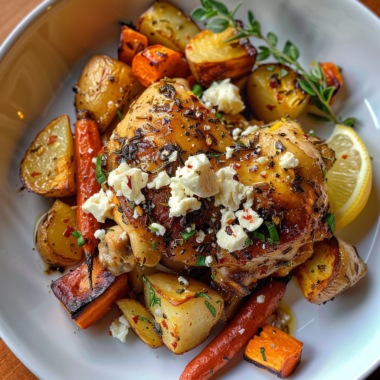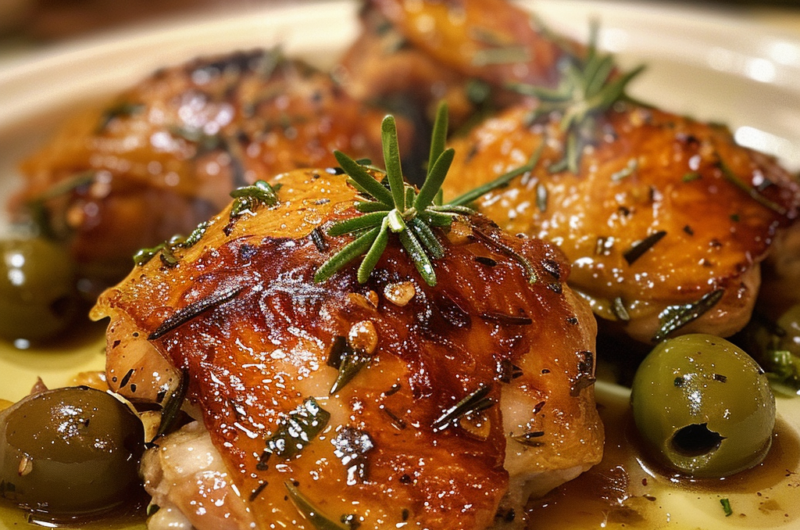
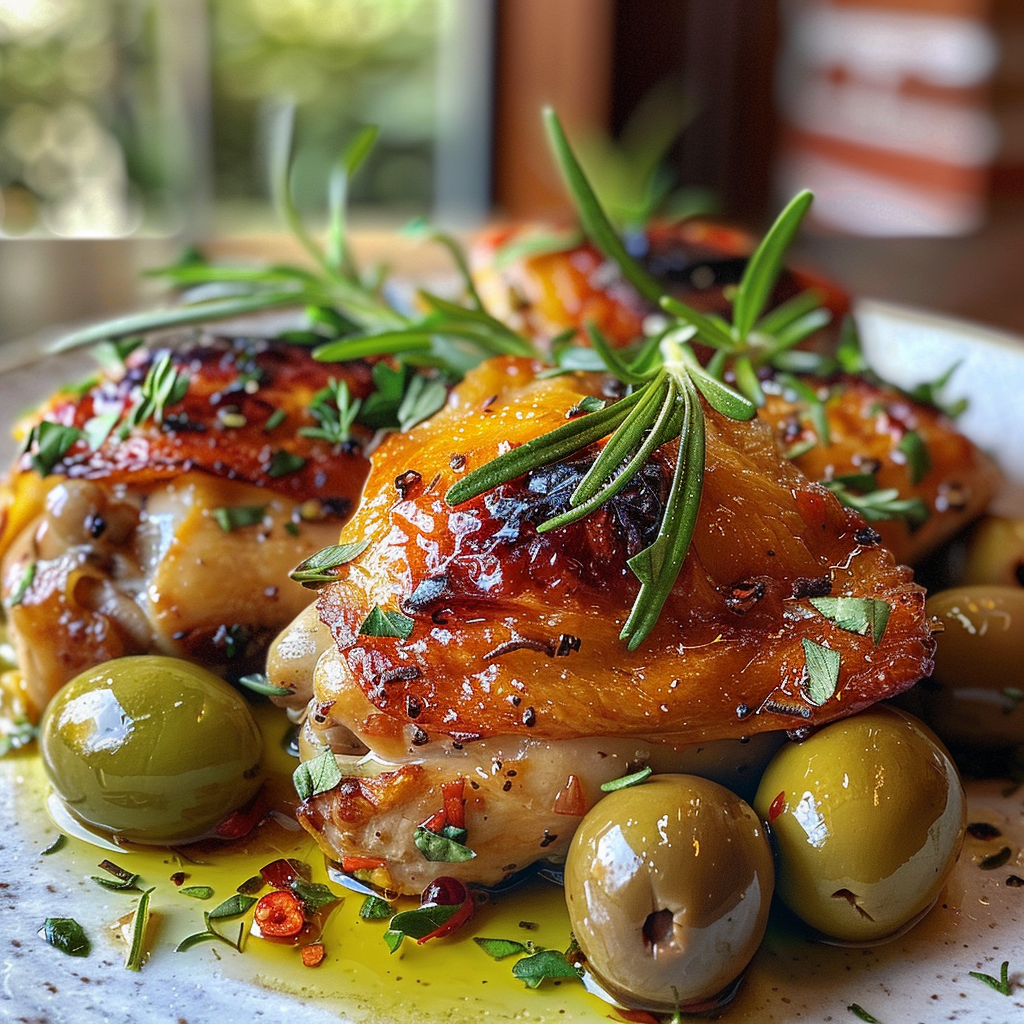
Golden, juicy chicken thighs with impossibly crispy skin and briny olives—ready in 45 minutes with minimal cleanup.
📋 In This Article
- Introduction
- Why This Recipe Works: The Science of Simplicity & Flavor
- Essential Ingredients for Mediterranean Magic
- Step-by-Step Perfection: Crafting Your One-Pan Dinner
- Common Mistakes to Avoid for a Flawless Dish
- Creative Variations & Pairings
- Storage & Reheating Tips
- Chef’s Pro Tips for Next-Level Flavor
- Frequently Asked Questions (FAQ)
- Conclusion
Introduction
Let’s be honest: weeknight cooking usually means compromising. You want something crispy, but you settle for steamed. You want depth of flavor, but you settle for “quick and edible.” This recipe for Crispy Mediterranean Chicken Thighs with Rosemary and Olives refuses to compromise. It is the rare One-Pan Dinner that delivers the texture of a Sunday roast with the effort of a Tuesday throw-together.
I’ve spent years testing roasting techniques, and this specific combination of bone-in, skin-on chicken thighs, briny Kalamata olives, and woody fresh rosemary hits a specific high note. The Mediterranean diet isn’t just a trend here; it’s the structural logic. The acidity from lemon cuts through the rendered chicken fat, while the olives provide a salinity that means you barely have to season the meat itself. It is, without a doubt, the most reliable way to get dinner on the table without losing your mind.
Why This Recipe Works: The Science of Simplicity & Flavor
There is a reason we stick to one-pan cooking for this dish, and it isn’t just about dirty dishes (though that’s a huge plus). It’s about thermodynamics and flavor concentration. When you roast chicken thighs at high heat, the fat under the skin renders out, basting the meat and keeping it moist while the skin dehydrates and crisps.
Here is the science: At temperatures above 300°F, the Maillard reaction kicks into high gear. This is the chemical interaction between amino acids and reducing sugars that gives browned food its distinctive flavor. By roasting at 400°F, we ensure the skin undergoes this reaction rapidly, creating a crackling crust while the interior remains tender.
If you crowd the pan, however, the moisture released from the chicken has nowhere to go. It creates a steam bath. Steam is the enemy of crispiness. By spacing the ingredients out, we allow that moisture to evaporate, leaving behind concentrated pan drippings and fond—the sticky, browned bits stuck to the bottom of the pan—that infuse the potatoes and cherry tomatoes with savory depth. This synergy means every component tastes like the whole, not just a sum of parts.
Essential Ingredients for Mediterranean Magic
You don’t need a pantry overhaul to make Crispy Mediterranean Chicken Thighs with Rosemary and Olives, but the quality of your ingredients matters more here than in a heavily sauced dish.
- Bone-in, skin-on chicken thighs: Do not swap these for boneless, skinless breasts unless you enjoy dry meat. The bone conducts heat, ensuring even cooking, while the skin provides the necessary fat for crisping.
- Kalamata olives: These bring a punchy, briney acidity. If you prefer something milder and butterier, Castelvetrano olives are a fantastic alternative. Pitted is easier, but I prefer the flavor retention of unpitted.
- Fresh rosemary: Dried rosemary is essentially edible pine needles. You need fresh needles to stand up to the high heat; they will crisp up and become aromatic garnishes rather than woody distractions.
- Extra virgin olive oil: Use a generous hand here. It helps the skin crisp and carries the flavor of the herbs.
- Lemon: We use both the juice and the zest. The zest contains the essential oils, while the juice provides the acid needed to balance the rich pan drippings.
- Potatoes: Waxy varieties like Yukon Gold hold their shape better than starchy Russets, absorbing the chicken fat without turning to mush.
- Garlic: Whole cloves can be tossed in; they will mellow and sweeten as they roast. Minced garlic will burn, so stick to whole cloves or thick slices.
Step-by-Step Perfection: Crafting Your One-Pan Dinner
Step 1: Preheat and Prep
Preheat your oven to 400°F (200°C). This high starting temperature is non-negotiable for rendering fat quickly. If the oven is too cool, the fat renders slowly, leaving you with flabby skin.
Step 2: Season Generously
Pat the chicken thighs completely dry with paper towels. Moisture on the surface creates steam, which inhibits browning. Season the chicken generously on all sides with salt, pepper, oregano, and thyme. Don’t forget to lift the skin slightly to season the meat directly—this ensures the flavor penetrates past the fat layer.
Step 3: The Base Layer
In a large rimmed baking sheet or roasting pan, toss the cubed potatoes, halved cherry tomatoes, garlic cloves, and olives with half of the olive oil and the lemon juice. Spread them out evenly. This bed of vegetables acts as a roasting rack, elevating the chicken slightly for air circulation while soaking up the juices.
Step 4: Arrange and Roast
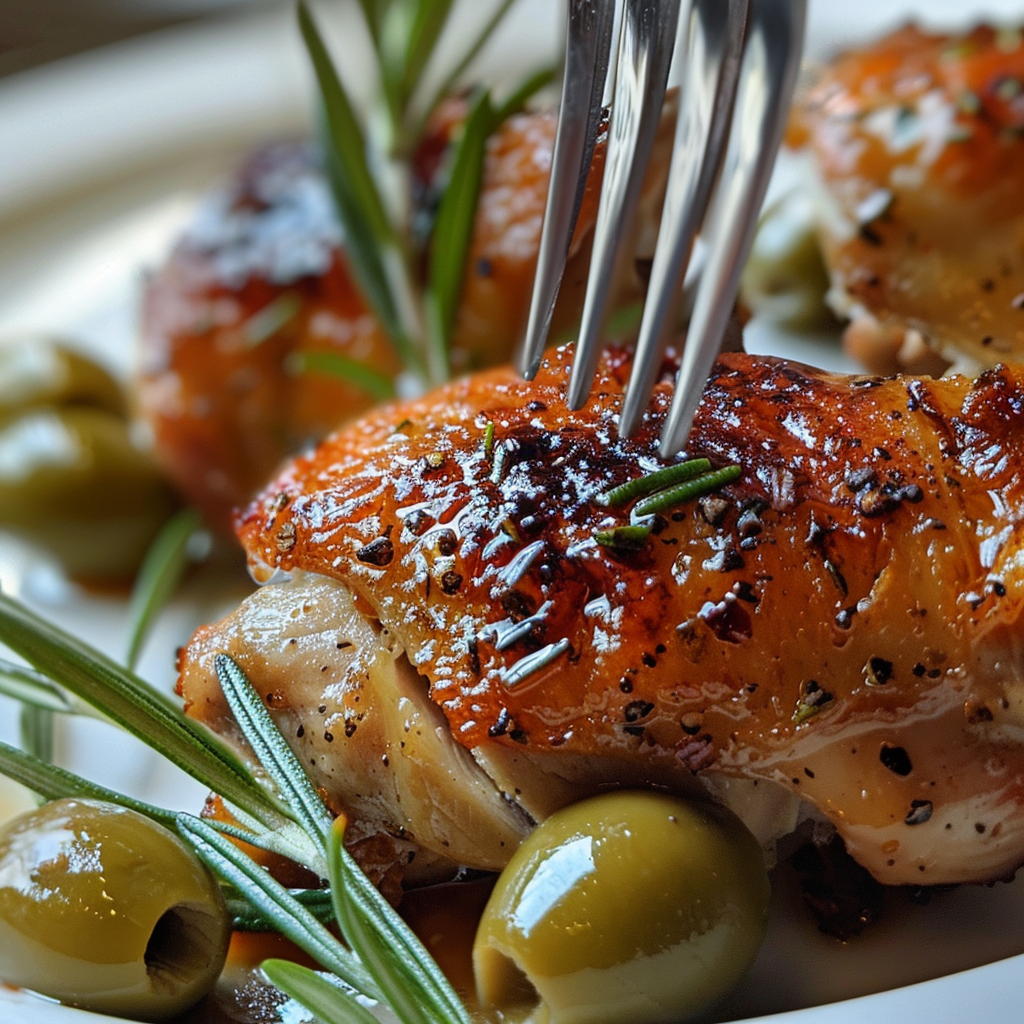
Nestle the seasoned chicken thighs, skin-side up, among the vegetables. Drizzle the remaining olive oil over the skin. Roast for 40 minutes. At this point, the chicken should be mostly cooked through, and the vegetables tender.
Step 5: The Crisping Phase
Increase the oven temperature to 425°F (220°C). Continue roasting for another 10-15 minutes. This blast of heat finishes the Maillard reaction, turning the skin a deep golden brown. Watch closely to ensure the rosemary doesn’t scorch too much.
Step 6: Check Doneness
Insert an instant-read thermometer into the thickest part of the thigh, avoiding the bone. You are looking for an internal temperature of 165°F (74°C). This is the temperature where proteins have fully denatured and the meat is safe, but because thighs have more connective tissue, they remain juicy even if they climb to 175°F.
Step 7: Resting
Remove the pan from the oven. Let the chicken rest for 5-10 minutes. I used to skip this step—don’t. During cooking, the juices migrate to the center of the meat. Resting allows those juices to redistribute. If you cut immediately, you lose moisture; if you wait, you retain it.
⚠️ Common Mistakes to Avoid for a Flawless Dish
Even a simple recipe can go sideways if you ignore the physics of roasting.
Overcrowding the Pan: This is the cardinal sin of roasting. If the ingredients are touching or piled up, they will steam in their own moisture. The result? Soggy skin and pale vegetables. Use two pans if necessary. Airflow is the difference between roasting and steaming.
Under-seasoning the Chicken: Chicken skin is a barrier. A light sprinkle of salt on top will not penetrate to the meat. Season aggressively, and do it early. If you have time, salt the chicken and let it sit uncovered in the fridge for a few hours. This dry brine seasons the meat deeply and dries the skin for better crisping.
Cooking at the Wrong Temperature: Starting at a low temperature will dry out the meat before the skin browns. Starting too high can burn the skin before the inside cooks. The two-stage roast (400°F then 425°F) balances cooking the meat through and crisping the skin.
Creative Variations & Pairings
Once you master the base technique, the Mediterranean flavor profile is incredibly forgiving for substitutions.
- Protein Swaps: While chicken thighs are ideal for fat and flavor, you can use bone-in chicken breasts, though you’ll need to reduce the cooking time to prevent drying out. Lamb leg steaks also work beautifully with the rosemary and olive combo.
- Vegetable Add-ins: Artichoke hearts (frozen or canned in water, drained) add a lovely tang. Thick slices of zucchini or bell peppers can be added in the last 20 minutes of roasting so they don’t turn to mush.
- Dairy Twist: Crumble feta cheese over the pan during the last 5 minutes of cooking. It won’t melt completely but will soften and add a salty, creamy element to the dish.
Storage & Reheating Tips
Leftovers of Crispy Mediterranean Chicken Thighs with Rosemary and Olives store well, but the skin will lose its crunch in the fridge. Store the chicken and vegetables in an airtight container in the refrigerator for up to 4 days.
To reheat, do not use the microwave if you care about texture. The microwave creates steam, destroying the skin’s crispiness. Instead, place the chicken on a wire rack set over a baking sheet and reheat in a 375°F (190°C) oven for 10-15 minutes. This method warms the meat through and re-crisps the skin.
If freezing, wrap the chicken tightly in plastic wrap and foil. It keeps for up to 3 months. Thaw overnight in the refrigerator before reheating.
💡 Chef’s Pro Tips for Next-Level Flavor
Dry Brine for Success: If you have the foresight, salt your chicken 12 to 24 hours before cooking. This “dry brining” allows the salt to penetrate deep into the muscle fibers, ensuring every bite is seasoned, not just the surface.
The Sear-and-Roast Hybrid: For the absolute best skin, sear the chicken thighs skin-side down in a hot cast-iron skillet for 3-4 minutes before transferring to the oven. You get the deep, golden crust of a pan-sear with the even cooking of a roast. It’s an extra pan to wash, but the texture is superior.
Use the Fond: After roasting, you’ll notice browned bits stuck to the pan. Don’t scrub that away. Squeeze a little fresh lemon juice into the hot pan and scrape up those bits. Pour this “jus” over the chicken just before serving. It’s pure, concentrated flavor.
Frequently Asked Questions (FAQ)
+Can I use boneless, skinless chicken thighs?
You can, but you will sacrifice the crispy skin and some moisture. Boneless thighs cook faster, so check them at the 25-minute mark to avoid overcooking.
+Why is my chicken skin not crispy?
Usually, this is due to moisture. Make sure you pat the skin dry before seasoning, and don’t overcrowd the pan. If the chicken sits in its own juices, it will boil rather than roast.
+Can I use dried herbs instead of fresh?
Dried oregano and thyme work well, but dried rosemary can be tough and unpleasant. If you must use dried rosemary, crush it into a powder with your fingers before sprinkling it on the chicken.
+What temperature should the oven be?
We start at 400°F to cook the meat through, then increase to 425°F to finish the skin. This two-stage temperature ensures the meat is cooked but the skin isn’t burned.
+Can I make this recipe ahead of time?
You can prep the vegetables and season the chicken a day in advance. Keep them covered in the fridge. However, for the crispiest skin, roast it just before serving.
+Is this recipe gluten-free?
Yes, all the ingredients listed are naturally gluten-free. Just double-check any spice blends you use to ensure they don’t contain anti-caking agents with gluten.
Conclusion
Crispy Mediterranean Chicken Thighs with Rosemary and Olives is more than just a weeknight meal; it is a lesson in how high heat and quality ingredients can do the heavy lifting for you. The combination of rosemary, olives, and lemon creates a classic Mediterranean profile that feels elegant yet requires almost no active work. Whether you are feeding a family or meal-prepping for the week, this one-pan dinner delivers consistent, delicious results every time.