A velvety, 30-minute sauce made from jarred roasted peppers and tangy feta—skip the baking, grab the blender, and thank us later.
📋 In This Article
Introduction
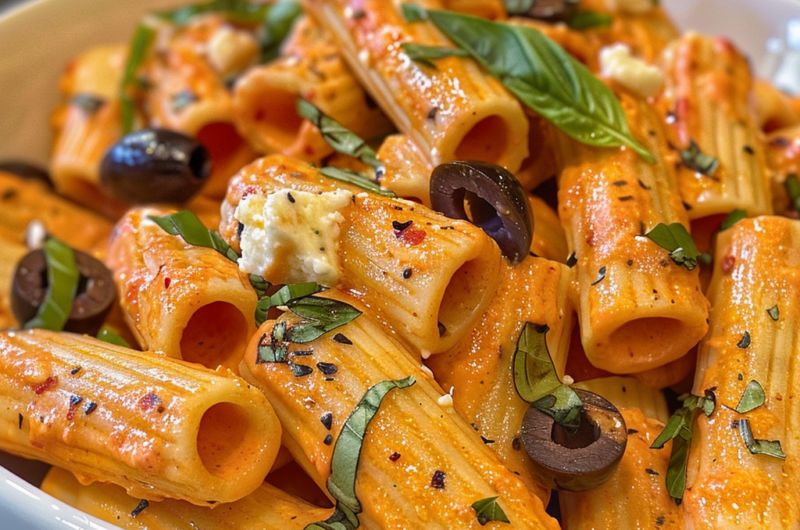
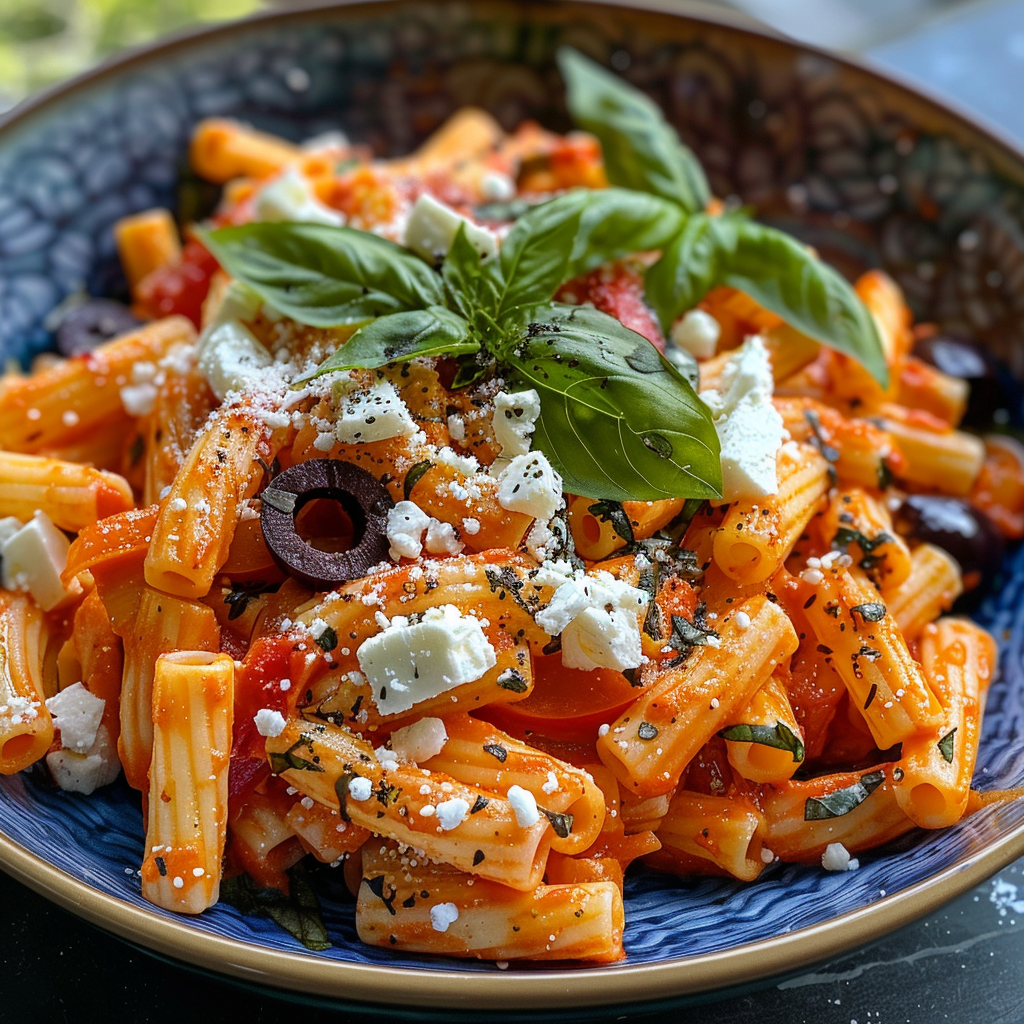
We’ve all seen the viral baked feta pasta trend. It’s fun, sure, but sometimes you want a sauce that actually coats your noodles rather than a chunky, broken cheese mess. That’s where this Creamy Mediterranean Roasted Red Pepper & Feta Pasta comes in. It takes the best parts of that internet sensation—the briny olives, the creamy feta, the sweet peppers—and refines the technique for a guaranteed smooth, restaurant-quality result every single time.
By blending jarred roasted red peppers with feta and a splash of cream, you create an emulsification that is technically superior to the baked version. The sauce is velvety, clinging to every ridge of rigatoni or fusilli, while the kalamata olives and fresh basil provide sharp, fresh contrasts to the rich base. It’s a weeknight dinner that feels like a luxury, proving that you don’t need an hour to get bold Mediterranean flavors on the table. Creamy Mediterranean Roasted Red Pepper & Feta Pasta (30 Min).
Why This Recipe Works (Beyond the Trend)
This isn’t just throwing ingredients in a pan. The real magic lies in the mechanical emulsification. When you blend the roasted red peppers with feta, olive oil, and cream, you’re forcing the fats and liquids to combine into a stable suspension. This creates a texture far superior to simply melting cheese onto tomatoes.
The roasted red peppers bring a sweetness that balances the aggressive saltiness of the feta and olives. This dish relies on that push-and-pull: sweet against salty, creamy against briny. Plus, jarred peppers are already cooked, meaning they’ve undergone caramelization that raw peppers lack, adding a depth of flavor that feels like it took hours to develop.
Ingredients You’ll Need
To pull this off in 30 minutes, quality matters. Because the ingredient list is short, every item needs to pull its weight.
- Pasta: 12 ounces of short, sturdy shapes like penne, rigatoni, or fusilli. The ridges help grab the smooth sauce.
- Feta Cheese: One 8-ounce block of sheep’s milk feta. Pre-crumbled feta contains anti-caking agents that prevent it from melting smoothly—always buy the block.
- Jarred Roasted Red Peppers: 1 cup, drained well. Look for peppers packed in olive oil or brine, not vinegar, for a cleaner flavor.
- Kalamata Olives: 1/2 cup, pitted and roughly chopped. Their brine is a secret flavor weapon.
- Fresh Basil: 1/4 cup, torn or chopped. Add it at the very end to preserve its volatile oils.
- Garlic: 3 cloves, minced. Don’t let it burn; it turns bitter instantly.
- Olive Oil: 3 tablespoons. Use the good stuff for sautéing and finishing.
- Heavy Cream: 1/2 cup. This stabilizes the feta emulsion and adds richness.
- Parmesan Cheese: 1/4 cup, grated. Adds a savory umami kick.
- Red Pepper Flakes: 1 teaspoon (optional). For a background warmth.
- Lemon Juice: 1 tablespoon. Acid is essential to cut through the richness of the cream and cheese.
Step-by-Step Instructions
- Boil the Pasta: Bring a large pot of water to a rolling boil. Salt it generously—think “salty like the sea.” Cook the pasta to just shy of al dente (usually 1 minute less than the package says). Crucial Step: Reserve at least 1 cup of that starchy pasta water before draining. The starch in that water is what helps bind the sauce to the pasta.
- Sauté the Aromatics: In a large skillet, heat 2 tablespoons of olive oil over medium heat. Add the minced garlic and sauté for about 30 seconds to 1 minute. You want it fragrant, not brown. Burnt garlic is unforgiving; it leaves an acrid taste that ruins the sauce. Remove the pan from the heat immediately once you smell that sweet garlic aroma.
- Blend the Base: In a blender or food processor, combine the drained roasted red peppers, the entire block of feta (crumbled), the sautéed garlic (with the oil), and the 1/2 cup of heavy cream. Blend on high speed until completely smooth. The friction of the blades actually helps the proteins in the cheese relax and integrate with the cream, creating a uniform, velvety texture.
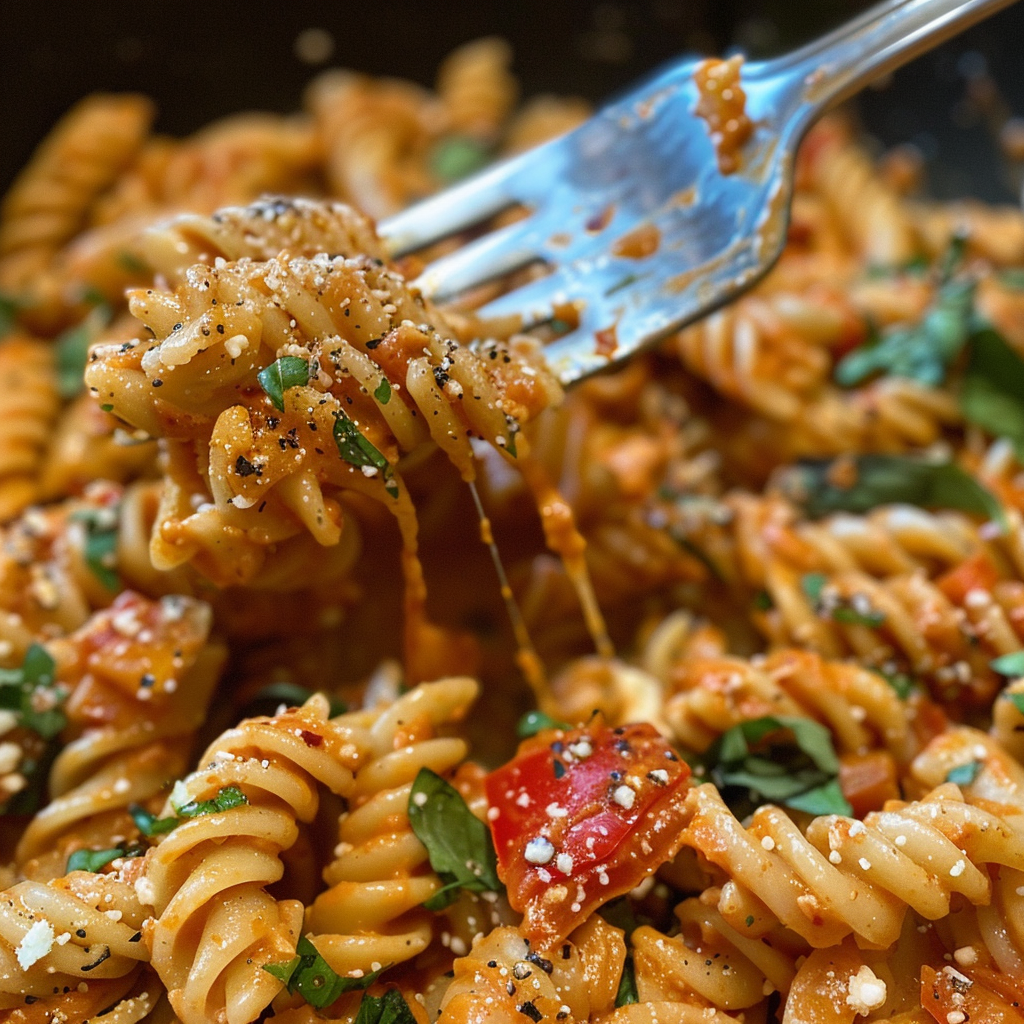
- Emulsify the Sauce: Pour the vibrant orange-red sauce back into the skillet you used for the garlic. Turn the heat to medium-low. Add the drained pasta. Toss vigorously. As you toss, add splashes of the reserved pasta water. This is the professional move: the starch in the water swells and thickens the sauce, while the water itself loosens it just enough to coat every piece of pasta evenly.
- Add the Finishers: Remove the skillet from the heat. Stir in the kalamata olives and half the fresh basil. The residual heat is enough to warm them through without cooking the basil into a black mush.
- Serve: Plate the pasta immediately. Top with the remaining basil, a dusting of parmesan, and a final drizzle of olive oil.
⚠️ Common Mistakes to Avoid
Even simple recipes can go wrong. Here’s how to troubleshoot:
- Over-blending the sauce: While you want it smooth, running a blender for too long can generate heat that separates the fats in the feta. Blend just until smooth.
- Skipping the pasta water: If your sauce looks broken or slides off the pasta, you likely skipped the pasta water. That starch is the glue. Without it, the sauce separates and pools at the bottom of the bowl.
- Using pre-crumbled feta: I cannot stress this enough: buy the block. Pre-crumbled feta has cellulose added to prevent clumping, which prevents it from melting into a creamy sauce, leaving you with a grainy texture.
- Over-salting: Both feta and olives are sodium bombs. Taste the sauce before adding any salt. You might find it needs none at all.
Variations & Dietary Adaptations
This recipe is a template.
- Protein Boost: Toss in grilled shrimp or rotisserie chicken during the last step. The sauce is rich enough to handle the added protein.
- Greens: Wilt a handful of spinach or kale into the hot pasta before adding the sauce.
- Gluten-Free: Use your favorite gluten-free pasta. The sauce is naturally gluten-free, making this an easy swap.
- Dairy-Free/Vegan: Swap the feta for a vegan block feta (or soaked cashews blended with lemon and salt) and use coconut cream or a vegan heavy cream alternative. Note that the flavor profile will shift significantly.
Storage & Reheating
Leftovers keep well, though the sauce may thicken considerably.
- Fridge: Store in an airtight container for up to 3 days.
- Reheating: The sauce will seize up when cold. Reheat gently in a skillet over medium-low heat. Add a splash of water or milk to loosen the sauce back to its original creamy consistency. Avoid high heat, which can cause the dairy proteins to separate.
💡 Pro Tips for Next-Level Flavor
Want to take this from good to “make this every week”?
- Toast the Garlic: Don’t just dump raw garlic in the blender. Sautéing it first mellows the harsh bite and brings out a nutty sweetness.
- Lemon Zest: Grate a little lemon zest into the sauce right before serving. It brightens the heavy cream and feta without adding extra liquid.
- Pine Nuts: Toast a handful of pine nuts in a dry pan until golden. Sprinkle them over the top for a textural crunch that mirrors the pesto tradition of Mediterranean cooking.
- Use the Olive Brine: If your sauce needs salt but you’re worried about over-salting, add a teaspoon of the kalamata olive brine instead. It adds salt plus a depth of savory flavor.
Frequently Asked Questions (FAQ)
+Why is my feta sauce grainy?
This usually happens for two reasons: using pre-crumbled cheese or overheating the sauce. Pre-crumbled cheese contains anti-caking agents that prevent smooth melting. If you used a block and it’s still grainy, you may have overheated the cheese proteins. Blend it again with a splash of cold water to try and smooth it out.
+Can I make this without a blender?
You can, but the texture won’t be the same. Use a food processor or even an immersion blender. If you have neither, chop the peppers extremely finely and mash the feta with a fork before mixing with cream, but expect a chunky, rustic texture rather than a velvety sauce.
+What pasta shape works best?
Short, tubular shapes like rigatoni or penne are ideal because the creamy sauce gets trapped inside the tubes. Long noodles like spaghetti are fine, but the sauce tends to slide off long strands more easily.
+Can I use fresh red peppers instead of jarred?
Yes, but it adds time. You’ll need to roast fresh peppers yourself to get that sweetness. Char them over a gas flame or under a broiler until blackened, then steam them in a covered bowl to loosen the skins. Peel and deseed them before blending. Jarred peppers are a perfectly acceptable shortcut for weeknights.
+How do I know when the pasta is done?
Taste it. It should be tender but still have a slight bite (al dente). Remember, the pasta will continue to cook slightly when you toss it with the hot sauce in the skillet, so pulling it a minute early is the safest bet to avoid mushy noodles.
Conclusion
This Creamy Mediterranean Roasted Red Pepper & Feta Pasta is more than just a quick dinner; it’s a lesson in how simple techniques—proper emulsification, starchy pasta water, and balancing flavors—create something far greater than the sum of their parts. It’s bright, briny, and deeply satisfying. The next time you’re staring at a block of feta and a jar of peppers, skip the baking dish and grab the blender. Your pasta night just got a serious upgrade.