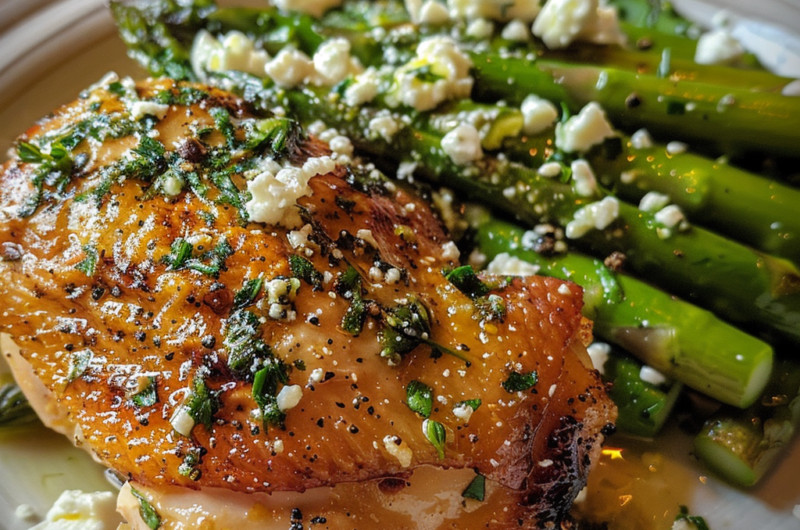
Golden, juicy chicken roasted with crisp-tender asparagus and briny feta—a 30-minute weeknight miracle.
📋 In This Article
- Introduction
- Why This Recipe Works (The Mediterranean Advantage)
- The Ingredients for Mediterranean Magic
- Instructions: Your Path to a Perfect One-Pan Meal
- Common Mistakes to Avoid
- Flavor & Ingredient Variations
- Serving Suggestions & Pairing Ideas
- Storage & Reheating Tips: Enjoy Leftovers Like Fresh
- Pro Tips for Next-Level Flavor
- Frequently Asked Questions (FAQ)
Introduction
Let’s be honest: Tuesday nights are not the time for multi-pot feats of culinary bravery. They are for survival, preferably delicious survival. That’s where this One-Pan Mediterranean Lemon-Herb Chicken & Roasted Asparagus with Feta Crumbles for Easy Weeknight Dinners comes in. It delivers high-impact flavor with low-impact cleanup, hitting that sweet spot between “I ordered takeout again” and “I actually cooked.”
The concept is simple but effective. High heat transforms lean chicken breasts into golden, savory bites while coaxing the natural sugars out of fresh asparagus. It’s a lesson in thermodynamic efficiency. The chicken roasts in a marinade of olive oil, garlic, and herbs, creating a fond—those sticky, caramelized bits on the bottom of the pan—that acts as a built-in sauce for the vegetables. Finished with a shower of salty feta, this dish proves that the Mediterranean diet is as easy as it is celebrated.
Why This Recipe Works (The Mediterranean Advantage)
This isn’t just a random assembly of ingredients; it’s a strategic formula. The Mediterranean diet relies on the trinity of healthy fats, fresh vegetables, and lean proteins. But the real secret here is the cooking vessel. A rimmed baking sheet acts as a high-heat engine.
By roasting at 425°F (220°C), we trigger the Maillard reaction—the chemical process where amino acids and sugars react under heat to create hundreds of new flavor compounds and that irresistible golden-brown crust. Searing might be classic, but roasting is hands-off. The lemon slices roast alongside the meat, softening their acidity into a mellow, caramelized sweetness, while the garlic mellows into a savory paste. The feta, added late, warms just enough to become creamy without losing its structural integrity.
The Ingredients for Mediterranean Magic
- 4 boneless, skinless chicken breasts – The canvas for our flavors. Tip: Look for breasts of uniform thickness to ensure even cooking.
- 1 lb. asparagus, trimmed – Provides a fresh, grassy contrast to the rich chicken.
- 3 oz. feta cheese, crumbled – Salty, briny, and essential for the finish.
- 1 lemon, sliced into thin rounds – Roasted lemon slices are edible and add a mellow citrus depth.
- 3 tbsp. extra-virgin olive oil – The medium for roasting; it conducts heat and carries flavor.
- 4 garlic cloves, finely minced – Aromatic backbone.
- 1 tbsp. dried oregano – Earthy, floral, and robust enough to withstand high heat.
- 2 tsp. ground cumin – Adds a warm, smoky bass note.
- 1 shallot, thinly sliced – Roasts into sweet, jammy ribbons.
- Salt and freshly ground black pepper – Essential for seasoning.
- Fresh dill sprigs for garnish – A burst of fresh color and flavor at the end.
Instructions: Your Path to a Perfect One-Pan Meal
Prep Time: 10 minutes | Cook Time: 20 minutes
- Preheat and Prep: Crank your oven to 425°F (220°C). High heat is non-negotiable here; it ensures we get a nice crust on the chicken rather than a sad, steamed exterior.
- Marinate the Chicken: In a large bowl, toss the chicken with the olive oil, minced garlic, oregano, cumin, salt, and pepper. Don’t just dust the surface; massage the marinade into the meat. Let it sit for at least 10 minutes while you prep the veg. Science Break: The salt in the marinade begins to dissolve muscle proteins, helping the chicken retain moisture during the high-heat roast.
- Prepare the Asparagus: Snap the woody ends off the asparagus. Toss the spears with a drizzle of olive oil, salt, and pepper. Keep the seasoning simple so the asparagus flavor shines through.
- Layer the Sheet Pan: Arrange the chicken on one side of a large sheet pan. Scatter the shallot and lemon slices around the chicken. Spread the asparagus on the other side. Give everything space. Mistake I made so you don’t have to: Overcrowding the pan creates steam, killing the chance of browning. Use two pans if necessary.
- Roast: Slide the pan into the oven. Roast for 20 minutes. The chicken should hit an internal temperature of 165°F (74°C).
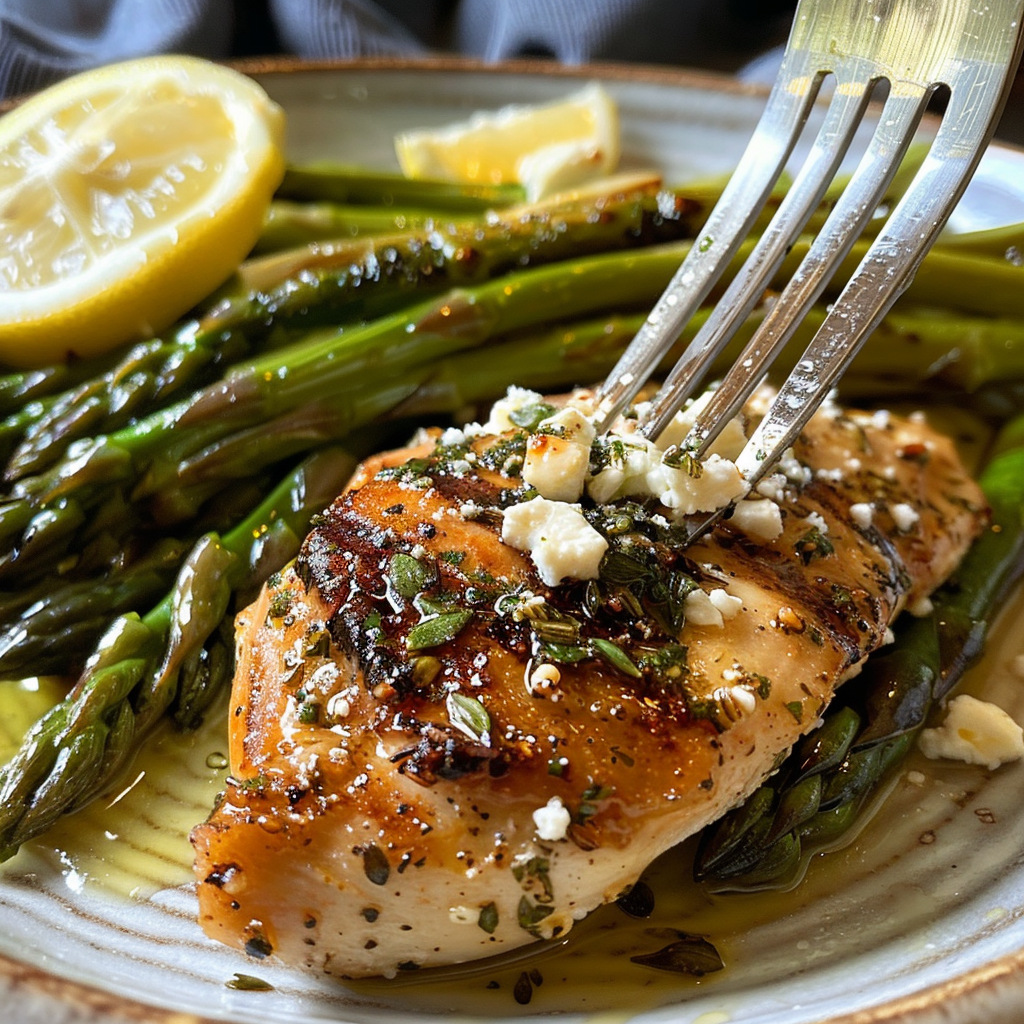
- Finish: Remove the pan. Scatter the feta crumbles over the hot chicken and asparagus. The residual heat will soften the cheese. Squeeze a fresh lemon wedge over the tray if you have it for a hit of brightness.
⚠️ Common Mistakes to Avoid
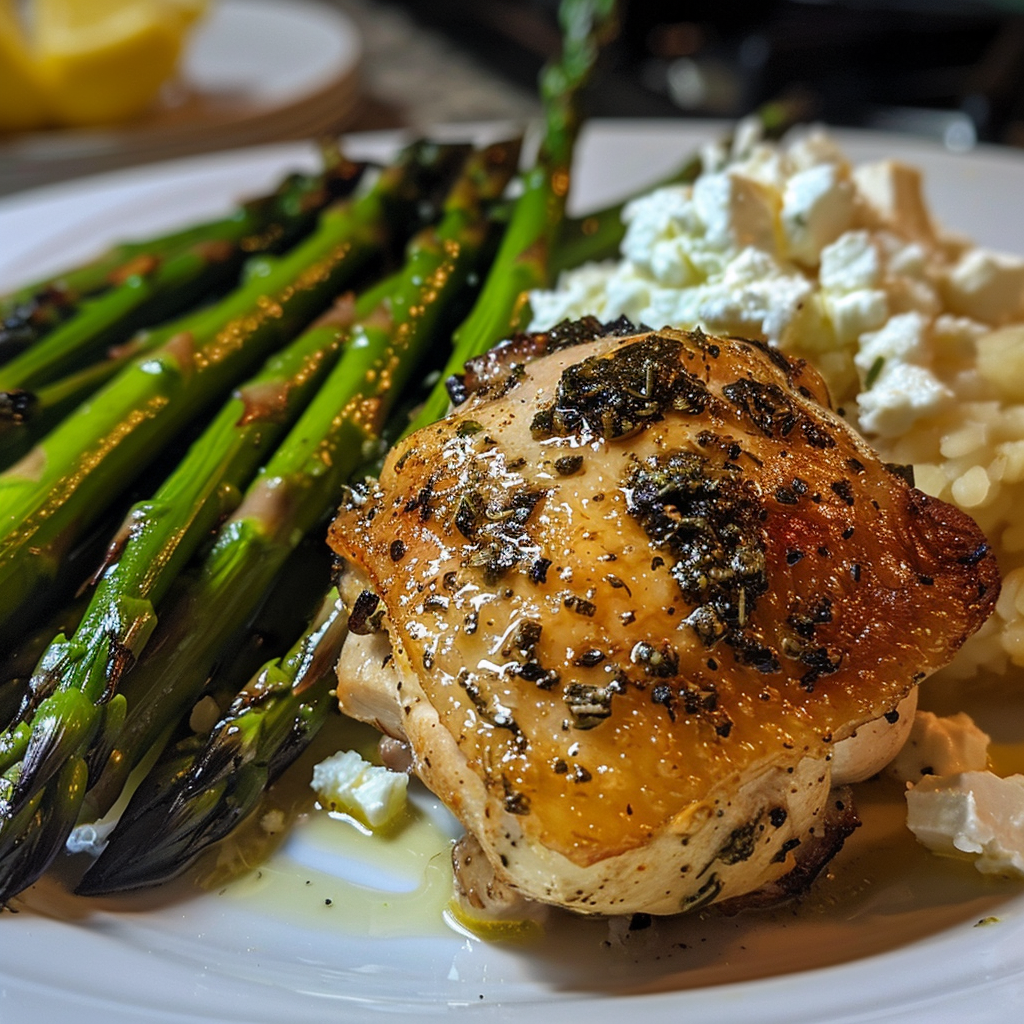
Even simple recipes can go sideways. The most frequent error? Overcrowding the pan. When ingredients touch, they steam rather than roast. That moisture barrier prevents the Maillard reaction, leaving you with grey, rubbery chicken and flaccid asparagus. Spread everything out.
Another pitfall is under-seasoning. Chicken breast is lean; it needs aggressive seasoning to stand up to the bold feta and lemon. Don’t be shy with the salt and herbs. Finally, watch the cooking time. Asparagus goes from crisp to mushy in minutes. Check the pan at the 18-minute mark.
Flavor & Ingredient Variations
This formula is flexible.
- The Thigh Swap: Chicken thighs have more fat, meaning more margin for error and richer flavor. They may need an extra 5 minutes.
- Veggie Rotation: No asparagus? Try bell peppers, zucchini, or red onion. Just cut them to similar sizes for even roasting.
- Cheese Choices: Goat cheese offers a tangier, creamier melt, while Parmesan brings a salty, umami punch.
- Spice Shift: Swap oregano for za’atar for a sesame-forward twist, or add smoked paprika for depth.
Serving Suggestions & Pairing Ideas
To turn this into a feast, serve it over fluffy couscous or quinoa to soak up the pan juices. A wedge of crusty bread works, too. For a creamy element, a dollop of tzatziki sauce on the side bridges the gap between the hot chicken and cool garnish. Wine? A crisp Sauvignon Blanc or a dry rosé mirrors the acidity of the lemon and cuts through the olive oil beautifully.
Storage & Reheating Tips: Enjoy Leftovers Like Fresh
One-Pan Mediterranean Lemon-Herb Chicken & Roasted Asparagus with Feta Crumbles for Easy Weeknight Dinners is not only a delightful meal but also a fantastic dish for leftovers. To ensure your chicken and asparagus maintain their flavors and textures, proper storage is essential. After cooking, let the dish cool to room temperature before transferring it to an airtight container. For optimal freshness, store your leftovers in the refrigerator for up to three days. If you want to keep them longer, consider vacuum sealing and freezing portions, which can extend their life to about three months.
When it’s time to enjoy your leftovers, reheating them correctly is key to preserving their taste. For the chicken, use the oven; preheat it to 350°F (175°C), place the chicken on a baking sheet, and cover it with aluminum foil to prevent drying out. Heat for about 20 minutes or until the internal temperature reaches 165°F (74°C). The asparagus can be reheated in a skillet over medium heat with a splash of olive oil, stirring occasionally until warmed through—this method helps retain its crunch. Avoid microwaving the asparagus, as it can become mushy. By following these food storage and reheating instructions, you can enjoy your leftovers just as fresh and delicious as the first time around.
💡 Pro Tips for Next-Level Flavor
- Zest First, Juice Later: Before slicing your lemon for the pan, zest it into the marinade. The zest contains the aromatic oils that provide a punch of flavor the juice alone can’t deliver.
- Pound It Out: If your chicken breasts are thick on one end, pound them to an even thickness. This ensures the whole breast cooks at the same rate, preventing dry tips.
- Rest the Meat: Let the chicken rest for 5 minutes after it leaves the oven. The muscle fibers need to relax; if you cut immediately, the juices run onto the board instead of staying in the meat.
- High Heat Roasting: Keep that oven at 425°F. It renders fat quickly and creates a texture contrast—crisp edges, tender centers—that defines great roasting.
Frequently Asked Questions (FAQ)
+Why is my roasted chicken dry?
Dry chicken is almost always a result of overcooking. Because breast meat is lean, it dries out fast once it passes 165°F. Use a thermometer and pull it the moment it hits temperature. Carryover cooking will do the rest.
+Can I use chicken thighs instead of breasts?
Absolutely. Thighs are more forgiving because of their higher fat content. They stay juicy even if you overshoot the temperature slightly. Just adjust the roasting time; boneless thighs usually take about the same time, but bone-in will take longer.
+How do I know when the asparagus is done?
Perfectly roasted asparagus is bright green and tender-criscent. If it looks olive-drab, it’s overcooked. It should still have a bit of snap when you bite into it.
+Can I prep this ahead of time?
Yes. You can marinate the chicken and prep the asparagus up to 24 hours in advance. Keep them separate in the fridge until you’re ready to roast.
+How long does cooked chicken stay good in the fridge?
Stored in an airtight container, cooked chicken is best eaten within 3 to 4 days. Reheat gently to avoid drying it out.
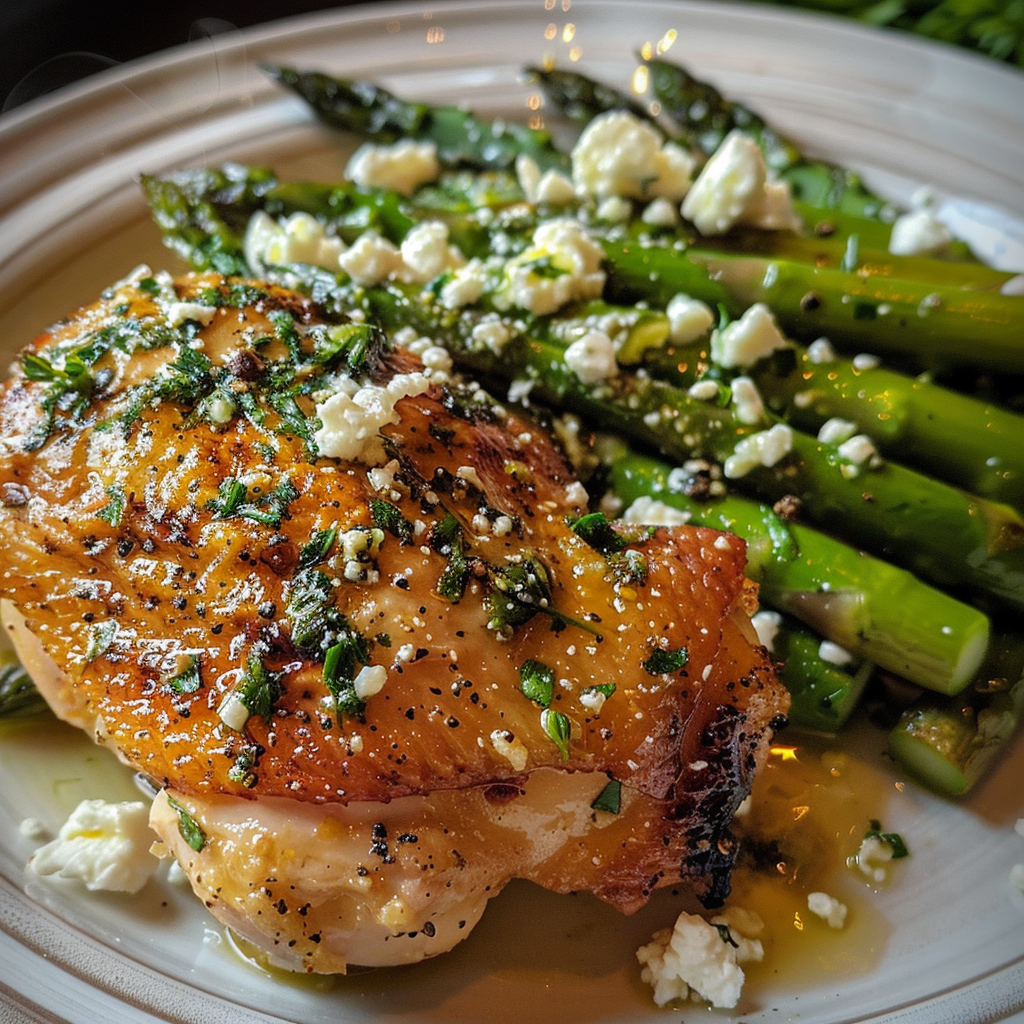
Sheet-Pan Chicken, Asparagus & Feta
Ingredients
Notes
- For juicy chicken, ensure the internal temperature reaches 165°F; use an instant-read thermometer to avoid overcooking.
- To prevent the asparagus from becoming mushy, add it to the sheet pan halfway through the cooking time; this keeps it crisp and vibrant.
- If you don’t have fresh dill, substitute with fresh parsley or basil for a different yet delicious flavor profile.
- For a quicker meal prep, marinate the chicken for just 30 minutes instead of the usual hours; it will still absorb plenty of flavor.
- Store leftovers in an airtight container in the fridge for up to 3 days; reheat gently in the oven at 350°F to maintain moisture.