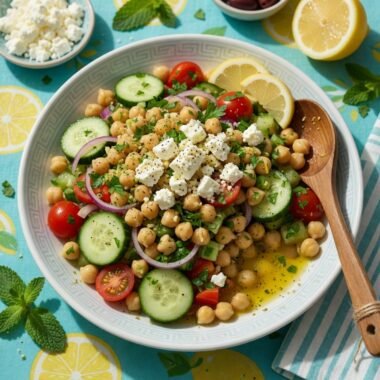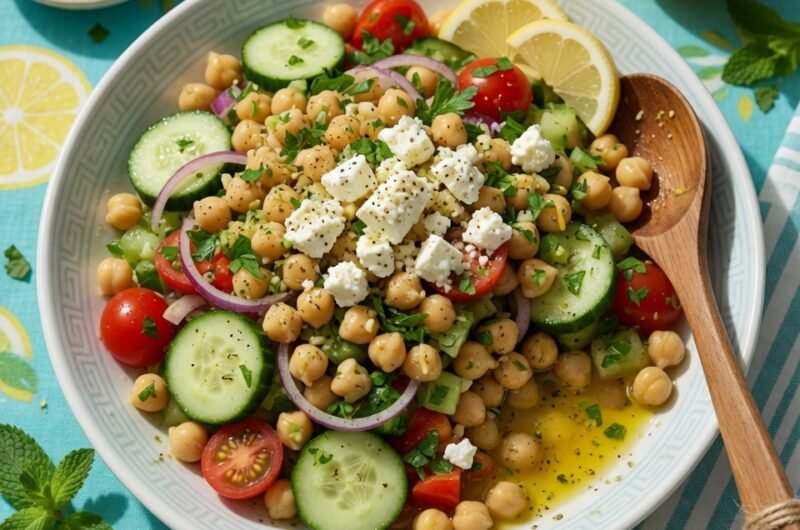
A 15-minute, no-cook recipe loaded with crisp vegetables, creamy feta, and a bright lemon dressing that actually clings to every bite.
📋 In This Article
Introduction
Some salads are just a sad obligation—watery lettuce and a few mealy tomatoes thrown together because you “should” eat healthy. This Mediterranean Chickpea Salad with Feta & Cucumber is the complete opposite. It’s the kind of meal that makes you actually crave vegetables. It relies on a simple but critical formula: fat, acid, salt, and texture.
The beauty of this dish lies in its versatility. It functions as a hearty lunch on its own, a vibrant side for grilled proteins, or a reliable staple for your weekly meal prep. Because the ingredients are robust—chickpeas, cucumbers, peppers, and feta—they hold up beautifully in the fridge, unlike delicate greens that wilt by noon. This specific combination of fresh Mediterranean ingredients creates a flavor profile that is bright, savory, and deeply satisfying without requiring any cooking. Lemon Herb Mediterranean Pasta: Fresh, Bright, and Easy.
Why This Salad Works
It’s easy to call a salad “healthy,” but this one earns the title through specific culinary mechanics. The chickpeas provide a dense, meaty texture and a significant protein boost that keeps you full, while the high fiber content supports stable digestion.
But the real secret is the interplay between the creamy feta and the crisp cucumber. We use block feta here—never pre-crumbled—because the texture is vastly superior. Pre-crumbled feta is often coated in anti-caking agents (cellulose) that prevent it from melting into the dressing, resulting in a dry, chalky bite. Block feta, when crumbled by hand, creates irregular nuggets that distribute creaminess throughout the salad. The lemon dressing doesn’t just coat the ingredients; it slightly softens the raw onions and marries the herbs with the olive oil, ensuring every forkful is seasoned to the core.
Ingredients You’ll Need
Salad Ingredients
- 1 can (15 oz) chickpeas, rinsed and drained (or 1.5 cups cooked chickpeas)
- 1 cup cherry tomatoes, halved
- 1 medium cucumber, diced (Persian or English recommended for fewer seeds)
- 1 bell pepper, diced (red or yellow for natural sweetness)
- 1/2 red onion, finely chopped
- 1 cup feta cheese, crumbled (buy a block and crumble it yourself for best texture)
- 1/4 cup fresh parsley, chopped
- Optional: 1/4 cup Kalamata olives, pitted and sliced
Lemon Dressing Ingredients
- 1/4 cup extra virgin olive oil
- 2 tablespoons lemon juice (freshly squeezed is non-negotiable)
- 1 tablespoon red wine vinegar
- 1 teaspoon Dijon mustard
- 1 clove garlic, minced
- Salt and black pepper, to taste
- Optional: 1 teaspoon fresh dill or mint for added brightness
Tips for Ingredient Selection
- The Cucumber Choice: Persian cucumbers are ideal because they have thin skin and very few seeds, meaning no soggy salad. If you can only find English cucumbers, scoop out the seed cavity before dicing to prevent excess moisture from diluting the dressing.
- Olive Oil Matters: Since this is a raw dressing, the flavor of the extra virgin olive oil shines through. Use a high-quality, peppery oil for the best results.
Directions
- Rinse the chickpeas thoroughly: Drain the can and rinse the chickpeas under cold running water until the water runs clear. Canned chickpeas are packed in aquafaba (a thick, starchy liquid). While that liquid is great for vegan baking, it leaves a slimy, metallic residue on the salad. Washing them away ensures the chickpeas taste nutty and clean, not canned.
- Prep the vegetables: Dice the cucumber and bell pepper into uniform pieces—aim for 1/4-inch cubes. Halve the cherry tomatoes. Finely chop the red onion. Pro tip: If your red onion smells particularly sharp, soak the chopped pieces in ice water for 10 minutes while you prep the rest. This tames the sulfur compounds without losing the crunch.
- Whisk the dressing: In a small bowl or jar, combine the lemon juice, red wine vinegar, Dijon mustard, minced garlic, salt, and pepper. Whisk vigorously while slowly drizzling in the olive oil. The Dijon acts as an emulsifier; the mustard particles physically surround the oil droplets, keeping them suspended in the vinegar mixture. This prevents the dressing from separating instantly, creating a velvety texture that clings to the chickpeas rather than pooling at the bottom of the bowl.
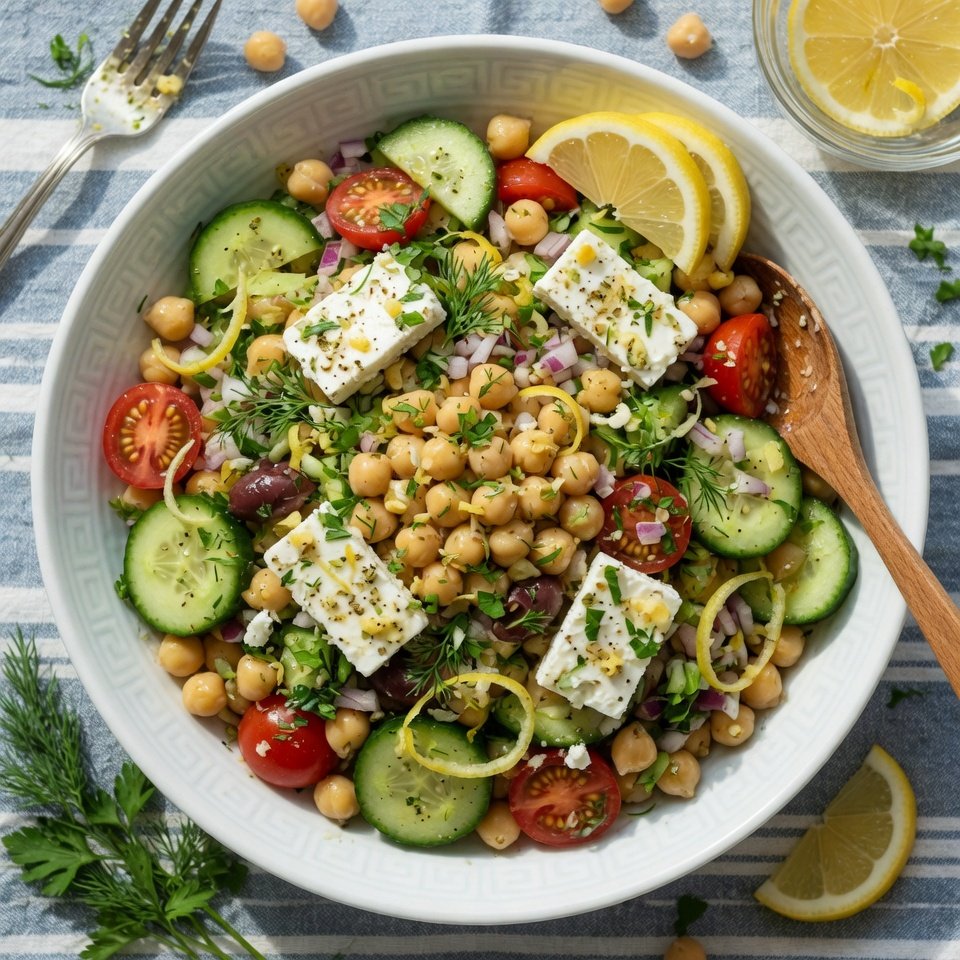
- Combine and toss: In a large mixing bowl, combine the drained chickpeas, chopped vegetables, and parsley. Pour the dressing over the top. Using a silicone spatula, fold the ingredients together gently. You want to coat everything without smashing the chickpeas into a paste.
- Fold in the feta: Add the crumbled feta and fold it in just once or twice. Over-mixing at this stage turns the feta into a paste; you want distinct, creamy pockets of cheese throughout.
- The critical rest: Let the salad sit for at least 15 minutes before serving. This rest period allows the salt to penetrate the chickpeas and vegetables, drawing out a small amount of their natural juices which then mingles with the dressing. This “marrying” phase is what separates a mediocre salad from a great one.
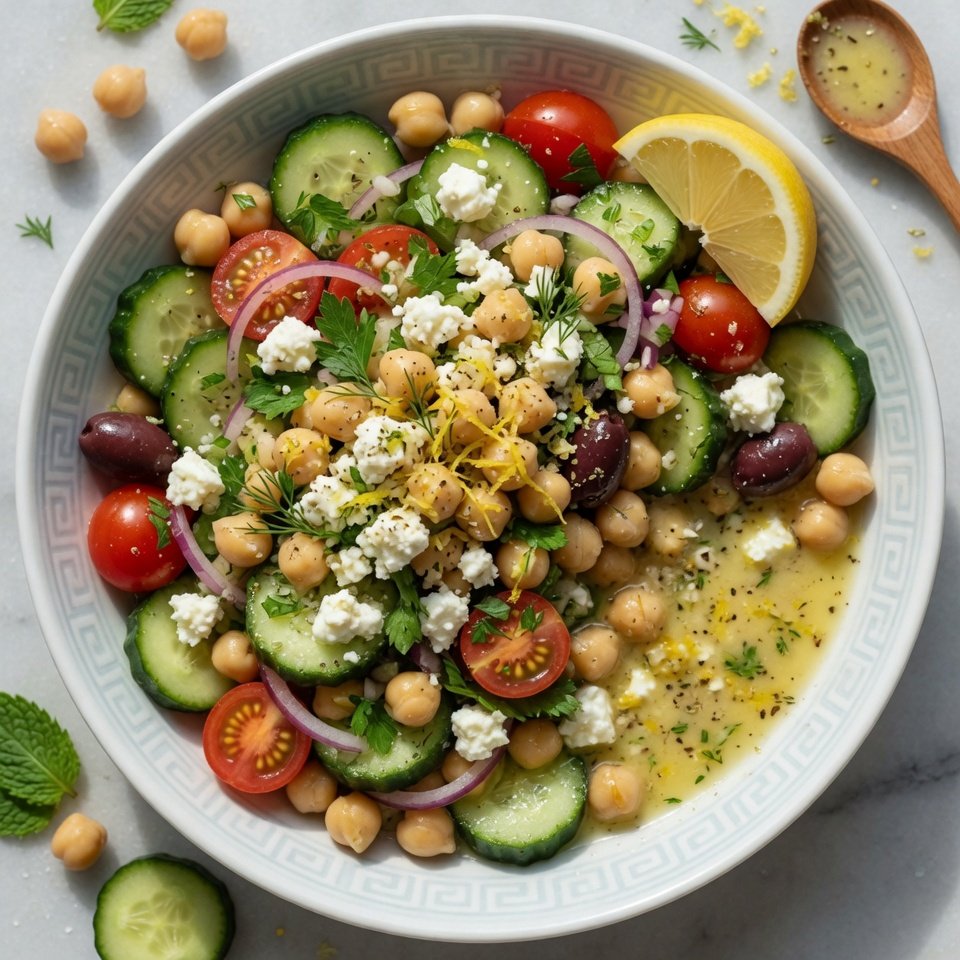
The Zesty Lemon Dressing: A Flavor Essential
The dressing is where many salads fail, but it’s where this Mediterranean Chickpea Salad succeeds. Most vinaigrettes break apart after five minutes, leaving you with oily greens and a pool of vinegar at the bottom. We solve this with the Dijon mustard and the method of addition.
By adding the oil slowly while whisking, you create a stable emulsion. The garlic provides a pungent base note, but the real star is the lemon zest (if you choose to add it) or the high ratio of lemon juice. Acid cuts through the richness of the olive oil and the fat from the feta, creating a “flavor triangle”—fat, acid, and salt—that signals deliciousness to the brain. If the dressing tastes too sharp, add a pinch of sugar or honey to balance the acidity; if it’s too flat, add a pinch more salt.
Serving Suggestions & Pairings
This dish is a workhorse. It’s substantial enough to serve as a light lunch on its own, but it plays well with others. Mediterranean Steak and Hummus Bowl: Easy 30-Min Recipe.
- As a Side: Serve it alongside grilled chicken thighs or lamb chops. The acidity cuts through the richness of roasted meats.
- In a Wrap: Spoon it into a pita with hummus for a portable lunch.
- On Greens: Place a scoop over a bed of arugula or spinach to bulk up a green salad without needing extra dressing.
Variations & Customizations
The base recipe is solid, but it’s also a template.
- For a Vegan Option: Swap the feta for a plant-based alternative or simply omit it. To replace the salty, creamy bite, add chopped Kalamata olives and a few slices of avocado.
- Add Fresh Herbs: Parsley is the standard, but fresh mint or dill changes the profile entirely, pushing it toward a more Eastern Mediterranean or Greek flavor profile.
- Add Grain: Toss in a cup of cooked quinoa or farro to make it a hearty grain bowl.
⚠️ Common Mistakes to Avoid
Even a simple recipe has pitfalls. Here’s how to avoid them:
- Skipping the Rinse: Leaving the canning liquid on the chickpeas is the biggest mistake. It creates a weird, gummy texture that no amount of dressing can fix.
- Overdressing: Because chickpeas are porous, they absorb flavor over time. Start with 3/4 of the dressing, taste, and add more if needed. You can always add more, but you can’t take it back.
- Soggy Vegetables: If you are prepping this for the week, keep the cucumbers and tomatoes separate from the dressed chickpeas until the day you eat them. This preserves their signature crunch.
Storage Tips & Meal Prep
This salad is a meal prep champion. Stored in an airtight container in the refrigerator, it keeps well for up to 4 days.
However, texture changes occur. The chickpeas will absorb the dressing and soften slightly (which makes them tastier), but the cucumbers may lose their snap. If you plan to store it, consider adding the cucumbers fresh when you serve, or simply accept a slightly softer texture on day 3. The flavors often improve after 24 hours as the ingredients marinate together.
💡 Pro Tips for Next-Level Flavor
Want to take this from “good” to “incredible”? Here are three small moves that make a difference: Greek Orzo Pasta Salad with Feta & Olives: Fresh, Bright, & Easy.
- Toast Your Chickpeas: If you have 10 minutes, spread the rinsed chickpeas on a baking sheet and roast them at 400°F for 10-15 minutes until slightly crispy. Let them cool before tossing. This removes surface moisture and creates a chewier, nuttier texture that stands up better to the dressing.
- Marinate the Onions: Before adding the red onion to the salad, let it sit in a tablespoon of the dressing for 5 minutes. This “pickles” them slightly, removing the harsh bite and making them sweeter.
- Salt Your Tomatoes: Sprinkle the tomatoes with a pinch of salt before adding them to the bowl. This draws out their juices, which mixes with the dressing and amplifies the tomato flavor tenfold.
Frequently Asked Questions (FAQ)
+Can I use dried chickpeas instead of canned?
Yes, and the texture is often better. Dried chickpeas require an overnight soak and about an hour of simmering, but they retain a firmer, nuttier bite that holds up beautifully in salads. If you have the time, it’s worth the extra step.
+How long does this salad last in the fridge?
Properly stored, it will last 3 to 4 days. The flavor improves after the first day as the ingredients marinate, though the vegetables will soften slightly over time.
+Is this Mediterranean Chickpea Salad gluten-free?
Yes, naturally. All the primary ingredients—chickpeas, vegetables, cheese, and dressing—are gluten-free. Just double-check any packaged ingredients (like pre-crumbled feta or broth if using cooked chickpeas) to ensure no hidden additives.
+What can I substitute for feta cheese?
If you aren’t a fan of feta, goat cheese offers a similar creamy texture but with a more tangy profile. For a dairy-free version, nutritional yeast can provide a savory, cheesy flavor, though it lacks the texture.
+Why is my salad watery?
This usually happens if the cucumbers were not dried after washing, or if the tomatoes were particularly juicy. To fix it, drain the excess liquid from the bottom of the bowl before serving. Using Persian or English cucumbers helps avoid this issue as they have fewer seeds.