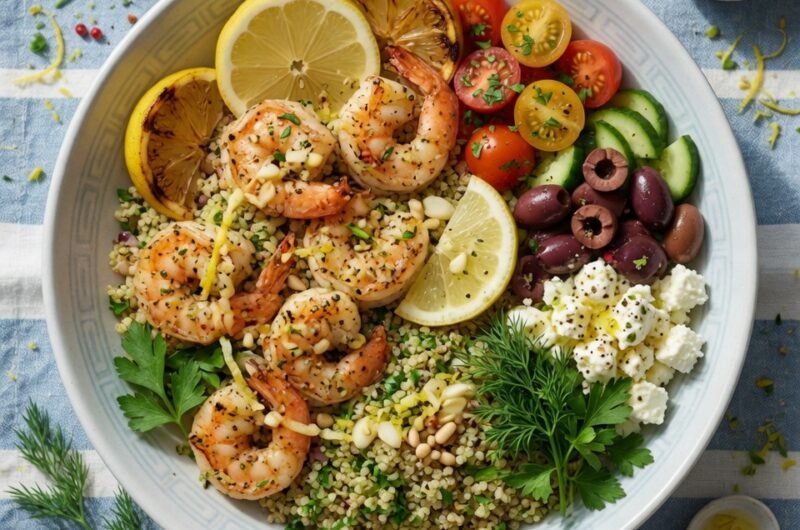
A bright, protein-packed dinner that comes together in one skillet — tender shrimp, fluffy quinoa, and Mediterranean flavors in just 30 minutes.
📋 In This Article
Introduction
Here’s the thing about weeknight dinners: they need to work harder than weekend ones. This Mediterranean Lemon Garlic Shrimp Quinoa Bowl does exactly that. It’s the kind of dish that feels like you ordered it at a coastal taverna, but it comes together in your kitchen with one pan and half an hour. I’ve made variations of this recipe dozens of times, tweaking the technique each round until the flavors landed exactly where I wanted them: bright, savory, and deeply satisfying without weighing you down.
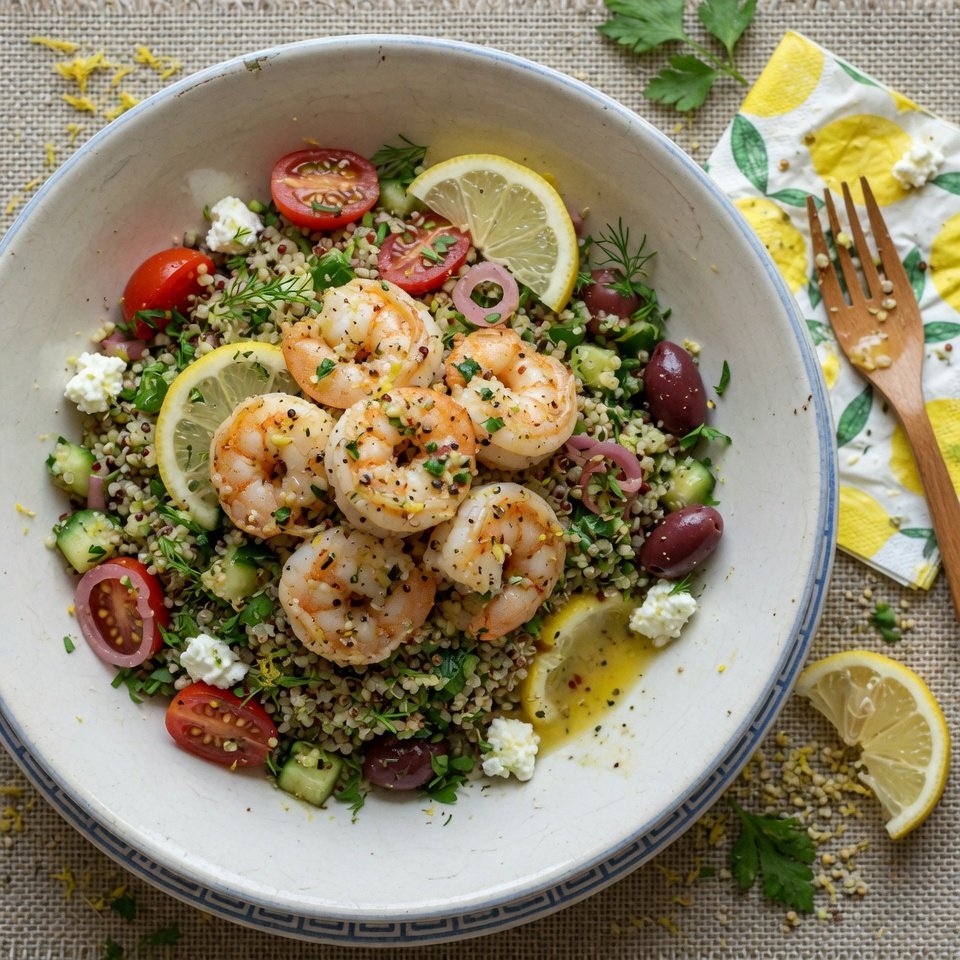
The combination works because every ingredient pulls its weight. Shrimp cooks in minutes and absorbs the garlic-lemon marinade like a sponge. Quinoa brings a nutty backbone and complete protein (one of the few plant sources that contains all nine essential amino acids). Extra virgin olive oil delivers healthy fats and that distinct Mediterranean richness, while feta cheese and olives add the salty punctuation that makes you reach for another bite. Fresh Flavors of Mediterranean Quinoa Salad.
What makes this version different from other shrimp quinoa recipes? The technique. We’re not just dumping everything into a pan and hoping for the best. We sear the shrimp first, remove them, then build the quinoa in the same skillet, capturing every bit of that garlic-lemon fond. Then we fold the shrimp back in at the end. This prevents overcooked, rubbery shrimp — a mistake I made plenty of times before learning this sequence.
Why This Recipe Works (Core Benefits)
This isn’t just another “healthy” recipe that sacrifices flavor for nutrition. The Mediterranean Lemon Garlic Shrimp Quinoa Bowl delivers on both fronts because the ingredients are doing real work:
Complete protein in one bowl. Between the shrimp and quinoa, you’re getting a full amino acid profile without needing to add meat. Quinoa is one of the few plant-based complete proteins, making this dish excellent for anyone reducing meat consumption.
Heart-healthy fats. The extra virgin olive oil provides monounsaturated fats and polyphenols linked to reduced inflammation and improved cardiovascular health. This isn’t just “not bad for you” — it’s actively good for you.
Anti-inflammatory ingredients. Garlic contains allicin, a compound with documented anti-inflammatory properties. Lemon provides vitamin C and antioxidants. Together, they create a flavor profile that’s as functional as it is delicious.
One-pan convenience. By cooking everything in a single skillet, you’re not just saving on dishes. You’re building layers of flavor as the quinoa absorbs the fond (those browned bits stuck to the pan after searing) and the aromatic base.
Naturally gluten-free. For those with celiac disease or gluten sensitivity, quinoa offers a grain-like texture without the gluten. Just verify your quinoa is certified gluten-free, as cross-contamination can occur during processing.
Meal prep friendly. This bowl reheats beautifully, making it ideal for Sunday prep. The flavors actually deepen after a day in the refrigerator.
The Heart of the Bowl: Key Ingredients
The success of this dish hinges on ingredient quality. Here’s what you need and why each matters:
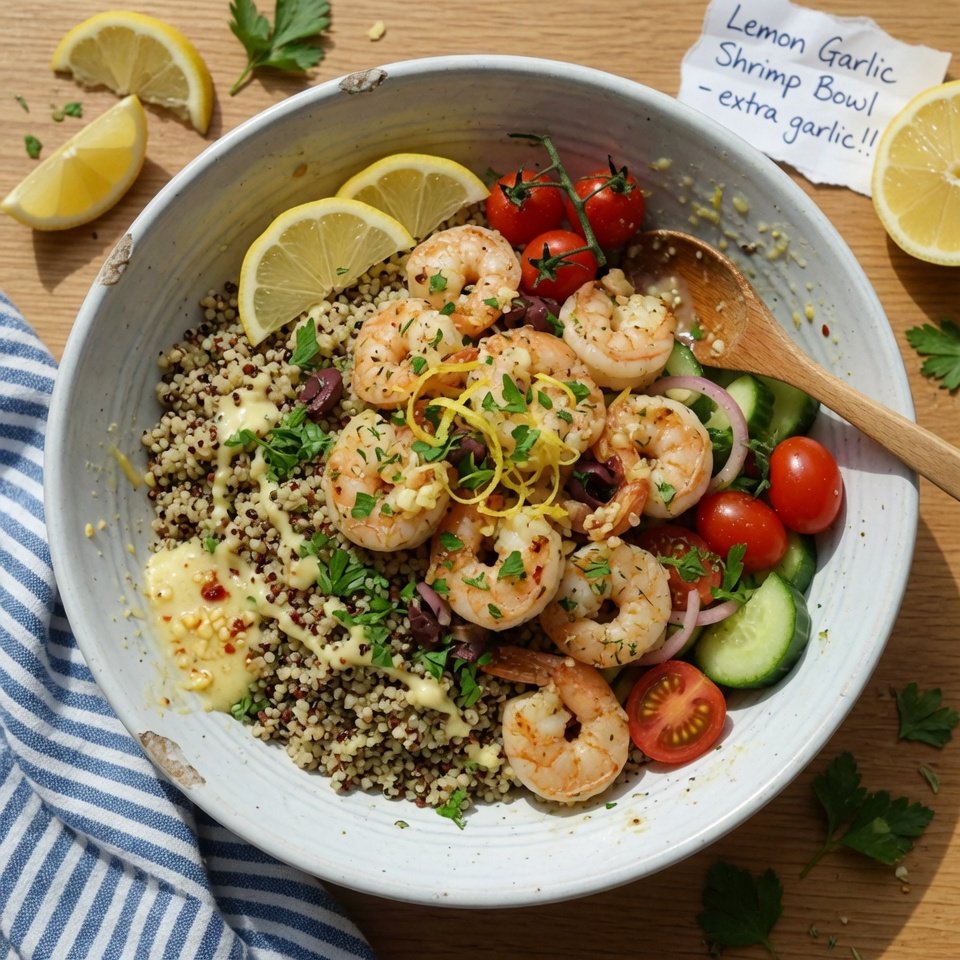
Shrimp (1.5 pounds, large, raw, peeled, deveined): Look for wild-caught if possible — the flavor is cleaner and sweeter than farmed. If using frozen, thaw completely and pat dry before cooking. Excess moisture is the enemy of a good sear.
Tri-color quinoa (1.5 cups dry): The blend of white, red, and black quinoa isn’t just aesthetic. Red and black varieties have slightly more fiber and a nuttier flavor. That said, any quinoa works here.
Fresh garlic (7 cloves total): Yes, seven. We’re using garlic in two stages: some for the shrimp, some for the quinoa base. Fresh garlic is non-negotiable here — the pre-minced jarred stuff lacks the pungent oils that make this dish sing.
Lemon (1 large): We’re using both the zest and juice. Zest contains the aromatic oils; juice provides the acid that brightens everything. Don’t skip the zest — it’s where most of the lemon flavor lives.
Extra virgin olive oil (2 tablespoons): Quality matters. Look for a peppery, grassy oil. If it tastes like nothing, it’ll cook like nothing.
Shallots (2 medium) or red onion (1 small): Shallots are sweeter and more delicate; red onion adds more bite. Either works, but shallots are my preference here.
Cherry tomatoes (1 cup, halved): They burst during cooking, creating little pockets of sweetness. Look for ones that feel heavy for their size.
Bone broth or vegetable broth (2.5 cups): Bone broth adds collagen and a deeper flavor, but vegetable broth keeps this fully plant-based. Either way, use something you’d drink on its own.
Dry white wine (1/2 cup): Optional but recommended. The alcohol cooks off, leaving behind a subtle acidity that water can’t replicate.
Feta cheese (1/2 cup, crumbled): Optional for dairy-free, but it adds a creamy, salty finish that ties everything together.
Fresh parsley (handful, chopped): For garnish. Dried parsley is a poor substitute here — fresh adds a brightness that dried can’t match.
Seasonings: Sea salt, black pepper, red pepper flakes (optional heat), dried oregano, and smoked paprika.
Step-by-Step Cooking Instructions
Step 1: Rinse and Prep the Quinoa
Rinse the quinoa under cold water for at least 30 seconds. Quinoa has a natural coating called saponin that tastes soapy and bitter if left on. Swish it around with your hand as you rinse — you’ll feel the water become less sudgy when the saponins are gone. Drain well.
Step 2: Prepare the Shrimp
If your shrimp aren’t already peeled and deveined, do that now. Pat them completely dry with paper towels. Moisture creates steam, and steam prevents browning. Season lightly with sea salt and black pepper.
Step 3: Sear the Shrimp
Heat 1 tablespoon of olive oil in a large skillet over medium-high heat until it shimmers. Add the shrimp in a single layer — don’t crowd the pan or they’ll steam instead of sear. Cook for 2 minutes without moving them.
Add 3 cloves of minced garlic and the zest of half a lemon. Flip the shrimp and cook another 1-2 minutes until pink and opaque.
Here’s the science: Shrimp cook fast because their proteins denature quickly. At around 120°F internally, they’re done. Go much beyond that, and the proteins tighten, squeezing out moisture and turning rubbery. Pull them when they’re just opaque.
Transfer the shrimp to a plate. Don’t wipe the pan.
Step 4: Build the Aromatic Base
Add another tablespoon of olive oil to the same skillet. Add the diced shallots and remaining 4 cloves of minced garlic. Sauté for 2 minutes until fragrant and translucent.
Why this matters: Those browned bits stuck to the pan from the shrimp? That’s fond — concentrated flavor from the Maillard reaction. By building your base in the same pan, you’re incorporating that flavor into every grain of quinoa.
Step 5: Toast the Quinoa
Add the rinsed quinoa and 1 teaspoon of dried oregano to the pan. Stir constantly for 1-2 minutes until the quinoa smells nutty and toasty.
Game changer. Toasting quinoa before adding liquid deepens its flavor significantly. It’s the difference between quinoa that tastes like nothing and quinoa that tastes like something.
Step 6: Deglaze and Simmer
Pour in the white wine and stir, scraping up any remaining fond from the bottom. Let it bubble for 2-3 minutes until slightly reduced.
Add the lemon juice, lemon zest, and bone broth. Bring to a boil, then reduce to low. Cover and simmer for 12-15 minutes until the quinoa is tender and the liquid is absorbed.
Step 7: Fluff and Combine
Remove from heat. Fluff the quinoa with a fork — this separates the grains and releases excess steam, preventing mushiness.
Gently fold in the cooked shrimp, halved cherry tomatoes, olives, and feta. The residual heat will warm everything through without overcooking the shrimp.
Step 8: Finish and Serve
Taste and adjust seasoning. You’ll likely need more salt than you think — quinoa is a blank canvas. Top with fresh parsley and an extra squeeze of lemon if desired. Mediterranean White Beans and Greens: A Nutritious and Flavorful Dish You’ll Love.
⚠️ Common Mistakes to Avoid
Overcooking the shrimp. This is the number one error. Shrimp go from perfect to rubbery in seconds. Pull them when they’re just pink and opaque, and remember they’ll continue cooking slightly from residual heat (carryover cooking).
Skipping the quinoa rinse. I’ve done this. The result is a soapy, bitter flavor that no amount of seasoning can fix. Thirty seconds of rinsing saves the entire dish.
Under-seasoning. Quinoa needs more salt than you expect. Taste the finished dish before serving and adjust. If it tastes flat, it probably needs salt, acid (more lemon), or both.
Crowding the pan during searing. When shrimp are too close together, they steam instead of sear. Work in batches if necessary.
Adding all the liquid at once without toasting. Toasting the quinoa in the aromatics first builds flavor. Skipping this step results in a flatter-tasting dish.
Using pre-minced garlic. The pre-jarred stuff has been sitting in liquid, losing its volatile oils. Fresh garlic is essential here.
Variations & Customizations
Protein Swaps
Chicken: Cut boneless thighs into 1-inch pieces. Sear until golden, then proceed as directed. Thighs stay juicy; breasts can dry out.
Chickpeas: For a plant-based version, use two cans of drained chickpeas. Add them with the broth instead of searing first.
Salmon: Cut into chunks and sear skin-side up first. The omega-3s add richness that pairs beautifully with the Mediterranean flavors.
Tofu: Press firm tofu for 20 minutes, cut into cubes, and sear until golden on all sides.
Grain Alternatives
Brown rice: Use the same method but increase broth to 3 cups and simmer for 40-45 minutes.
Couscous: Use Israeli couscous for better texture. It cooks faster — about 10 minutes.
Orzo: Treat it like rice, toasting first, then simmering in broth.
Dietary Modifications
Dairy-free: Skip the feta or use a dairy-free alternative. Nutritional yeast adds a similar savory depth.
Whole30 compliant: Omit wine and feta. Use compliant broth.
Lower carb: Reduce quinoa to 1 cup and increase vegetables — zucchini, bell peppers, or spinach work well.
Spice Adjustments
For heat, add red pepper flakes with the garlic. For smokiness, increase smoked paprika. For brightness, add fresh dill or mint with the parsley.
Meal Prep & Storage Tips
This bowl is a meal prep champion, but there are tricks to keeping it at its best:
Storage: Transfer cooled leftovers to airtight containers. Refrigerate within two hours of cooking. Properly stored, it keeps for 3-4 days.
Freezing: You can freeze portions for up to 2 months, but the texture of the shrimp changes slightly. For best results, freeze the quinoa mixture separately from the shrimp if possible.
Reheating: Add a splash of water or broth to the quinoa before reheating — it absorbs liquid as it sits. Warm gently in a skillet over medium heat or microwave in 30-second intervals. The goal is to heat through without cooking further.
Freshening: A squeeze of fresh lemon and a sprinkle of herbs right before serving revives the flavors. The acid wakes everything up.
💡 Pro Tips for Success
Dry the shrimp thoroughly. I can’t stress this enough. Wet shrimp don’t sear; they steam. Pat them dry with paper towels before seasoning.
Toast the quinoa. This 60-second step transforms the flavor. The quinoa should smell nutty before you add liquid.
Don’t skip the wine. If you don’t cook with wine, substitute with broth. But if you can, the wine adds a layer of acidity and complexity that water can’t.
Taste as you go. Quinoa needs seasoning. The shrimp needs seasoning. The finished dish needs seasoning. Build flavor in layers.
Use the zest. Most of the lemon’s aromatic oils are in the zest, not the juice. If you’re only using juice, you’re missing half the lemon flavor.
Let it rest. After combining everything, let the dish sit for 2-3 minutes before serving. This allows the flavors to marry and the temperature to even out.
Frequently Asked Questions (FAQ)
+Why is my shrimp rubbery?
Shrimp overcook in seconds. They’re done when they turn pink and opaque, typically 2-3 minutes per side depending on size. Remove them immediately from heat. Carryover cooking will finish the job. If they’re already rubbery, they’re overcooked — next time, pull them 30 seconds earlier than you think you should.
+Can I use frozen shrimp?
Absolutely. Thaw them completely in cold water (about 15 minutes) or in the refrigerator overnight. Pat them very dry before cooking. Frozen shrimp are often fresher than “fresh” shrimp at the seafood counter, which may have been previously frozen and thawed.
+How do I know when quinoa is done?
The quinoa is ready when the germ (the little white curly tail) has separated from the seed and the texture is tender but still has a slight bite. If there’s liquid remaining, cook uncovered for another minute. If it’s dry but still crunchy, add a splash of water and continue cooking.
+Can I make this ahead?
Yes. The flavors actually improve after a day in the refrigerator. Store the components separately if possible — keep the shrimp and quinoa in different containers. Reheat the quinoa first, then gently fold in the shrimp. Add fresh herbs and lemon just before serving.
+What can I substitute for quinoa?
Brown rice, farro, couscous, or orzo all work. Adjust the cooking time and liquid ratio accordingly. Brown rice needs more liquid and time; couscous needs less of both.
+How long does this keep in the fridge?
Properly stored in an airtight container, this keeps for 3-4 days. The shrimp are best within 2 days for optimal texture, but they’re safe to eat for the full 4 days.
+Is this recipe gluten-free?
Yes, quinoa is naturally gluten-free. However, if you have celiac disease, look for quinoa labeled certified gluten-free to avoid cross-contamination from processing facilities.
+Can I make this dairy-free?
Easily. Omit the feta cheese or substitute with a dairy-free alternative. The dish is still satisfying without it — the olives and olive oil provide plenty of richness.
Conclusion
This Mediterranean Lemon Garlic Shrimp Quinoa Bowl isn’t trying to be fancy. It’s trying to be exactly what weeknight dinners should be: fast, nourishing, and genuinely delicious. The technique — searing shrimp, removing them, building flavor in the same pan — ensures every component is cooked properly. The ingredients — garlic, lemon, olive oil, herbs — are the foundation of Mediterranean cooking for a reason. They work.
Make it tonight. Make it for meal prep. Make it when you need something healthy that doesn’t taste like “healthy food.” And if you find yourself adding extra garlic or squeezing more lemon over the top, you’re doing it right. That’s the point.
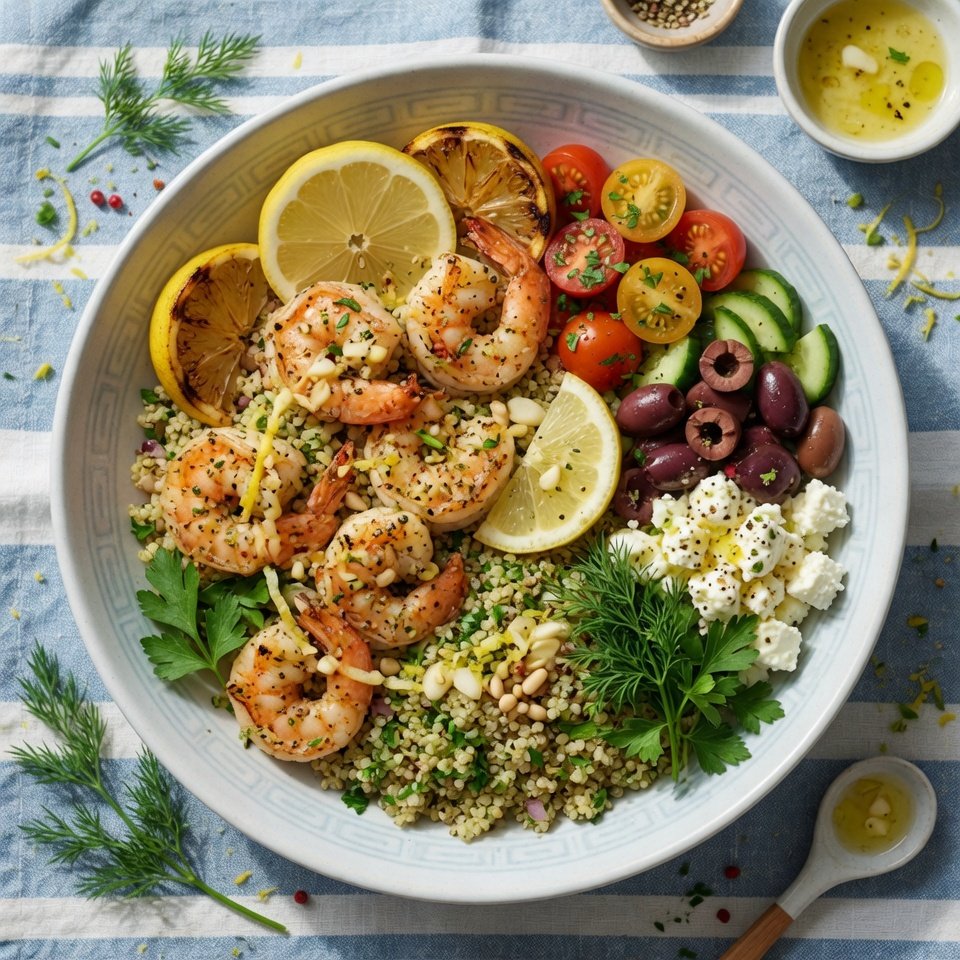
Garlic Shrimp with Quinoa
Ingredients
Method
- In a large nonstick skillet with a tight-fitting lid, heat 2 teaspoons of the olive oil over medium high.
- Add the shrimp, then sprinkle with 1/2 teaspoon salt and 1/4 teaspoon chili powder. Sauté just until the shrimp are pink and cooked through, about 3 minutes. Immediately remove the shrimp to a plate so they do not overcook.
- Heat the remaining 2 teaspoons olive oil in the same skillet, then add the onion. Let cook until the onion begins to soften, about 5 minutes. Add the garlic and cook just until fragrant, about 30 seconds.
- Add the quinoa, cayenne, and remaining 1/2 teaspoon salt and 1/4 teaspoon chili powder. Stir to coat the quinoa with the oil and let brown for 2 minutes.
- Pour in the chicken stock, then increase the heat to high and bring the broth to a boil. Once boiling, cover and reduce the heat to a simmer. Let simmer until the quinoa is tender, 12 to 15 minutes. Uncover and fluff with a fork.
- Zest the lemon directly into the pan, then juice the lemon and add the lemon juice and parsley to the skillet as well. Toss to combine, then top with the reserved shrimp. Sprinkle with additional fresh parsley. Serve warm.
Notes
- To ensure perfectly cooked shrimp, look for a vibrant pink color and a slight curl; avoid overcooking, as they can become rubbery in texture.
- For a more flavorful quinoa, rinse it thoroughly under cold water before cooking to remove any residual saponins, which can impart a bitter taste.
- If you're short on time, you can use pre-cooked shrimp; just add them to the skillet at the end to heat through, reducing your overall cooking time.
- Feel free to swap the chicken broth with vegetable broth for a lighter, vegetarian option that still delivers great flavor.
- This dish can be stored in the refrigerator for up to three days; reheat gently in the microwave or on the stovetop with a splash of broth to prevent dryness.