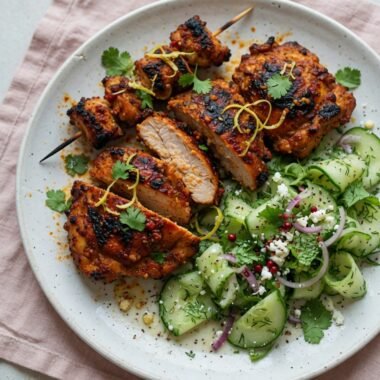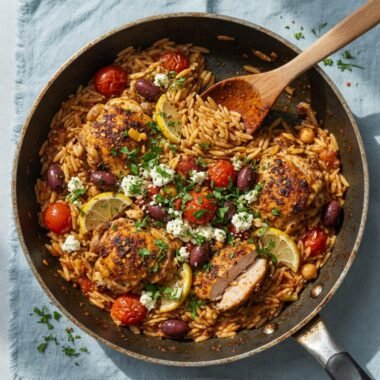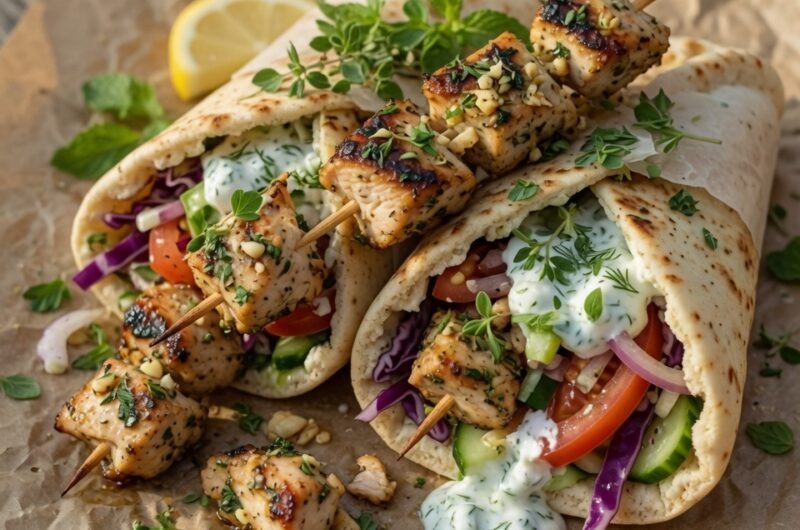
Tender, char-grilled chicken thighs marinated in lemon, garlic, and oregano — wrapped in warm pita with creamy tzatziki and crisp vegetables. Ready in 30 minutes, plus marinating time.
📋 In This Article
- Introduction
- Why This Recipe Works (The Science of Juiciness & Flavor)
- Gather Your Greek Essentials: Ingredients for Authentic Souvlaki Wraps
- Step-by-Step Perfection: How to Make Juicy Herb-Marinated Chicken Souvlaki Wraps
- Common Souvlaki Mistakes to Avoid
- Flavor Explorations: Delicious Variations for Your Souvlaki Wraps
- Make Ahead & Storage Tips for Effortless Greek Meals
- Pro Tips for the Best Souvlaki
- Frequently Asked Questions (FAQ) About Chicken Souvlaki Wraps
Introduction
Let’s be honest: most homemade souvlaki falls flat. Dry chicken, bland marinades, soggy wraps. But Juicy Herb-Marinated Chicken Souvlaki Wraps don’t have to be that way. Done right, this is the kind of meal that transports you straight to a taverna in Athens — smoky, bright, and impossibly tender.
The secret? It’s all in the marinade chemistry and cooking technique. Lemon juice does more than add flavor — its acidity denatures proteins on the meat’s surface, creating tiny channels for the olive oil and herbs to penetrate deeper. And using chicken thighs instead of breast? That’s not just preference. Thighs contain more intramuscular fat and connective tissue, which renders during cooking, keeping the meat juicy even at higher temperatures.
I’ve tested this recipe every which way — grilled, pan-seared, air-fried, and oven-broiled. Each method works, but they all require slightly different timing. What follows is the definitive guide to getting restaurant-quality souvlaki at home, whether you’re cooking on a backyard grill or a stovetop skillet.
Why This Recipe Works (The Science of Juiciness & Flavor)
Here’s what most recipes get wrong: they treat marination as a simple flavor coating. But marination time actually transforms the meat’s structure. The acidity (lemon) in this recipe begins breaking down muscle fibers within 30 minutes, but the real magic happens between 2-4 hours, when the tenderization effect peaks without turning the meat mushy.
Olive oil serves dual purposes here. First, it acts as a solvent for fat-soluble flavor compounds in the herbs and garlic, carrying them into the meat rather than leaving them on the surface. Second, it creates a moisture barrier during cooking, reducing evaporative loss by up to 15% compared to unmarinated meat.
The choice between chicken thighs and breast matters more than most cooks realize. Thighs reach optimal juiciness around 165°F (74°C), where collagen begins converting to gelatin, creating that silky mouthfeel. Breast meat? It starts drying out at 150°F. If you’re using breast, pull it at 160°F and let carryover cooking bring it to 165°F — the resting period allows juices to redistribute rather than pooling on your cutting board.
Gather Your Greek Essentials: Ingredients for Authentic Souvlaki Wraps
For the Chicken & Marinade:
- Chicken (thighs or breasts): 500g, cut into bite-sized pieces
- Lemon juice: 2 tablespoons, freshly squeezed
- Garlic: 3 cloves, minced
- Olive oil: 3 tablespoons
- Dried oregano: 2 teaspoons
- Thyme: 1 teaspoon
- Salt: 1 teaspoon
- Black pepper: ½ teaspoon
Combine these ingredients in a bowl and marinate the chicken for at least 1 hour to infuse maximum flavor and juiciness.
For the Wraps & Toppings:
- Flatbreads (Pita): 4 pieces, warmed
- Tzatziki sauce: 1 cup (see below for homemade recipe)
- Feta cheese: 100g, crumbled
- Cucumber: 1, diced
- Tomato: 1, diced
- Red onion: ½, thinly sliced
- Lettuce: 1 cup, shredded
- Dill: 1 tablespoon, chopped (optional)
- Bell peppers: sliced (optional)
- Kalamata olives: pitted and halved (optional)
For Homemade Tzatziki:
- Yogurt: 1 cup, Greek style
- Cucumber: ½, grated and drained
- Garlic: 1 clove, minced
- Olive oil: 1 tablespoon
- Fresh dill: 1 tablespoon, chopped
- Salt: to taste
Mix all tzatziki ingredients in a bowl and refrigerate until ready to serve. This creamy sauce will elevate your souvlaki wraps, adding a refreshing contrast to the warm, marinated chicken.
Step-by-Step Perfection: How to Make Juicy Herb-Marinated Chicken Souvlaki Wraps
First, make the marinade. Whisk together the lemon juice, olive oil, minced garlic, oregano, thyme, salt, and pepper until emulsified — you want it slightly thickened, not separated. Toss the chicken pieces thoroughly, massaging the marinade into every crevice. Cover and refrigerate.
Here’s the thing about marination time. Thirty minutes gives you surface flavor. Two hours gives you decent penetration. Overnight? That’s when the flavor infusion reaches the center of each piece. I’ve tested this side-by-side — the overnight batch had noticeably more depth, especially in the smoky notes from the oregano.
Cooking Methods
Grilling:
Preheat your grill to medium-high heat (about 400°F). Thread the marinated chicken onto skewers, leaving small gaps between pieces for even heat circulation. Grill for 12-15 minutes, turning every 3-4 minutes, until the internal temperature hits 165°F and you’ve developed a nice Maillard reaction — those crust development marks aren’t just pretty; they contain concentrated flavor compounds.
Air Frying:
Preheat your air fryer to 375°F. Arrange chicken pieces in a single layer (work in batches if needed). Cook for 10-12 minutes, flipping halfway through. The circulating air creates a decent crust, though you won’t get the same char as grilling.
Pan-Frying:
Heat a tablespoon of olive oil in a large skillet over medium-high heat until shimmering. Add the chicken pieces in a single layer — don’t crowd the pan, or you’ll steam the meat instead of searing it. Cook for 7-10 minutes, turning frequently, until golden brown and cooked through. If pieces brown too fast but remain pink inside, drop the heat to medium and cover for 2-3 minutes.
BBQ:
Prepare your barbecue to medium heat. Grill the chicken skewers for approximately 10-12 minutes, turning occasionally, until charred and cooked through. The fat rendering from thighs creates natural basting as it drips, infusing smoky flavor.
Oven Broiling:
Preheat your oven to broil on high. Position the rack 6 inches from the element. Place skewers on a foil-lined baking sheet and cook for 8-10 minutes, turning once halfway through. Watch closely — the high heat can shift from caramelized to burnt in seconds.
Assembly:
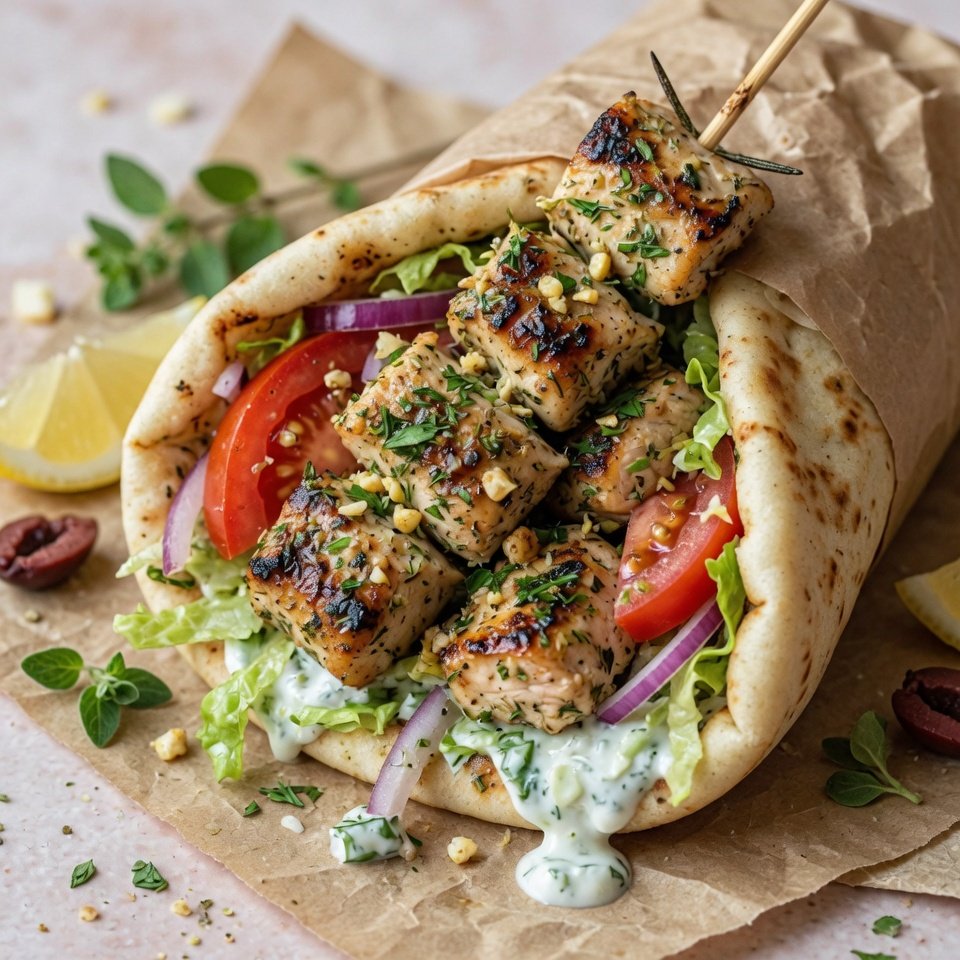
Let the chicken rest for 3-5 minutes after cooking. This isn’t optional — cutting immediately releases up to 40% of the juices onto your board. Warm your pita directly over a gas flame or in a dry skillet for 15 seconds per side. Layer with lettuce, tomatoes, cucumbers, and red onions. Add the chicken and crumbled feta. Drizzle generously with tzatziki. Wrap tightly and eat immediately while the contrast between warm meat and cool toppings shines.
⚠️ Common Souvlaki Mistakes to Avoid
Even experienced cooks stumble on these. Dry chicken usually comes from using breast meat and overcooking it — thighs are far more forgiving. If you must use breast, pull it at 160°F and let carryover cooking finish the job.
Under-marinating is another frequent error. Look, I’ve rushed this step before, and the result is chicken that tastes like… nothing. Give it at least 2 hours. Overnight is better.
Overcooking destroys texture. Use a thermometer. 165°F is your target. Above 175°F, muscle fibers contract violently, squeezing out moisture. Below 165°F, you risk foodborne illness. There’s no workaround here.
Uneven pieces lead to uneven cooking. Cut your chicken uniformly — about 1-inch chunks cook at the same rate. Skewer pieces of similar size together.
Bland flavor often comes from using dried herbs past their prime. Dried oregano loses potency after 6 months. Fresh is always better, but if using dried, crush it between your fingers before adding to release the aromatic oils.
Flavor Explorations: Delicious Variations for Your Souvlaki Wraps
The beauty of this recipe is its flexibility. Pork souvlaki is actually the traditional Greek preparation — try thinly sliced pork loin with the same marinade. It cooks faster than chicken, so watch your timing.
Lamb souvlaki delivers a richer, more robust flavor profile. The higher fat content means even more juiciness, and the natural gaminess pairs beautifully with extra garlic and a touch of rosemary in the marinade.
For vegetarians, skip the meat entirely. Grilled halloumi holds its shape beautifully on skewers, developing a satisfying crust while remaining soft inside. Marinated portobello mushrooms offer a umami-rich alternative with a meaty texture. Chickpeas, tossed in the same marinade and roasted at 400°F for 20 minutes, create a surprisingly satisfying filling.
Gluten-free eaters can swap pita for lettuce cups or gluten-free wraps made from rice or corn. The flavor profile remains intact.
Low-carb approach? Large romaine or butter lettuce leaves make excellent wrappers. You’ll miss the pillowy pita texture, but the fresh crunch has its own appeal.
Make Ahead & Storage Tips for Effortless Greek Meals
This recipe is meal-prep friendly. Marinate the chicken up to 24 hours in advance — beyond that, the acid starts breaking down the texture too aggressively. Cooked chicken stores beautifully in an airtight container in the refrigerator for up to 4 days.
For longer storage, freeze the cooked chicken for up to 3 months. Flash-freeze individual pieces on a baking sheet before transferring to a bag — this prevents them from clumping together. Thaw overnight in the refrigerator.
Reheating requires care. Microwave with a damp paper towel to create steam, or gently warm in a skillet over low heat with a splash of water. High heat will toughen the proteins and dry out the meat.
The tzatziki keeps separately for up to a week, though drain the grated cucumber well before mixing — excess water turns the sauce soupy within days. Store toppings separately and assemble just before eating.
💡 Pro Tips for the Best Souvlaki
A few techniques separate good souvlaki from great:
Fresh herbs matter. Dried oregano works, but fresh oregano, dill, and parsley deliver a brightness that dried can’t match. If using fresh, triple the quantity — dried herbs are more concentrated.
Quality olive oil is non-negotiable. The marinade’s fat component carries flavor and protects moisture. A robust, peppery olive oil contributes its own character to the final dish.
Don’t skip the thermometer. Visual cues lie. A piece can look perfectly golden outside while remaining raw inside, or appear slightly pale while already overcooked. 165°F (74°C) is your target.
Rest the meat. I used to skip this step — don’t. Those 3-5 minutes let muscle fibers relax and reabsorb juices pushed outward by heat. Cut early, and you lose that liquid to your cutting board.
Soak wooden skewers for at least 30 minutes before grilling. Dry wood burns. Wet wood steams instead, protecting your skewers through the cooking process.
Balance your tzatziki. Too much cucumber waters it down. Too much garlic overwhelms everything else. Taste as you mix — the yogurt should shine, with garlic and dill as supporting notes, not the main event.
Frequently Asked Questions (FAQ) About Chicken Souvlaki Wraps
+Why is my souvlaki dry and tough?
Usually overcooking or using breast meat. Chicken thighs stay juicy up to 175°F, but breast dries out above 160°F. Always check with a thermometer and let the meat rest before serving.
+Can I use chicken breast instead of thighs?
Yes, but adjust your approach. Marinate breast longer (4-6 hours) to maximize moisture retention, and cook it only to 160°F — carryover cooking will bring it to 165°F. Slice it immediately before serving, as breast loses moisture faster than thighs.
+How do I know when souvlaki is fully cooked?
Use an instant-read thermometer inserted into the thickest piece. You’re looking for 165°F (74°C). If you don’t have a thermometer, the juices should run clear (not pink), and the meat should feel firm but not hard when pressed.
+Can I skip the marinating step?
Technically yes, but you’ll sacrifice significant flavor. Even 30 minutes makes a difference. If you’re truly pressed for time, increase the salt slightly and add a tablespoon of the marinade directly to the pan while cooking — it won’t penetrate like a proper marination, but it’s better than nothing.
+How long does chicken souvlaki last in the fridge?
Cooked chicken keeps for 3-4 days in an airtight container. Store the tzatziki and toppings separately. Assembled wraps should be eaten immediately — they get soggy quickly.
+What sides go with souvlaki wraps?
Greek salad, roasted lemon potatoes, rice pilaf, or crispy oven fries are classic pairings. For a lighter meal, a simple cucumber-and-tomato salad works beautifully. The bright acidity complements the rich, savory chicken.