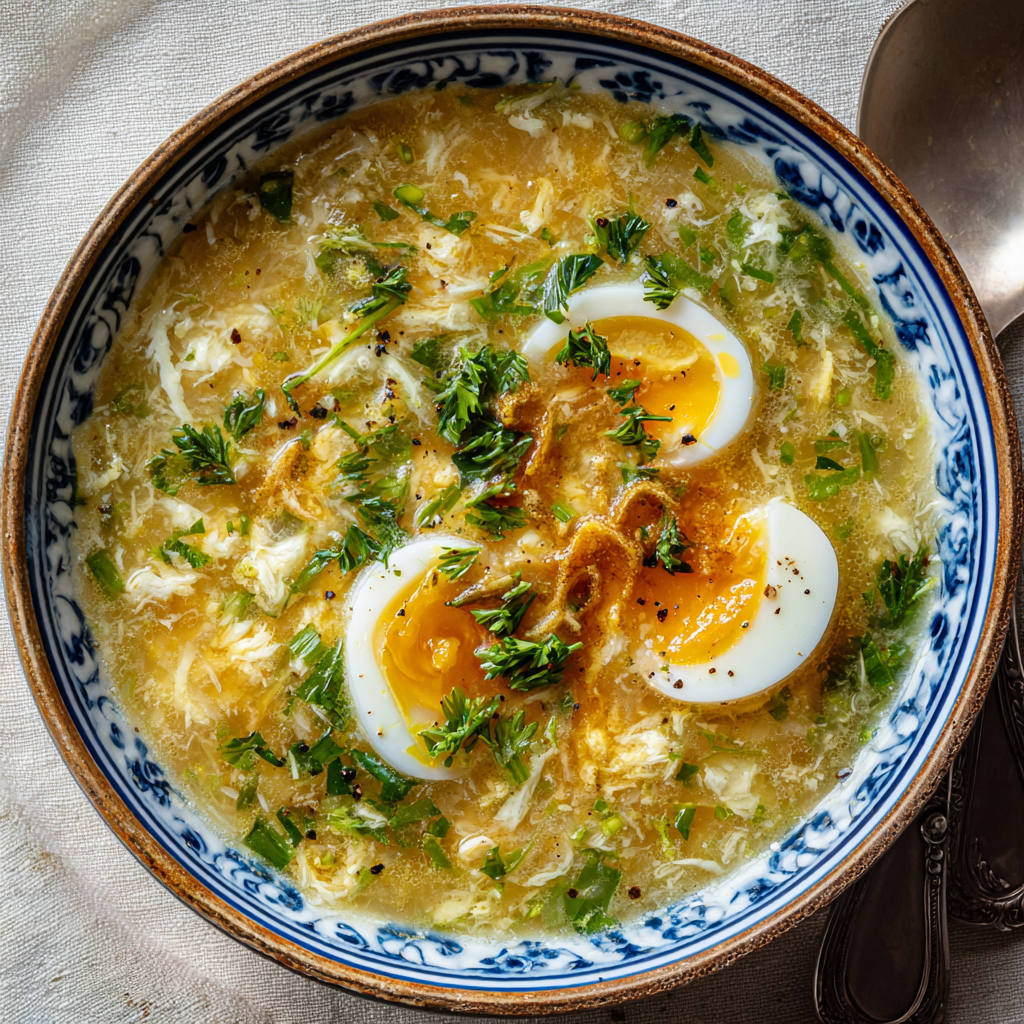
A velvety, bright, and deeply comforting bowl, this Greek lemon soup (Avgolemono) uses a clever egg-emulsification technique for a creamy texture without a drop of dairy.
📋 In This Article
- Introduction
- Why This Avgolemono Recipe Works
- What is Avgolemono Soup? A Culinary Classic Explained
- Essential Ingredients for Authentic Lemony Greek Egg Drop Soup
- Step-by-Step Instructions: How to Make Avgolemono Soup
- Common Mistakes to Avoid for Perfect Avgolemono
- Avgolemono Variations and Customizations
- Storing and Reheating Your Lemony Greek Egg Drop Soup
- Expert Tips for the Best Avgolemono
- Frequently Asked Questions (FAQ)
- Conclusion
Introduction
Some soups feed you; others hug you. Avgolemono falls firmly into the second category. At first glance, it looks like a simple chicken and rice soup, but one sip reveals the magic: a luxurious, creamy texture and a bright, tangy kick that wakes up your palate. It is the Lemony Greek Egg Drop Soup you didn’t know you were missing.
I’ve spent years testing variations of this dish, from the rustic village versions thick with rice to refined restaurant preparations using orzo. The beauty of Avgolemono lies in its deceptive simplicity. It transforms humble pantry staples—eggs, lemons, stock—into something that tastes like it took hours of fussing. It doesn’t. But it does require technique. Get the tempering right, and you have a silky, sunshine-yellow broth that rivals the finest French velouté. Get it wrong, and well, you have scrambled egg drop soup. We’re going to make sure you get it right.
Why This Avgolemono Recipe Works
Most creamy soups rely on heavy cream or a roux of butter and flour for body. Avgolemono cheats the system. It uses eggs. Specifically, it uses the egg-lemon liaison to create an emulsion.
This approach offers two distinct advantages. First, it cuts the richness. Unlike a dairy-heavy chowder, this soup remains light enough for a spring lunch yet warming enough for a winter dinner. Second, it amplifies flavor. The lemon juice doesn’t just add acidity; it acts as a flavor magnifier for the chicken stock, lifting the savory notes while the egg yolks provide a velvety mouthfeel. By tempering the eggs—slowly introducing hot liquid to raise their temperature—we denature the proteins gently. This creates a stable, thickened network that gives the soup its signature body without a speck of flour.
What is Avgolemono Soup? A Culinary Classic Explained
Pronounced av-go-LEH-mo-no, the name is a literal portmanteau of the Greek words for egg (avgo) and lemon (lemoni). While often associated with soup, the term actually refers to the sauce itself. In Greek cuisine, this egg-lemon mixture is a versatile finishing touch, draped over dolmades (stuffed grape leaves), vegetables, or roasted meats.
As a soup, it is the ultimate comfort food. It typically starts with a base of chicken stock, though a quality homemade chicken stock will always yield superior results. The starch component varies—some families swear by short-grain rice, others by orzo—but the constant is that glossy, pale yellow broth. It is a dish that proves you don’t need a long ingredient list to achieve depth; you just need to understand how ingredients interact.
Essential Ingredients for Authentic Lemony Greek Egg Drop Soup
The success of this dish hinges on the quality of just a few components. Because the flavor profile is so pure, there is nowhere to hide.
- Chicken Stock: Use the best you can find. If using store-bought, opt for a low-sodium variety so you can control the salinity. If you have bone-in chicken, simmering it in the stock extracts collagen, which aids in the soup’s body.
- Eggs: You need three large eggs for this recipe. They provide the structure. Use them at room temperature to help prevent shocking the mixture during tempering.
- Lemons: Fresh lemon juice is non-negotiable. Bottled juice lacks the aromatic oils of the zest and often tastes metallic. For this recipe, juice two large lemons, and consider adding a strip of zest to the broth as it simmers for extra fragrance.
- Rice: Traditional recipes often use short-grain rice or Arborio. These varieties release more starch, contributing to a thicker consistency. Long-grain rice works well for a lighter, more distinct grain texture.
- Aromatics: A classic mirepoix of onions, carrots, and celery builds the flavor foundation. Sauté them until soft to ensure their sweetness balances the lemon’s acidity.
- Chicken: Tender, shredded chicken makes this a meal. You can poach the chicken directly in the stock (a great two-for-one technique) or use leftover rotisserie chicken.
- Olive Oil: A splash of high-quality olive oil at the end adds a fruity finish.
- Fresh Herbs: Dill is the traditional pairing, its grassy anise flavor cutting through the richness. Flat-leaf parsley works beautifully as well.

Step-by-Step Instructions: How to Make Avgolemono Soup
Step 1: Build the Broth
In a large pot or Dutch oven, bring 6 cups of chicken stock to a gentle boil. Add your chopped onions, carrots, and celery. Let this simmer for about 20 minutes. This step does two things: it softens the vegetables and allows their flavors to fully meld with the stock.
Step 2: Cook the Rice
Stir in 1/2 cup of rice. Cover the pot and reduce the heat to maintain a simmer. Cook the rice until it is just tender—usually about 15 minutes. If you are using orzo, check it at the 8-minute mark, as it cooks faster.
Step 3: Add the Chicken
If you are using pre-cooked, shredded chicken (about 2 cups), add it now just to warm it through. If you are poaching raw chicken, ensure it is fully cooked (reaching an internal temperature of 165°F) before moving to the next step.
Step 4: The Critical Temper
This is the moment where science meets art. Move the pot off the heat entirely. In a separate bowl, whisk together 3 large eggs and the juice of 2 lemons until frothy. You need to temper the eggs to prevent them from scrambling when they hit the hot liquid.
Take a ladleful (about 1/2 cup) of the hot broth and slowly drizzle it into the egg-lemon mixture while whisking vigorously. Repeat with a second ladleful. This process slowly raises the temperature of the eggs, a technique known as thermal equilibration.
Step 5: Create the Emulsion
Now, slowly pour the warmed egg mixture back into the soup pot, whisking the soup constantly as you pour. The soup will transform into a cloudy, creamy, pale yellow liquid. If the soup is still hot, the residual heat will gently cook the egg proteins, thickening the broth into a silky sauce.
Step 6: Season and Serve
Taste immediately. Does it need more salt? More lemon? Adjust the seasoning with salt and pepper. Serve hot, garnished with fresh dill or parsley.
Prep Time: 15 minutes Cook Time: 35 minutes Total Time: 50 minutes
⚠️ Common Mistakes to Avoid for Perfect Avgolemono
Even a simple dish has pitfalls. Here is how to avoid the most common errors.
- Scrambling the Eggs: This is the number one failure mode. If you pour eggs directly into boiling stock, they will coagulate instantly, leaving you with strands of cooked egg in a clear broth. The fix? Always remove the pot from the heat and temper the eggs first.
- The Wrong Egg-to-Broth Ratio: Too few eggs, and the soup feels thin and watery. Too many, and it can taste overly “eggy” and thick. Stick to the ratio of roughly 3 eggs for every 5-6 cups of liquid for that perfect velvety consistency.
- Overcooking the Rice: Nobody likes mushy soup. Cook your rice just until al dente. Remember, it will continue to absorb liquid even after the heat is off.
- Under-seasoning: Lemon juice can mask saltiness. You might need to add more salt than you expect to balance the acidity. Taste at the very end and adjust.
Avgolemono Variations and Customizations
The classic recipe is a staple, but the template is incredibly flexible.
- Orzo vs. Rice: For a creamier texture, swap the rice for orzo. This rice-shaped pasta releases starch into the broth, thickening it further and creating a luscious mouthfeel.
- Vegetarian Avgolemono: You can easily make a vegetarian version by swapping the chicken stock for a robust vegetable broth. Add chickpeas or white beans in place of the chicken for protein.
- Meat Options: While chicken is standard, some regions of Greece use lamb or even fish stock with small pieces of fish. The egg-lemon sauce is versatile enough to handle robust meats.
Storing and Reheating Your Lemony Greek Egg Drop Soup
This soup is best eaten the day it is made, but it stores reasonably well. Cool the soup to room temperature before refrigerating in an airtight container. It will keep for 3 to 4 days.
Reheating is where you need to be careful. High heat will break the emulsion, turning your silky soup into a curdled mess. Reheat gently over low heat on the stove, stirring constantly. Do not let it boil. If the soup separates slightly, a vigorous whisking while heating can sometimes bring it back together. Freezing is generally not recommended, as the egg-thickened broth can become grainy upon thawing.
💡 Expert Tips for the Best Avgolemono
- Use Room Temperature Eggs: Cold eggs are more prone to shocking when they hit the hot broth. Let your eggs sit on the counter for 20 minutes before you start cooking.
- Don’t Skip the Zest: For a deeper lemon flavor, add a strip or two of lemon zest to the broth while the rice cooks. Remove the zest before adding the egg mixture. This infuses the soup with aromatic oils without adding extra acidity.
- Whisk Like You Mean It: When tempering and when combining the mixture back into the pot, whisking is your safety net. Agitation prevents the proteins from bonding too tightly.
- The “Ribbons” Test: When you drizzle the hot broth into the eggs, the mixture should become slightly lighter in color and frothy. This visual cue tells you the eggs are tempered and ready.
Frequently Asked Questions (FAQ)
+Why did my Avgolemono soup turn white?
If your soup looks white or opaque rather than pale yellow, it likely cooled down too much or the emulsion didn’t fully set. This doesn’t affect the flavor, but reheating it gently while whisking can help restore the creamy texture.
+Can I make Avgolemono without rice?
Absolutely. You can omit the rice for a lighter, broth-based soup, or substitute it with small pasta shapes like pastina or stars. Just remember that the starch from the rice contributes to the soup’s body, so without it, the soup will be slightly thinner.
+Is Avgolemono supposed to be sour?
It should be bright and tangy, not mouth-puckeringly sour. The lemon should highlight the savory chicken flavor, not overpower it. Start with the juice of one lemon, taste, and add the second one gradually until you hit the right balance.
+How do I fix grainy Avgolemono?
If your soup becomes grainy, it means the eggs have curdled slightly. Unfortunately, you can’t “un-cook” scrambled eggs. However, you can often smooth it out by using an immersion blender for a few seconds to re-emulsify the mixture, though this will change the texture to be more uniform.
+What can I serve with Avgolemono?
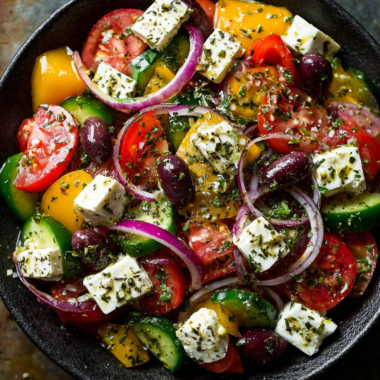
It is a complete meal in a bowl, but it pairs beautifully with crusty bread for dipping. A simple Greek salad with feta and olives makes for a refreshing side dish.
Conclusion
Avgolemono is proof that the best dishes often come from the simplest techniques. It transforms the mundane act of boiling chicken and rice into something that feels almost decadent. It is a bowl of comfort that bridges seasons—warming in winter, yet bright enough for a cool spring evening. Once you master the tempering technique, this Lemony Greek Egg Drop Soup won’t just be a recipe you try once; it will become a permanent fixture in your weeknight rotation.