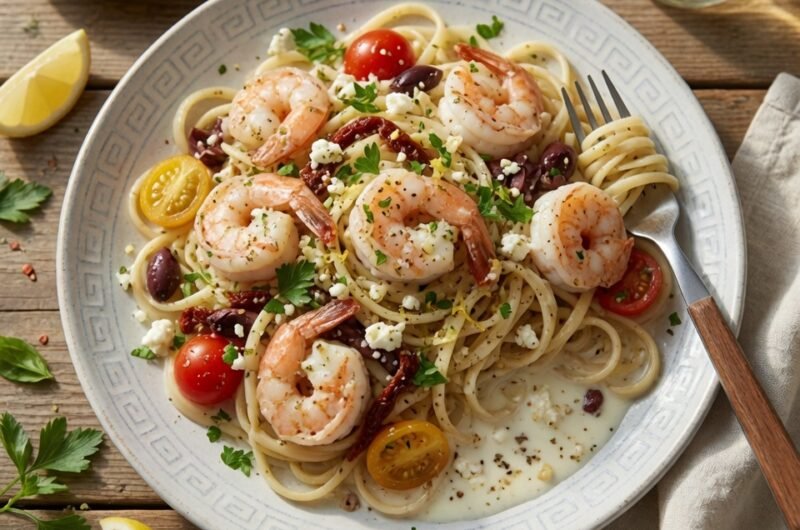
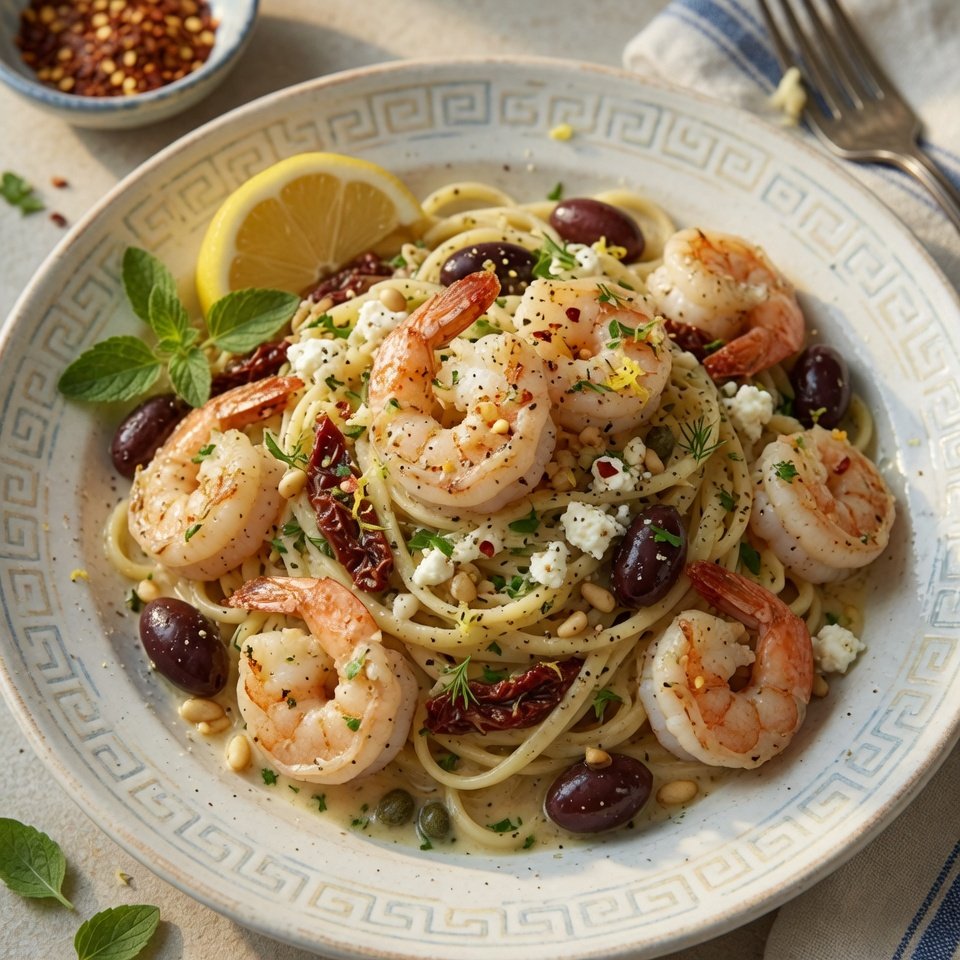
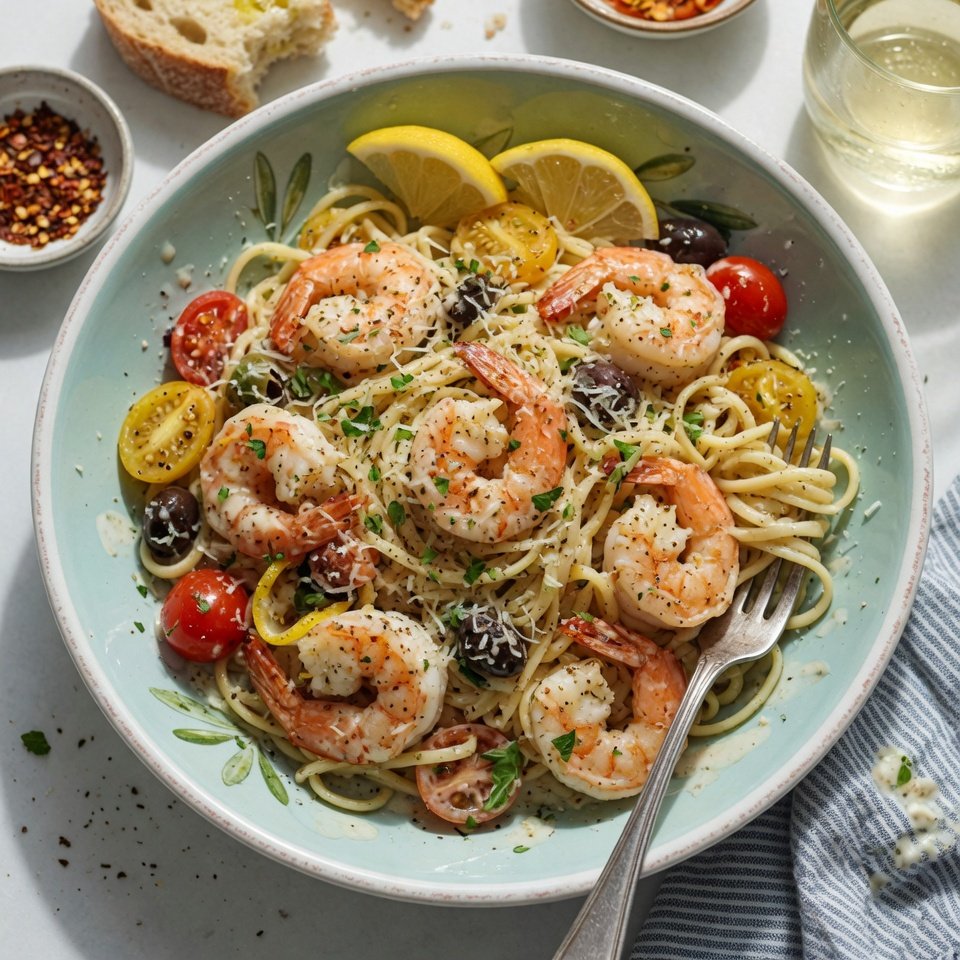
A fast, elegant dinner where succulent shrimp and al dente pasta meet a glossy, emulsified garlic-white wine sauce—ready in under 30 minutes.
📋 In This Article
Introduction
This is The Best Mediterranean Shrimp Pasta With a Garlic White Sauce You’ll Dream About—a bold claim, but one bite of the garlicky, wine-kissed sauce will prove me right. Too often, shrimp pasta falls into one of two traps: either it’s drowning in heavy cream that masks the delicate seafood flavor, or it’s a dry, oily mess that slides right off the noodle. We’re doing neither. This recipe relies on the magic of emulsification, using pasta water and olive oil to create a velvety coating that clings to every strand. It’s fast food, elevated.
Why This Recipe Works (The Dream Factor)
Most “quick” pasta recipes sacrifice texture for speed. Not here. The brilliance of this dish lies in the layering of flavors and the science of the sauce. We aren’t just dumping ingredients into a pan; we are building a flavor base.
First, the Garlic White Sauce. It’s not a cream sauce. It’s a sophisticated emulsion. By vigorously whisking starchy pasta water into the olive oil and white wine, you create a creamy, glossy texture without a drop of heavy cream. The starch molecules swell and act as binders, suspending the fat in the liquid.
Second, the Mediterranean flavors are treated with respect. We bloom the oregano and red pepper flakes in warm oil to wake up their essential oils—a step many skip, resulting in dusty, muted flavor. The shrimp are seared quickly to develop a fond (those sticky, browned bits on the pan bottom) which adds immense depth to the final dish. It’s a technique that delivers restaurant quality in the time it takes to boil water.
Key Ingredients for Mediterranean Perfection
To pull this off, the quality of your ingredients matters. You don’t need many, so make them count.
- Shrimp: Look for large shrimp (26/30 count is ideal). I prefer wild-caught for their sweeter flavor and firmer texture. If using frozen (which I often do), thaw them completely and pat them intensely dry with paper towels. Wet shrimp steam; dry shrimp sear.
- Pasta: Spaghetti or linguine works best here—the long strands twist beautifully in the emulsified sauce. If going gluten-free, a corn-based pasta holds up better than rice varieties, which can get gummy.
- Garlic: You need fresh cloves. Pre-minced jarred garlic lacks the punch and volatile oils needed for this dish. Slice them thinly for a milder, sweeter flavor, or mince them for a more aggressive, pungent hit.
- White Wine: Use a dry wine like Pinot Grigio or Sauvignon Blanc. Avoid “cooking wine”—it has too much salt and lacks complexity. If you wouldn’t drink it, don’t cook with it.
- Olive Oil: This is the backbone of the sauce. A high-quality extra virgin olive oil will provide a fruity, peppery finish that a neutral oil simply cannot replicate.
- Lemon: Acidity is the referee of this dish. It cuts through the richness of the oil and brightens the sweetness of the shrimp. Use both the juice and the zest for maximum aroma.
- Tomatoes: Cherry tomatoes are ideal. Their skins blister quickly in the pan, creating little pockets of sweetness that burst in your mouth.
- Parmesan Cheese: A hard cheese like Parmigiano-Reggiano adds a salty, umami kick. Grate it fresh; the pre-shredded stuff is coated in cellulose and won’t melt smoothly.
Step-by-Step Instructions
- Prep the Ingredients: Before you turn on the stove, get everything ready. Peel and devein the shrimp. Mince the garlic. Halve the tomatoes. Chop the parsley. Juice the lemon. This “mise en place” approach is critical because shrimp cook so fast you won’t have time to chop once the heat is on.
- Boil the Pasta: Bring a large pot of water to a rolling boil. Salt it generously—it should taste like a well-seasoned soup. Add the pasta and cook until just shy of al dente (about 1 minute less than the package instructions). Before draining, reserve at least 1 cup of the starchy pasta water. This is liquid gold.
- Sear the Shrimp: In a large skillet, heat 2 tablespoons of olive oil over medium-high heat until shimmering. Add the shrimp in a single layer. Season with salt, pepper, and a pinch of oregano. Sear for 1 to 2 minutes per side until they turn pink and opaque. Remove the shrimp from the pan immediately. Note: They will finish cooking in the residual heat, so take them out while they still look slightly translucent in the very center.
- Build the Flavor Base: Reduce the heat to medium. Add another tablespoon of olive oil. Add the garlic and red pepper flakes. Sauté for about 45 seconds until fragrant, but not brown. Burnt garlic is bitter and ruins the sauce. Add the tomatoes and cook for 2 minutes until they start to soften.
- Deglaze and Simmer: Pour in ½ cup of white wine. Use a wooden spoon to scrape up the browned bits (the fond) from the bottom of the pan. This dissolves the concentrated flavor back into the sauce. Let the wine simmer for 2 minutes to cook off the harsh alcohol vapors.
- Create the Emulsion: Lower the heat to medium-low. Add ¾ cup of the reserved pasta water and the lemon juice. Stir vigorously with a whisk or spoon. The mixture will look thin at first, but keep stirring. The starch from the water and the agitation will force the oil and liquid to combine into a creamy, light sauce.
- Combine and Toss: Add the drained pasta and the cooked shrimp back to the skillet. Toss everything together for a full minute. The pasta will absorb the sauce and finish cooking to al dente. If the sauce looks too tight, splash in a bit more pasta water.
- Serve: Remove from heat. Stir in the fresh parsley and top with Parmesan cheese. Serve immediately while the sauce is glossy and hot.
⚠️ Common Mistakes to Avoid
Even simple recipes can go wrong. Here is how to dodge the bullet.
- Overcooking the Shrimp: This is the number one crime. Shrimp contain a protein called myosin that tightens rapidly under heat. Overcook them, and they expel all their moisture, turning into rubber erasers. Pull them off the heat the second they turn opaque.
- Rinsing the Pasta: Never rinse your pasta for a hot dish. The surface starch washes away, and suddenly, your sauce has nothing to grab onto. It will slide right off the noodles and pool at the bottom of the bowl.
- Skipping the Pasta Water: If you drain the pasta and forget to save the water, your sauce will be oily and broken. The starch in that water is the thickener. I used to forget this constantly—now I put a measuring cup in the colander so I literally cannot forget.
- Burning the Garlic: Garlic has a low burning point. If your oil is smoking, it’s too hot for garlic. If it turns dark brown, start over. The bitterness will permeate the entire dish.
Variations and Substitutions
This recipe is a template. Feel free to riff on it.
Gluten-Free Options
Swap the wheat pasta for a chickpea or lentil-based pasta. These alternatives tend to create a starchier cooking water, which actually helps the sauce emulsify even better than standard pasta.
Spicy Kick
If the red pepper flakes aren’t enough, add a teaspoon of Calabrian chili paste along with the garlic. It offers a complex, fruity heat that standard flakes lack.
Dairy-Free Adjustments
To make this dairy-free, simply omit the Parmesan cheese. You won’t lose much creaminess because the sauce relies on starch emulsification, not dairy. A sprinkle of nutritional yeast can mimic the cheesy, savory notes if you miss it.
Protein Swaps
Shrimp not your thing? Scallops work beautifully, though they require a very hot pan for a proper sear. For a budget-friendly option, chunks of boneless, skinless chicken thighs work well; just sauté them longer (about 5-6 minutes) before removing them from the pan.
Storage and Reheating Tips
Shrimp pasta is best eaten the moment it hits the plate. However, life happens.
To store, let the dish cool completely before transferring to an airtight container. It will keep in the refrigerator for up to 3 days. Be aware that the pasta will absorb the sauce as it sits, so leftovers will be less saucy.
For reheating, skip the microwave if you can. It blasts the shrimp with uneven heat, making them rubbery. Instead, toss the leftovers in a skillet over medium-low heat with a splash of water or broth. Cover the pan to create steam, which gently reheats the shrimp without overcooking them further.
💡 Pro Tips for Next-Level Flavor
Want to make this taste like it came from a trattoria? Focus on these details.
- Dry Brine the Shrimp: Salt your shrimp and let them sit in the fridge for 15 minutes before cooking. This draws out moisture which then dissolves the salt, and the salty brine is reabsorbed into the meat. It seasons the shrimp inside and out.
- Lemon Zest is Hidden Power: Don’t just use the juice. Grate the lemon zest directly into the finished dish right before serving. The zest contains the essential oils, which provide a bright, floral aroma that the juice alone can’t deliver.
- Finish with Raw Oil: Drizzle a tiny bit of your very best, most expensive extra virgin olive oil over the plated pasta right at the end. The heat of the dish will release its aroma, giving you a final layer of fresh, grassy flavor.
Frequently Asked Questions (FAQ)
+Why is my shrimp rubbery and tough?
Rubbery shrimp is almost always a result of overcooking. Shrimp cook incredibly fast—usually just 2-3 minutes total. Watch them closely; the moment they curl into a loose “C” shape and turn opaque, they are done. If they are tightly curled into an “O” shape, they are overcooked.
+Can I use frozen shrimp for this recipe?
Absolutely. In fact, most “fresh” shrimp at the seafood counter were previously frozen. Thaw them overnight in the fridge or run the sealed bag under cold water for 15 minutes. The most critical step is patting them completely dry with paper towels before they hit the pan. Excess moisture prevents searing and leads to steaming.
+What can I substitute for white wine?
If you prefer not to cook with alcohol, you can substitute an equal amount of chicken or vegetable broth. To mimic the acidity of the wine, add an extra squeeze of lemon juice or a teaspoon of white wine vinegar.
+How do I know when the garlic is cooked correctly?
Cook garlic until it is fragrant and pale gold. If it turns dark brown or black, it will taste acrid and bitter. Since minced garlic cooks faster than sliced, keep a close eye on it—usually, 45 seconds to 1 minute is plenty in a medium-hot pan.
+Can I make this dish ahead of time?
You can prep the ingredients (chopping garlic, cleaning shrimp, measuring liquids) hours in advance. However, do not cook the dish until you are ready to eat. Pasta absorbs sauce as it sits, and reheated shrimp rarely tastes as good as freshly seared shrimp.
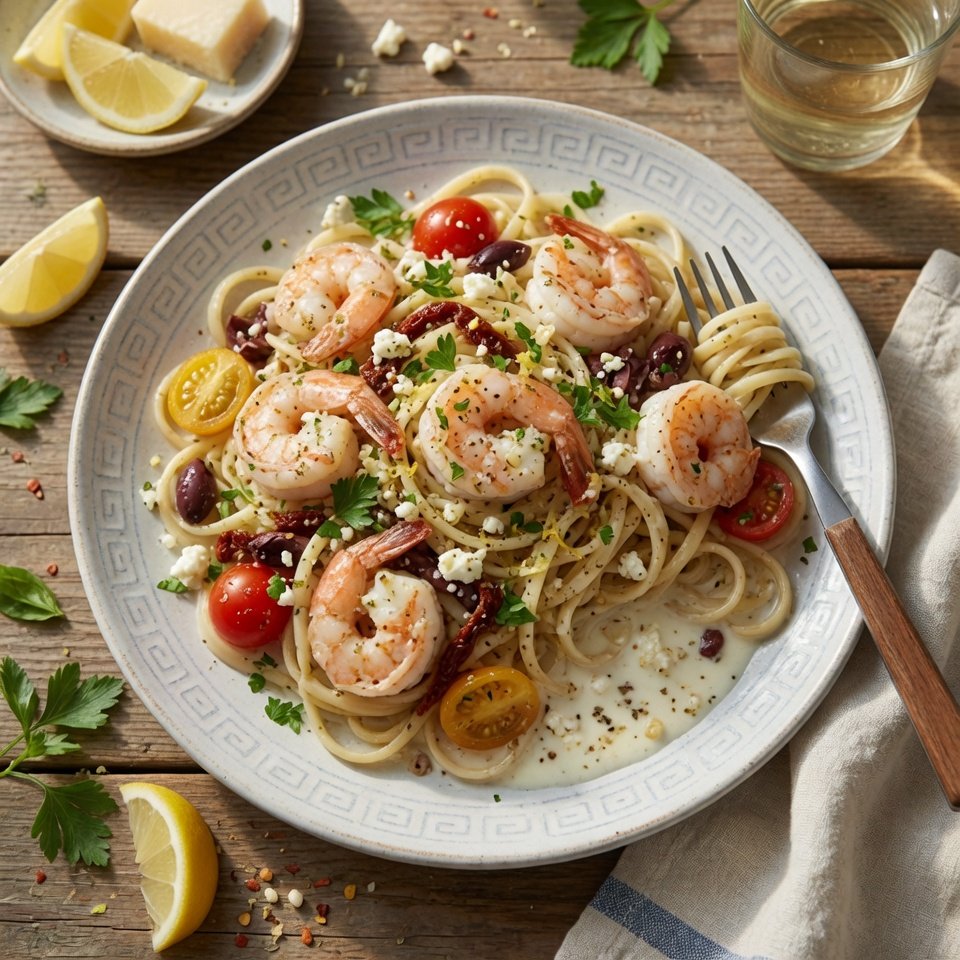
Shrimp Pasta
Ingredients
Method
- Cook the pasta. Bring a large pot of water to a boil. Once boiling, salt generously and add the spaghetti. Cook according to package to al dente (about 9 minutes). Reserve a half cup of the starchy pasta cooking water before draining.
- Meanwhile, cook the shrimp. In a large pan, heat 1 tablespoon olive oil over medium-high heat. When the oil shimmers, add the shrimp. Cook until pink on both sides, 2-3 minutes per side. Transfer the shrimp to a side plate for now.
- Saute the aromatics. Add little more olive oil to the pan, if needed. Reduce the heat to medium-low. Add the onion, garlic, oregano and red pepper flakes (I used Aleppo-style pepper). Cook for 2 minutes, stirring constantly. Add the wine and scrape up any pieces of garlic and onions. Cook the wine for 1 minute to reduce, then add the lemon zest and juice.
- Combine. Add the chopped parsley, tomatoes, and a pinch of salt and pepper. Toss about for about 30 to 40 seconds, then add the cooked pasta to the pan. Toss to coat, adding a splash of the reserved pasta water if needed to make a glossy sauce.
- Finish and serve. Toss in the cooked shrimp and allow to warm through briefly, about 30 seconds. Remove the pasta from heat. Sprinkle with grated parmesan cheese and more red pepper flakes or Aleppo pepper. Serve immediately!
Notes
- For perfectly cooked shrimp, look for a bright pink color and a firm texture; they should curl slightly but not be overly tight.
- To prevent your pasta from becoming dry, reserve a bit of the starchy cooking water and add it gradually to your sauce for a silky finish.
- If you don’t have white wine on hand, a splash of chicken or vegetable broth can work as a great substitute, adding depth without the acidity.
- To save time, you can prep your ingredients ahead: chop the onions, garlic, and tomatoes, and marinate the shrimp in olive oil, lemon juice, and spices for about 15 minutes before cooking.
- Store any leftovers in an airtight container in the fridge for up to 2 days; reheat gently in a pan with a splash of olive oil to prevent sticking and dryness.