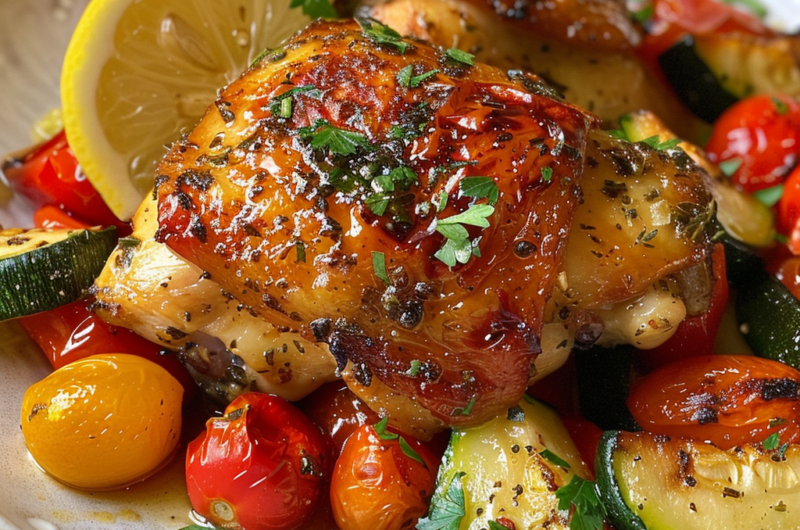
Golden, crispy-skinned chicken thighs roasted on a bed of tender potatoes and peppers—all in about 45 minutes.
📋 In This Article
Introduction
Let’s be honest: weeknight cooking is often a sprint, not a marathon. You want something that feels like a triumph but requires the energy of a stroll. That’s exactly why this One-Pan Lemon Herb Mediterranean Chicken and Roasted Vegetables for Weeknights is a staple in my rotation. It delivers the kind of deeply savory, bright flavors you usually only get from hours of braising, but it relies on high heat and smart layering instead of time.
The concept is simple: render the fat from chicken thighs to baste the vegetables underneath. But the execution? That’s where most people slip up. They crowd the pan or skip the drying step, ending up with steamed meat and soggy veg. Not here. We’re going for shattering-crisp skin and perfectly caramelized edges. It’s a dish that proves you don’t need ten pots and pans to eat like royalty on a Tuesday. Flavorful One-Pan Mediterranean Chicken and Potatoes.
Why This Recipe Works (The Mediterranean Advantage)
This isn’t just “healthy”; it’s smart chemistry. The One-Pan Lemon Herb Mediterranean Chicken and Roasted Vegetables for Weeknights works because of thermodynamics. By starting the chicken skin-side up on top of the vegetables, the rendering fat drips down, seasoning the potatoes and carrots from the inside out. This process, often called “basting in situ,” creates a self-saucing environment.
Furthermore, we leverage the Maillard reaction—the chemical process that gives browned food its distinctive flavor—by roasting at a high temperature. This creates hundreds of new flavor compounds on the chicken skin and the vegetable edges, offering a complexity that steaming or boiling simply cannot achieve. The acidity from the lemon juice cuts through the rich olive oil and chicken fat, balancing the dish with a bright, sharp contrast that keeps every bite interesting.
The Essential Ingredients
To build a One-Pan Lemon Herb Mediterranean Chicken and Roasted Vegetables for Weeknights that actually delivers on flavor, you need to be picky about your components.
Protein
- Chicken Thighs: Use bone-in, skin-on chicken thighs. I cannot stress this enough. The bone insulates the meat, keeping it juicy while the skin renders and crisps. Boneless, skinless breasts will dry out long before the potatoes are tender.
Vegetables
- Potatoes: Yukon Gold potatoes are ideal. They have a medium starch content, meaning they hold their shape better than Russets but are creamier than red potatoes. Cut them into 1-inch chunks.
- Bell Peppers: Red or yellow peppers add sweetness that contrasts with the savory chicken.
- Red Onion: I prefer red onion over white here; it caramelizes beautifully and adds a mild, sweet sharpness.
Aromatics and Fats
- Lemon: You’ll use the zest in the marinade and the slices roasted alongside the chicken. The heat mellows the lemon’s bitterness, turning the slices into edible, jammy treats.
- Olive Oil: A good extra virgin olive oil is non-negotiable. It acts as a flavor carrier for the herbs and helps conduct heat to the vegetables.
Shopping List
- 4-6 Chicken Thighs (bone-in, skin-on)
- 1.5 lbs Yukon Gold potatoes
- 2 large Carrots
- 2 Bell peppers
- 1 Red onion
- 1 head of Garlic
- Fresh rosemary, thyme, and oregano
- 2 Lemons
- Extra virgin olive oil
Step-by-Step Instructions
Step 1: Preheat and Prep
Preheat your oven to 425°F (220°C). This high heat is crucial. It ensures the skin crisps before the meat overcooks. While the oven heats, chop your potatoes, carrots, onions, and peppers into uniform 1-inch pieces. Uniformity ensures everything finishes cooking at the same time.
Step 2: Season the Vegetables
In a large bowl or directly on your rimmed baking sheet, toss the vegetables with ¼ cup olive oil, the juice of one lemon, 1 teaspoon dried oregano, salt, and pepper. Use your hands to massage the oil into the veg. Spread them out in an even layer.
Critical Step: Do not overcrowd the pan. If the vegetables are piled on top of each other, they will steam. Steamed potatoes are sad potatoes. Use two pans if necessary.
Step 3: Prepare the Chicken
Pat the chicken thighs thoroughly dry with paper towels. I mean really dry. Moisture is the enemy of crispiness. In a small bowl, mix 1 tablespoon olive oil, the zest of one lemon, minced garlic, and chopped fresh herbs (rosemary and thyme work wonders). Rub this mixture under the skin of the chicken and directly on the meat, then season the skin generously with salt and pepper.
Step 4: Roast
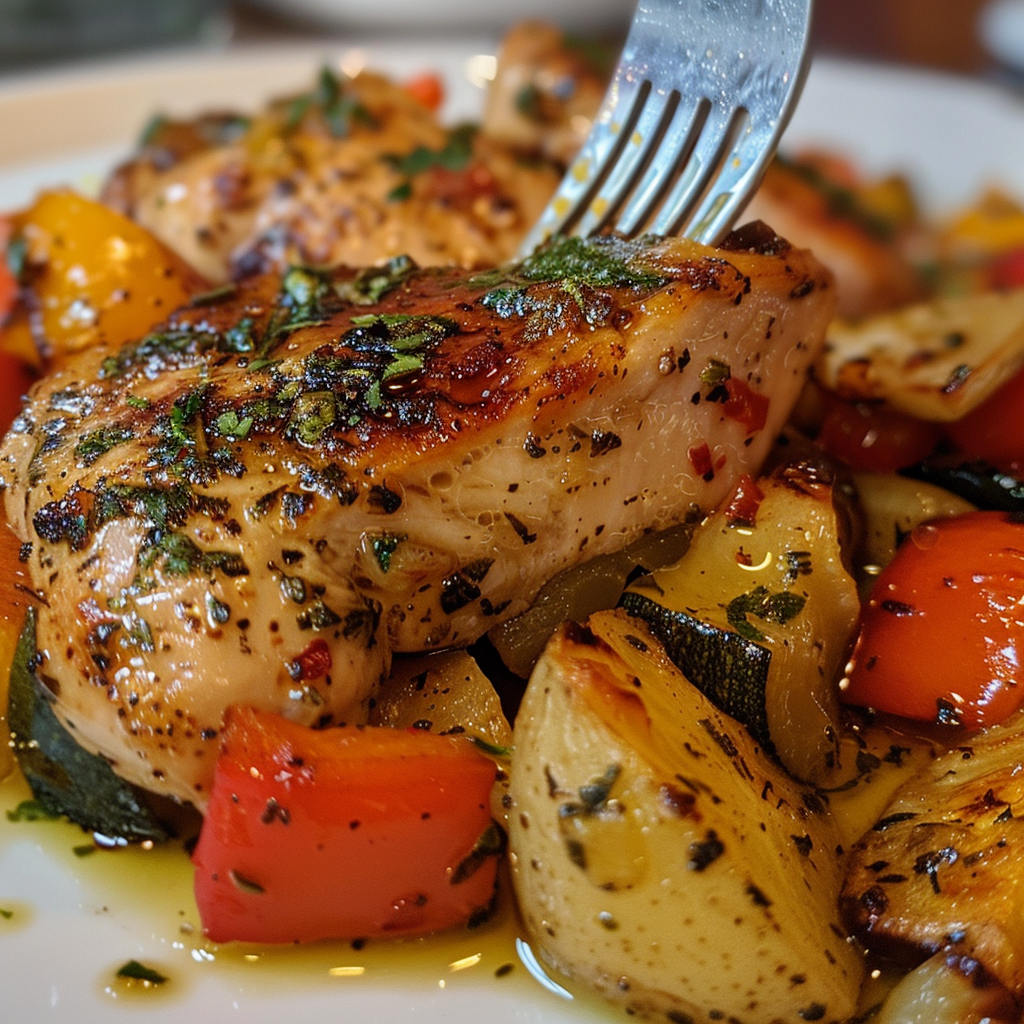
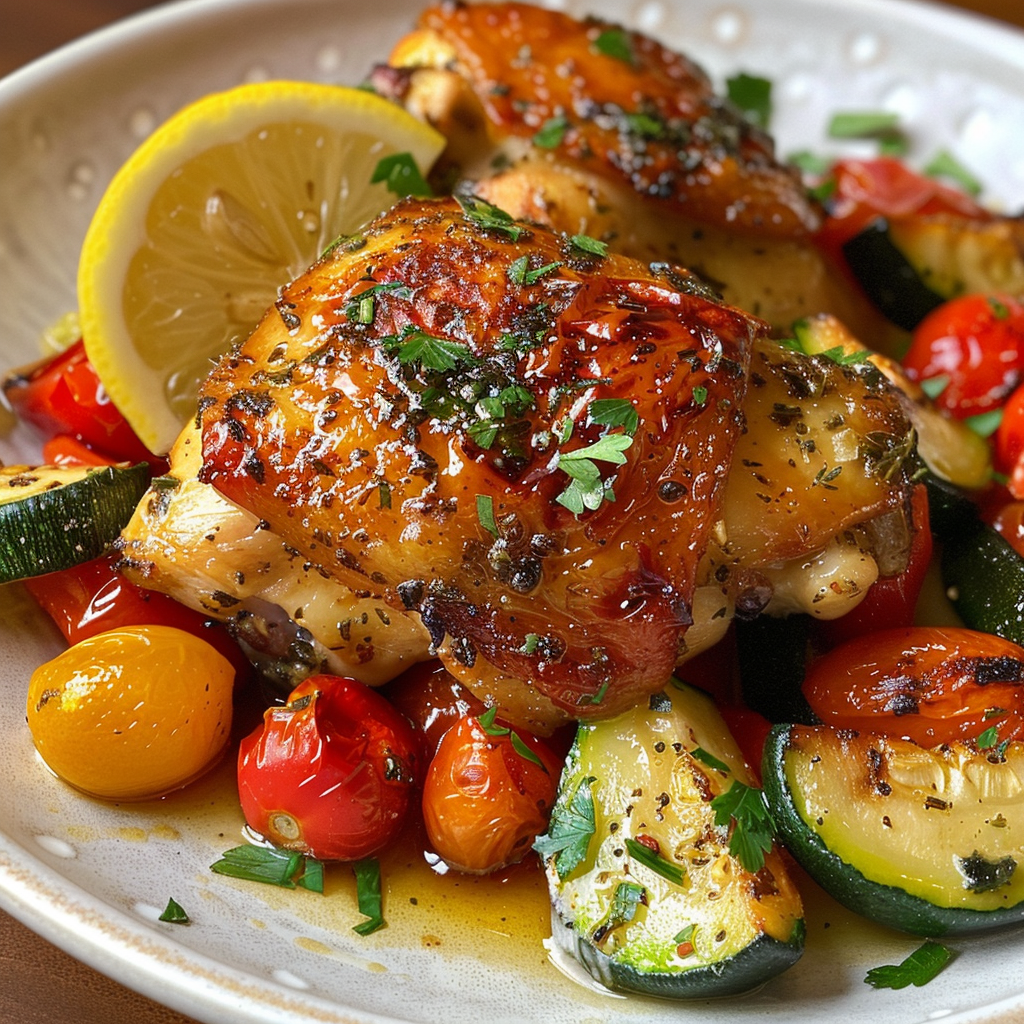
Place the chicken thighs skin-side up on top of the vegetable bed. Roast for 45 to 50 minutes. You are looking for two things: an internal temperature of 165°F (74°C) in the thickest part of the thigh, and deeply golden, bubbly skin.
Step 5: Rest and Serve
Remove the pan from the oven. Let the chicken rest on the vegetables for 5 to 10 minutes. This resting period allows the muscle fibers to relax and reabsorb the juices. If you cut into it immediately, that flavorful liquid ends up on your cutting board, not in your mouth. Squeeze fresh lemon juice over the top before serving.
⚠️ Common Mistakes to Avoid
Even a simple recipe like One-Pan Lemon Herb Mediterranean Chicken and Roasted Vegetables for Weeknights can go wrong if you ignore the details.
The biggest offender? Wet chicken. If you don’t pat the skin dry, that moisture must evaporate in the oven before the skin can brown. By then, the meat is often overcooked. Another frequent error is cutting vegetables unevenly. If your carrot chunks are twice the size of your potato chunks, you’ll have raw carrots and mushy potatoes. Take the extra minute to cut uniformly. Finally, under-seasoning is a dealbreaker. The potatoes need a heavy hand with salt to stand up to the rich chicken drippings.
Flavor & Vegetable Variations
This recipe is a template, not a law. Flavorful Easy Mediterranean Chicken Stir Fry.
Vegetable Swaps: In the summer, toss in zucchini or cherry tomatoes during the last 20 minutes of roasting. In the fall, swap the potatoes for cubed butternut squash or sweet potatoes—they caramelize faster, so check them early.
Flavor Pivots: Want a Spanish vibe? Swap the oregano for smoked paprika and add chorizo slices to the pan. Craving something more Middle Eastern? Use za’atar and sumac, and finish with a dollop of yogurt.
Chicken Cuts: While I advocate for thighs, drumsticks work well too. Just be aware they take slightly longer to cook. Avoid white meat unless you are comfortable pulling the chicken out early (around 35 minutes) to prevent drying.
Serving Suggestions & Pairings
This dish is a complete meal on its own, but the right sidekick elevates it. A simple green salad with a sharp vinaigrette cuts through the richness of the roasted chicken. Alternatively, a scoop of fluffy couscous or quinoa works wonders for soaking up the pan juices—which are essentially a free sauce.
For wine pairings, stick to the Mediterranean theme. A crisp Sauvignon Blanc or a light Pinot Grigio mirrors the lemon and herb notes. If you prefer red, a light-bodied Grenache won’t overpower the delicate herbal flavors.
Storage & Reheating Tips
Leftovers of One-Pan Lemon Herb Mediterranean Chicken and Roasted Vegetables for Weeknights store beautifully. Keep them in an airtight container in the fridge for up to 3–4 days.
To reheat, avoid the microwave if possible. It turns crispy skin into rubber. Instead, place the chicken and veg in a baking dish and heat in a 350°F (175°C) oven for about 15 minutes. If you are freezing this, portion it out first. Thaw overnight in the refrigerator for best texture.
💡 Expert Tips for Success
To take this from good to great, employ these pro techniques.
Dry Brining: If you have the time, salt your chicken thighs and let them sit uncovered in the fridge for 2 to 24 hours before cooking. This draws moisture out, which then dissolves the salt, and the salty liquid is reabsorbed into the meat. The result? Deeply seasoned meat and even drier skin for maximum crunch.
Use a Thermometer: Visual cues lie. A meat thermometer is the only way to guarantee safety without drying out the meat. Insert it into the thickest part of the thigh, avoiding the bone.
The Fond: Don’t toss the sticky, browned bits stuck to the bottom of the pan. That “fond” is pure flavor. Squeeze a little lemon juice or splash a bit of broth into the hot pan right after removing the chicken to deglaze it, creating an instant jus to spoon over your plate.
Frequently Asked Questions (FAQ)
+Why is my chicken skin rubbery instead of crispy?
This usually happens due to moisture. Ensure you pat the skin completely dry before seasoning, and make sure your oven is fully preheated to 425°F. Low heat is the enemy of crispy skin.
+Can I use chicken breasts instead of thighs?
You can, but they cook faster. Use bone-in, skin-on breasts and start checking for doneness at the 35-minute mark. Boneless breasts are not recommended as they dry out before the vegetables roast.
+Do I need to peel the potatoes?
No. Yukon Gold potatoes have thin, edible skins that become quite tasty when roasted. Just give them a good scrub. If using Russets, peeling is better for texture.
+How do I know when the chicken is fully cooked?
The safest method is an instant-read thermometer inserted into the thickest part of the thigh. It should read 165°F (74°C). The juices should also run clear when you cut into the meat near the bone.
+Can I prep this ahead of time?
Absolutely. You can chop the vegetables and marinate the chicken up to 24 hours in advance. Keep them covered in the refrigerator until you’re ready to roast.
+What if my vegetables are burning?
If the chicken skin is done but the vegetables need more time, tent the chicken loosely with foil. This stops the browning while allowing the heat to finish cooking the veg.
Conclusion
Cooking doesn’t need to be complicated to be spectacular. This One-Pan Lemon Herb Mediterranean Chicken and Roasted Vegetables for Weeknights is proof that with the right technique and a hot oven, you can achieve restaurant-level results with minimal cleanup. It’s a wholesome, flavor-packed meal that fits seamlessly into a busy life. So, grab a sheet pan, turn up the heat, and enjoy the magic of Mediterranean flavors in your own kitchen.
One Pan Herby Lemon Roasted Chicken with Veggies
Ingredients
Method
- Preheat your oven to 425°F.
- In a large bowl or Ziplock bag, combine the carrots, onion, potatoes, olive oil, onion powder, garlic powder, oregano, lemon juice, salt, and pepper. Toss until everything is evenly coated. Set aside (or refrigerate if prepping ahead).
- Next, prepare the chicken. Remove any giblets from the chicken cavity and pat the chicken very dry with paper towels, as this helps with browning. Season the chicken generously inside and out with salt and pepper.
- Now, make the compound butter. In a small bowl, mix together the softened butter, basil, thyme, rosemary, lemon zest, garlic, salt, and pepper until fully combined.
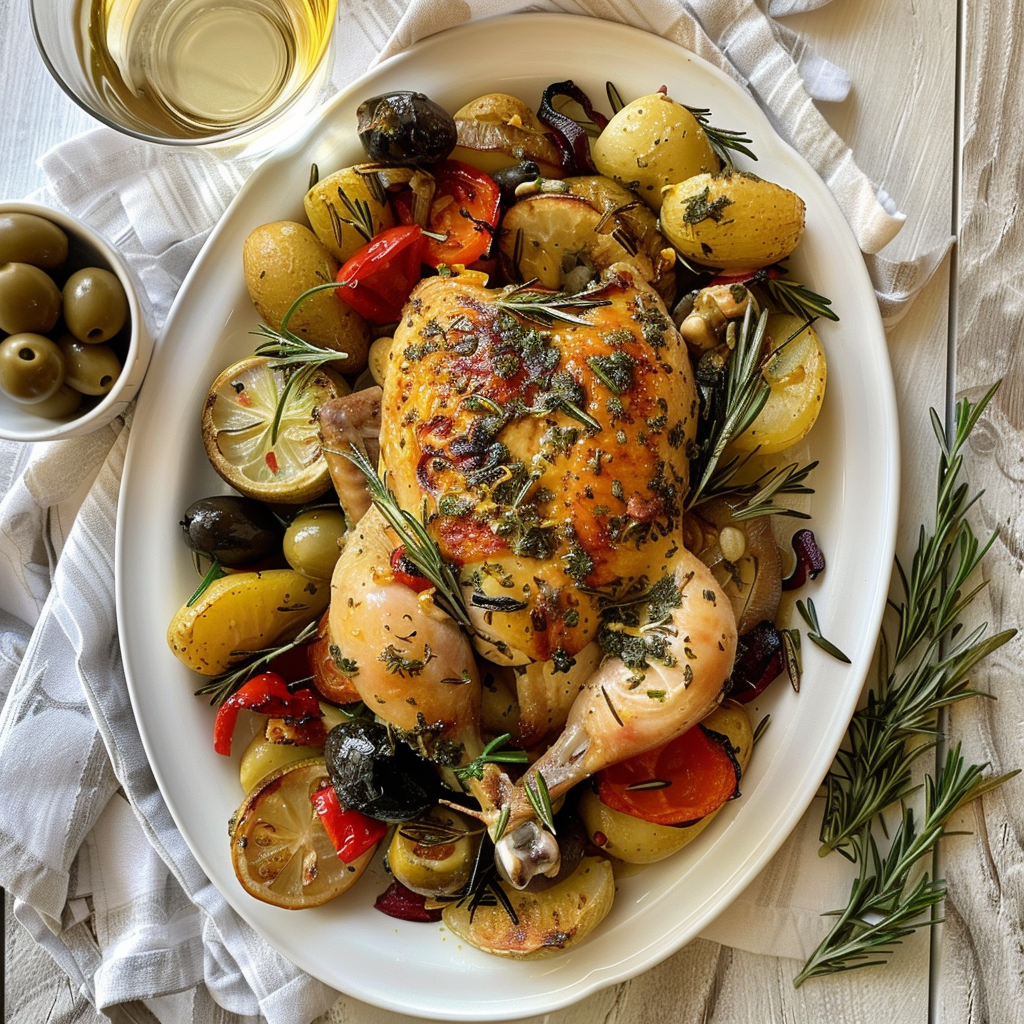
- Spread the vegetables evenly in a large roasting pan. Place the chicken directly on top of the veggies.
- Gently loosen the skin over the chicken breasts and thighs and spread about half of the compound butter underneath the skin. Rub the remaining butter all over the outside of the chicken. Dollop any extra butter over the vegetables.
- Pour the chicken broth into the pan around the vegetables (not over the chicken). Add the fresh rosemary and thyme sprigs to the pan, squeeze the lemon juice over everything, and lay the lemon slices on top of the chicken.
- Cover the pan with a piece of parchment paper (dampened slightly), then cover tightly with foil. Roast for 45 minutes, then remove both the parchment and foil, basting the chicken and vegetables with pan juices every 20 minutes. Continue roasting for another 45-60 minutes, until the chicken is golden and cooked through. *The chicken is done when a thermometer inserted into the thickest part of the thigh reads 165°F.*
- Remove the pan from the oven and let the chicken rest for 5–7 minutes. Finish with a squeeze of fresh lemon juice, a pinch of salt and pepper, and scatter micro greens over the top if using.
- Carve the chicken and serve warm with the roasted veggies and plenty of pan juices spooned over everything.
Notes
- Ensure the chicken is patted dry thoroughly to achieve a beautifully browned and crispy skin; moisture is the enemy of crispiness.
- For perfectly cooked chicken, use an instant-read thermometer to check the thickest part of the thigh; it should read 165°F for doneness.
- If you don’t have a whole chicken, feel free to use bone-in, skin-on chicken thighs or drumsticks for a quicker cooking time and equally delicious flavor.
- To keep your veggies from burning while roasting, toss them in olive oil and seasonings ahead of time, and add them to the pan first for a head start on cooking.
- Store leftover chicken and veggies in an airtight container in the fridge for up to 3 days; reheat gently in the oven to maintain crispiness instead of using the microwave.