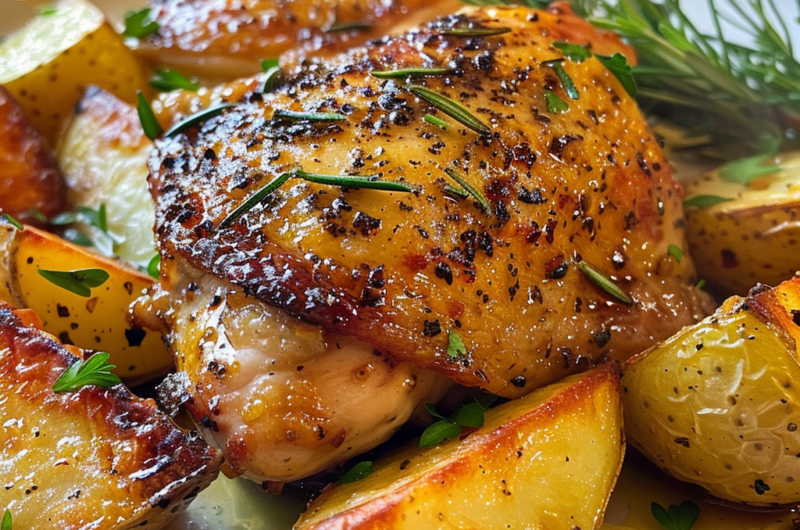
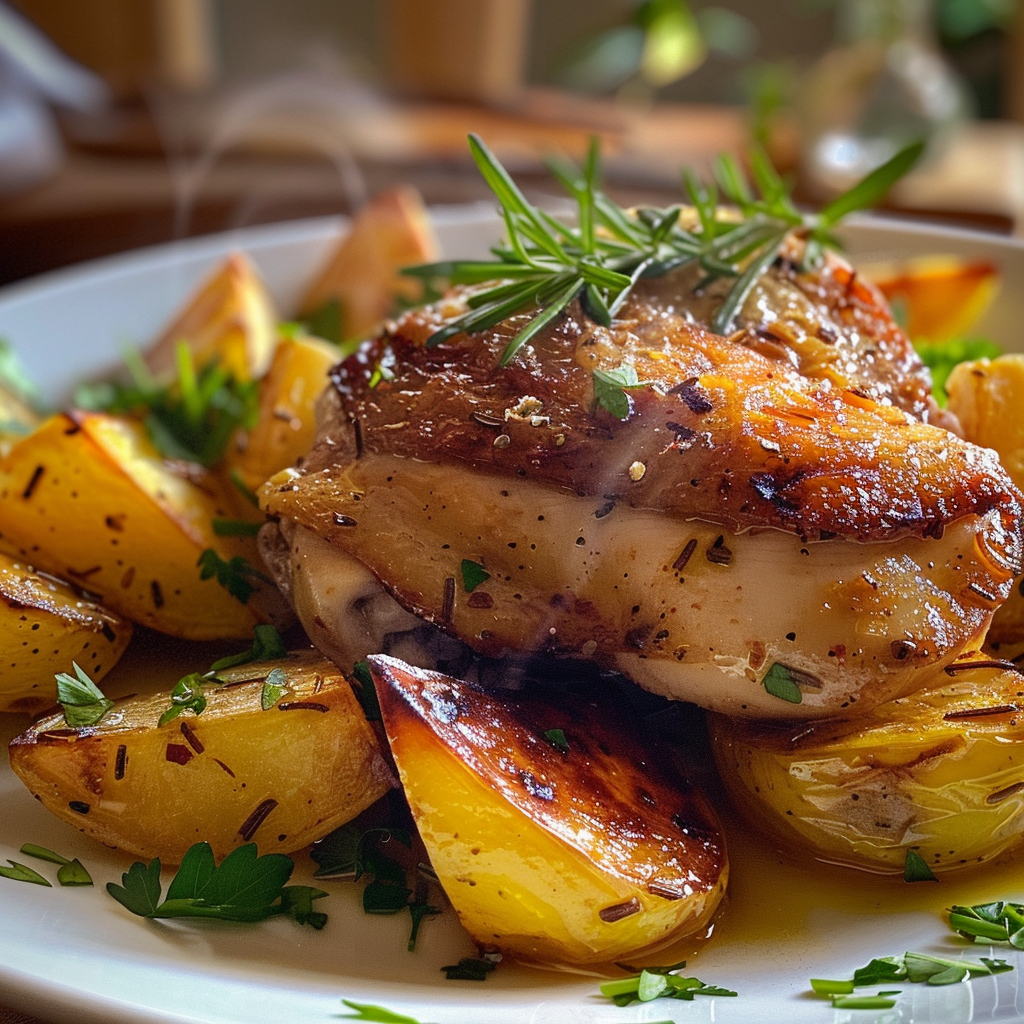
Golden, juicy chicken thighs with impossibly crispy skin—ready in 35 minutes with just 5 minutes of hands-on prep.
📋 In This Article
- Introduction
- Why This Recipe Works (The Science of Crispy & Flavorful)
- Essential Ingredients for Mediterranean Magic
- Step-by-Step Instructions: Your Speedy Dinner Awaits
- Pro Tips for Ultimate Flavor & Crispiness
- Common Mistakes to Avoid for a Perfect Meal
- Delicious Variations & Serving Suggestions
- Storage & Reheating for Leftovers
- Frequently Asked Questions (FAQ)
Introduction
Weeknight dinners usually demand a compromise: flavor for speed, or crispiness for ease. This Crispy Mediterranean Chicken Thighs with Rosemary and Lemon-Garlic Potatoes recipe refuses to compromise. It brings the vibrant, sun-drenched flavors of the Mediterranean to your table in under an hour, largely because the oven does the heavy lifting. We’re talking about rendering fat until skin shatters like glass, while potatoes roast in the savory drippings below.
The magic lies in the symbiosis between the bird and the spuds. As the chicken roasts, its fat renders out, basting the potatoes in a natural confit. The result? Deeply savory, crispy-skinned chicken and potatoes that taste like they’ve been cooking in chicken fat all day—because they have. It’s a one-pan meal that feels less like a Tuesday night scramble and more like a deliberate, flavorful feast.
Why This Recipe Works (The Science of Crispy & Flavorful)
Achieving perfectly crispy skin isn’t just about high heat; it’s about moisture management. Chicken skin is roughly 80% water and 20% fat. To get it crisp, you need to evaporate the water and render the fat. We start with a roasting technique at 425°F (220°C). At this temperature, the Maillard Reaction kicks into high gear, browning the proteins and sugars on the skin’s surface to create hundreds of new flavor compounds.
But temperature is only half the battle. Patting the chicken dry before cooking is non-negotiable. If the skin is wet, the oven’s energy is wasted boiling off surface moisture rather than crisping the skin. We also leverage acidic tenderization from the lemon juice. The acidity helps break down the connective tissues in the meat, ensuring the interior remains juicy even as the exterior crisps. Finally, the fat rendering from the thighs creates a natural cooking medium for the potatoes, absorbing the aromatic compounds of the garlic and rosemary for a side dish that is far greater than the sum of its parts.
Essential Ingredients for Mediterranean Magic
- Chicken Thighs (Bone-in, Skin-on): The undisputed king of roasting cuts. The bone insulates the meat, preventing it from overcooking, while the skin provides the necessary fat for crisping and flavor.
- Potatoes: Yukon Gold potatoes are ideal here. They have a naturally buttery flavor and a texture that holds up to roasting while still turning creamy inside. Red potatoes work in a pinch, but they won’t absorb the drippings quite as well.
- Fresh Rosemary: This woodsy herb is robust enough to withstand high heat. Its pine-like aroma cuts through the rich chicken fat, balancing the heavy savory notes.
- Lemon (Freshly Squeezed): We use both the juice and the zest. The juice offers a bright, acidic counterpoint, while the zest provides intense floral oils without the sourness.
- Garlic: Fresh cloves are a must. Sliced thinly, they roast into sweet, mellow nuggets; minced, they create a crust on the potatoes.
- Olive Oil (Extra Virgin): A binder for the seasonings and a safety net to ensure the potatoes don’t stick, though the chicken fat does most of the work.
- Salt & Black Pepper: The foundation of flavor. Don’t skimp on the salt; it helps draw moisture out of the skin for better crisping.
- Dried Oregano (Optional): For an earthy, dried-herb baseline that permeates the meat.
- Smoked Paprika (Optional): Adds a subtle, smoky depth and a beautiful reddish hue to the finished skin.
Step-by-Step Instructions: Your Speedy Dinner Awaits
- Preheat Oven: Crank your oven to 425°F (220°C). If you have a convection setting, use it—the circulating air speeds up evaporation, leading to even crispier skin.
- Dry Brine: Pat the chicken thighs thoroughly dry with paper towels. I mean, really dry. Moisture is the enemy of crispiness. Season them generously with salt and pepper on both sides. If you have time, let them sit uncovered in the fridge for an hour beforehand; this dries the skin even further.
- Make the Marinade: In a small bowl, whisk together the olive oil, lemon juice, minced garlic, chopped rosemary, and optional oregano or paprika.
- Prep the Potatoes: Cut your potatoes into 1-inch chunks. Toss them in a large bowl with half of the marinade mixture, ensuring they are well coated. Season them with a pinch of salt.
- Assemble the Pan: Arrange the potatoes in a single layer on a large rimmed baking sheet. Place the chicken thighs skin-side up directly on top of or nestled among the potatoes. Pour the remaining marinade over the chicken.
- Roast: Roast for 35-40 minutes. You’re looking for an internal temperature of 165°F (74°C) in the thickest part of the thigh and deeply golden skin. If the skin isn’t crisp enough by the time the meat is done, crank the broiler for 1-2 minutes—watch it closely so the garlic doesn’t burn.
- Rest: Remove the pan from the oven. Let the chicken rest for 5-10 minutes. This allows the juices to redistribute; cut into it immediately, and you lose that moisture on the cutting board.
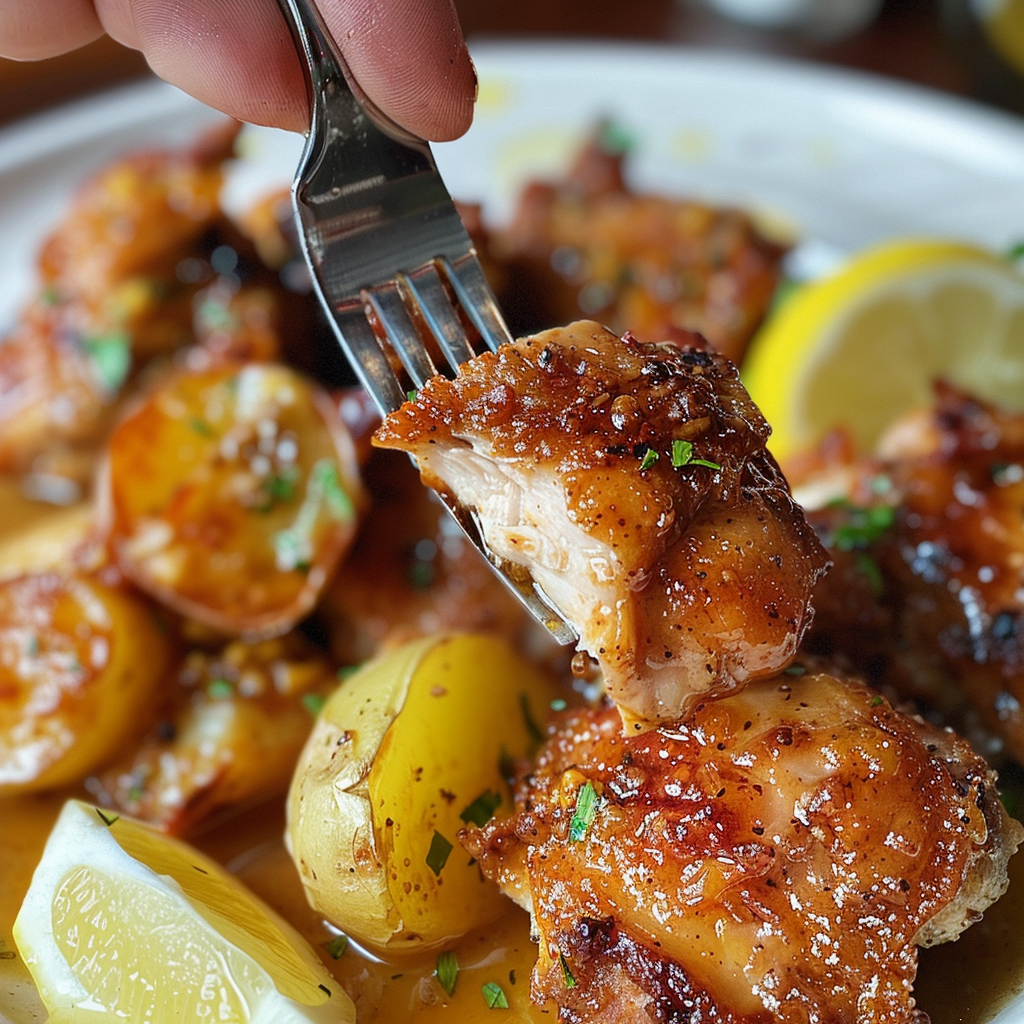
- Serve: Serve the chicken alongside the lemon-garlic potatoes, making sure to spoon some of the pan drippings over the top.
💡 Pro Tips for Ultimate Flavor & Crispiness
- Don’t Overcrowd the Pan: If the potatoes and chicken are touching too much, they will steam. Steam equals rubbery skin. Give them space. Use two pans if necessary.
- Potato Placement: For the best flavor, tuck the potato pieces around the chicken so they catch the rendered fat. It’s essentially a self-basting mechanism.
- Zest First, Juice Later: When using lemon, zest it before juicing it. The zest contains the essential oils that provide a bright, floral top note without the acidity.
- The Broiler Trick: If your oven runs cool or you just want that extra “shatter” to the skin, a quick blast under the broiler is a game changer. Just be vigilant—burnt garlic is bitter.
- Utilize the Fond: Those sticky, browned bits on the bottom of the pan are pure gold. Deglaze the pan with a splash of water or white wine while it’s still warm to create an instant jus to drizzle over the meat.
⚠️ Common Mistakes to Avoid for a Perfect Meal
Cooking seems simple until it isn’t. Here’s where things usually go wrong.
First, wet chicken skin. I cannot stress this enough: if you put wet chicken in the oven, you are steaming it. It will be pale, flabby, and sad. Pat it dry. Use a hairdryer on it if you have to (a trick used by professional chefs, actually).
Second, uneven potato cuts. If one potato piece is the size of a marble and another is a golf ball, the marble will burn while the golf ball stays raw. Uniformity ensures they all finish cooking at the same time.
Third, skipping the rest period. It’s tempting to dive in straight from the oven. But cutting immediately releases the juices onto the board, leaving you with dry meat. Patience is an ingredient here.
Finally, burnt garlic. If you mince your garlic too finely, it will burn and turn bitter at 425°F. Keep the pieces relatively chunky, or tuck them under the potatoes to shield them from direct heat.
Delicious Variations & Serving Suggestions
This dish is a blueprint, not a rigid law. The Mediterranean flavor profile is incredibly forgiving and adaptable.
- Vegetable Additions: Throw in quick-cooking vegetables during the last 15 minutes of roasting. Cherry tomatoes burst into sweet bombs, and zucchini slices soak up the lemony juices. Asparagus works well too, but add it only for the last 10 minutes.
- Herb Swaps: Not a fan of rosemary? Thyme is a classic substitute with a more subtle, earthy flavor. Oregano or marjoram also work beautifully.
- Chicken Breasts: You can substitute bone-in, skin-on chicken breasts, but reduce the cooking time to 25-30 minutes to prevent drying out.
- Serving Ideas: Serve with a simple Greek salad of cucumber, tomato, and feta to cut the richness. A dollop of cool, creamy tzatziki sauce on the side is also excellent for balancing the intense savory notes of the roasted garlic and chicken fat.
Storage & Reheating for Leftovers
Leftovers store well, though the skin will lose some of its magic. Place cooled chicken and potatoes in an airtight container and refrigerate for up to 3-4 days.
For reheating, do not—I repeat, do not—use the microwave. It turns crispy skin into a soggy mess. Instead, reheat in a 375°F (190°C) oven or an air fryer at 350°F (175°C) for 10-15 minutes. This method revives the texture of the skin and warms the potatoes through without making them mushy. If you have extra pan drippings, drizzle them over the chicken before reheating to keep the meat moist.
Frequently Asked Questions (FAQ)
+Why is my chicken skin not crispy?
Usually, it’s moisture. The skin needs to be completely dry before it hits the heat. Also, ensure your oven is fully preheated to 425°F. If the oven isn’t hot enough, the skin won’t render fat quickly enough to crisp up.
+Can I use boneless, skinless chicken thighs?
You can, but you will lose the crispy skin and the self-basting benefit. Boneless, skinless thighs cook much faster—check them at the 20-minute mark. Without the skin, the meat may dry out slightly faster, so keep an eye on the internal temperature.
+What type of potato is best for roasting?
Yukon Gold potatoes are the best all-rounder. They have a creamy interior and a skin that gets pleasantly crisp. Russets are too starchy and can fall apart, while red potatoes hold their shape well but don’t get quite as crispy a crust.
+Can I marinate the chicken overnight?
Yes, but be careful with the lemon. Acid breaks down protein, and marinating in lemon juice for more than 4-6 hours can make the texture mealy. If you want to prep ahead, marinate with oil, garlic, and herbs, but add the lemon juice just before cooking.
+How do I know when the chicken is done?
The most accurate way is an instant-read thermometer inserted into the thickest part of the thigh (avoiding the bone). It should read 165°F (74°C). The juices should run clear when you cut into the meat, not pink.
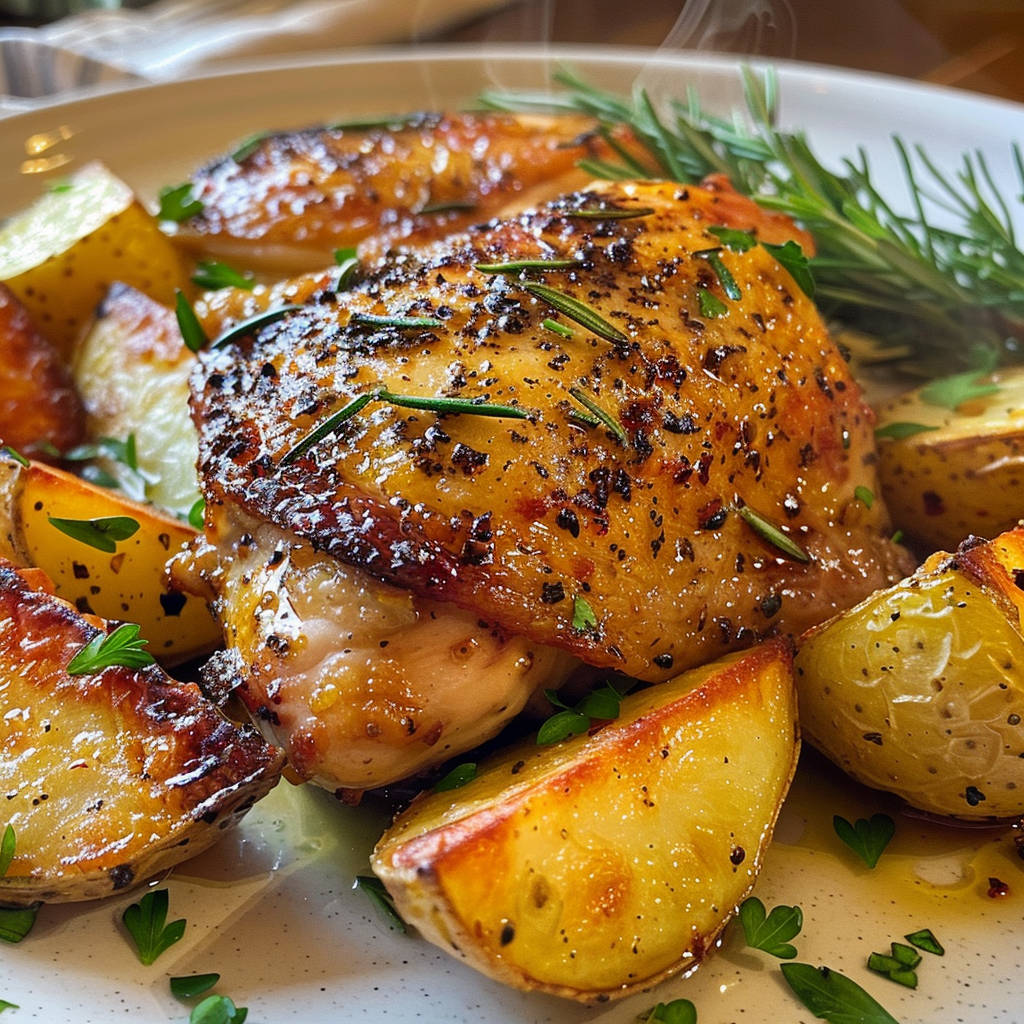
Greek Lemon Chicken and Potatoes
Ingredients
Method
- Blend the marinade ingredients until smooth. Place the chicken along with all of the marinade in a sealable bag and refrigerated for 2 hours.
- Preheat oven to 425°F and set rack to the middle level.
- Add the potatoes to a baking dish and pour half of the used marinade on top of them. With your hands, thoroughly coat the potatoes with the marinade. Spread the potatoes out into an even layer.
- Place the chicken thighs on the top of the potatoes, skin side up.
- Drizzle the remaining marinade onto the chicken. Bake the chicken for 10 minutes, then turn the heat down to 375°F and continue to bake for another 45-55 minutes or until the chicken reaches at least 185°F internal temp when checked with a thermometer. Note: If the potatoes are still a bit hard, simply remove the chicken pieces to a plate and tent with foil. Raise the oven temp to 425°F and return the potatoes back to the oven and cook until tender and brown.
- Let the chicken sit lightly tented for 10-15 minutes before serving so that the chicken and potatoes will reabsorb the juices. Serve with garnish of fresh oregano and lemon wedges. Enjoy!
Notes
- For perfectly cooked chicken, aim for an internal temperature of 185°F; using a meat thermometer will ensure it’s safe and juicy.
- To avoid dryness, let the chicken rest for 10-15 minutes after baking; this helps the juices redistribute throughout the meat.
- If you can't find Greek oregano, Sicilian or Italian oregano works well as a substitute without sacrificing too much flavor.
- For quicker prep, marinate the chicken for just 45 minutes to an hour; you’ll still achieve great flavor without the wait.
- Store leftovers in an airtight container in the fridge for up to 3 days, and reheat in the oven at 350°F for the best texture.