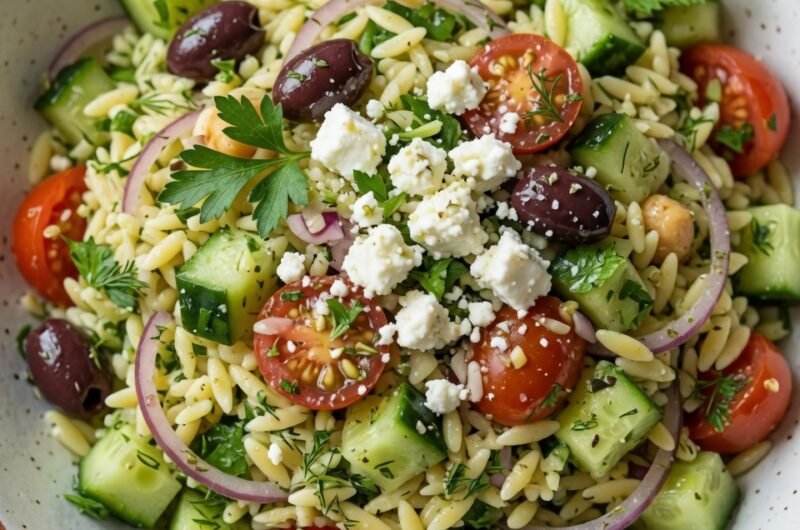
Bright, lemony, and packed with fresh herbs, this orzo salad is the antidote to soggy, bland potluck sides.
📋 In This Article
- Introduction
- Key Ingredients for a Perfect Mediterranean Orzo Salad
- Step-by-Step Instructions: Crafting Your Mediterranean Orzo Salad
- Common Mistakes to Avoid for a Flawless Orzo Salad
- The Perfect Dressing: Lemon-Herb Vinaigrette for Orzo Salad
- Variations & Customizations: Make it Your Own
- Serving Suggestions & Pairings
- Storage & Make-Ahead Tips
- Pro Tips for the Best Mediterranean Orzo Salad
- Frequently Asked Questions (FAQ)
Introduction
Let’s be honest: pasta salad has a reputation. Too often, it’s a heavy, mayonnaise-laden afterthought sitting sadly in a plastic bowl. But Mediterranean Orzo Salad With Cucumbers & Herbs flips the script entirely. It’s light, it’s vibrant, and it relies on good olive oil and fresh herbs rather than a heavy dressing to do the heavy lifting.
I’ve spent years testing pasta salads, and the orzo format—specifically the rice-like shape of this pasta—offers a unique textural advantage. It creates a creamy mouthfeel without needing a drop of mayo. The key, however, isn’t just what goes into the bowl, but how you treat the pasta before it gets there. If you’ve ever ended up with a gummy, starchy mess, you know exactly what I mean. Mediterranean Stuffed Chicken Breast With Spinach and Feta.
This recipe is built for warm weather. It travels well for picnics, holds up beautifully for meal prep, and comes together in the time it takes to boil water.
Key Ingredients for a Perfect Mediterranean Orzo Salad
To build a salad that tastes as good as it looks, you need ingredients that pull their weight. Here is what you’ll need:
- Orzo Pasta: 1-1/2 cups of dry orzo. This shape mimics rice, creating a creamy base that absorbs the dressing exceptionally well.
- Cucumber: 1 medium Persian or English cucumber. We use these varieties because their skin is thin and their seeds are small, meaning no peeling or seeding is required—just a satisfying crunch.
- Fresh Herbs: A mix of fresh parsley, mint, and dill. Don’t skimp here; the herbs provide the aromatic backbone of the dish.
- Feta Cheese: 1/2 cup of crumbled feta. It adds a necessary salty, creamy punch.
- Cherry Tomatoes: 1 cup, halved. They introduce a burst of sweetness and acidity that balances the savory elements.
- Red Onion: 1/4 cup, finely chopped. It offers a sharp bite that cuts through the richness of the olive oil and cheese.
- Kalamata Olives: 1/4 cup, pitted and sliced. These bring a briny depth that anchors the Mediterranean flavor profile.
- Lemon Juice & Zest: From 1 medium lemon. We use both the juice for acid and the zest for concentrated aromatic oils.
- Extra Virgin Olive Oil: 3 tablespoons. This acts as the carrier for the flavors and helps distribute the herbs evenly.
- Red Wine Vinegar: 1 tablespoon. Added for extra acidity complexity.
- Garlic: 1 clove, minced.
- Salt and Black Pepper: To taste.
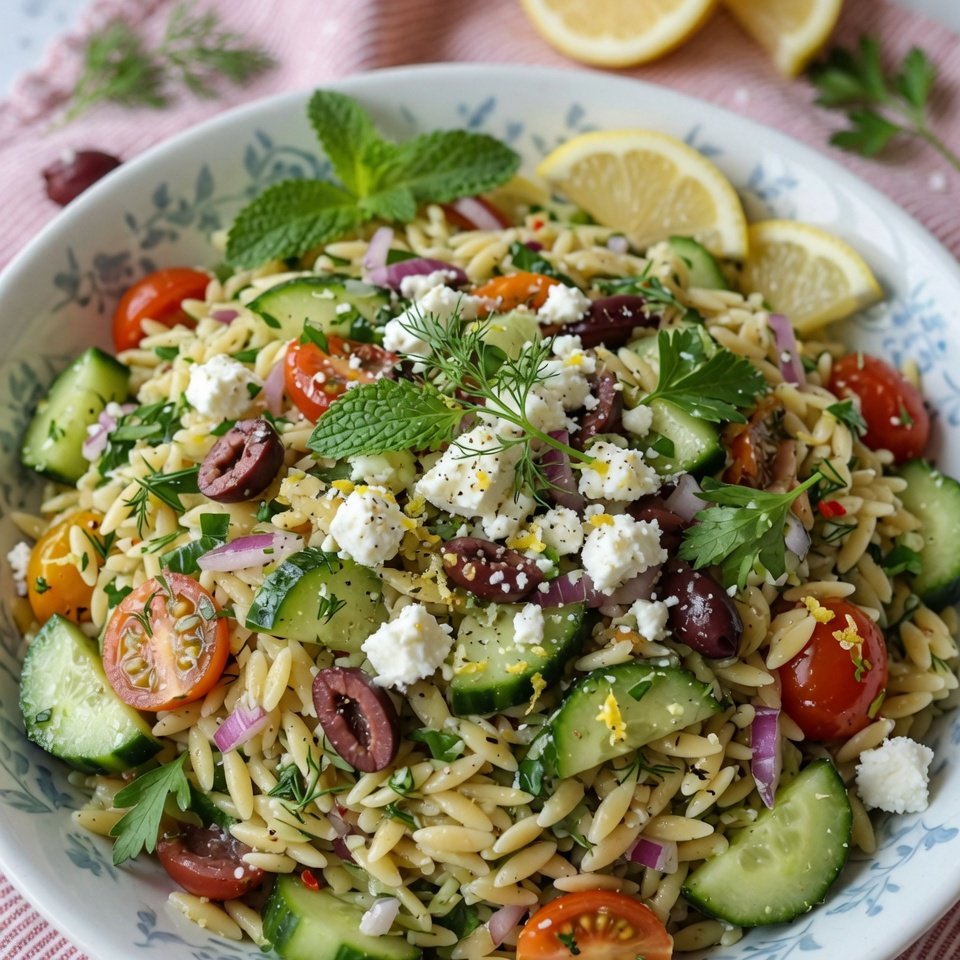
Step-by-Step Instructions: Crafting Your Mediterranean Orzo Salad
- Cook the Orzo: Bring a large pot of water to a rolling boil. Salt it generously—it should taste like the sea. Add the 1-1/2 cups of orzo and cook until al dente, usually about 8-9 minutes.
- Science Note: Salting the water is crucial because starches absorb water as they cook; this is your only chance to season the pasta itself, not just the coating on the outside.
- Drain and Rinse: Drain the orzo in a colander. Immediately rinse it under cold running water. This stops the cooking process instantly and washes away excess surface starch.
- Why this matters: Unlike hot pasta dishes where you want starch to help sauce cling, here, residual starch creates a gummy, unappealing texture. Rinsing ensures distinct, separate grains.
- Prep the Vegetables: While the water boils, chop your cucumber, halve the tomatoes, mince the garlic, and slice the olives. Place them in a large mixing bowl.
- Make the Vinaigrette: In a small bowl or jar, whisk together the olive oil, lemon juice, red wine vinegar, minced garlic, salt, and pepper.
- Technique: Whisk vigorously to force the oil and acid into a temporary emulsion. This creates a cohesive texture rather than a greasy separation.
- Combine: Add the cooled, drained orzo to the bowl with the vegetables. Pour the dressing over the top. Add the chopped herbs and toss gently to combine.
- Fold in Feta: Add the crumbled feta last. Gently fold it in so the cubes stay somewhat intact, providing little pockets of salty creaminess.
- Chill: Cover and refrigerate for at least 30 minutes before serving. This resting period allows the pasta to absorb the vinaigrette and the flavors to marry.
⚠️ Common Mistakes to Avoid for a Flawless Orzo Salad
Even simple recipes have pitfalls. Here is how to guarantee success:
- Overcooking the Pasta: This is the number one error. Orzo turns to mush faster than larger pasta shapes. Pull it when it still has a slight bite. It will soften further as it cools and absorbs the dressing.
- Skipping the Rinse: If you don’t rinse the orzo, the residual heat continues to cook it, and the surface starches gelatinize, turning your salad into a solid block. Cold water shocks the pasta and washes the starch away.
- Soggy Cucumbers: If your cucumber feels wet or slimy, it will drag the salad down. If using a standard waxed cucumber, remove the seeds. For Persian or English varieties, just chop and go.
- Under-seasoning: Cold food requires more aggressive seasoning than hot food. Taste the salad after it has chilled; you often need another pinch of salt or a squeeze of lemon to wake it up.
The Perfect Dressing: Lemon-Herb Vinaigrette for Orzo Salad
The dressing for this Mediterranean Orzo Salad With Cucumbers & Herbs is deceptively simple. It relies on a classic ratio: 3 parts fat (olive oil) to 1 part acid (lemon juice and vinegar).
The olive oil carries the flavor, while the lemon juice provides brightness that cuts through the feta and olives. The addition of garlic and dried oregano (if using) infuses the oil with aromatic compounds. When you whisk them together, you create an emulsion—a mixture where tiny droplets of oil are suspended in the acid. This allows the dressing to coat the orzo evenly rather than pooling at the bottom of the bowl.
For best results, make the dressing in a jar with a lid. Shake it hard right before pouring to re-emulsify if it has separated.
Variations & Customizations: Make it Your Own
This recipe is a template. Once you master the base, try these variations: Mediterranean Orzo Salad with Grilled Vegetables & Feta.
- Add Protein: Turn this side dish into a main course by adding grilled chicken, chickpeas, or even canned tuna.
- Go Vegan: Simply omit the feta. The orzo and olive oil provide enough substance that you won’t miss it, or you can substitute a vegan feta alternative.
- Gluten-Free: Orzo is wheat-based, but many brands make excellent gluten-free orzo from rice or corn blends. The texture is slightly different, but the flavor profile remains the same.
- Swap the Herbs: While the parsley-mint-dill trio is classic, you can switch to basil and oregano for a more Italian vibe, or cilantro and parsley for a different twist.
- Pesto Twist: Replace the vinaigrette with a few tablespoons of basil pesto for a richer, more herbaceous salad.
Serving Suggestions & Pairings
This dish is incredibly versatile. It pairs perfectly with grilled proteins because the acidity cuts through char and smoke.
- With Fish: Serve alongside grilled salmon or a whole roasted branzino. The lemon in the salad echoes the citrus often used on fish.
- With Chicken: It’s the ideal side for lemon-herb roasted chicken or simple grilled thighs.
- As a Mezze: Add it to a spread with hummus, pita, and dolmas for a light lunch or appetizer spread.
Storage & Make-Ahead Tips
One of the best qualities of Mediterranean Orzo Salad With Cucumbers & Herbs is its longevity. It stores beautifully in an airtight container in the refrigerator for up to 3 days.
If you plan to make it further ahead, keep the dressing separate. Toss the salad with the dressing only when you are ready to eat. This prevents the cucumbers from breaking down and ensures the orzo doesn’t become too soft.
If the salad seems a bit dry after sitting in the fridge, stir in a splash of olive oil or lemon juice. The pasta absorbs liquid as it sits, so a little refresh goes a long way.
💡 Pro Tips for the Best Mediterranean Orzo Salad
To take this from “good” to “great,” apply these professional techniques: Mediterranean Chickpea Salad with Feta & Cucumber.
- Toast the Orzo: For a nuttier, deeper flavor, toast the dry orzo in a dry pan over medium heat for 2-3 minutes until golden and fragrant before boiling. This adds a layer of complexity similar to how we toast spices.
- Salt Your Water Aggressively: I mentioned this earlier, but it bears repeating. The pasta needs internal seasoning. If the water isn’t salty enough, the salad will taste flat no matter how much dressing you add.
- Zest First, Juice Second: Always zest your lemon before juicing it. It is incredibly frustrating to try and zest a spent, squishy lemon half.
- The Chill Factor: Don’t skip the 30-minute chill. It allows the orzo to absorb the vinaigrette. Warm pasta releases steam and repels oil; cold pasta holds onto it.
Frequently Asked Questions (FAQ)
+Can I make orzo salad the day before?
Yes, you can. In fact, it often tastes better the next day. Just hold back half the fresh herbs and add them right before serving to keep the flavor bright and the color green.
+Why is my orzo salad gummy?
You likely didn’t rinse the pasta after cooking. Orzo releases a lot of starch. Rinsing with cold water washes the starch away and stops the cooking process immediately.
+What is orzo pasta made of?
Orzo is a pasta made from durum wheat semolina. It looks like rice but cooks and eats like pasta. If you need a gluten-free version, look for orzo made from corn or rice blends.
+Can I use dried herbs instead of fresh?
You can, but the texture and flavor will be significantly different. Dried herbs are more potent but lack the fresh “pop.” If substituting, use 1 teaspoon of dried herbs for every tablespoon of fresh.
+How long does this salad last in the fridge?
Stored in an airtight container, it will keep well for 3 to 4 days. The cucumbers may lose a little crunch, but the flavor remains excellent.
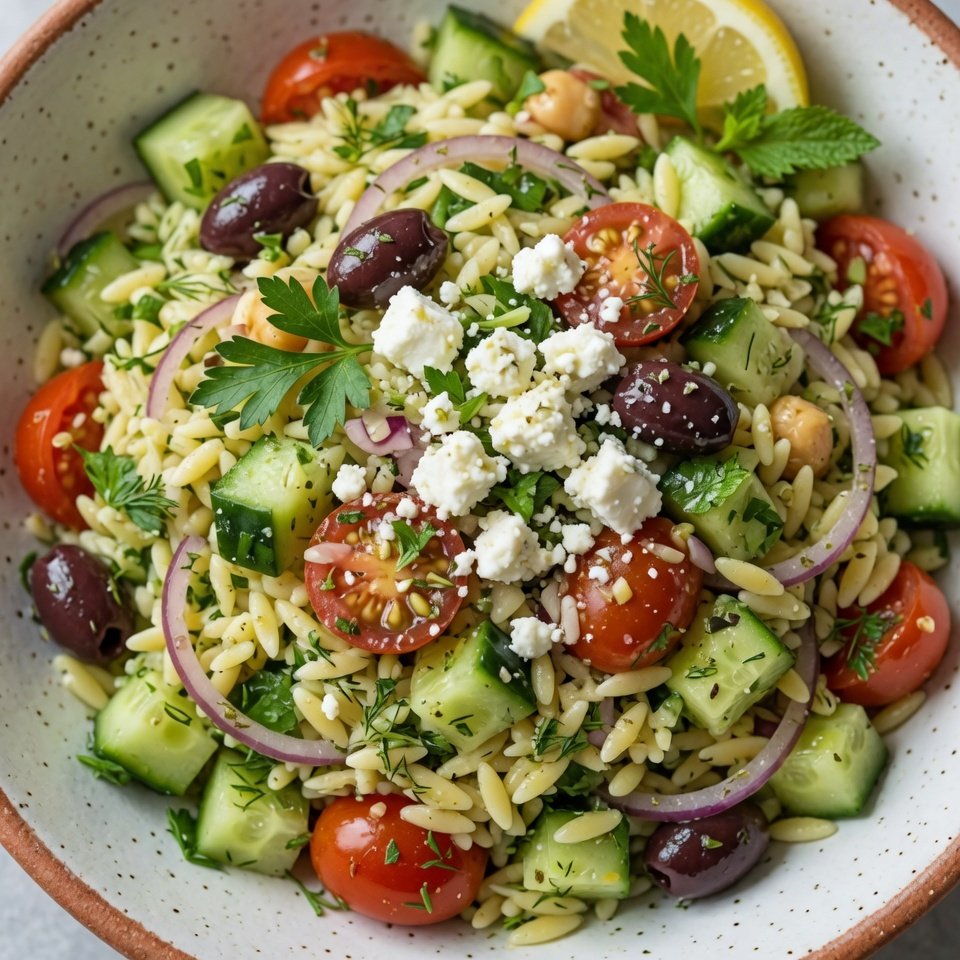
Lemony Orzo Pasta Salad with Cucumber and Feta
Ingredients
Method
- Bring a large pot of water to a boil. Generously salt, and cook the orzo al dente according to package directions (about 9 minutes).
- Meanwhile, prep the cucumbers and herbs. Set aside.
- Drain the pasta, let cool for a couple of minutes, then transfer to a large mixing bowl and toss with the olive oil and lemon juice. Stir in the lemon zest, chopped cucumber, herbs, and feta.
- Season generously with salt and pepper, to taste. Refrigerate until ready to serve. Enjoy!!
Notes
- For the perfect texture, cook the orzo until al dente, which should be slightly firm to the bite; this prevents it from becoming mushy in the salad.
- To enhance the flavor, allow the salad to chill in the refrigerator for at least an hour before serving; this helps the ingredients meld together beautifully.
- If you want a little more crunch, consider adding bell peppers or radishes alongside the cucumber for added texture and color.
- Store any leftovers in an airtight container in the fridge for up to 3 days; the flavors will continue to develop as it sits.
- For a creamy twist, try substituting crumbled feta with a dollop of Greek yogurt to add richness without overwhelming the dish.