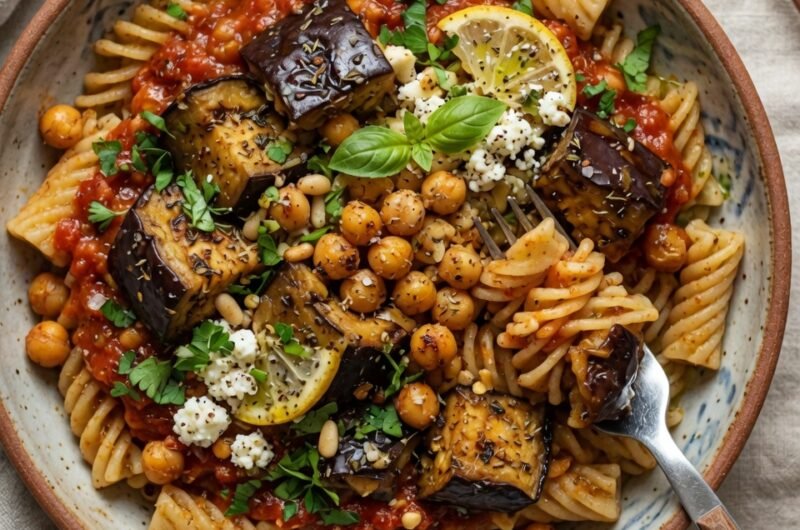
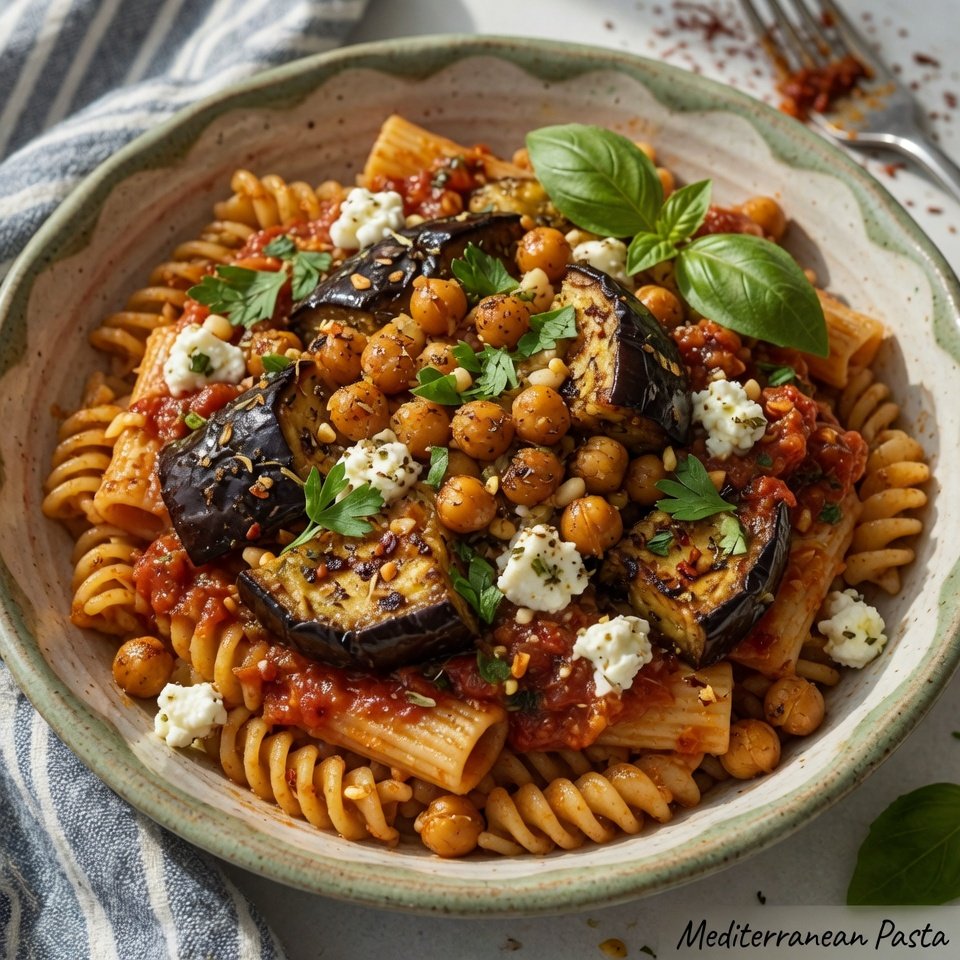
A smoky, protein-packed weeknight dinner where caramelized eggplant meets hearty chickpeas — no soggy vegetables, no bland sauce.
📋 In This Article
Introduction
Let’s get one thing out of the way: eggplant has a reputation. Too often, it ends up as a spongy, oil-soaked disappointment. But here’s the truth — when you treat it right, roasted eggplant transforms into something entirely different. Creamy on the inside, deeply caramelized on the outside, with a smoky depth that braising simply can’t touch.
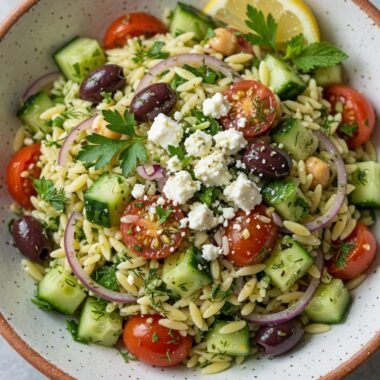
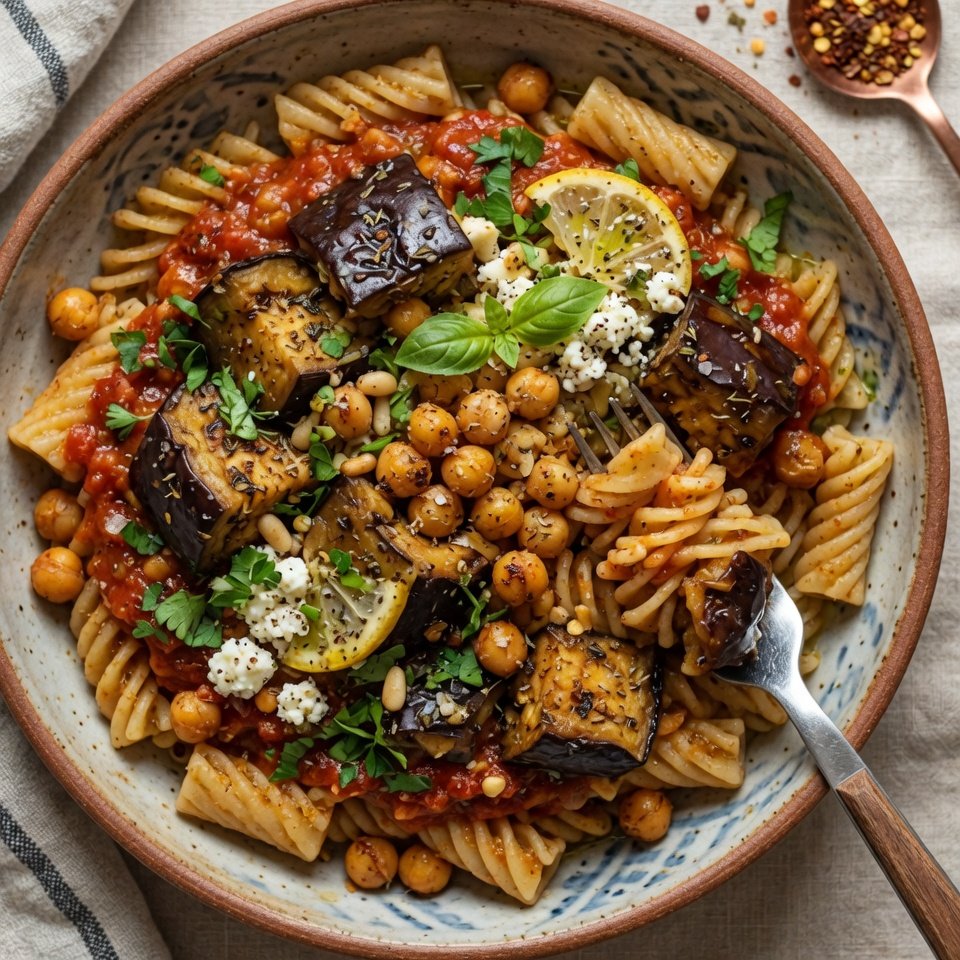
This Mediterranean Roasted Eggplant & Chickpea Pasta is the weeknight dinner I return to again and again. It hits that sweet spot where healthy meets genuinely craveable. The chickpeas bring structure and protein, the chickpea pasta makes it gluten-free without feeling like a compromise, and the tomato-garlic base ties everything together with that unmistakable Mediterranean warmth. Mediterranean Orzo Salad with Grilled Vegetables & Feta.
What makes this work isn’t just the ingredients — it’s the technique. High-heat roasting. Proper seasoning. A splash of pasta water to bring the sauce together. These aren’t fancy steps, but they’re the difference between “fine” and “I want this again tomorrow.”
Why This Recipe Works
Most eggplant pasta recipes suffer from the same problem: the eggplant disappears into the sauce, turning everything into a vaguely purple mush. Not this one.
The fix is simple but non-negotiable — we roast the eggplant at 425°F on a separate sheet pan. This temperature is high enough to trigger the Maillard reaction (that beautiful browning that creates hundreds of new flavor compounds) while evaporating excess moisture. The result? Golden, caramelized cubes that hold their shape and bring actual texture to every bite.
Meanwhile, the chickpeas do double duty. Half get roasted alongside the eggplant, getting slightly crispy on the exterior. The other half stay creamy, creating textural contrast. It’s a small step that pays off big.
The sauce comes together in the time it takes the pasta to cook. Canned tomatoes provide a bright, acidic backbone, while oregano and paprika layer in that Mediterranean warmth. A finishing drizzle of good extra virgin olive oil and a squeeze of lemon juice pull everything into focus.
Ingredients You’ll Need
The ingredient list is short, but each one earns its place.
For the Roasted Vegetables
- Eggplant (1 medium, about 1 lb): Look for firm, shiny skin with no soft spots. Globe eggplants work best here — their larger size means less prep, and their flesh breaks down into that creamy texture we want.
- Chickpeas (1 can, 15 oz): Drained and rinsed. Half go on the sheet pan; half stay for the sauce.
- Extra Virgin Olive Oil (3 tablespoons): Don’t skimp. This is your primary cooking fat and finishing oil.
- Salt (1 teaspoon): For seasoning the eggplant before roasting.
- Black Pepper (½ teaspoon): Freshly ground, always.
For the Pasta and Sauce
- Chickpea Pasta (8 oz): Brands like Banza or Barilla’s legume pasta work beautifully. They hold their shape and bring extra protein. Regular pasta works too — just adjust cooking time.
- Yellow Onion (1 medium): Diced. The sweetness balances the tomato acidity.
- Garlic (3 cloves): Minced. Don’t be shy — eggplant loves garlic.
- Canned Diced Tomatoes (1 cup): Fire-roasted if you can find them. The extra char adds depth.
- Dried Oregano (2 teaspoons): The backbone of Mediterranean flavor.
- Smoked Paprika (½ teaspoon): Optional, but it reinforces that smoky roasted note.
- Red Pepper Flakes (¼ teaspoon): For warmth, not heat.
- Lemon Juice (1 tablespoon): Added at the end to brighten everything.
- Fresh Parsley (¼ cup): Chopped, for garnish.
Optional Additions
- Tahini (2 tablespoons): Stirred into the sauce for creaminess without dairy.
- Feta Cheese (¼ cup): Crumbled on top if you’re not keeping it vegan.
- Olives or Capers (2 tablespoons): For a briny punch.
Step-by-Step Instructions
Step 1: Preheat and Prep
Preheat your oven to 425°F (220°C). This temperature matters — it’s high enough to brown the eggplant before it turns mushy, but not so high that the exterior burns while the interior stays raw.
Line a large baking sheet with parchment paper. You can skip the parchment, but it makes cleanup significantly easier.
Step 2: Prepare the Eggplant
Cut the eggplant into 1-inch cubes. Don’t peel it — the skin holds its shape during roasting and adds color.
Here’s where many recipes go wrong: they skip salting. Toss the cubes with 1 teaspoon salt and let them sit in a colander for 15-20 minutes while the oven preheats. Yes, this adds time. But here’s the thing — salt draws out excess moisture through osmosis. That moisture is what makes eggplant soggy. Remove it, and you get proper caramelization instead of steaming.
After 15 minutes, pat the cubes dry with paper towels. They should feel slightly tacky but not wet. Transfer to the baking sheet, toss with 3 tablespoons olive oil and ½ teaspoon black pepper, and spread in a single layer.
Critical: Don’t overcrowd the pan. If the cubes touch too much, they’ll steam. Use two sheets if needed.
Step 3: Roast the Eggplant and Chickpeas
Drain and rinse the chickpeas. Pat them dry — excess moisture prevents crisping. Add half the chickpeas to the baking sheet with the eggplant, tossing to coat in the remaining oil.
Roast for 25-30 minutes, flipping everything halfway through. You’re looking for deeply golden edges on the eggplant and slightly crispy skins on the chickpeas. The eggplant should be tender when pierced but still holding its shape.
Step 4: Start the Sauce Base
While the vegetables roast, heat 2 tablespoons olive oil in a large skillet over medium heat. Add the diced onion and cook for 5-6 minutes, stirring occasionally, until translucent and just starting to brown at the edges.
Add the minced garlic, oregano, smoked paprika, and red pepper flakes. Cook for 30 seconds — just until fragrant. Garlic burns quickly, so don’t walk away.
Pour in the diced tomatoes and the remaining chickpeas. Stir to combine, then reduce heat to medium-low and let simmer for 8-10 minutes. The sauce should thicken slightly.
Step 5: Cook the Pasta
Bring a large pot of salted water to boil. Add the chickpea pasta and cook according to package directions, but start checking 1-2 minutes before the suggested time. Chickpea pasta goes from al dente to mushy faster than wheat pasta, and there’s no recovering from overcooked legume pasta.
Before draining, reserve ½ cup pasta water. The starch in this water helps the sauce cling to the pasta — it’s a simple emulsification trick that restaurants use constantly.
Step 6: Combine Everything
Add the roasted eggplant and chickpeas to the skillet with the sauce. Gently fold to combine — the eggplant is tender, so don’t stir aggressively.
Add the drained pasta and toss. If the sauce seems too thick or isn’t coating the pasta well, add the reserved pasta water a few tablespoons at a time. The starch in the water binds with the oil, creating a silky sauce that clings to every piece.
Remove from heat. Stir in the lemon juice and taste. Need more salt? Add it. Want more brightness? Add another squeeze of lemon.
Step 7: Serve
Divide among bowls. Drizzle with additional olive oil, top with fresh parsley, and add feta if using. Serve immediately.
⚠️ Common Mistakes to Avoid
Even simple recipes have failure points. Here’s what trips people up. Mediterranean Veggie Pasta with Zucchini and Eggplant.
Skipping the Salt Step
I used to skip salting eggplant — it felt fussy. The result was consistently disappointing: soggy cubes swimming in oil, no browning, no texture. That 15-minute rest draws out the moisture that prevents proper caramelization. Without it, you’re fighting a losing battle against steam.
Overcrowding the Sheet Pan
When vegetables are packed too tightly, they steam instead of roast. The oven’s heat can’t circulate properly, and moisture gets trapped. Give everything space. Use two pans if your oven fits them, or roast in batches.
Overcooking Chickpea Pasta
Chickpea pasta doesn’t forgive overcooking the way wheat pasta sometimes does. It turns gummy and falls apart. Set a timer for 2 minutes less than the package says, then taste. You can always cook longer, but you can’t un-cook it.
Under-seasoning
Eggplant is a flavor sponge — in a good way, but only if you give it something to absorb. Be generous with salt at the roasting stage, and taste the finished dish before serving. Bland pasta is a tragedy that’s entirely preventable.
💡 Pro Tips for Perfect Results
Use the Right Eggplant
Globe eggplants (the large, dark purple ones) have the best flesh-to-seed ratio for this dish. Smaller Asian eggplants work but break down faster. Avoid eggplants that feel soft or have brown spots — they’re past their prime and will taste bitter.
Fire-Roasted Tomatoes Are Worth It
If your grocery store carries fire-roasted canned tomatoes, grab them. The extra char from the roasting process adds a smoky depth that regular diced tomatoes lack. It’s a small upgrade with noticeable payoff.
Don’t Skip the Pasta Water
That starchy cooking liquid is liquid gold for sauces. When you add it to the skillet, the starch granules swell and create a thicker, more cohesive sauce that actually sticks to the pasta instead of pooling at the bottom of the bowl. This is basic emulsification science — fat (olive oil) and water (tomato juices) don’t naturally mix, but starch acts as a binder.
Make It Creamy Without Dairy
Stirring in tahini at the end adds richness without dairy. The sesame paste emulsifies into the tomato sauce, creating a velvety texture. Start with 1 tablespoon and add more to taste.
Flavor Variations & Customizations
This recipe is a template, not a rulebook. Here’s how to make it yours.
Add More Vegetables
Zucchini, bell peppers, and red onion all roast well alongside the eggplant. Add them to the sheet pan, adjusting cooking time as needed. Just don’t add so many that you crowd the pan.
Make It Spicy
Increase the red pepper flakes to ½ teaspoon, or add a diced fresh jalapeño when sautéing the onions. A spoonful of harissa stirred into the sauce brings North African warmth.
Go Green
Stir in a few handfuls of baby spinach at the end — the residual heat will wilt it without overcooking. Or add fresh basil instead of parsley for a sweeter, more Italian-leaning profile.
Add Protein
Grilled chicken or sautéed shrimp turn this into a heartier main. For a vegan protein boost, cubed firm tofu roasted with the eggplant works well — just press it first to remove excess moisture.
Serving Suggestions
This pasta is a complete meal on its own, but a few sides elevate it into something special.
A simple green salad with lemon vinaigrette cuts through the richness. Crusty bread is never a bad idea — it’s perfect for sopping up any sauce left in the bowl.
For wine, a crisp white like Sauvignon Blanc or Pinot Grigio complements the Mediterranean flavors. If you prefer red, something light like a Gamay or Pinot Noir won’t overpower the dish.
Storage & Meal Prep
This dish reheats well, making it ideal for meal prep.
Refrigerator Storage
Let the pasta cool completely, then transfer to airtight containers. It keeps in the refrigerator for 4 days. The flavors actually deepen after day one — the eggplant continues to absorb the sauce.
Freezer Storage
For longer storage, freeze for up to 3 months. Use freezer-safe containers, leaving a bit of space at the top for expansion. Thaw overnight in the refrigerator before reheating.
Reheating
Add a splash of water before reheating — pasta absorbs liquid as it sits. Microwave in 60-second intervals, stirring between each, until heated through. Or reheat in a skillet over medium heat, adding water as needed to loosen the sauce. Greek Couscous Salad: A Refreshing Mediterranean Classic.
Frequently Asked Questions (FAQ)
+Do I really need to salt the eggplant before roasting?
Technically, no — you can skip it. But the eggplant will be less creamy and more prone to absorbing too much oil. Modern eggplants are bred to be less bitter than older varieties, so the salting step is more about texture than flavor. If you’re short on time, skip it, but expect a slightly different result.
+Why is my roasted eggplant bitter?
Bitterness usually comes from older eggplants with mature seeds. Choose firm, heavy eggplants with smooth, shiny skin — these are younger and milder. If your eggplant does taste bitter, a longer salting time (30 minutes) can help draw out the compounds responsible.
+Can I use regular pasta instead of chickpea pasta?
Absolutely. The recipe works with any short pasta shape — penne, rigatoni, or fusilli all work well. Wheat pasta will have a softer texture and less protein than chickpea pasta, but the flavor profile remains the same. Adjust cooking time according to the package.
+How do I know when the eggplant is done roasting?
The cubes should be deeply golden on at least two sides and tender when pierced with a fork. If they’re browning too fast but still firm inside, the oven may be running hot — reduce to 400°F and continue roasting. If they’re pale after 30 minutes, they’re likely overcrowded; spread them out and give them more time.
+Can I make this ahead for meal prep?
Yes — this is one of those dishes that’s arguably better the next day. The flavors meld as it sits, and the eggplant continues to soften. Store in the refrigerator for up to 4 days. Add a splash of water when reheating to refresh the sauce.
+What can I substitute for chickpeas?
White beans (cannellini or navy) work well and maintain a creamy texture. For a different flavor profile, try lentils — brown or green hold their shape better than red. Neither will get crispy when roasted the way chickpeas do, so skip roasting them and add them directly to the sauce.
Conclusion
Good eggplant recipes shouldn’t be rare. But too often, this vegetable gets mistreated — underseasoned, undercooked, or drowned in oil until it becomes a textureless afterthought.
This Mediterranean Roasted Eggplant & Chickpea Pasta is the antidote. Proper technique transforms eggplant from spongy to silky. High-heat roasting builds flavor that braising can’t match. And the combination of chickpeas, bright tomatoes, and fragrant herbs creates something that tastes like it took hours, not 35 minutes.
Make it once, and you’ll understand why it’s on repeat in my kitchen. The leftovers reheat beautifully. The variations are endless. And it proves that healthy, vegan food doesn’t have to be boring — it just has to be cooked with intention.
Easy Greek-Style Eggplant Recipe
Ingredients
Method
- Heat oven to 400 degrees F.
- Place eggplant cubes in a colander over a large bowl or directly over your sink, and sprinkle with salt. Set aside for 20 minutes or so to allow eggplant to "sweat out" any bitterness. Rinse with water and pat dry.
- In a large braiser, heat 1/4 cup extra virgin olive oil over medium-high until shimmering but not smoking. Add onions, peppers, and chopped carrot. Cook for 2-3 minutes, stirring regularly, then add garlic, bay leaf, spices, and a dash of salt. Cook another minute, stirring until fragrant.
- Now add eggplant, chopped tomato, chickpeas, and reserved chickpea liquid. Stir to combine.
- Bring to a rolling boil for 10 minutes or so. Stir often. Remove from stove top, cover and transfer to oven.
- Cook in oven for 45 minutes until eggplant is fully cooked through to very tender. (While eggplant is braising, be sure to check once or twice to see if more liquid is needed. If so, remove from oven briefly and stir in about 1/2 cup of water at a time.)
- When eggplant is ready, remove from oven and add a generous drizzle of Private Reserve EVOO, garnish with fresh herbs (parsley or mint). Serve hot or at room temperature with a side of Greek yogurt or even Tzatziki sauce and pita bread.
Notes
- To ensure your eggplant is tender and flavorful, make sure to let it sweat with salt for at least 20 minutes, then rinse it thoroughly to remove excess bitterness.
- For a richer flavor, consider adding a splash of white wine or a squeeze of lemon juice while cooking the vegetables; it brightens the dish beautifully.
- If you prefer a creamier texture, substitute half the chickpeas with a can of white beans, which will blend nicely into the sauce.
- Leftovers can be stored in the fridge for up to three days, and they actually taste even better the next day as the flavors meld; reheat gently on the stovetop with a splash of water to prevent drying out.
- Keep an eye on the dish as it braises in the oven; if it looks too dry, add a bit of reserved chickpea liquid or water to maintain a saucy consistency.