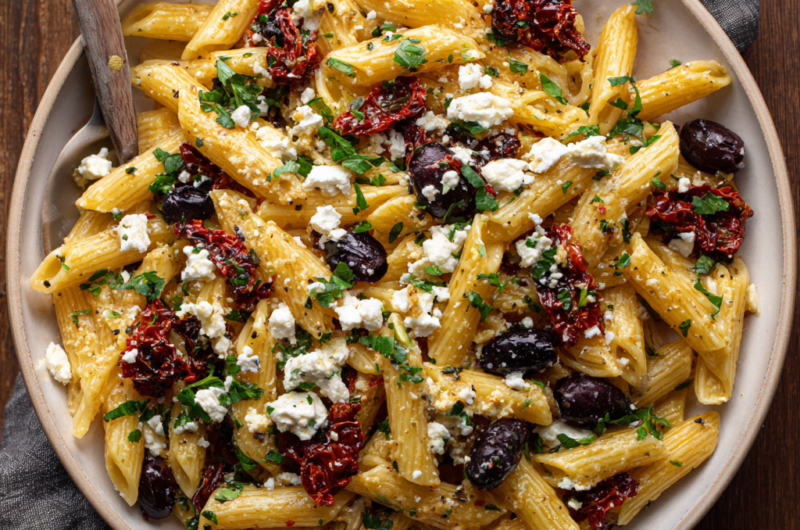
A 15-minute pasta that tastes like the Aegean coast — briny olives, creamy feta, and sun-dried tomatoes come together with zero simmering and maximum flavor.
📋 In This Article
Introduction
Some pasta dishes try too hard. This isn’t one of them. Mediterranean Pasta With Olives, Feta, and Sun-Dried Tomatoes works because it lets a handful of bold ingredients do the heavy lifting — no simmering for hours, no complicated techniques, just smart assembly. The brine from Kalamata olives, the tang of oil-packed sun-dried tomatoes, and the creamy-salty punch of good feta create layers of flavor that taste like they took all day. They didn’t.
I’ve made versions of this dish dozens of times, and here’s what I’ve learned: the magic happens when you treat your pantry ingredients with respect. That means using olive oil that actually tastes like olives, feta that’s creamy rather than rubbery, and pasta cooked just shy of done so it finishes in the sauce. The result? A weeknight dinner that feels like a small escape — no plane ticket required.
Why This Recipe Works
The brilliance of this dish lies in what culinary professionals call “flavor concentration.” Sun-dried tomatoes pack the umami-rich intensity of pounds of fresh tomatoes into a few tablespoons. Kalamata olives contribute both salt and a fermented depth that wakes up your palate. And feta? It does double duty — the creamy interior coats the pasta while the brine from its packing liquid adds a subtle tang.
This approach — building flavor through concentrated ingredients rather than long cooking — is the backbone of Mediterranean cuisine. It’s why a Greek salad tastes so vibrant with just five components. The same logic applies here. You’re creating an emulsified sauce in minutes by tossing hot pasta with quality oil and a splash of starchy pasta water. That starch is crucial: it helps the oil and cheese liquids bind together into something velvety rather than greasy.
Fifteen minutes. That’s the timeline from pot to plate. And most of that is waiting for water to boil.
Key Ingredients
The ingredient list is short, which means every item matters. Here’s what to grab — and why.
Pasta (spaghetti, linguine, or penne): Long shapes work beautifully here because they tangle with the olive oil and catch bits of garlic and tomato in every strand. Short shapes like penne are fine too, especially if you prefer a more fork-friendly bite.
Kalamata olives: Look for ones packed in brine or oil — either works. Avoid canned “black ripe” olives, which lack the fermented complexity of true Kalamatas. Pit them yourself or buy pre-pitted if you’re short on time.
Oil-packed sun-dried tomatoes: These are non-negotiable. The oil they’re packed in is already infused with tomato essence, and the texture is plumper and more yielding than the dry-packed variety. Drain them, but don’t toss that oil — it’s liquid gold for vinaigrettes.
Feta cheese: Buy a block if you can. Pre-crumbled feta often contains anti-caking agents that prevent it from melting into the pasta properly. Look for Greek feta made from sheep’s milk (or a sheep-goat blend) — it’s creamier and more complex than cow-milk versions.
Extra virgin olive oil: This isn’t the place for bargain oil. You want something with a peppery kick and grassy notes, since the oil is never heated beyond warming. That flavor comes through in the final dish.
Garlic: Four cloves may seem like a lot, but the garlic is only briefly sautéed, so it retains its punch without turning harsh. Slice or mince it uniformly so it cooks evenly.
Lemon juice: A splash at the end brightens everything. The acid cuts through the richness of the oil and cheese, creating balance.
Fresh herbs (parsley, basil, or oregano): Parsley is classic, but basil adds sweetness and oregano leans into the Greek theme. Use one or a combination.
Red pepper flakes: Optional, but they add a low hum of heat that plays well against the salty olives and feta.
Step-by-Step Instructions
1. Boil the Pasta
Bring a large pot of water to a rolling boil. Add a generous amount of salt — about 1 tablespoon for every 4 quarts. The water should taste distinctly salty; this is your only chance to season the pasta itself.
Add your pasta and cook until al dente — usually 1 to 2 minutes less than the package directions. You want it to have a slight bite in the center because it will continue cooking when tossed with the warm ingredients.
Critical step: Before draining, reserve at least 1 cup of the starchy pasta water. This liquid is the key to creating a silky sauce that clings to every strand.
2. Sauté the Garlic
While the pasta cooks, heat 3 tablespoons of extra virgin olive oil in a large skillet over medium-low heat. Add 4 cloves of minced garlic and cook gently for 1 to 2 minutes.
Here’s why the low heat matters: garlic contains natural sugars that caramelize quickly. If your heat is too high, those sugars burn before the garlic softens, leaving you with a bitter, acrid taste that ruins the dish. You want the garlic to turn pale gold and fragrant — not brown.
3. Infuse the Oil
Add ½ cup of chopped sun-dried tomatoes and ½ cup of pitted, halved Kalamata olives to the skillet. Stir for about 1 minute.
This brief warming does two things. First, it releases the aromatic compounds in the tomatoes and olives, making them more fragrant. Second, it begins to release their oils into the pan, creating a flavored base that will coat the pasta. Don’t overcook — you’re not trying to soften them further, just warm them through.
4. Combine Everything
Transfer the drained pasta directly to the skillet. Toss vigorously with tongs or a wooden spoon. If the pasta seems dry or the ingredients aren’t distributing evenly, add the reserved pasta water a few tablespoons at a time, tossing constantly.
What’s happening here is emulsification — the starch in the pasta water helps bind the olive oil into a creamy, cohesive sauce rather than a slick of grease. This is the same principle behind cacio e pepe and aglio e olio. The difference? Your flavor base is already built in with the olives and tomatoes.
5. Finish and Serve
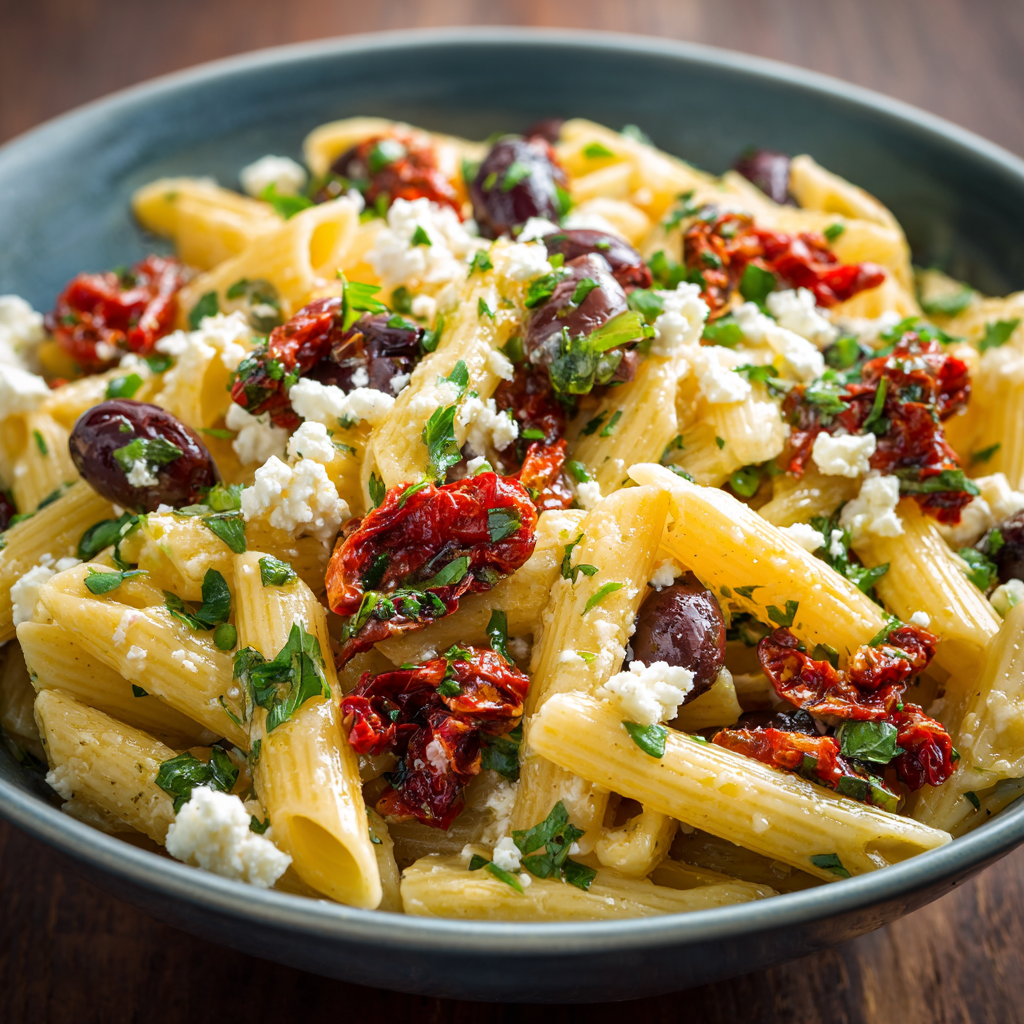
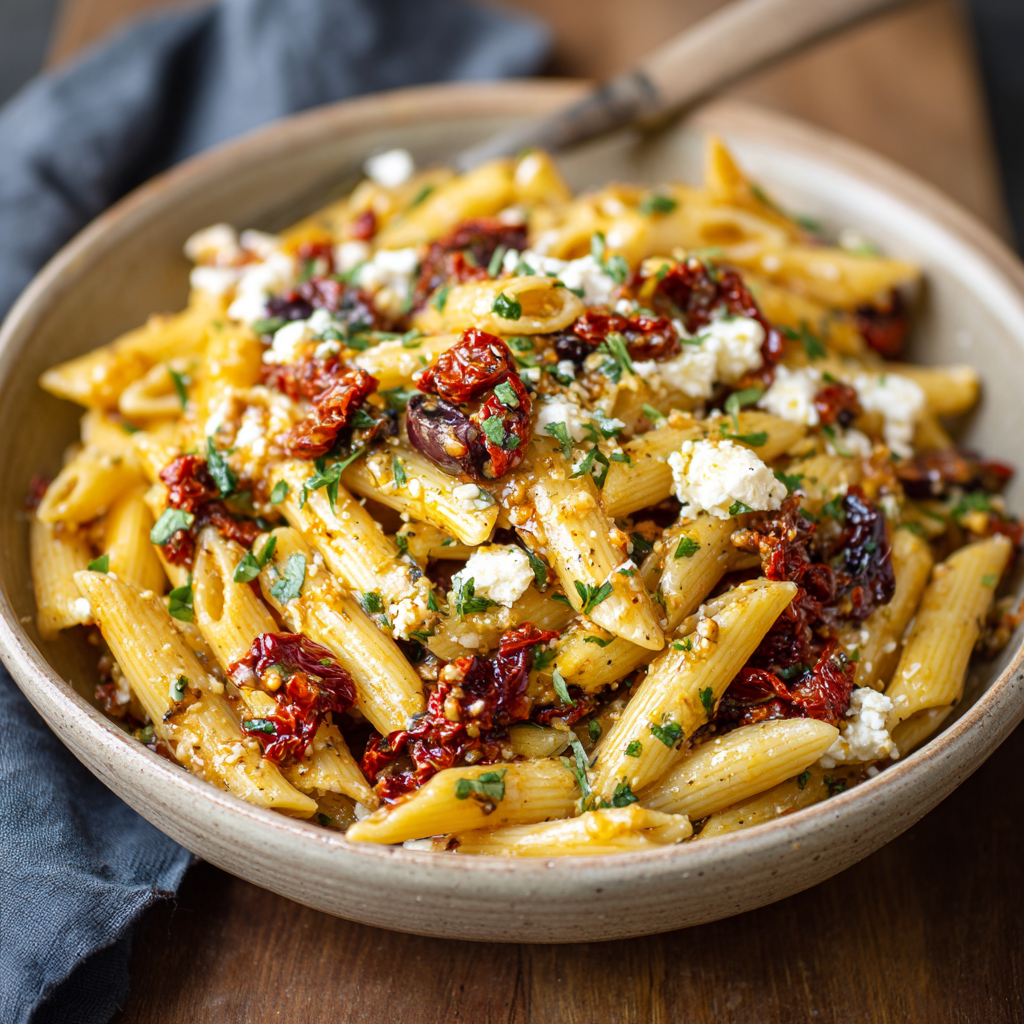
Remove the skillet from the heat. Add 1 cup of crumbled feta, a big squeeze of lemon juice (about 1 tablespoon), and ¼ cup of chopped fresh herbs. Toss gently to combine — you want some feta to melt slightly into the sauce and some to remain in distinct crumbles.
Taste. Adjust with more lemon if it needs brightness, more red pepper flakes if you want heat, or a final drizzle of olive oil for richness. Serve immediately, while the pasta is still warm and the herbs are fresh.
⚠️ Common Mistakes to Avoid
Even a simple dish can go wrong. Here’s what to watch for.
Overcooking the pasta. Al dente isn’t a suggestion — it’s essential. Pasta that’s fully cooked in the pot will turn mushy when it hits the warm skillet and absorbs the sauce. Pull it early and let it finish in the pan.
Burning the garlic. I’ve done this more times than I care to admit. Garlic goes from golden to bitter in seconds. Use medium-low heat and keep the pan moving. If it starts browning too fast, take it off the heat immediately.
Under-salting the pasta water. If your water tastes like the ocean, you’ve gone too far. But if it tastes like plain tap water, you haven’t gone far enough. Properly salted water means the pasta itself is seasoned, not just coated with sauce.
Skipping the pasta water. That starchy liquid is what transforms olive oil from a topping into a sauce. Without it, your pasta will be dry and the ingredients won’t integrate.
Using low-quality feta. Cheap feta is rubbery, overly salty, and refuses to melt. Spend the extra dollar on Greek or Bulgarian feta — the texture and flavor difference is dramatic.
Adding cold ingredients. Straight-from-the-fridge olives and feta lower the temperature of the dish and inhibit flavor release. Let them sit on the counter while the pasta water boils.
💡 Pro Tips for the Best Results
Toast the garlic first. For a deeper, nuttier garlic flavor, try this: add the garlic to cold oil in the pan, then turn on the heat. As the oil warms, the garlic gradually cooks and turns evenly golden. This technique, called “cold-start sautéing,” gives you more control and reduces the risk of burning.
Reserve more pasta water than you think you need. Different pasta shapes absorb different amounts of liquid. Having extra on hand means you can adjust the sauce consistency at the very end without panic.
Use the sun-dried tomato oil. The oil in the jar is already infused with tomato essence. Swap a tablespoon of your regular olive oil for this flavored oil — it adds another layer of intensity without any extra work.
Let the pasta rest for 2 minutes before serving. This brief pause allows the sauce to thicken slightly as it cools, and gives the flavors time to marry. The dish will still be plenty warm, but the texture improves.
Double the recipe for meal prep. This pasta holds remarkably well in the refrigerator for up to 4 days. The olives and tomatoes only get more flavorful as they sit. Just bring it to room temperature before eating, or warm gently with a splash of water.
Flavor Variations & Customizations
This recipe is a template, not a rulebook. Here’s how to make it your own.
Add protein. Grilled chicken, sautéed shrimp, or even canned chickpeas turn this from a side dish into a full meal. If using shrimp, cook them in the garlic-infused oil before adding the olives and tomatoes — the seafood essence infuses the entire dish.
Make it vegan. Skip the feta and toss in ¼ cup of nutritional yeast or a vegan parmesan alternative. The dish will still have plenty of umami from the olives and sun-dried tomatoes.
Go green. Add 2 cups of fresh spinach or arugula in the last 30 seconds of tossing. The residual heat wilts it perfectly without turning it into mush.
Try different olives. Kalamatas are classic, but oil-cured black olives add a wrinkly texture and earthier flavor. Green Castelvetranos bring a buttery sweetness. Mix varieties for complexity.
Add crunch. Toasted pine nuts or walnuts sprinkled on top give textural contrast. Toast them in a dry pan until fragrant — about 2 minutes — before adding.
Make it spicy. Increase the red pepper flakes, or add a teaspoon of Calabrian chili paste for a deeper, fruitier heat that complements the Mediterranean profile.
Serving Suggestions & Pairings
This pasta is satisfying on its own, but a few additions make it a complete meal.
Pair with wine. A crisp white like Sauvignon Blanc or Pinot Grigio cuts through the richness. If you prefer red, go for something light and acidic — a young Chianti or a Côtes du Rhône works beautifully.
Add bread. A crusty baguette or focaccia is perfect for soaking up any extra oil. Rub it with a raw garlic clove for extra punch.
Serve with a simple salad. Arugula with lemon and olive oil takes 2 minutes and adds peppery freshness that balances the salty, rich pasta.
Finish with fruit. A bowl of grapes or sliced melon after the meal cleanses the palate and leans into the Mediterranean theme.
Storage & Make-Ahead Tips
Refrigeration. Store leftovers in an airtight container for up to 4 days. The flavors actually improve after day one as the ingredients marry.
Reheating. Warm gently in a skillet over low heat with a splash of water or olive oil. Microwave works in a pinch, but stir halfway through and cover to retain moisture.
Make-ahead components. Chop the olives, sun-dried tomatoes, and herbs up to 24 hours in advance. Store them separately in the refrigerator. Crumble the feta just before using. The garlic should be minced fresh.
Freezing. Not recommended. The texture of the olives and tomatoes changes after thawing, and the oil separates.
Frequently Asked Questions (FAQ)
+Can I use a different type of pasta?
Absolutely. Spaghetti and linguine are traditional, but penne, fusilli, or farfalle work just as well. Short shapes are easier to eat as leftovers since they don’t clump together when cold. Adjust cooking time according to the package.
+Why is my pasta dish dry instead of saucy?
You likely skipped the pasta water or didn’t add enough. That starchy liquid is essential for emulsification — it binds the oil into a creamy sauce. Start with ¼ cup and add more until the pasta glistens but isn’t swimming.
+Can I make this ahead for a party?
Yes, with one adjustment. Toss the pasta with the oil, garlic, olives, and tomatoes up to 2 hours ahead. Add the feta, lemon, and fresh herbs just before serving so they stay vibrant. Room temperature pasta actually tastes better than cold.
+What can I substitute for feta cheese?
If you’re not a fan of feta’s strong flavor, try ricotta salata (milder and less tangy) or goat cheese (creamier and more spreadable). For a non-dairy option, a sprinkle of nutritional yeast adds savory depth.
+How do I know when the garlic is perfectly cooked?
Watch for color and smell. The garlic should turn pale gold and smell fragrant and sweet — not sharp or acrid. If it’s browning, it’s already overdone. Pull it from the heat immediately.
+Can I use fresh tomatoes instead of sun-dried?
You can, but the dish will be much lighter and less intense. Sun-dried tomatoes are concentrated — they bring more flavor per bite than fresh. If using fresh, go for cherry tomatoes and sauté them until they blister and burst.
Conclusion
Mediterranean Pasta With Olives, Feta, and Sun-Dried Tomatoes is proof that great food doesn’t require great effort. A handful of bold ingredients, a pot of well-salted water, and about 15 minutes are all you need for a dish that tastes like a summer afternoon on the Aegean coast. The briny olives, tangy tomatoes, and creamy feta do the work for you — no long simmering, no obscure techniques, just smart assembly.
Make it once, and it’ll become part of your regular rotation. Make it twice, and you’ll start improvising — a handful of spinach here, some toasted pine nuts there. That’s the beauty of Mediterranean cooking: it invites you to play. So grab a bottle of good olive oil, boil a pot of water, and let the coast come to your kitchen.